
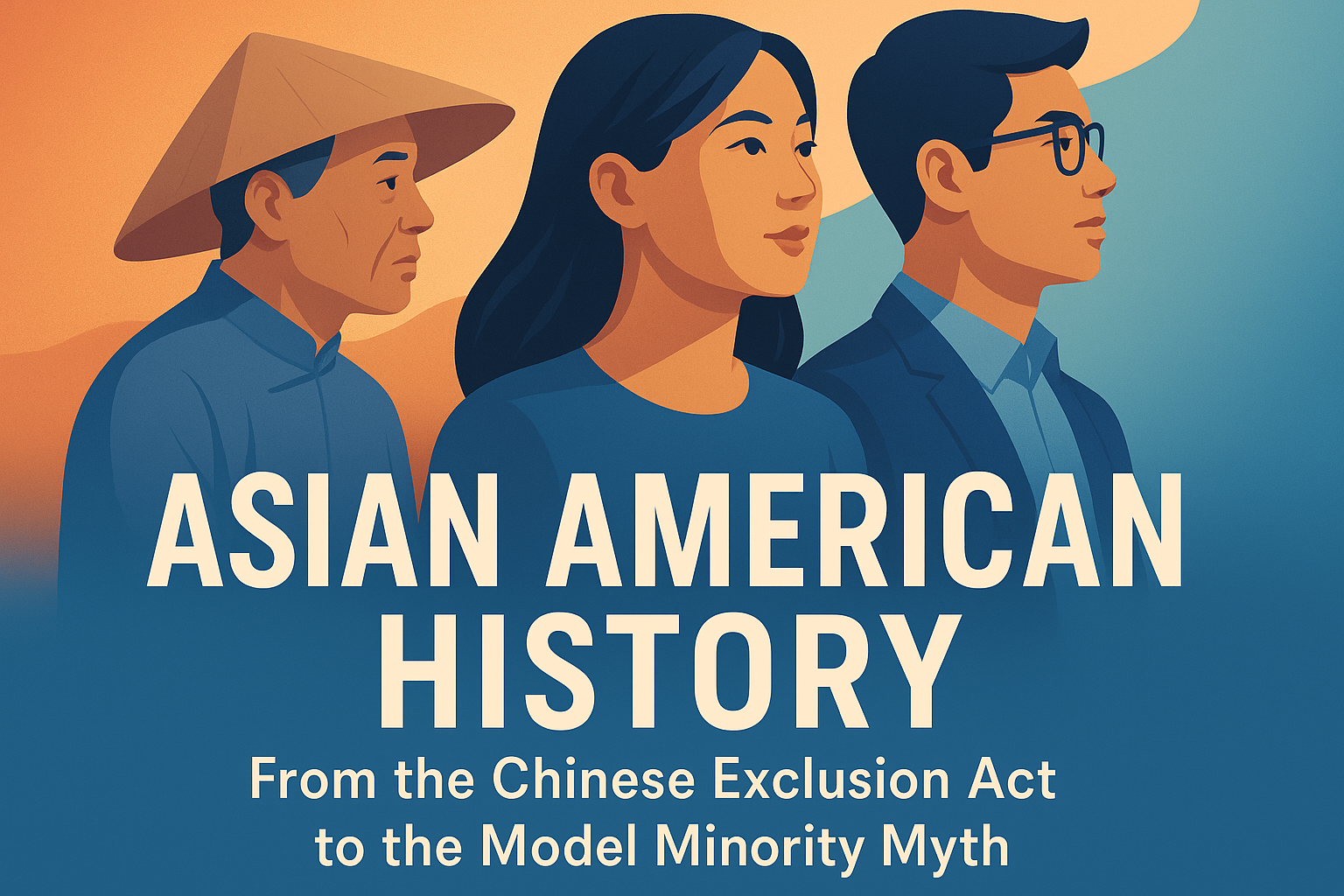
Asian American history is an intricate tapestry woven from the diverse experiences and contributions of millions of individuals. Spanning over a century, this history is marked by both struggle and resilience. The Chinese Exclusion Act and the Model Minority Myth represent significant points along this timeline, bookending a narrative filled not only with hardship but also with remarkable triumphs. Understanding these critical aspects of Asian American history is essential not just for unpacking racial dynamics within the United States, but also for promoting a more inclusive and equitable society.
The Chinese Exclusion Act of 1882 was a pivotal moment in U.S. history, serving as the first legislation to specifically target immigrants based on their ethnicity and nationality. This Act symbolized the broader xenophobic sentiment of the era and laid the groundwork for future restrictive immigration policies. On the other hand, the Model Minority Myth emerged during the civil rights era as a double-edged sword, painting Asian Americans as the “ideal” minority who, through hard work and sacrifice, managed to “succeed” in America. While seemingly positive, this stereotype has had numerous detrimental effects, creating tension between racial groups and masking ongoing discrimination.
Understanding these terms and their historical context is not just an intellectual exercise. It’s crucial for comprehending present-day racial issues, challenging harmful stereotypes, and forging a united path forward. As we explore the key aspects of Asian American history, we gain invaluable insights into the intricate web of identity, policy, and society.
The Chinese Exclusion Act: Roots and Ramifications
In the late 19th century, the United States was a beacon for those seeking new opportunities. However, the influx of Chinese immigrants, drawn by the promise of work and prosperity, sparked waves of nativist sentiment. Laws like the Chinese Exclusion Act of 1882 became tangible manifestations of these fears, explicitly prohibiting Chinese laborers from entering the country.
This Act was not just a legal barrier but a societal one as well. It sent a clear message: Asian immigrants were not welcome and would never be considered “true” Americans. The exclusion wasn’t limited to entry; Chinese nationals already in the U.S. faced severe restrictions, from being unable to apply for citizenship to facing segregated living conditions. The effects of this legislation rippled through generations, stunting the growth of Chinese American communities.
Perhaps one of the most visible examples of these ramifications can be seen in San Francisco’s Chinatown. While now a vibrant cultural center, its origins lie in enforced segregation. Chinese immigrants were forced to cluster together in cramped quarters due to hostility and local ordinances. Over time, these communities developed into self-sustaining microcosms—places of both safety and isolation.
From Exclusion to Inclusion: The Shift in Immigration Policy
The exclusionary practices didn’t last indefinitely. As the world shifted in the wake of World War II, so did American policies. The Chinese Exclusion Act was repealed in 1943 under the Magnuson Act, primarily as a move to strengthen alliances against Axis powers. Even so, the quota was limited to only 105 Chinese immigrants annually, indicating the persistent hesitancy to fully embrace Chinese nationals.
It wasn’t until the 1965 Immigration and Nationality Act that a major overhaul occurred. This act abolished previous national origins quotas and emphasized family reunification and skilled immigrants. This pivotal change in policy allowed for a diverse influx of Asian immigrants, thereby transforming the demographic landscape of America.
- Family Reunification: Families split by past immigration restrictions began to reunite, leading to the growth of Asian communities across the country.
- Skilled Labor: The U.S. saw an influx of highly educated Asian professionals entering fields such as technology, medicine, and engineering.
- New Communities: Cities like Los Angeles and New York became hubs for diverse Asian populations, enriching American culture through new traditions, cuisines, and ideas.
This transformation was not just about increasing numbers; it signified a step toward correcting the erroneous views of previous decades. While challenges remained, Asian Americans began to carve out a place in the American dream, striving for opportunities previously denied to them.
The Birth of the Model Minority Myth
As social dynamics evolved in the mid-20th century, so did perceptions of Asian Americans. During the 1960s, as civil rights movements gained momentum, the Model Minority Myth emerged. This stereotype suggested that Asian Americans, through a focus on education and hard work, managed to achieve economic success and social mobility, virtually without protest against systemic barriers.
This narrative can be misleading and harmful. It overlooks the diversity within Asian communities, where economic success varies widely across different ethnic groups. Furthermore, the myth has been used to downplay issues faced by other minority groups, casting them as “less hardworking” compared to their Asian counterparts.
A real-world example of this stereotype’s impact is found in educational environments. Asian American students are often presumed to excel in academics, particularly in mathematics and science. This assumption can lead to intense pressure and mental health issues among students who might be struggling without support. Simultaneously, it can lead educators to overlook the needs of those who do not fit the stereotype, unfairly distributing resources and attention.
Challenging the Model Minority Myth
In recent years, there has been a growing effort to dismantle the Model Minority Myth and its associated assumptions. Advocacy groups and scholars stress the importance of recognizing the diversity and disparities within Asian American communities. The lived experiences of Southeast Asian refugees, Indigenous Pacific Islanders, and other underrepresented groups often contrast starkly with the polished narrative of universal success.
This challenge to the myth isn’t about dismissing the success stories of many Asian Americans but about recognizing they do not represent the whole. Efforts are underway to collect disaggregated data, which allows for more nuanced understandings of different subgroups within the broader Asian American umbrella.
| Subgroup | Average Income | Educational Attainment |
|---|---|---|
| Chinese American | $85,000 | 50% Bachelor’s Degree or Higher |
| Burmese American | $45,000 | 15% Bachelor’s Degree or Higher |
| Filipino American | $90,000 | 45% Bachelor’s Degree or Higher |
Data like this helps illuminate the economic and educational realities faced by different communities, paving the way for more effective policy-making and community support initiatives that can address specific needs rather than relying on sweeping generalizations.
Historical Impact on Modern Asian American Identity
The encounters with exclusion and stereotype shape how Asian Americans perceive themselves and their place in the broader tapestry of American life. While the Chinese Exclusion Act instilled feelings of alienation, prompting communities to turn inward for survival, the Model Minority Myth encourages a façade of uniformity. This duality is present in many aspects of life, impacting everything from personal identity to broader social policies.
In professional settings, this history can inform workforce dynamics. Many Asian Americans face a stereotyped “bamboo ceiling,” an invisible barrier that impedes leadership advancements despite high performance and qualifications. This issue often remains unaddressed due to the blanket assumptions rooted in the Model Minority Myth.
Moreover, the history of Asian American experience plays a role in how matters of racial justice are discussed today. Understanding our history allows for more empathetic and comprehensive dialogues, uniting disparate groups in the pursuit of common goals.
Conclusion: Reflecting on the Journey Toward Equity
Reflecting on the journey from the Chinese Exclusion Act to the Model Minority Myth and beyond, we see a complex history filled with challenges and growth. The narrative of Asian Americans in the United States is not monolithic; it is multi-faceted, filled with stories of perseverance, adaptation, and community building.
One key takeaway from this exploration is the importance of acknowledging and understanding the diversity within the Asian American community. Recognizing this diversity allows for more informed discussions, better allyship, and more effective policy interventions that uplift rather than stereotype.
For readers, this history serves as a call to action. Advocate for nuanced narratives that reflect the real stories of individuals rather than relying on simplistic stereotypes. Encourage policies and educational frameworks that foster understanding and inclusion. By doing so, you not only honor the past but take an active role in shaping a more equitable future for all racial and ethnic groups in the United States.
Our next step involves educating ourselves and others, listening actively to stories untold, and challenging systemic barriers with informed empathy. By doing so, we pave the path toward greater understanding and justice.
Frequently Asked Questions
1. What was the Chinese Exclusion Act and why was it enacted?
The Chinese Exclusion Act, signed into law in 1882, was a federal legislation that banned the immigration of Chinese laborers to the United States. It was the first significant law restricting immigration into the country. The roots of this act can be traced back to the mid-19th century when a large number of Chinese immigrants came to the U.S. during the Gold Rush and for the construction of the Transcontinental Railroad. Despite their invaluable contributions, these immigrants faced severe racism and discrimination. Economic fears, job scarcity, and cultural prejudices fueled anti-Chinese sentiments among the American populace, leading to widespread agitation for restrictive immigration policies. The Chinese Exclusion Act not only halted Chinese immigration but also prohibited Chinese immigrants already in the U.S. from becoming citizens. This legislation laid the groundwork for subsequent restrictive immigration laws and set a precedent for ethnic and racial discrimination in American policies. Though the act was initially intended to last for 10 years, it was renewed and made permanent until it was eventually repealed in 1943.
2. How did the Chinese Exclusion Act influence other Asian American communities?
The repercussions of the Chinese Exclusion Act extended beyond the Chinese community, affecting other Asian groups in the United States. Following the passage of the Act, immigrants from other Asian countries such as Japan, Korea, India, and the Philippines began to arrive, filling some of the economic gaps left by the exclusion of Chinese laborers. However, these groups faced similar discrimination and exclusionary pressures as anti-Asian sentiments became more generalized. The Act set a legal and social precedent that influenced future restrictive immigration laws, such as the Immigration Act of 1917, which expanded the exclusion zone to include much of Asia, and the National Origins Act of 1924, which severely restricted immigration from Asia overall. These laws not only curtailed immigration but also shaped public perception, fostering stereotypes and reinforcing the marginalization of Asian communities in America. Despite these challenges, Asian American communities exhibited remarkable resilience, forming ethnic enclaves, active socio-political organizations, and engaging in significant cultural exchanges that contributed richly to American society.
3. What is the Model Minority Myth and how has it affected Asian American communities?
The Model Minority Myth is a stereotype that paints Asian Americans as uniformly successful, academically and economically, in contrast to other minority groups. This myth emerged prominently in the 1960s and 70s, often used to downplay the systemic racism faced by Asian Americans and to suggest that other minorities could achieve similar success if they worked hard enough. While seemingly positive, this stereotype is damaging, as it obscures the diverse experiences of Asian Americans, ignoring the socio-economic challenges and disparities faced by different subgroups within the community. For instance, many Southeast Asian refugees continue to experience high poverty rates and educational challenges. Additionally, the Model Minority Myth creates unrealistic expectations for individual success among Asian Americans, contributing to mental health issues and stigmatizing those who do not fit the mold. Furthermore, it effectively drives a wedge between Asian Americans and other minority groups, undermining solidarity and distracting from the broader goals of racial equality and social justice.
4. How have Asian Americans overcome challenges to contribute to the U.S. society?
Asian Americans have made significant contributions to U.S. society despite facing numerous challenges. Historically, they played pivotal roles in critical industries, such as the development of the railroad systems and the agricultural sector. They were instrumental in shaping the cultural landscape as well, with notable contributions in the arts, cuisine, technology, and academia. Many Asian Americans have also made significant strides in political and social arenas, advocating for civil rights and equality. The Civil Rights Movement, for instance, saw prominent Asian American activists who fought alongside African Americans and other marginalized groups to challenge discrimination and injustice. In recent decades, Asian Americans have emerged as influential voices in the pursuit of immigrant rights and multicultural representation. The resilience and determination of Asian Americans have not only fortified their communities but also enriched the diverse tapestry of American culture and society as a whole. The perseverance and accomplishments of individuals and community leaders continue to inspire new generations to engage actively in the pursuit of a more just and inclusive society.
5. Why is understanding Asian American history important today?
Understanding Asian American history is crucial for several reasons. Firstly, it sheds light on the complexities of race and immigration in the United States, illustrating how policies and cultural attitudes have both challenged and shaped ethnic communities. By learning about events such as the Chinese Exclusion Act and the development of the Model Minority Myth, we gain insight into the systemic barriers that have impacted the trajectories of Asian American lives and identities. Moreover, it highlights the resilience and contributions that have significantly influenced American society and culture. In today’s diverse and globalized world, appreciating the nuances of Asian American history fosters greater empathy and cross-cultural understanding. Furthermore, educating ourselves about these histories prompts deeper engagement with ongoing issues such as immigration reform, racial equity, and representation, ensuring that past injustices are acknowledged and prevented from repeating. By valuing the stories and struggles of Asian Americans, we promote a more inclusive historical narrative and work towards a future that celebrates diversity as one of the United States’ greatest strengths.