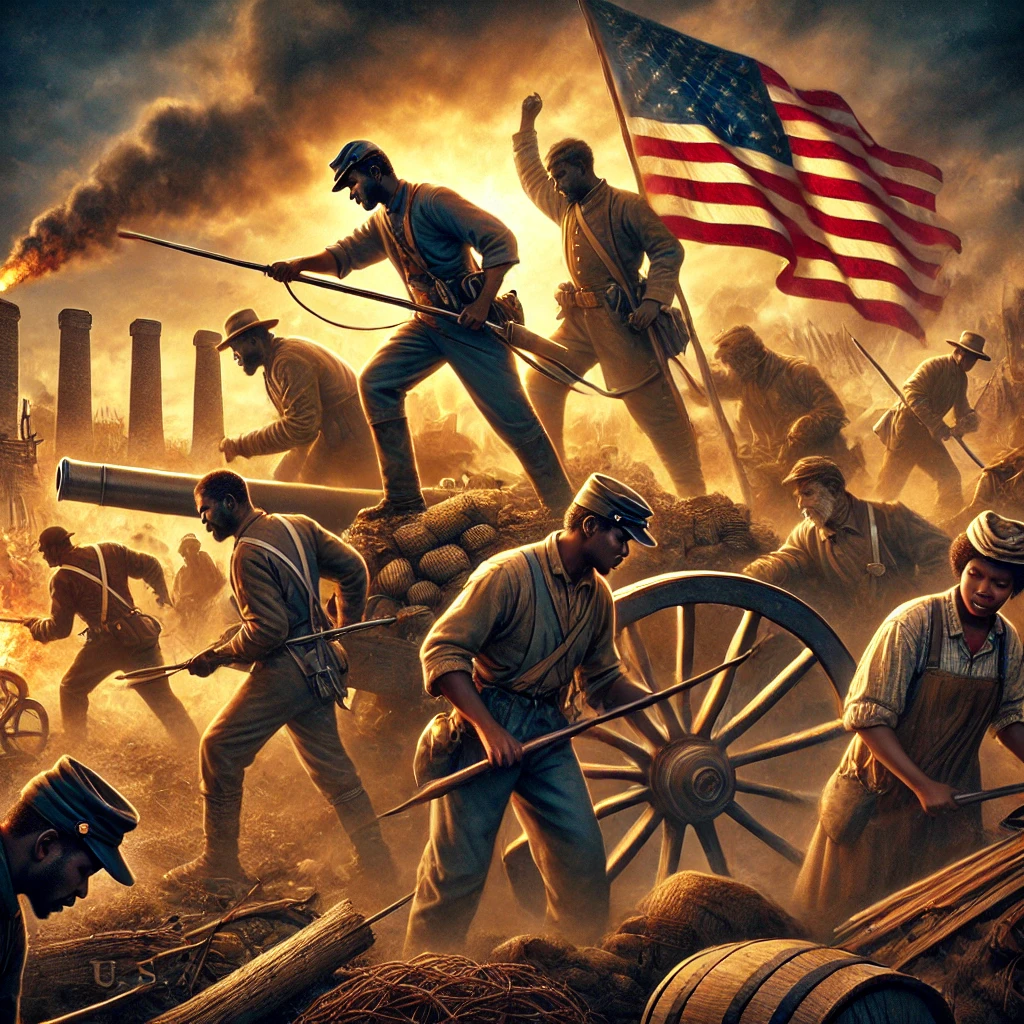
The American Civil War, fought from 1861 to 1865, was a pivotal moment in the nation’s history. While the conflict primarily centered around the issues of slavery and states’ rights, it also became a significant turning point for African Americans. Their contributions to the Union war effort were multifaceted and indispensable, ranging from military service to labor, espionage, and advocacy. Understanding these contributions not only highlights the vital role African Americans played but also sheds light on the broader implications for civil rights and social justice in the United States.
Military Service: Soldiers and Sailors
Enlistment and Recruitment
At the onset of the Civil War, African Americans were largely barred from enlisting in the Union Army due to prevailing racial prejudices and legal restrictions. However, as the war progressed and the need for manpower grew, attitudes began to change. The passage of the Second Confiscation Act and the Militia Act of 1862 allowed for the employment of African Americans in the military.
The Emancipation Proclamation’s Impact
The issuance of the Emancipation Proclamation on January 1, 1863, by President Abraham Lincoln was a significant catalyst. It not only declared the freedom of slaves in Confederate states but also officially permitted African Americans to join the Union forces. This led to a substantial increase in African American enlistment.
Formation of the United States Colored Troops (USCT)
The Bureau of Colored Troops was established in May 1863 to manage the recruitment of black soldiers, leading to the formation of the United States Colored Troops. Approximately 180,000 African American men served in the Union Army, constituting about 10% of its manpower. Additionally, around 20,000 served in the Navy.
Combat Contributions and Valor
African American soldiers participated in numerous key battles, including the Siege of Petersburg, the Battle of Fort Wagner, and the Battle of Nashville. The 54th Massachusetts Infantry Regiment, one of the first official black units, gained fame for its courageous assault on Fort Wagner in South Carolina. Their bravery challenged the widespread doubts about the effectiveness of black soldiers and played a crucial role in shifting public opinion.
Challenges Faced
Despite their service, African American soldiers faced significant discrimination. They were often assigned to labor-intensive duties rather than combat roles and received lower pay than white soldiers. It wasn’t until June 1864 that Congress granted equal pay. Moreover, black soldiers captured by Confederate forces faced brutal treatment, including execution or re-enslavement.
Labor and Support Roles
Contraband Camps and Labor
Many enslaved people fled to Union lines, where they were referred to as “contrabands.” They provided essential labor, building fortifications, working in camps, and performing other support roles that were critical to the Union’s logistical operations.
Economic Contributions
In Union-occupied territories, African Americans worked on abandoned plantations under the supervision of Union authorities. The goods produced, such as cotton and food crops, supported the Union war effort economically.
Women’s Contributions
African American women also played vital support roles. They served as nurses, cooks, laundresses, and spies. Figures like Susie King Taylor provided nursing care and education to black soldiers, while others gathered intelligence and assisted in underground networks.
Intelligence and Espionage
Harriet Tubman’s Espionage Efforts
Harriet Tubman, renowned for her work with the Underground Railroad, also served the Union as a spy and scout. She organized and led espionage activities in South Carolina, providing valuable information about Confederate positions and resources.
Black Dispatches
The term “Black Dispatches” referred to the intelligence gathered by African Americans during the war. Both enslaved and free African Americans provided critical information to Union generals about Confederate troop movements, fortifications, and supply lines. This intelligence was instrumental in several Union victories.
Advocacy and Moral Support
Frederick Douglass and Leadership
Prominent leaders like Frederick Douglass were instrumental in advocating for the enlistment of African American soldiers. Douglass argued that military service would earn African Americans the right to citizenship and equal treatment. His recruitment efforts were pivotal in encouraging black men to join the Union forces.
Community Support
African American communities in the North organized to support the war effort through fundraising, recruitment drives, and providing supplies to soldiers. Churches and mutual aid societies played central roles in mobilizing resources and rallying support for the Union cause.
Resistance Behind Confederate Lines
Sabotage and Rebellion
Enslaved African Americans in the South engaged in acts of resistance against the Confederacy. They slowed down work, destroyed equipment, and, in some cases, rebelled. These acts of sabotage weakened the Confederate war effort and disrupted their economy.
Assisting Union Forces
Many enslaved people provided assistance to Union soldiers by acting as guides in unfamiliar Southern territories, helping escaped Union prisoners, and sharing knowledge of the local geography.
Paving the Way for Emancipation and Civil Rights
Influence on Lincoln’s Policies
The active participation and sacrifices of African Americans influenced President Lincoln’s views on slavery and equality. The bravery displayed by black soldiers helped to bolster the case for emancipation and full citizenship rights.
Legal Milestones
Their service laid the groundwork for significant legal changes, including the passage of the 13th Amendment, which abolished slavery, the 14th Amendment, granting citizenship, and the 15th Amendment, securing voting rights regardless of race.
Post-War Contributions and Legacy
Reconstruction Era Participation
After the war, African American veterans became leaders during the Reconstruction era. They held public office, started businesses, and continued to fight for civil rights. Their wartime service gave them the experience and recognition to influence political and social change.
Educational Advancements
Many veterans advocated for education as a means to improve the lives of African Americans. They helped establish schools and institutions that would become historically black colleges and universities (HBCUs).
Notable Figures and Units
The 1st South Carolina Volunteers
One of the first African American regiments in the Union Army, the 1st South Carolina Volunteers was formed from escaped slaves. They conducted raids along the Southern coast, disrupting Confederate activities and freeing more enslaved people.
William Carney
Sergeant William Carney of the 54th Massachusetts Infantry Regiment became the first African American awarded the Medal of Honor for his gallantry during the assault on Fort Wagner, where he saved the Union flag from falling.
Robert Smalls
An enslaved African American, Robert Smalls, commandeered a Confederate transport ship, the CSS Planter, and surrendered it to Union forces. His actions provided the Union with valuable artillery and information. Smalls later served in the Union Navy and became a U.S. Congressman during Reconstruction.
Cultural Impact and Recognition
Memorials and Monuments
Monuments like the Robert Gould Shaw and the 54th Regiment Memorial in Boston honor the service of African American soldiers. These memorials serve as reminders of their bravery and the crucial role they played in the nation’s history.
Literature and Media
The stories of African American contributions have been immortalized in books, films, and documentaries. Works like the film “Glory” have brought wider recognition to the sacrifices and heroism of black soldiers during the Civil War.
Continuing Struggle for Equality
Civil Rights Movement Foundations
The experiences of African Americans during the Civil War set the stage for future generations to continue the fight for equality. The courage and determination they displayed became a source of inspiration during the Civil Rights Movement of the 1950s and 1960s.
Educational Efforts
Organizations and educators continue to highlight the importance of African American contributions to the Civil War. This ensures that their legacy is not forgotten and that it informs current discussions about race, equality, and justice.
Conclusion
African Americans played an indispensable role in the Union war effort during the Civil War. Their contributions spanned military service, labor support, intelligence gathering, and advocacy, all of which were crucial to the Union’s success. Despite facing discrimination and immense personal risk, they demonstrated unwavering commitment to the cause of freedom and the preservation of the nation.
Their legacy is a testament to their resilience and determination. The impact of their contributions extended far beyond the war, influencing the course of American history and the ongoing pursuit of civil rights. Recognizing and honoring their efforts is essential in understanding the full scope of the Civil War and its lasting effects on the United States.