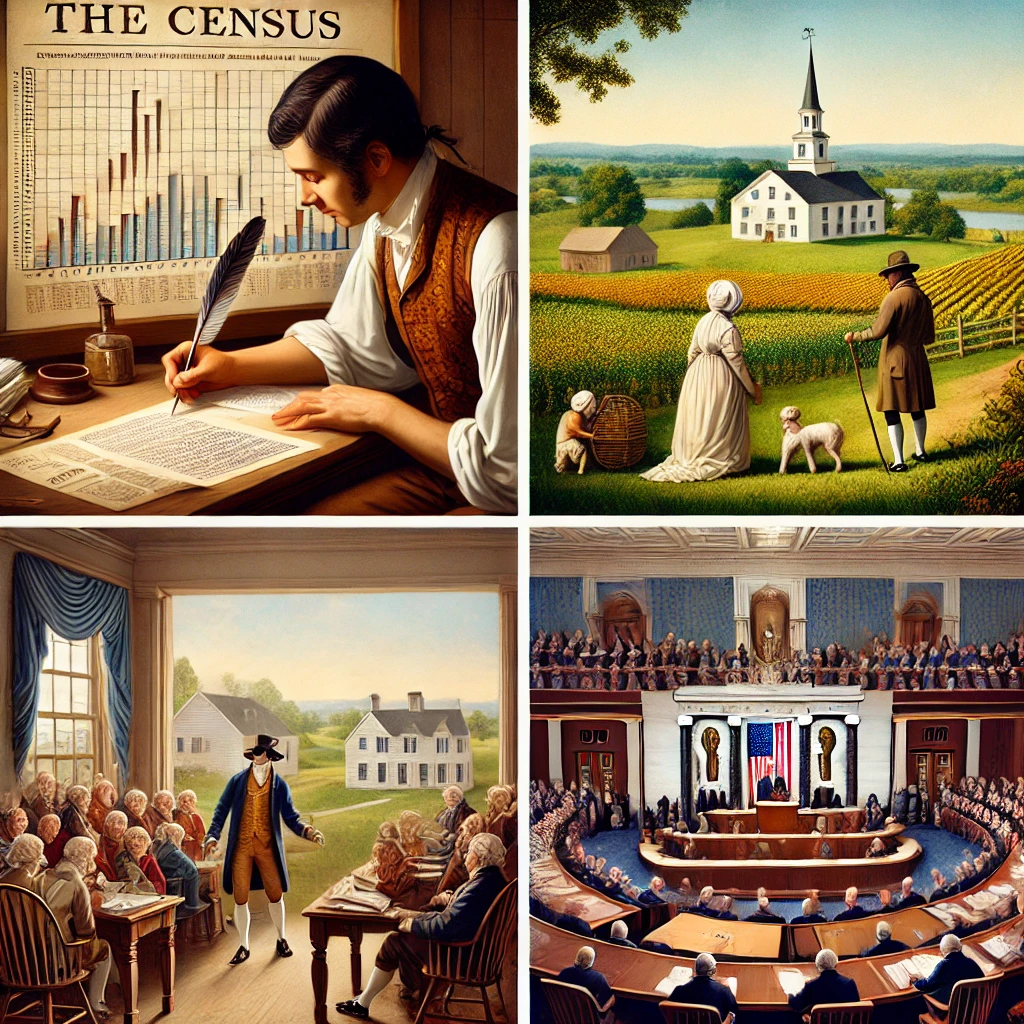
When you think of the word “census,” you might picture a straightforward government procedure that appears every ten years. People fill out forms, mail them back, or complete them online today. But in the early years of the United States, the census was far more than a mere headcount. It was a groundbreaking political innovation, a direct reflection of the newborn republic’s founding ideals, and a centerpiece for debates that helped shape the future of the nation. In this article, we’ll explore how the census played a crucial part in determining the balance of power among states, guided public policy, and influenced the formation of American political identity during the country’s formative years.
Origins of the U.S. Census
The roots of the American census are grounded in the Constitution itself. In Article I, Section 2, the Framers established that an “actual Enumeration” of the population must be conducted every ten years. This provision wasn’t simply a bureaucratic afterthought; it was central to the concept of representative government. The Founders believed that representation should not be arbitrary but based on the number of people living in each state. At a time when monarchies and aristocracies still held sway around the world, America’s promise to allocate representation based on population was a revolutionary idea. This would help ensure that each region’s legislative strength kept pace with its growth and that newly emerging population centers would receive an appropriate level of political influence.
Why Every Ten Years?
The idea of a regular, decennial census stemmed from two primary considerations: population growth and practicality. The Framers knew the young nation would expand quickly, both through higher birth rates and the arrival of immigrants. Counting people too frequently would have been a logistical nightmare in the late 18th century, especially because enumerators often traveled by horse or on foot. On the other hand, waiting too long to count would mean that population shifts wouldn’t be captured, risking outdated political representation. Ten years was deemed a manageable interval—frequent enough to reflect change, yet not so burdensome as to be impossible for a still-developing national government.
Apportionment: The Heart of Early American Politics
One of the central reasons the census mattered so deeply in early American politics was its direct link to representation in Congress—specifically, the House of Representatives. The Constitution dictates that seats in the House be divided among the states in proportion to their population. As a result, states with larger populations would receive more seats, granting them greater influence in crafting laws, approving budgets, and determining national priorities.
The Three-Fifths Compromise
However, there was an immediate—and deeply troubling—question about who counted toward the overall population. When the Founding Fathers gathered in Philadelphia, the southern states argued that enslaved people should be counted as part of their population totals, even though enslaved people were not granted any political rights or freedoms. Northern states objected to counting enslaved people in full, fearing that doing so would artificially inflate the South’s political power. The compromise reached was that enslaved individuals would count as “three-fifths of all other Persons” for representation and taxation purposes. This “Three-Fifths Compromise” had a profound effect on early American politics, shaping how the census was tallied and, in turn, how seats were distributed in the House. It granted the southern states extra political power but also highlighted the deep contradictions within a nation founded on ideals of liberty yet reliant on the institution of slavery.
Shifting Power and Growing Tensions
As the population expanded, each decennial census could—and did—alter the political balance. States experiencing rapid growth would see an increase in their seats, forcing others to cede influence. This constant reshuffling of congressional seats could cause tension between fast-growing frontier states and more established ones. Early Americans understood that the census was not merely data collection; it was the foundation for deciding who held the reins of power in Washington, D.C.
Early Census Methodology: How Did They Count?
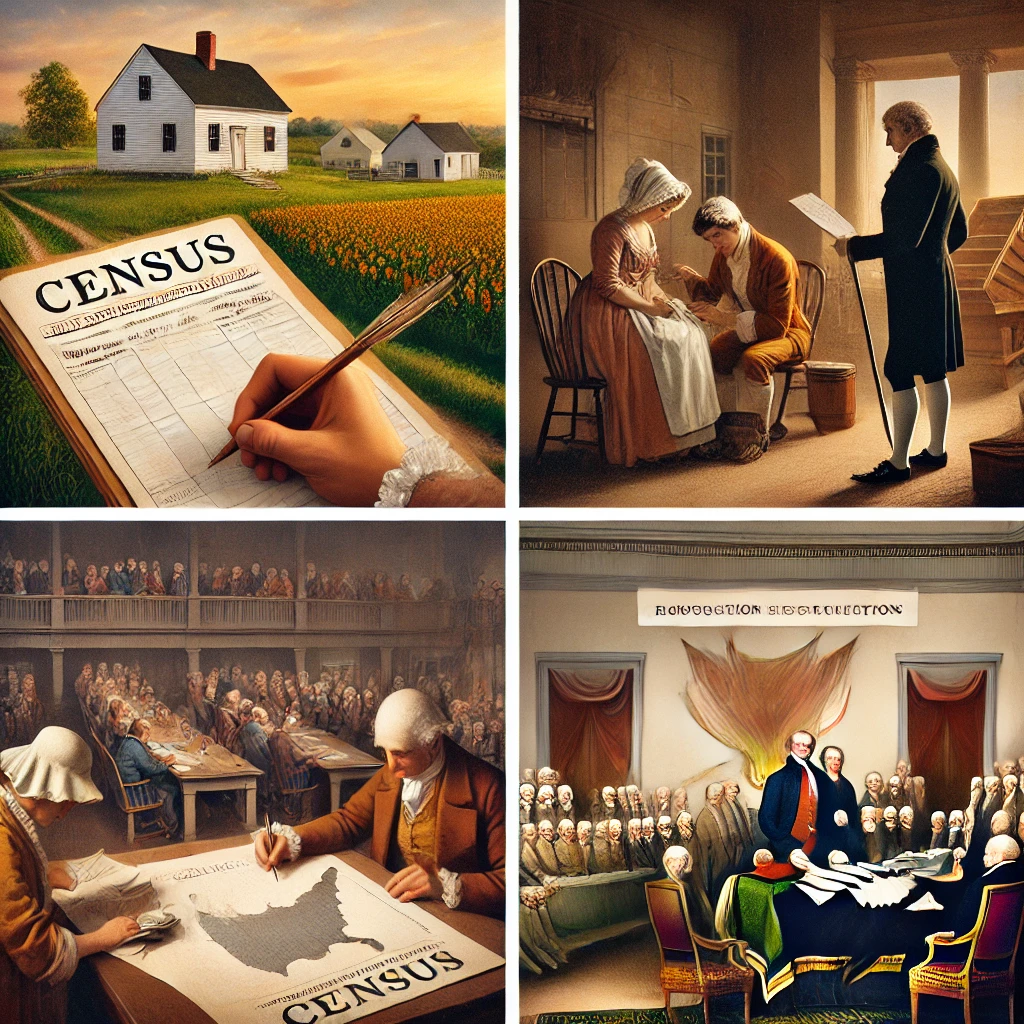
In the first U.S. census of 1790, marshals were tasked with walking or riding through communities, knocking on doors, and documenting residents. The aim was to count every free person, enslaved individual, and indentured servant. The limited technology of the time—paper, ink, and a strong constitution for traveling on rough roads—made the process arduous. Still, the 1790 census managed to count nearly four million people, offering a snapshot of a growing nation soon after independence.
Challenges of Enumeration
- Geographic Barriers: The early nation was vast and not always easily navigable. Mountain ranges, rivers, and lack of proper roads or bridges could slow enumerators’ progress.
- Suspicion and Distrust: Many people were wary of government officials asking questions. Some folks feared higher taxes, while others simply didn’t trust a young federal government that was still an unfamiliar concept.
- Accuracy Concerns: Data collection depended on enumerators’ dedication, honesty, and competency. Moreover, enslaved individuals often lived on remote plantations, further complicating attempts to get an accurate count.
- Time Constraints: Completing the census was time-consuming. The tasks involved traveling long distances and deciphering the intricate household compositions. For a population spread out over a large territory, enumerators found it challenging to make multiple visits to clarify information.
Despite these hurdles, the census continued to expand and adapt. As America grew more populous and technologically advanced, the census would eventually develop new methods, but in these early decades, enumerators on horseback defined how the federal government approached data collection.
Political Implications and Public Policy
From taxation to legislative priorities, census data was at the core of many policy debates in early America. Once the census established how many representatives each state would have, those representatives, in turn, influenced the direction of federal policies. Whether deciding on funding for roads and canals, defense budgets, or the location of new federal offices, states with larger delegations typically had more sway.
Funding and Federal-State Relations
During the early 19th century, the federal government began to invest in infrastructure projects such as roads, bridges, and canals to facilitate commerce and communication. States with more representatives often negotiated more advantageous funding deals for infrastructure projects within their borders. The census data, by altering the number of representatives and thus each state’s voting power, shaped the distribution of these federal funds.
National Identity and Unity
Beyond legislative wrangling, the census played a cultural and ideological role in unifying a scattered population. The enumeration reminded citizens that they were part of a larger national project, illustrating the breadth and diversity of the new country. Even if day-to-day experiences could be very localized—life in rural Pennsylvania looked vastly different from life in urban Boston or a southern plantation—knowing that the entire nation was being counted together helped forge a sense of collective identity.
The Federalist Debate: Central Versus Local Power
The idea of a federal census that impacted representation also fueled debates between Federalists, who favored a stronger central government, and Anti-Federalists or Jeffersonian Republicans, who championed states’ rights. Federalists believed a uniformly implemented census was crucial for ensuring fair representation and a stable, centralized government capable of uniting a disparate collection of states. On the other side, some worried that a powerful federal government with control over the census could potentially manipulate data or use the population count to justify higher taxes or conscription.
While many of these fears did not materialize, it’s worth noting how the census, at its very core, was tied to questions about the balance of power between states and the federal government. The fact that the Constitution mandated this count represented a clear statement that the new federal government had the right—and responsibility—to assess its entire population for governance purposes.
Census and the Issue of Slavery
As mentioned earlier, the Three-Fifths Compromise gave slaveholding states extra congressional seats relative to their population of eligible voters. This reality meant that enslaved communities—though unable to vote—nonetheless contributed to the political power of slaveholders. Over time, this disproportionate power impacted federal decisions about issues like expanding slavery to new territories, regulating the slave trade, and determining national policies that affected all states, not just the South.
Growing Sectionalism
As new states joined the Union, debates about whether they would allow slavery were influenced by the balance of power in Congress. The census, by determining how many seats each state received, played a role in whether the Senate and House would tilt pro-slavery or anti-slavery. The question of whether new territories like Missouri, Texas, or California would be counted with enslaved or free populations directly shaped the direction of national politics. In this sense, the census was integral in fueling sectional tension that would eventually lead to the Civil War.
1800 and Beyond: Changes and Continuity
By 1800, the second U.S. census showed how quickly the country was growing, revealing an approximate population of over five million. The fact that another census was conducted at all reinforced the new tradition: every ten years, Americans would be counted, and their representation in government would be realigned accordingly. As the decades passed, new questions emerged. Should the census only count populations, or should it also collect data about occupations, industries, and other economic indicators?
Expanding Scope of Data Collection
While the Constitution specifically requires only a population count, the early government soon realized that having more information—such as age, sex, and economic activity—could help guide policy. In 1810, the census began collecting data on manufacturing to understand the country’s economic strengths and potential. This decision showed that Americans increasingly viewed the census as a critical tool not just for political apportionment, but for planning and shaping the nation’s future.
Technological Advancements
In the early decades, the tools for counting didn’t change much, relying largely on pen and ink. But by the mid-19th century, as the Industrial Revolution took hold, new methods like mechanical tabulation would eventually emerge (though the first mechanical tabulators were widely used in the 1890 census). Still, the seeds of a more scientific and bureaucratic process were planted as early as the first few censuses, when officials recognized that accurate data was vital.
The Census as a Political Strategy
Over time, political leaders learned to use census data strategically to strengthen their arguments and platforms. For example, if a state’s population boom suggested a need for more federal investment in transportation, a savvy representative might cite official census numbers to justify the allocation of federal funds for new roads or canals. Similarly, if an area wanted to argue for new statehood, it could point to population growth as evidence that it was ready to join the Union.
Gerrymandering and District Boundaries
Though the Constitution established that each state’s total seats would be apportioned by population, it left the drawing of individual congressional districts largely up to the states. This opened the door to “gerrymandering,” or manipulating district lines to create an advantage for a particular political party or faction. Census data underpinned this process because it provided the population numbers that would shape each district. Even in the nation’s early years, local politicians quickly realized the power of redrawing boundaries to maintain control or minimize the influence of opposition groups.
Building a Sense of Nationhood
The census didn’t just matter to politicians—it also offered ordinary citizens a glimpse into the size and scope of their new country. Newspapers often reported the census findings, highlighting population growth in certain regions and comparing rural versus urban populations. Reading about the population totals of emerging states like Ohio or Kentucky fostered a sense of national pride and shared destiny. It was as if the country were taking its own pulse every decade, measuring how far it had come and anticipating the opportunities that lay ahead.
A Tool for National Pride
National pride wasn’t the only emotion stirred by the census. As communities saw their numbers swell, they often lobbied for more resources, from schools to post offices, believing a growing population deserved improved services. This created a feedback loop: growth led to political power, which led to infrastructure and investment, which in turn attracted more settlers.
Challenges and Criticisms in the Early Republic
Though the census was widely accepted as necessary for the functioning of government, criticism arose regularly. Some accused census takers of undercounting certain communities, whether intentionally or accidentally. Others believed that collecting any data beyond a simple population tally was a violation of personal privacy. Additionally, the moral quandary of the Three-Fifths Compromise loomed over every count, a reminder that the very mechanism of representation reinforced an unjust system of human bondage.
At the same time, many lawmakers understood that a fair and transparent census was essential to the ideals of the republic. Their argument was straightforward: a government of the people can only function if it knows something about the people it governs. This sentiment helped the census endure as a core institution of American political life, even when controversies inevitably arose.
Legacy and Lasting Impact
Today, we may take the census for granted, but its role in early American politics was transformative. It established a mechanism for equitable representation (although “equitable” was limited by the standards and moral failings of the day), guided important policy decisions, and helped forge a sense of shared nationhood. The ripple effects of those early counts can be felt even now:
- Representative Government: The foundational idea that representation should be pegged to population remains a defining characteristic of America’s legislative branch.
- Expansion and Infrastructure: Census-driven shifts in power influenced national infrastructure decisions, fueling expansion westward and the building of roads and canals.
- Data-Driven Decisions: The eventual expansion of census questions laid the groundwork for modern data-driven policymaking, influencing everything from public health to educational funding.
- Ongoing Debates: Contemporary debates about gerrymandering, redistricting, and the fairness of census questions echo many of the discussions from the early Republic.
A Reflection of American Values
Ultimately, the census in early American politics reveals the complexity and ambition of the nation’s founders and citizens. They believed in a system flexible enough to adapt to changing population patterns yet rigorous enough to maintain unity. This balancing act required constant negotiation—among states, between states and the federal government, and within the hearts and minds of Americans who questioned the moral underpinnings of certain compromises.
The census has always been more than numbers. It’s a reflection of the social, political, and economic transformations that mark each new decade of American history. In the young republic, it symbolized the democratic principle that government should be grounded in the will of the people—while simultaneously exposing the contradictions in a society that denied fundamental rights to many within its borders. That tension—between the lofty ideals of representation and the harsh realities of inequality—defined much of early American politics, and the census stood at the crossroads of that debate.
Conclusion
From its inception, the U.S. census has been inseparable from the nation’s political fabric. In a world still ruled largely by monarchs and emperors, the idea that political representation would be directly tied to a headcount was both innovative and daring. Early American leaders recognized that population was not just a statistic but the heartbeat of the republic. By allotting representation according to real numbers, the Constitution asserted that politics should reflect the people it served, at least in theory.
Of course, the first censuses were conducted under a system that denied voting rights to women, Indigenous peoples, and enslaved individuals. Still, the principle of counting each person—even if imperfectly—laid the foundation for a representative democracy that would grow more inclusive over time. The debate over how to conduct that count, and what it should measure, foreshadowed many of the controversies that continue to surround the census today.
Yet, through every controversy and revision, the American census endures as a testament to the nation’s founding principle: governance by and for the people. In the early republic, it served as a powerful lever of political power, shaping Congress and guiding policy decisions for a young country on the cusp of rapid expansion. It helped unify diverse and distant populations under a single national project, reinforcing the ties that bound the states together even as they sometimes threatened to pull apart.
In this sense, understanding the role of the census in early American politics offers us a window into both the promise and paradoxes of the new nation. It showed a commitment to fair representation—albeit flawed by the racial and gender injustices of the time—and it underscored the importance of data in shaping the course of a democracy. Today, as we continue to debate representation, identity, and the meaning of citizenship, the lessons from the nation’s early censuses resonate as strongly as ever. They remind us that at its best, the census stands for a core American ideal: every person counts.
Frequently Asked Questions
1. What role did the early American census play in the political landscape of the United States?
The early American census played a pivotal role in shaping the political landscape of the young United States. Unlike the modern-day perception of the census as a mere statistical endeavor, in the years following the nation’s founding, it was deeply intertwined with fundamental democratic principles. The census was instrumental in determining representation in the newly established House of Representatives. This was not just a dutiful counting of people; it was a direct application of the Great Compromise, ensuring fair representation by accounting for the population of states. This precise apportionment was crucial in maintaining a balance between populous and less populous states, guiding political power dynamics and policy-making decisions. Additionally, the census data heavily influenced the allocation of federal funds to the states, which was of monumental importance as the nation sought to unify and stabilize its fledgling economy and infrastructure.
2. How did the early American census reflect the nation’s founding principles and ideals?
The early American census was a testament to the ideals and principles upon which the United States was founded. At its core was the principle of representative democracy — a system where power and voice were proportionally distributed according to population. This was envisioned by the Founding Fathers as a means to prevent the tyranny of both excessively populated states and those with smaller populations. The census embodied the ideals of equality and fairness by ensuring that each person’s vote had equitable weight. Furthermore, by committing to the process of regularly updating population data every ten years, the census reinforced the idea of adaptability and responsiveness in governance, allowing the democratic system to evolve in step with the growth and shifts within the nation. This dedication to regular, systematic enumeration highlighted the new republic’s commitment to logical governance based on empirical data rather than assumptions or arbitrary decisions.
3. What challenges and debates surrounded the first U.S. census?
The inaugural U.S. census in 1790 was not without its challenges and controversies. Conducting a national headcount in the early days of the republic was an enormous logistical challenge. The task was compounded by the rudimentary state of infrastructure, vast rural stretches, and diverse population groups scattered across the young nation. There were significant debates about who should be counted, with critical discussions surrounding the contentious issue of slavery. The Three-Fifths Compromise was a major point of debate, as states with larger enslaved populations wanted these individuals to be fully counted to increase representation and power in Congress, while others argued against it on the grounds of fairness and ethics. The undertaking was fraught with concerns about accuracy, data integrity, and the sheer practicality of gathering such information across vast and unequally developed territories. Despite these hurdles, the successful completion of the census established a cornerstone for American political organization and demonstrated an impressive commitment to democratic principles.
4. In what ways did the census impact federal resource allocation and economic planning?
The early census was crucial in the strategic allocation of federal resources and economic planning throughout the United States. The data collected served as a backbone for distributing federal funds to states, thereby affecting the development of public infrastructure, education systems, and community resources. Understandably, a precise count was paramount for equitable distribution, ensuring states received federal assistance corresponding to their needs and population sizes. This distribution of resources had far-reaching implications; it influenced the growth of urban centers and rural areas, facilitated transportation development, and even impacted migration patterns as resources aligned with population densities and needs. The census provided the federal government with vital insights into regional growth patterns and demographic shifts, enabling informed decision-making that supported national economic strategies. Thus, by guiding the disbursement of resources and planning efforts, the census played a foundational role in the economic development of early America.
5. How did the early census pave the way for the development of American civil rights and representation?
The early American census laid significant groundwork for the development of civil rights and the evolution of representation throughout the nation’s history. As the decades passed, census data continually highlighted discrepancies and inequalities in representation and resource distribution, sparking debates and reforms aimed at achieving a more inclusive and equitable society. Over time, these enumerations have provided crucial evidence in the fight against gerrymandering, voting restrictions, and other systemic inequities. They have underpinned landmark legislative actions aimed at achieving fair representation, serving as a tool of transparency that has empowered advocacy groups to push for change and influence policy development. Thus, the census established a framework where population data continuously informs policies and reforms — a legacy that persists as America continues to strive toward civil rights advancements and equal representation for all its citizens. This evolving role of the census underscores its critical function not just as a tool for governance, but as a catalyst for change in the political and civil spheres of the nation.