
The Louisiana Purchase, finalized in 1803, is often hailed as one of the most significant real estate deals in American history. By more than doubling the size of the United States, it ushered in new opportunities for American settlers and significantly expanded the nation’s boundaries. Yet, the broader impacts on Native American tribes in these newly acquired western territories are a crucial part of this story—one that is too often overshadowed by the Purchase’s political and economic advantages for the young United States. The real experience of tribes such as the Osage, Sioux, Omaha, and many others unfolds as a complex narrative of displacement, negotiation, cultural transformation, and changing alliances. By examining the origins of the Louisiana Purchase, the immediate aftermath for Native people, and the long-term consequences, we can gain a deeper appreciation of how this transformative land deal shaped the destinies of Native nations long before the era of coast-to-coast expansion. Understanding this history allows us to see how the events of the early 19th century sowed seeds of tension, conflict, and resilience that shaped the future of both the United States and the indigenous peoples whose homelands were suddenly claimed by a foreign power.
The Road to the Louisiana Purchase
Before the American government entered into negotiations with France, the vast territory known as Louisiana passed through several hands. Originally claimed by France in the late 17th century, it was transferred to Spain after the French and Indian War. Later, in a secret treaty in 1800, Napoleon reclaimed this vast land for France. President Thomas Jefferson, who was keen on securing access to the Mississippi River and the port of New Orleans for U.S. trade, initially aimed to purchase only New Orleans and small portions of the surrounding area. However, Napoleon, realizing his larger imperial dreams in the Americas were growing too costly—especially given unrest in French-controlled Saint-Domingue (Haiti)—offered the entire Louisiana territory to the United States.
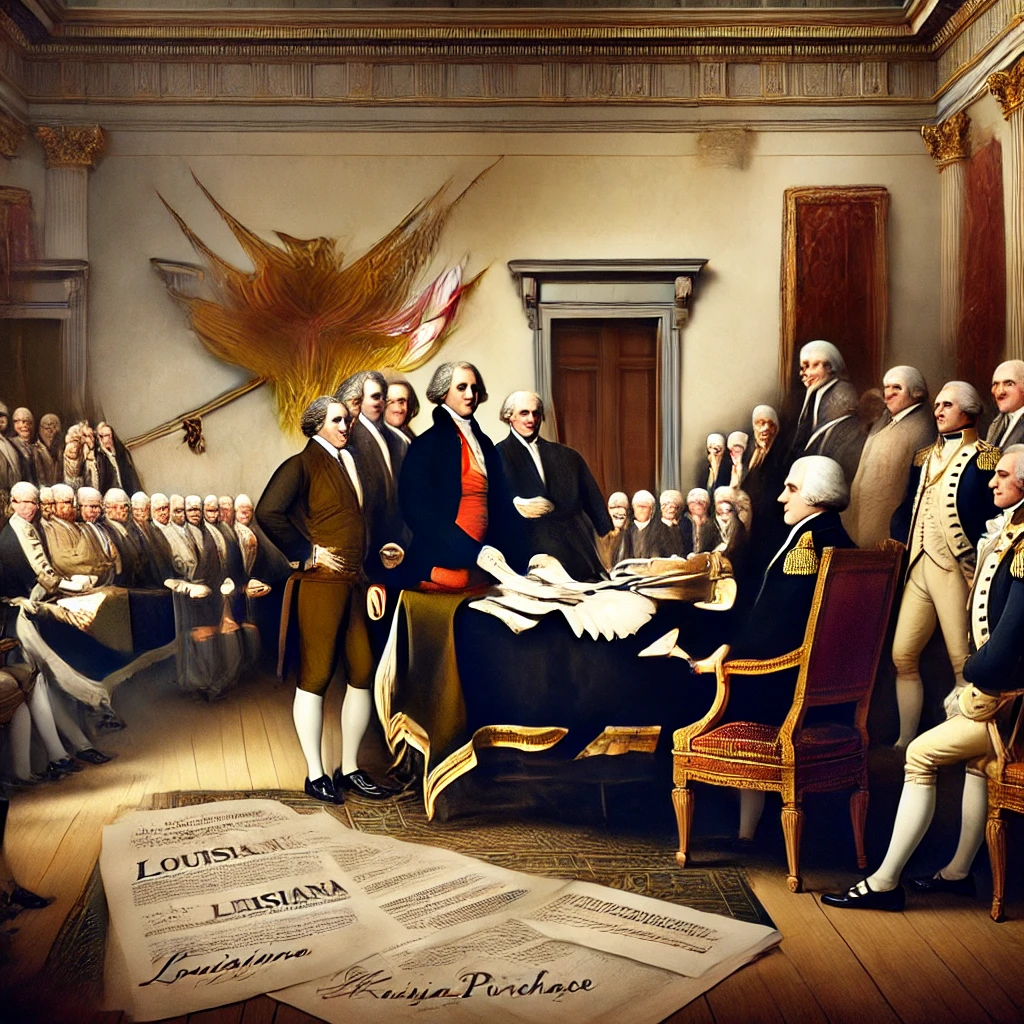
With surprising speed, the United States agreed to buy this enormous swath of land for $15 million. The ratification of the Louisiana Purchase Treaty on October 20, 1803, effectively doubled the size of the nation. From the viewpoint of U.S. policymakers, this acquisition was an extraordinary achievement. It secured trade routes, promoted westward settlement, and strengthened the young nation’s position on the global stage. Yet, the land in question was already inhabited by numerous Native American tribes who had their own governance systems, trade networks, and cultural traditions. From the perspective of indigenous nations, the treaty between the United States and France illustrated a fundamental disregard for their sovereignty. Land was exchanged in an international deal, yet the original owners—Native peoples—were not invited to negotiations and received no compensation.
Immediate Shifts in Power and Diplomacy
The Louisiana Purchase changed the diplomatic landscape overnight. Before 1803, Native American tribes living in the region negotiated separately with European powers like Spain and France, often securing trade benefits and political protection through skillful diplomacy. Many tribes had forged alliances designed to maintain a delicate balance of power between competing European colonizers. When the United States replaced France as the sovereign claiming the land, these alliances and previous agreements were either voided or severely weakened.
Initially, some tribes saw potential benefits in cooperating with the U.S. government, hoping to continue lucrative trade relationships or to receive new forms of support. For instance, trading posts established by French or Spanish colonial powers could be adapted for trade with American settlers, providing a new market for furs, hides, and other goods. However, the United States had its own approach to Indigenous diplomacy, often founded on the idea that tribes should either assimilate into American culture or cede their lands through treaties that favored U.S. expansion. This approach was facilitated by American views of “Manifest Destiny”—the belief that expansion across North America was both justified and inevitable.
In this shifting environment, tribal leaders found themselves navigating an unfamiliar political scene. There were also significant language barriers and differences in diplomatic customs. The American approach involved official treaties written in English, which many tribes struggled to interpret. At the same time, U.S. officials were driven by a mindset that saw the land as underutilized if it was not subjected to settler agriculture and development. This mismatch in worldviews meant that treaties signed in the wake of the Louisiana Purchase often led to misunderstandings and inequitable land cessions.
The Lewis and Clark Expedition and Its Effects on Tribes
Soon after the Purchase, President Jefferson commissioned the Lewis and Clark Expedition (1804–1806) to explore the newly acquired lands. While the expedition is often celebrated as a scientific and exploratory achievement—collecting plant specimens, mapping rivers, and meeting numerous tribes—it also served strategic and political purposes. Lewis and Clark brought along gifts for tribal leaders, read out statements that the United States was now the official authority in the region, and tried to forge alliances with tribes to secure American influence.
In many ways, the Lewis and Clark journey was a sign of things to come for Native American tribes. They encountered both curiosity and resistance from indigenous communities. Tribes like the Mandan and Hidatsa traded and shared knowledge about the land, while the Teton Sioux were more confrontational, reflecting rising anxieties about increasing numbers of outsiders traversing their homelands. Though the Corps of Discovery team generally tried to maintain friendly relations, conflicts and misunderstandings inevitably arose due to cultural differences, language barriers, and U.S. assumptions about land ownership.
These early interactions highlighted the fundamental clash of worldviews at stake. For many Native American societies, land was a shared resource tied to spiritual and cultural identities. For the United States, “ownership” implied exclusive rights, which extended to selling or assigning land without the input of those who had lived there for generations. The Lewis and Clark Expedition’s documentation of resources and tribal territories laid the groundwork for future American settlements and later negotiations—or forcible acquisitions—of Native lands.
Erosion of Native Sovereignty
One of the most profound long-term impacts of the Louisiana Purchase was the erosion of tribal sovereignty. Even though Native nations had their own leaders and systems of governance, the U.S. government assumed a paternalistic authority over them. Policies soon emerged that aimed to “civilize” and assimilate indigenous people. These policies included pushing for farming, adopting European-American customs, and signing treaties that often ceded large portions of tribal territories in exchange for goods, annuities, or vague promises of peace and protection.
As settlers began pouring into the new territories, tensions rose quickly. Many treaties were negotiated under pressure, with Native leaders sometimes coerced or misled by American negotiators. In other instances, unauthorized individuals falsely claimed to represent tribes, signing away lands without legitimate authority. This pattern of dubious treaties contributed to widespread land loss for Native people. Large territories that had once supported migratory hunting practices, trade routes, and cultural traditions were now fragmented by property lines and under the control of settler communities.
In addition, the American legal system generally sided with expansionist interests whenever disputes arose. Even when tribes attempted to defend their rights in U.S. courts, legal frameworks were typically stacked against them. The concept of “domestic dependent nations,” which would emerge in later Supreme Court rulings, reflected the belief that while tribes had some internal autonomy, they were ultimately wards under the protection and authority of the federal government. From this perspective, the seeds of future forced relocations—like the Trail of Tears—were sown as soon as the nation claimed the vast territories of the Louisiana Purchase.
Displacement and Cultural Disruption
Displacement took many forms after the Louisiana Purchase. In some cases, Native families were simply pushed out by a steady increase in settlers arriving to farm, ranch, or mine resources on tribal lands. In other areas, the U.S. military or militias enforced new boundaries, leading to violent confrontations. Tribal communities that traditionally migrated with the seasons or visited sacred lands found that fences, settlements, and new territorial lines blocked their historical routes.
The disruption wasn’t purely physical—cultural practices were also undermined. Religious ceremonies, oral storytelling, and community governance all rely on a strong connection to the land. As that connection was severed, either by legal constraints or forced relocation, these traditions faced threats that ranged from gradual erosion to outright bans in U.S.-controlled territories. New diseases introduced by settlers also devastated tribes that did not have immunity to ailments like smallpox and measles, adding another layer of hardship during this period of transition.
At the same time, adaptation and resilience were also part of the story. Some Native communities adopted new agricultural methods, partly due to U.S. government pressures but also as a strategy to survive in a rapidly changing world. Others formed confederacies or alliances with neighboring tribes, hoping that unity would strengthen their bargaining position against U.S. demands. For many, these strategies could only delay the overwhelming surge of settlement, but they do reveal how tribes did not simply vanish; they actively resisted, adapted, and negotiated in the midst of monumental changes.
Shifting Alliances and Tribal Conflicts
As the United States asserted its control, different tribes found themselves in new conflicts with one another, sometimes spurred on by American policies. Territorial boundaries drawn by the U.S. often disregarded traditional intertribal borders, creating friction where there had been established practices of sharing or dividing land. Additionally, U.S. agents sometimes deliberately pitted tribes against each other to weaken resistance to expansion. By offering preferential trade deals or promising land to certain groups, they created incentives for tribes to align with federal forces or, alternatively, to oppose rival tribes.
Moreover, the fur trade, which had been a major economic driver for many Native nations, shifted dramatically under American control. European powers—especially the French—had been integral trading partners, but after the Louisiana Purchase, American traders moved in with different terms and fewer scruples about tribal well-being. Competition over diminishing game led to deeper rivalries among tribes that depended on hunting, further destabilizing the region.
These shifting dynamics sometimes resulted in intense intertribal warfare, with the U.S. government often stepping in to broker treaties that reinforced American oversight. The result was a growing cycle of dependency on U.S. “protection” or resources, further diminishing tribal sovereignty. This environment made it increasingly difficult for Native nations to present a united front against encroaching settlement.
The Role of Missionaries and Assimilation Policies
Another significant factor in the transformation of Native societies after the Louisiana Purchase was the rise of Christian missionary work. With the opening of western lands, missionaries from various denominations traveled into these territories to spread their faith. Their goals often included education, the introduction of new agricultural techniques, and the promotion of European-American cultural norms. While some missionaries operated out of genuine concern for Native well-being, their efforts were usually tied to the broader government policy of assimilation.
Mission schools taught English, European history, and Christian doctrine, often discouraging or outright forbidding indigenous languages and religious practices. Over time, this contributed to the gradual erosion of tribal identities, as younger generations were encouraged to see their traditions as outdated or “pagan.” On the flip side, some Native communities leveraged mission schools to learn English and U.S. customs so they could better advocate for their rights. Education became a double-edged sword—both a means of survival and a vehicle for cultural loss.
While assimilation efforts intensified in the decades after the Louisiana Purchase, many tribes maintained key aspects of their traditions. Resistance took numerous forms, from covert practice of ceremonies to efforts at forging alliances that allowed them to preserve tribal governance structures. Understanding this dynamic helps us recognize that the Louisiana Purchase’s impact was not a simple matter of unilateral loss. Instead, it set in motion a series of pressures that forced Native nations to respond with resilience, diplomacy, and at times, armed resistance.
Economic Exploitation and Resource Extraction
As Americans moved west, they were motivated by more than the promise of farmland. Explorers and settlers sought valuable resources like timber, minerals, and later, oil. The opening of the West also spurred transportation projects such as roads, steamboat routes, and eventually railroads. These developments were profitable for U.S. citizens and the federal government, but often came at a high cost to Native communities.
Settler encroachment on tribal hunting grounds disrupted traditional food sources, forcing many Native families into dependency on government rations. The fur trade, once balanced by European competition, now placed tribes at the mercy of American traders who controlled prices. Later, as gold and other minerals were discovered, a rush of settlers swarmed specific regions, frequently violating treaty boundaries and leaving behind environmental damage that could ruin native fishing and foraging areas.
Economic exploitation was further enabled by a growing sense of entitlement stemming from Manifest Destiny. Many Americans believed it was their God-given right to develop the land as they saw fit. Federal and state governments often supported or directly facilitated these pursuits, rarely consulting with tribes about environmental or economic consequences. As a result, Native nations found themselves losing not only land but also the natural resources essential for cultural and economic survival.
Long-Term Consequences and Forced Relocations
Over time, the demographic and political changes initiated by the Louisiana Purchase set the stage for more systematic efforts to remove Native peoples from their homelands. The Indian Removal Act of 1830, signed by President Andrew Jackson, was an extension of the expansionist mindset that had taken root years earlier. While this act primarily targeted the southeastern tribes, it illustrated a national trend. The American government believed that removing indigenous populations to designated areas—often west of the Mississippi—was the easiest way to facilitate white settlement.
Even tribes that initially found themselves within the Louisiana Territory would later be pressured to relocate once settlers pushed deeper into the West. The concept of “Indian Territory” continued to shift, always moving farther away from valuable farmland or resource-rich areas. These forced relocations, such as the Trail of Tears for the Cherokee, or similar moves for tribes like the Choctaw, Chickasaw, and Muscogee, were tragic outcomes of policies that began solidifying soon after the Louisiana Purchase.
The expansions of the mid-19th century (including the annexation of Texas, the Oregon Treaty, and the Mexican Cession) worsened the situation. Collectively, these land acquisitions reinforced the idea that indigenous peoples were obstacles to be removed in the name of national growth. Over time, government agencies like the Bureau of Indian Affairs were established to administer reservations and manage relations, but often did so in ways that prioritized American settler interests above tribal welfare.
Cultural Resilience and Modern Implications
Despite centuries of upheaval sparked in part by the Louisiana Purchase, Native American communities have demonstrated remarkable resilience. Tribal governments still operate today, exercising forms of self-determination and cultural revitalization. Many have revived or maintained their languages, ceremonies, and forms of governance. Legal battles, too, continue to reshape the landscape of tribal sovereignty. Over the last century, multiple court cases and legislative acts have reaffirmed certain treaty rights or offered compensation for past injustices, although they can never fully remedy the historical harm.
The modern implications of the Louisiana Purchase era highlight the need for ongoing dialogue and cooperation between tribal nations and federal or state governments. Contemporary projects—like pipelines or mining operations—mirror earlier expansions, raising questions about consultation, consent, and compensation for affected tribes. Tribes are using legal tools and media outreach to assert their rights, rooted in treaties that go back to the 19th century. In this sense, the Louisiana Purchase is not just a historical event; it set in motion patterns of interaction between Native Americans and the federal government that remain relevant today.
Through cultural rejuvenation initiatives, educational reform, and political activism, Native American communities strive to reclaim agency over their histories and future development. It’s an ongoing process, one that underscores how decisions made more than two centuries ago still echo in the daily lives, cultural practices, and legal standing of indigenous peoples throughout the United States.
Conclusion
The Louisiana Purchase was a monumental milestone in U.S. history, reshaping borders and fueling the young nation’s dreams of westward expansion. For Native American tribes, however, this land deal enacted without their input had profound repercussions. It disrupted longstanding alliances, carved up territories, and set in motion policies that eroded tribal sovereignty and forced countless communities to relocate from their ancestral homelands. Yet, the legacy of the Louisiana Purchase is also one of resilience. Native nations negotiated, resisted, and adapted in ways that ensured the survival of their cultures, governance, and identities into the present day.
By examining the history surrounding the Louisiana Purchase, we gain a clearer understanding of how America’s expansion was built upon the displacement of indigenous peoples. This knowledge helps us see why tribal sovereignty, treaty rights, and cultural preservation remain critical issues for Native communities today. As educators, students, and citizens, recognizing the full scope of the Louisiana Purchase story enables us to appreciate not only the complexities of the past but also the diverse voices that continue to shape the United States. Through honest examination and respectful dialogue, we can acknowledge historical injustices and support ongoing efforts toward justice and reconciliation. The story of the Louisiana Purchase thus provides a vital lesson about the power of land deals to change lives—and the enduring strength of those who work to preserve their heritage against great odds.
Frequently Asked Questions
1. What was the Louisiana Purchase and why is it significant?
The Louisiana Purchase was a monumental land acquisition finalized in 1803 when the United States, under President Thomas Jefferson, purchased approximately 827,000 square miles of territory from France. This deal not only doubled the size of the nation but also included land stretching from the Mississippi River to the Rocky Mountains and from Canada to the Gulf of Mexico. Its significance is often noted for its enormous impact on the expansion and future of the United States, facilitating westward movement, increasing agricultural opportunities, and drastically altering the political and economic landscape of the nation. However, this expansion wasn’t a new beginning for everyone; it drastically impacted the Native American tribes living in these areas, leading to disruptions that reshaped their lives and cultures.
2. How did the Louisiana Purchase affect Native American tribes in the region?
The impact of the Louisiana Purchase on Native American tribes was profound and often devastating. With the addition of new territory, the United States government began pushing policies that favored settlers’ westward expansion, which encroached on Native lands. This expansion displaced many tribes from their ancestral lands, leading to loss of culture, tradition, and autonomy. The new U.S. settlement policies also initiated a series of relocations collectively known as the Trail of Tears. The newly acquired land was rich in resources, and American settlers and the government sought control over these resources, often ignoring the rights and existing treaties with Native tribes. Furthermore, the introduction of new lands often meant more conflicts between encroaching settlers and the native populations who were determined to protect their territories.
3. What specific policies were introduced that impacted Native Americans after the Louisiana Purchase?
Following the Louisiana Purchase, a series of policies directly impacted Native Americans. One of the most consequential was the Indian Removal Act of 1830, which sought to relocate Native tribes east of the Mississippi River to lands west of it, effectively driving them out of their ancestral homelands. This policy, driven by the interests of American settlers and miners, forced many tribes onto reservations, often on lands far less fertile and beneficial than those they originally inhabited. Another policy was the expansion of military forts and roads throughout the new territory, facilitating easier access for settlers and further encroaching on Native lands. Moreover, treaties made with tribes were frequently broken or altered to suit the government’s expansionist aims, leaving many tribes without recourse to protect their land or rights.
4. How did these changes affect the social and cultural lives of Native American tribes?
The changes brought by the Louisiana Purchase significantly altered the social and cultural lives of Native American tribes. Forced relocations often meant that tribes were unable to practice their traditional ways of life, such as hunting and agriculture, as they were now on unfamiliar lands or smaller, restricted areas. The introduction and imposition of American laws and education systems aimed at assimilation further eroded traditional cultural practices. The tribes lost access to sacred sites, which were essential to their spiritual and cultural identity. Moreover, increased exposure to European settlers led to the spread of diseases like smallpox, to which Native Americans had no immunity, resulting in a severe decline in populations and causing additional social upheaval.
5. Were there any positive impacts of the Louisiana Purchase on Native Americans?
While the Louisiana Purchase is largely remembered as having negative impacts on Native American tribes, there were some nuanced interactions that were not entirely detrimental. In some cases, the different tribes seized opportunities to form alliances with American settlers or government representatives in hopes of gaining favorable terms or delaying displacement. Moreover, Native tribes actively engaged in trading with settlers, exchanging goods and knowledge that sometimes led to temporary economic benefits. They played a pivotal role in supporting the fur trade and became intermediaries in commerce. However, these moments were often overshadowed by the overwhelming dispossession and disruption experienced by the majority of tribes due to westward expansion and the U.S. government’s subsequent policies.