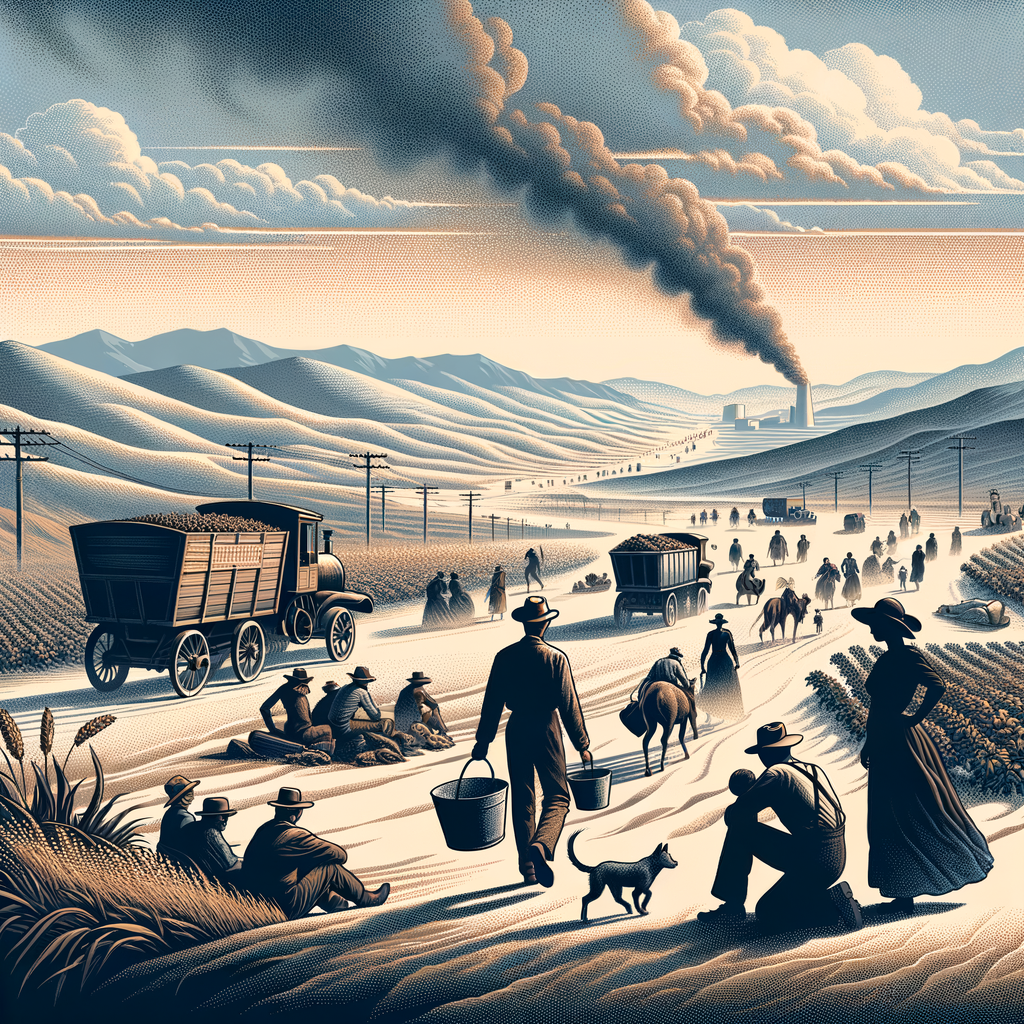
The 1920s are often remembered as a time of prosperity and progress in the United States. Known as the Roaring Twenties, this decade saw rapid economic growth, new forms of entertainment, and major cultural shifts. But by the early 1930s, the picture had changed drastically. The Great Depression had taken hold, leaving millions of Americans unemployed and struggling to get by. Among the many hardships that defined this era, few were as devastating as the Dust Bowl—a severe environmental catastrophe that compounded the challenges already faced by Americans living in the Great Plains. In this article, we’ll explore what caused the Dust Bowl, how it affected families on the plains, and why so many of them uprooted their lives to migrate westward, particularly to California.
The Roots of the Dust Bowl
Overfarming and Economic Pressures
During World War I (1914–1918), there was a high demand for agricultural products. Farmers in the Great Plains—covering states like Oklahoma, Texas, Kansas, Colorado, and New Mexico—plowed up millions of acres of native grasslands to plant more wheat and other profitable crops. This led to short-term gains, but it set the stage for disaster. Overfarming stripped the soil of its protective layer of prairie grasses. Without those grasses to hold the topsoil together, the land became vulnerable to erosion.
When the war ended and crop prices fell in the 1920s, many farmers tried to compensate for lower profits by planting even more acres. This aggressive approach to farming further destabilized the soil. Although signs of trouble were apparent, few farmers had the economic flexibility to implement sustainable farming techniques. The boom-time mentality of the Roaring Twenties encouraged expansion rather than caution, and people believed the good times would continue indefinitely.
Drought and Windstorms
In the early 1930s, a severe drought hit the Great Plains. With little rain to nourish the soil, the land dried out rapidly. Dust became the new enemy; once-productive fields turned into barren deserts. Powerful windstorms swept across the plains, picking up massive clouds of dust and carrying them for miles. These storms were often called “Black Blizzards” because they blotted out the sun and left a thick layer of dust on everything in their path.
Topsoil is vital for farming, and once it blows away, it can take decades—or even centuries—to rebuild naturally. The loss of topsoil meant that even when rain returned, it would be difficult for crops to thrive. This created a dire situation for farm families, who had to contend not only with the economic hardships of the Great Depression but also with environmental disaster on their own land.
The Human Toll
The Dust Bowl wasn’t just an environmental event—it was a human crisis. Families watched helplessly as their livelihoods literally blew away. Dust infiltrated homes, covering floors, furniture, and food. Health problems like “dust pneumonia” became widespread, especially among children and older adults. When dust storms hit, people wore masks or bandannas over their faces to keep from breathing in the debris.
This environmental catastrophe struck an already struggling region. Banks were foreclosing on farms when families couldn’t pay their mortgages, and jobs were scarce. Many farmers reached a breaking point and decided to gamble on a fresh start elsewhere. Their hopes turned toward California, a place rumored to have fruit orchards and farms in need of extra hands.
Life on the Great Plains: Daily Hardships
Coping with Dust
For those who tried to stay in the Dust Bowl region, daily life was a battle against dirt and wind. Women placed damp sheets over windows to catch dust before it made its way indoors. Families used shovels to clear out the thick layer of brown silt that piled up after a storm. Local stores sold goggles to protect people’s eyes.
Everyday tasks became monumental challenges. Cooking and cleaning were never-ending chores. Water was scarce; when it did rain, sometimes the raindrops would mix with dust, falling to the ground as muddy droplets. Livestock suffered, too. Cattle became thinner and produced less milk, making it harder for farm families to sustain themselves.
Declining Morale
As the drought persisted and the Depression dragged on, morale plunged across the Great Plains. Small-town businesses closed, forcing residents to rely on limited community resources. Neighbors helped each other when they could, sharing what little they had, but it wasn’t enough. Children were taken out of school to help with farm tasks or to support the family in any way possible. Many were sent to stay with relatives in other states, splitting up families in the process.
Heading West: The Journey to California
The Lure of the West
For many families, California represented hope, opportunity, and a chance to escape the unrelenting conditions of the Dust Bowl. The state’s agricultural sector was booming, thanks to large-scale fruit and vegetable farms. California growers needed seasonal labor to plant and harvest crops like oranges, grapes, and lettuce.
Word spread that California farmers were looking for workers. While wages were meager, they often seemed better than what people could manage in the Dust Bowl, which was basically nothing. Families began loading up their trucks and cars—often old Ford Model Ts—packing as many belongings as they could fit. They said goodbye to the land that had failed them and set out on the long journey west.
Route 66 and Other Paths
Many Dust Bowl migrants took Route 66, the famous highway running from Chicago to Los Angeles. This iconic roadway became synonymous with westward migration. Gas stations, diners, and small motels sprung up along the route, catering to the growing number of families traveling in search of work.
However, the journey was anything but easy. Vehicles overloaded with people and possessions frequently broke down. Money was tight, and many travelers relied on free or low-cost campsites along the road. The trip could take weeks, depending on weather and mechanical issues. Migrants often sold precious heirlooms for fuel or food. Some never made it to California due to exhaustion, illness, or running out of money.
The “Okies”
The term “Okies” originally referred to people from Oklahoma, but it was soon applied broadly to all migrants fleeing the Dust Bowl, regardless of their home state. While some used the term neutrally, it often took on a derogatory tone. Californians, already grappling with their own economic struggles in the Great Depression, viewed the influx of Dust Bowl refugees with suspicion, fearing they would bring down wages or strain public services.
Despite the label and the discrimination they faced, the migrants pressed on, driven by a mix of desperation and hope. Their stories became part of a larger narrative of American resilience, illustrating both the harsh realities of environmental disasters and the human capacity to persevere.
Arrival in California: Reality Sets In
Labor Camps and Difficult Conditions
When migrants reached California, they didn’t always find the golden opportunities they had imagined. Seasonal farm work was grueling, and jobs were often scarce. Growers took advantage of the surplus of labor, driving down wages. Families would move from farm to farm, county to county, following the harvest seasons. They often lived in makeshift camps or in hastily constructed shacks with no running water or proper sanitation.
California’s labor camps became both a refuge and a new form of hardship. While some government-run camps tried to maintain decent living standards, many privately owned camps were overcrowded and unsanitary. Migrant children continued to miss school. Medical care was limited, and malnutrition became a common issue. Nevertheless, for some, even low-paying farm work was better than the dust-choked hopelessness they had left behind.
Cultural Tensions
The influx of migrants sparked cultural tensions between native Californians and newcomers. Some locals viewed the “Okies” as competition for scarce jobs. Others worried that migrants would depend on public assistance. Newspapers ran sensational stories, further fueling anti-migrant sentiment. Signs reading “No Okies Allowed” appeared in certain towns and businesses.
Despite these challenges, many migrants integrated into California’s economy over time. Some found work in canneries or in industrial sectors that sprung up around World War II. Children who traveled west with their parents gradually adapted to life in California, attending local schools and forming new friendships. Over the years, their stories would help shape the cultural identity of the American West.
Government Response and New Deal Programs
Franklin D. Roosevelt’s Administration
When Franklin D. Roosevelt took office in 1933, the country was deep into the Great Depression. One of the priorities of his New Deal was to provide relief to farmers and stabilize the agricultural sector. Programs like the Agricultural Adjustment Administration (AAA) aimed to raise crop prices by paying farmers to limit production. However, in the Dust Bowl regions, the main problem wasn’t overproduction anymore—it was a lack of viable land and water.
FDR also initiated programs to address the environmental causes behind the Dust Bowl. The Soil Conservation Service (now known as the Natural Resources Conservation Service) was created to introduce better farming practices, such as contour plowing and crop rotation. Shelterbelts—rows of trees designed to reduce wind erosion—were planted across the plains.
Camps for Migrant Workers
Recognizing the dire situation of Dust Bowl migrants in California, the federal government established the Resettlement Administration, later replaced by the Farm Security Administration (FSA). Part of their mission was to build camps for migrant workers that offered cleaner facilities, running water, and some form of community governance. While these camps were a step up from the private labor camps, they served only a fraction of the migrants in need.
Photographers like Dorothea Lange, working for the FSA, documented the lives of Dust Bowl refugees. Lange’s iconic photograph “Migrant Mother” became a symbol of the hardship and resilience of this era. These images raised public awareness and sympathy for the plight of displaced farm families, influencing support for government aid programs.
Cultural Impact: John Steinbeck and Beyond
The Grapes of Wrath
Few works of literature capture the essence of the Dust Bowl migration as vividly as John Steinbeck’s novel, The Grapes of Wrath. Published in 1939, the book follows the Joad family, who are forced off their Oklahoma farm and head to California in hopes of a better life. Steinbeck’s portrayal of the migrant experience—the grueling journey, the discrimination, and the search for dignity—resonated with readers nationwide.
Although some criticized Steinbeck for what they saw as an overly sympathetic view of migrants, the novel sparked national conversation about poverty, labor rights, and the responsibility of government. It also shone a spotlight on the environmental tragedy unfolding in the Dust Bowl states and underscored the importance of ethical labor practices in California’s agriculture.
Music and Folk Traditions
The Dust Bowl migration also found its way into the music of the 1930s. Folk singers like Woody Guthrie, himself an Oklahoman, wrote songs that chronicled the struggles of displaced farmers. Guthrie’s “Do Re Mi” cautioned migrants about the difficulties awaiting them in California, while “Tom Joad” echoed themes from Steinbeck’s novel. These songs provided a voice for the voiceless and humanized a crisis that was, for many Americans, just a distant news headline.
Through literature, music, and photography, the Dust Bowl experience left a lasting mark on American culture. These creative works kept the stories and lessons of this era alive, ensuring that future generations would understand both the scale of the disaster and the resilience of the people who endured it.
Environmental Lessons Learned
Rethinking Farming Practices
One of the most significant lessons from the Dust Bowl was the need for sustainable farming practices. Agricultural experts realized that the prairie grasses played a critical role in maintaining soil stability. Practices like crop rotation, contour plowing, and reduced tillage help prevent erosion and conserve moisture in the soil. Windbreaks and shelterbelts can slow the speed of wind traveling across farmland, reducing the amount of dust picked up.
These techniques, along with scientific advances in agriculture, have substantially reduced the likelihood of another catastrophe on the scale of the Dust Bowl. Farmers today are more aware of the delicate balance between land use and environmental health. Government agencies and universities continue to research best practices in soil and water conservation to protect against drought and erosion.
The Value of Conservation Policies
The Dust Bowl spurred the federal government to take a more active role in land and water management. Programs started under the New Deal laid the groundwork for later legislation on conservation and environmental protection. Over time, laws such as the Soil and Water Resources Conservation Act and the Conservation Reserve Program have built on these efforts, reinforcing the principle that preserving natural resources is essential for national prosperity.
While no policy can fully prevent droughts or economic downturns, the response to the Dust Bowl demonstrated that coordinated government action can mitigate the worst impacts of environmental disasters. The lessons learned continue to influence policy discussions around climate change, sustainable development, and disaster preparedness.
Broader Impact on American Society
Shifting Demographics
The Dust Bowl migration significantly changed California’s demographic landscape. Towns and cities expanded to accommodate (and sometimes to resist) the influx of newcomers. Over time, many migrant families put down roots, contributing to California’s cultural tapestry. Younger generations gained access to public education, found jobs outside of agriculture, and eventually prospered in a state that had once looked upon them with skepticism.
Other regions felt the impact as well. The population decline in parts of Oklahoma, Texas, and Kansas contributed to economic challenges in those states. Some small towns never fully recovered, while others diversified their economies over time, shifting from solely agricultural to a mix of light manufacturing, energy, or service-based industries.
Lasting Economic and Social Changes
Long after the Dust Bowl storms settled, the migration to California and other regions left a permanent imprint on American society. The collective experience of hardship fostered empathy and a shared sense of purpose in the face of adversity. It galvanized support for social safety nets, including unemployment insurance, Social Security, and other aspects of the evolving New Deal programs.
Additionally, organizations like labor unions gained momentum, partly due to the large pool of workers seeking fair wages and better working conditions. Although the gains weren’t immediate or universal, they set a precedent for collective action. America’s post-Depression identity was shaped by a blend of rugged individualism and a recognition that, sometimes, people need a hand up from their neighbors and their government.
Conclusion
The story of the Dust Bowl and the migration to California is a tale of extreme hardship, human resilience, and the indomitable quest for a better life. It began with the promise of prosperity during the Roaring Twenties and escalated into an environmental calamity that converged with the Great Depression. Thousands of families found themselves with parched land and impossible economic circumstances, pushing them to journey west along roads like Route 66 in search of jobs, stability, and renewed hope.
Yet arriving in California presented its own set of challenges—discrimination, low wages, and harsh living conditions in crowded labor camps. Government responses, including New Deal programs, provided some relief and set important precedents in agricultural policy and social welfare. In the midst of these trials, influential works of literature, photography, and music emerged, capturing the pain and fortitude of those who lived through this era.
From an environmental perspective, the Dust Bowl taught the nation the importance of sustainable farming and conservation. Policies and practices introduced in the aftermath have helped prevent similar disasters on the same scale. The migration itself transformed the cultural and demographic landscape of California, leaving a legacy still felt in communities across the state.
Ultimately, the Dust Bowl and the Great Depression remind us of the delicate interplay between human activity and the natural world. They also highlight the power of human perseverance. Despite the storms, the prejudice, and the economic turmoil, many who made that risky westward journey managed to rebuild their lives. In doing so, they helped shape modern American society—and offered lessons in resilience and resourcefulness that continue to guide us today.
Frequently Asked Questions
1. What caused the Dust Bowl, and how did it affect farmers in the affected regions?
The Dust Bowl was primarily caused by a combination of severe drought and poor land management practices in the Great Plains region of the United States during the 1930s. Farmers at the time had extensively plowed the native grasslands to plant wheat and other crops, encouraged by high demand during World War I and technological advancements in farming equipment. These practices stripped the soil of its vital root structure, leaving it vulnerable to erosion.
When the drought hit, the lack of sufficient rain and the inability of the soil to retain moisture created conditions ripe for disaster. With the topsoil loosened, strong winds lifted immense clouds of dust, creating “Black Blizzards” that blotted out the sun and spread across the country. The Dust Bowl devastated agricultural communities, with farms becoming barren wastelands. Many farmers were financially ruined as their crops failed and their land turned worthless, forcing them to abandon their homes in search of better opportunities elsewhere.
2. Why did so many “Okies” and others affected by the Dust Bowl head to California, and what was the journey like?
“Okies” is a term that came to describe the migrants, many from Oklahoma, who fled the devastated regions of the Dust Bowl for California. People were drawn to California because it was perceived as a land of opportunity with fertile land and the promise of jobs in agriculture. The state’s mild climate and growing economy represented hope for a better future despite the ongoing Great Depression.
The journey to California was fraught with difficulties. Many traveled along Route 66, often in dilapidated vehicles overloaded with their possessions. The road was long, with few resources and accommodations available to the travelers. Migrants faced car breakdowns, lack of food and money, and hostility from locals who saw them as a threat to scarce jobs. Despite these hardships, thousands pressed on, driven by desperation and determination to find a better life.
3. What challenges did migrants face upon arriving in California, and how did they cope?
Migrants arriving in California encountered numerous challenges, despite their hope for a fresh start. Large numbers of newcomers caused a labor surplus, leading to fierce competition for jobs. Many ended up working in agriculture, picking fruit and vegetables for low wages under harsh conditions. The work was often seasonal, leaving families without income during off-peak seasons.
Housing was another significant issue. Many migrants constructed makeshift camps, sometimes referred to as “Hoovervilles,” with inadequate sanitation and living conditions. Discrimination and hostility from some Californians further complicated their attempts to settle. To cope, migrants formed tight-knit communities, offered mutual support, and sometimes organized to demand better working conditions and wages. Government programs, partly initiated by the New Deal, also offered some relief and support during this time.
4. How did the Dust Bowl migration impact California and its communities?
The influx of migrants had profound effects on California’s societal and economic landscape. The state’s population swelled, placing a strain on resources, infrastructure, and public services. The local workforce was vastly increased, but the sudden rise in available labor drove wages down and contributed to tensions between locals and newcomers competing for jobs.
Despite these struggles, the migrants eventually integrated into California’s economic framework, contributing to the state’s thriving agricultural industry. Cultural aspects of the migrants’ heritage, such as music, food, and traditions, also influenced California culture, leaving a lasting legacy. This period highlighted issues of labor rights and poverty, which spurred legislative changes to address working conditions and welfare.
5. What long-term environmental and policy changes resulted from the Dust Bowl experience?
The environmental lessons from the Dust Bowl prompted significant policy and land management changes. The federal government implemented new farming techniques to combat soil erosion and promote conservation. The Soil Conservation Service (now the Natural Resources Conservation Service) was established to provide education and support to farmers in adopting sustainable practices.
Initiatives like crop rotation, contour plowing, and the planting of windbreaks were encouraged to rebuild the damaged ecosystems. On a policy level, the experiences of those affected by the Dust Bowl and the subsequent migration contributed to broader New Deal reforms that addressed economic inequality and established social safety nets for struggling Americans. These changes represented an acknowledgment of the need for both environmental stewardship and economic support systems to prevent similar future crises.