
World War II was a global conflict that tested the resilience and determination of countries around the world. Among the many battles and operations that defined this period, the D-Day Invasion of June 6, 1944, stands out as one of the most critical turning points. Also known as Operation Overlord, D-Day involved a massive assault on the beaches of Normandy, France, by Allied forces led primarily by the United States, the United Kingdom, and Canada. This operation marked the beginning of the end for Nazi Germany, set the stage for the liberation of Western Europe, and showcased the extraordinary valor of thousands of soldiers, airmen, and sailors. In this article, we’ll take a comprehensive look at the events leading up to D-Day, the meticulous planning behind the operation, the day of the landings itself, and the long-term significance of this bold endeavor.
Setting the Stage: Prelude to D-Day
Before delving into the invasion’s impact, it’s essential to understand the context in which it took place. By the early 1940s, Nazi Germany, under Adolf Hitler, had overrun much of mainland Europe. Countries such as France, Belgium, and the Netherlands had fallen, while Great Britain found itself under constant threat from German air raids during the Battle of Britain. The Soviet Union was under a brutal siege on the Eastern Front after Germany launched Operation Barbarossa in 1941.
Meanwhile, across the Atlantic, the United States entered World War II after the Japanese attack on Pearl Harbor on December 7, 1941. Though America had been lending support to the Allied cause through measures like the Lend-Lease Act, the direct declaration of war accelerated its involvement. U.S. forces joined Britain and the Soviet Union as the major Allied powers, with the shared objective of defeating the Axis powers: Nazi Germany, Fascist Italy, and Imperial Japan.
Despite early setbacks, the Allies recognized that an invasion of German-occupied Western Europe was essential to relieve the Soviet Union and ultimately defeat the Nazi regime. Discussions about opening a “Second Front” had been underway for some time. The British were initially hesitant, given their experiences at the disastrous Dieppe Raid in 1942. However, as the war progressed, planning intensified for a massive amphibious assault to liberate France and push east toward Germany.
The Planning of Operation Overlord
The Allied high command, featuring prominent figures such as General Dwight D. Eisenhower (Supreme Allied Commander), British General Bernard Montgomery, and American General Omar Bradley, recognized that the success of Operation Overlord hinged on intricate planning and coordination. They needed to assemble a huge coalition of forces, gather countless supplies, and maintain strict secrecy to catch the Germans off guard.
1. Choosing Normandy
Several locations in Western Europe were evaluated for the invasion, with the Pas-de-Calais region initially appearing as the most direct route from Britain to France. However, German forces also viewed Pas-de-Calais as the likeliest invasion point and heavily fortified it. Normandy, though more challenging, offered beaches suitable for landing and was less anticipated by the German high command. Additionally, the Allies undertook an elaborate deception campaign known as Operation Fortitude. This initiative used fake equipment, phantom army units (including the famous “First U.S. Army Group” supposedly led by General George Patton), and fake radio transmissions to keep German attention focused on Pas-de-Calais.
2. Logistics and Training
Pulling off the largest amphibious assault in history required extraordinary logistics. Troops trained for months in amphibious landings, urban combat, and close-quarters fighting. Engineers developed specialized vehicles, including amphibious tanks called “DD tanks,” and “Hobart’s Funnies,” which were adapted to handle obstacles like barbed wire and minefields on the beaches.
3. Air and Naval Power
Control of the skies and seas was crucial. In the months leading up to D-Day, the Allies launched relentless bombing campaigns on German transportation networks, airfields, and coastal defenses. This effort aimed to disrupt Germany’s ability to move reinforcements quickly and to weaken the Atlantic Wall, the extensive fortifications along Europe’s western coast. The Royal Navy and the U.S. Navy worked together to protect convoys across the Atlantic and prepare for the channel crossing, ensuring that Allied forces would not be intercepted en route to France.
4. Intelligence and Timing
Allied intelligence teams relied on aerial reconnaissance photos, reports from the French Resistance, and information gleaned from decrypted German communications through the ULTRA program. Timing was everything. The Allies needed a favorable tide, a full moon for paratrooper drops, and decent weather to ensure the operation’s success. The original invasion date of June 5 was postponed by a day because of poor weather reports. Had Eisenhower stuck to June 5, the stormy seas might have spelled disaster. On June 6, 1944, despite rough conditions, the invasion proceeded, marking one of the most pivotal dates in military history.
The Day of the Landings: Beaches and Battlefields
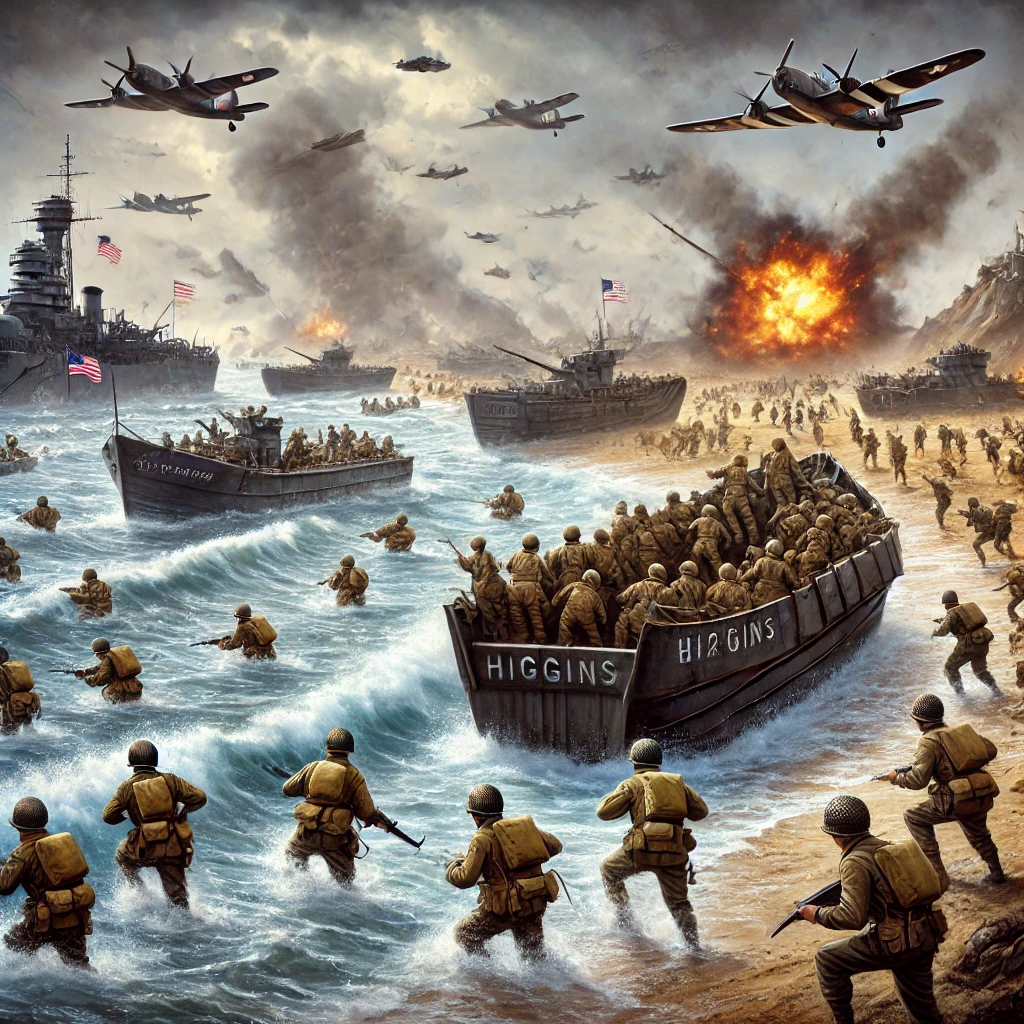
On D-Day itself, Allied forces landed on five sectors of the Normandy coastline. Each beach—Utah, Omaha, Gold, Juno, and Sword—had unique terrain challenges and faced different levels of German resistance. By the end of the day, the Allies had established a foothold in Nazi-occupied France, though at a terrible cost in lives.
1. Airborne Operations
Shortly after midnight on June 6, thousands of paratroopers from the U.S. 82nd and 101st Airborne Divisions, along with British and Canadian airborne units, dropped behind enemy lines. Their objectives included capturing key bridges, securing causeways, and disrupting German defenses to ease the path for the main amphibious force. The drops were chaotic—poor weather and heavy anti-aircraft fire scattered many paratroopers. Nonetheless, their efforts sowed confusion among German defenders and prevented swift counterattacks.
2. Utah Beach
American forces led the assault on Utah Beach at the westernmost point of the landings. Thanks to effective bombing and naval gunfire support, plus elements of luck in landing slightly south of the intended zone, the troops at Utah faced lighter resistance than expected. They managed to secure the beach and move inland, linking up with airborne forces further inland.
3. Omaha Beach
Omaha was a different story. Surrounded by steep cliffs and heavily fortified by the German 352nd Infantry Division, Omaha became the most brutal and costly beach for the Americans. Machine-gun fire, mortar shells, and artillery decimated landing craft and pinned down soldiers on the shore. Many factors contributed to the chaos, including rough seas that wreaked havoc on amphibious tanks and landing craft. Despite staggering losses, the U.S. forces eventually broke through the German defenses, though it took hours of intense fighting.
4. Gold, Juno, and Sword Beaches
British troops landed at Gold and Sword Beaches, encountering moderate resistance and employing specialized tanks to break through beach obstacles. Meanwhile, Canadian troops stormed Juno Beach, confronting heavy defenses but ultimately pushing inland. By nightfall on June 6, Allied forces had gained a vital foothold on all five beaches.
Immediate Impact and Strategic Significance
Securing the beaches of Normandy was only the first step in a much larger campaign. Yet the accomplishment of D-Day cannot be overstated. The immediate outcomes were a series of breakthroughs that signaled the beginning of the end for Nazi Germany.
1. A Critical Second Front
One of the invasion’s primary objectives was to create a formidable second front in Western Europe, compelling the Germans to divert resources from the Eastern Front. This relieved immense pressure on the Soviet Union, which had been locked in a grueling struggle against Nazi forces. The establishment of a Western Front also hastened the overall pace of the war, as Germany now found itself sandwiched between two massive Allied offensives.
2. Erosion of German Defenses
The success of D-Day highlighted weaknesses in the German command structure and in the Atlantic Wall defenses. Factors such as the German reliance on static defenses, lack of mobility, and the rigid chain of command under Hitler contributed to their inability to repel the invasion. As Allied forces pressed inland, German units scrambled to form a cohesive response—an effort hindered by Allied air superiority that destroyed bridges, railways, and roads critical for moving troops and supplies.
3. Boost to Allied Morale
The invasion’s triumph had a profound effect on the morale of Allied nations. For civilians and military personnel alike, the landings offered hope that the war could and would be won. The news of a successful beachhead in France resonated with people across occupied Europe, inspiring resistance movements to intensify their efforts against the Nazis.
4. Consolidation and Expansion
After establishing beachheads, the Allies turned their attention toward capturing key ports, such as Cherbourg, and uniting all five beachheads into a single, unbroken front. This involved cutting through the dense hedgerow country of Normandy, a task complicated by the region’s terrain. Nonetheless, the Allies gradually expanded their foothold and began the advance toward Paris, which would be liberated in August 1944.
The Battle of Normandy: Beyond the Beaches
While D-Day is often the primary focus, the subsequent Battle of Normandy (June–August 1944) was equally significant in deciding the war’s outcome. This multi-month offensive aimed to secure critical areas in northern France, push back German forces, and ultimately facilitate a drive toward Germany itself.
1. The Hedgerow Fighting
One of the lesser-discussed elements of the Normandy campaign is the nature of the terrain. The region’s “bocage” (hedgerows) created a maze of thick shrubbery and earthen walls that provided excellent defensive cover for German troops. Allied units found themselves engaged in close-quarters combat, with each advance measured in yards rather than miles. Specialized tactics and equipment—like tank-mounted hedge cutters—were eventually developed to break through these natural barriers.
2. Operation Cobra and the Breakout
In late July 1944, U.S. General Omar Bradley launched Operation Cobra, a concentrated assault designed to break through German lines and enable a rapid advance. American forces capitalized on heavy bombings and opened a gap that allowed an armored thrust through the German defenses. This breakout led to a sweeping encirclement of German forces in the Falaise Pocket, trapping thousands of Axis soldiers and paving the way for the liberation of Paris.
3. Liberation of Paris and the Road to Germany
Following the success of Operation Cobra, Allied forces moved quickly across France. The liberation of Paris on August 25, 1944, symbolized a critical milestone. Nazi occupation of France had lasted four years, and now, with the capital free, Allied attention shifted to pushing the Germans back to the Rhine and beyond. By late 1944, as the Soviets pressed in from the east, it was clear that Germany was nearing collapse.
Long-Term Consequences for World War II
The D-Day Invasion and the Battle of Normandy had significant and long-lasting consequences for the trajectory of World War II.
1. Accelerated Defeat of Nazi Germany
The opening of a Western Front forced Germany to split its already stretched forces, contributing to their eventual defeat. Although many fierce battles lay ahead—the Battle of the Bulge in late 1944 being a notable example—D-Day set the wheels in motion for a systematic Allied approach that closed in on Germany from both east and west. By May 1945, the Third Reich capitulated, bringing the war in Europe to an end.
2. Shift in Global Power Dynamics
The success of Operation Overlord solidified the United States and the Soviet Union as dominant forces in global politics and military capability. Though the war was far from over in the Pacific Theater, the Normandy landings demonstrated the logistical prowess, industrial capacity, and unity of purpose among the Allies, particularly between the U.S. and Britain. This unity influenced the post-war order and laid the groundwork for the Cold War dynamics that would soon emerge between the U.S. and the Soviet Union.
3. Advances in Military Strategy and Technology
D-Day pushed the boundaries of amphibious warfare. The necessity of coordinating land, sea, and air forces in a massive operation contributed to innovations in planning, deception tactics, specialized vehicles, and combined-arms strategies. Lessons learned from D-Day would influence military doctrine for decades to come, informing strategies in conflicts such as the Korean War, the Vietnam War, and beyond.
4. Human Cost and the Price of Liberation
Though we often focus on the success of the operation, the Normandy landings and subsequent campaign came at a high cost. The exact number of Allied casualties on D-Day alone is difficult to pinpoint but commonly estimated at over 10,000, with several thousand killed. Thousands more German troops and French civilians lost their lives. The cost in human suffering underscores the sacrifices that were made to end Nazi tyranny and liberate occupied nations.
Personal Stories of Courage and Endurance
When discussing the significance of D-Day, it’s crucial to acknowledge the human element. The invasion was carried out by ordinary men—many just out of high school or college—who found themselves in extraordinary circumstances. Paratroopers, for instance, jumped into the darkness, not knowing if they would land in a flooded field, a German strongpoint, or behind friendly lines. Sailors guided landing craft through rough waters while under enemy fire. Doctors and medics worked around the clock to treat wounds in makeshift aid stations.
Stories of heroism abound, from Army Rangers climbing the cliffs of Pointe du Hoc to neutralize German artillery, to medics like John H. “Jack” Prior who braved gunfire to tend to the injured. These personal accounts serve as lasting reminders that war is fought not just by generals and politicians, but by individuals whose courage shapes history.
The Legacy of D-Day
The impact of D-Day continues to resonate well beyond the immediate scope of World War II.
- Commemorations and Memorials
Every year, nations commemorate the anniversary of D-Day to honor the veterans who took part in the invasion and to remember those who made the ultimate sacrifice. Ceremonies along the beaches of Normandy and in various Allied nations underscore the respect and gratitude felt for the courage of that generation. Monuments, museums, and preserved landing sites serve as living history lessons, educating visitors about the events of June 6, 1944. - Strengthening Transatlantic Alliances
D-Day exemplified the power of multinational cooperation, particularly between the United States, the United Kingdom, and Canada. This cooperation would later manifest in alliances such as NATO, founded in 1949, which sought to secure a lasting peace in Europe by uniting Western nations in collective defense. The collaborative spirit that was forged on the beaches of Normandy paved the way for future joint military and diplomatic efforts. - Educational Importance
For students of history, D-Day stands as a case study in planning, logistics, courage, and sacrifice. It offers insights into everything from political decision-making and military strategy to human psychology and resilience. Schools and universities around the world incorporate lessons from D-Day into their curricula, emphasizing its role as a decisive event that shaped the modern era. - Reminder of the High Stakes of War
Perhaps most importantly, D-Day serves as a reminder of the enormous stakes of global conflict. The sacrifices made on the beaches of Normandy illustrate the horrifying costs of war, while also demonstrating that determined, united action against tyranny can fundamentally alter the course of history.
Reflections on D-Day’s Continued Significance
It’s been decades since the soldiers of D-Day waded ashore under unrelenting fire, but their impact remains as powerful today as it did in 1944. The operation’s success was not guaranteed; it was the product of countless individual acts of courage, months of meticulous planning, and the combined efforts of multiple Allied nations. Had D-Day failed, the course of World War II—and potentially the shape of the post-war world—might have been drastically different.
By examining D-Day, students of history gain valuable insights into how cooperation, strategic innovation, and sheer perseverance can achieve results that seem impossible. From the vantage point of the 21st century, we can look back in awe at the logistical challenges, technological hurdles, and moral imperatives that defined Operation Overlord. This monumental undertaking ultimately paved the way for the liberation of millions and laid the groundwork for a new international order.
It is also worth noting that, while D-Day is often framed primarily as an American operation, the reality was multinational. British, Canadian, Polish, French, and troops from other Allied nations also played indispensable roles. Their combined efforts exemplify the ethos of unity and shared sacrifice that propelled the Allied victory in Europe.
Lessons for Future Generations
Understanding the significance of D-Day is more than just recounting a historical victory; it’s about gleaning lessons that remain relevant. For instance, the importance of intelligence, planning, and morale stands out. Allied leaders worked tirelessly to outmaneuver German intelligence, maintain secrecy, and keep troops focused on the goal despite formidable obstacles.
Furthermore, D-Day highlights the power of collaboration. No single Allied nation could have mounted an operation of such scope alone. The broad coalition—encompassing political leaders, generals, soldiers, scientists, and civilian workers—demonstrated that pooling resources and expertise can achieve remarkable feats. This lesson transcends warfare and applies to modern global challenges, from humanitarian crises to climate change.
Finally, D-Day serves as a solemn reminder of the profound cost of warfare. The beaches of Normandy are marked by cemeteries and memorials dedicated to those who never returned. These hallowed grounds stand as a testament to the sacrifices made by an entire generation. When individuals learn about D-Day, they often come away with a renewed appreciation for peace, diplomacy, and the courage required to confront threats when they arise.
Conclusion
D-Day, or Operation Overlord, represents one of the most pivotal moments in American and world history. The invasion not only opened a new front against Nazi Germany but also showcased the power of cooperation, the value of meticulous planning, and the bravery of countless individuals. In the broader narrative of World War II, it stands out as a day when the tide definitively turned in favor of the Allies, setting the stage for the liberation of Europe and the ultimate defeat of the Axis powers.
The significance of the D-Day Invasion lies in both its immediate military outcomes and its enduring legacy. It accelerated the collapse of Nazi Germany, reshaped international alliances, and left behind a wealth of lessons on unity, strategy, and sacrifice. Even now, decades later, the stories of those who stormed the beaches and parachuted into the night inspire awe and respect. They remind us that history is shaped by individuals and nations willing to stand against tyranny and fight for a more just world.
Today, whether you’re walking along the sands of Omaha Beach, visiting the American Cemetery at Colleville-sur-Mer, or studying the operation in a classroom, D-Day remains a poignant chapter in the annals of American history—indeed, in global history. It’s a testament to what can be accomplished when free nations unite behind a common cause. By remembering the sacrifices made on June 6, 1944, we can better appreciate the freedom we enjoy today and ensure that the lessons of the past continue to guide us toward a more peaceful future.
Frequently Asked Questions
1. What was the significance of D-Day in World War II?
D-Day, launching on June 6, 1944, was one of World War II’s most defining moments. It significantly altered the course of the war as it marked the start of the Allied forces’ invasion of German-occupied Western Europe. By coordinating a large-scale assault on the beaches of Normandy, the Allies gained a crucial foothold in France. This was the beginning stage for a larger campaign to liberate Europe from Nazi control. D-Day’s success weakened Nazi Germany’s grip on Europe, leading to a domino effect of engagements that would ultimately hasten the Allies’ victory. In essence, this strategic maneuver shifted the balance of power, reinvigorating Allied momentum and marking the operationally pivotal initiation of the end of Nazi oppression and occupation.
2. How did the planning and execution of D-Day unfold?
The planning for D-Day was meticulous and required months of preparation. Operation Overlord, as it was codenamed, involved deceptive measures such as misinformation to mislead the Germans about the actual invasion location. The extensive planning spanned logistics, intelligence, and material supply to facilitate the amphibious assault. On the day of the invasion, over 156,000 troops from the United States, the United Kingdom, Canada, and other Allied nations stormed the fortified beaches of Normandy under challenging weather. A complex web of air and naval forces supported this audacious attack. The courage, strategy, and coordination on D-Day demonstrated the relentless resolve of the Allied forces and their commitment to dismantling the oppressive Nazi regime.
3. Why was Normandy chosen as the landing location for D-Day?
Normandy was strategically selected for a variety of reasons. The choice was influenced by its geography, as the beaches offered sufficient landing areas and were within the range of supporting air cover from the United Kingdom. Furthermore, Normandy was less fortified compared to the Pas de Calais region, which was the expected target according to German intelligence. Choosing Normandy allowed the Allies to engage enemy forces in a location where they were less prepared, diminishing their capacity for immediate counterattack and maximizing the potential for securing a decisive foothold in France. This strategic choice was integral in ensuring the operational success of D-Day, laying the groundwork for the liberation of Western Europe.
4. What challenges did the Allies face during the D-Day invasion?
The Allies faced numerous challenges during the D-Day invasion. The operation involved overcoming formidable German defenses, including concrete bunkers, extensive networks of obstacles on the beaches, and machine-gun nests. Additionally, the weather conditions were less than ideal, with delayed landings due to rough seas and cloudy skies. This added complexity and uncertainty to the operation. Troops also had to navigate treacherous waters and face heavy enemy fire as they approached the shore. Despite these challenges, intricate planning, bravery, and sheer determination enabled the Allies to advance past the initial hurdles, securing vital beachheads that were crucial for further operations in the European theater.
5. What was the aftermath of D-Day for both the Allies and the Axis powers?
The aftermath of D-Day was transformative for World War II’s trajectory. For the Allies, it marked a significant victory that galvanized further assaults on Nazi-occupied territories. The successful beachhead landings facilitated the opening of the Western Front, relieving pressure off the Soviet forces on the Eastern Front. This critical milestone intensified the Allied push towards Germany, culminating in the liberation of Paris and eventually leading to the collapse of the Nazi regime. Conversely, for the Axis powers, particularly Germany, D-Day was a devastating blow to their war efforts. It strained their military resources as they faced battles on multiple fronts and disrupted their strategic defense operations across Europe. The inability to repel the D-Day invasion underscored significant strategic vulnerabilities and set in motion a sequence of military defeats that would contribute to the end of World War II.