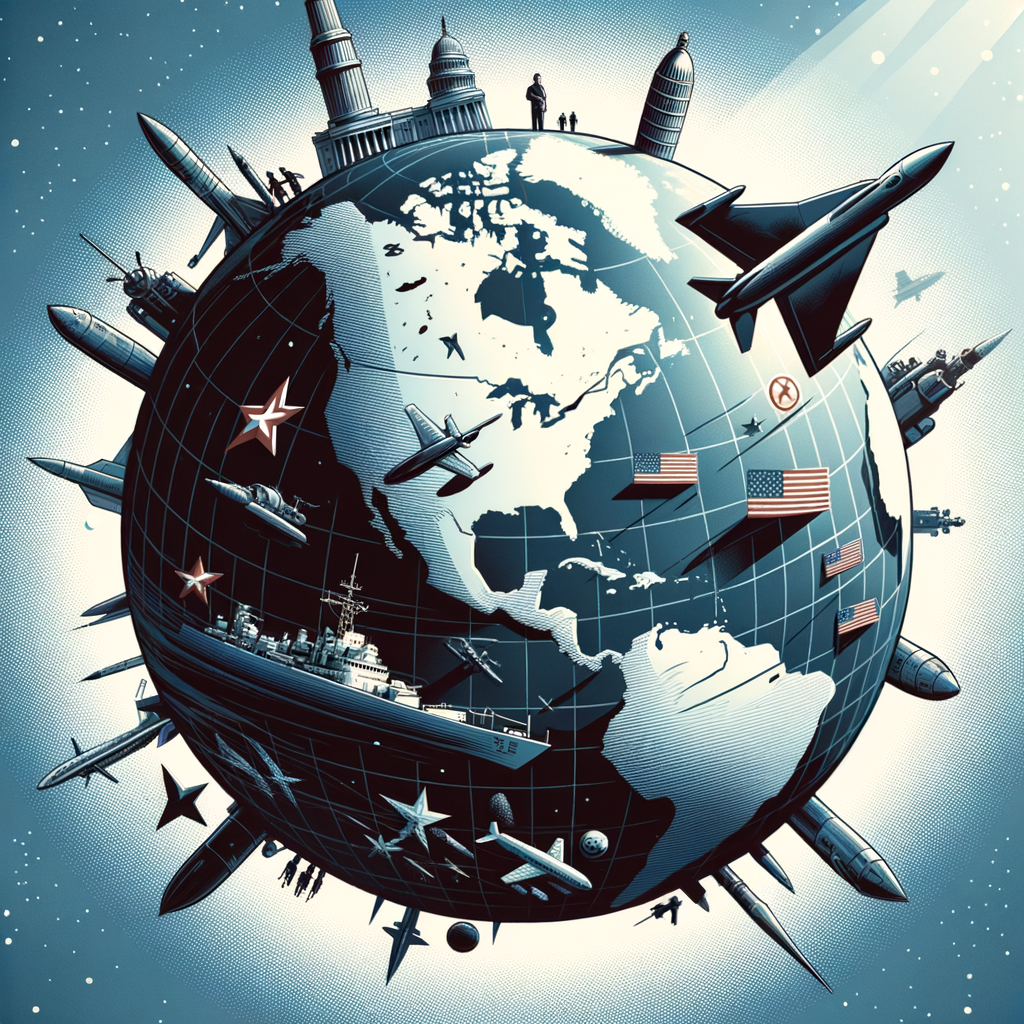
The Cold War stands as a defining period in global history, markedly shaping the contours of modern foreign policy. It spanned several decades from the end of World War II in 1945 until the collapse of the Soviet Union in 1991. This global stand-off predominantly involved two superpowers: the United States, championing capitalism and democracy, and the Soviet Union, propagating communism. Their rivalry transcended mere political differences and resulted in a multifaceted confrontation that affected virtually every aspect of international relations. Understanding the influence of the Cold War is crucial in analyzing contemporary foreign policy issues because the vestiges of this era continue to shape the geopolitical landscape. In this article, we delve into the profound impact of the Cold War on modern foreign policy, examining the promotion of ideological alignment, the militarization of international relations, and the establishment of multilateral agreements and organizations that continue to influence the global order today. Through an exploration of these factors, we will reveal how the Cold War laid the foundation for the foreign policies we see implemented by nations around the world today.
From containment strategies to deterrence doctrines and proxy wars, the impacts of these historical elements have illustrated how past conflicts and rivalries continue to influence strategic decision-making processes. Various countries’ foreign policies bear the indelible marks of Cold War strategies. In particular, the formation of military alliances, the development of awesome military capabilities, and the manipulation of public opinion were prime strategies during this era; they remain in practice today under various guises and modifications. Furthermore, as contemporary global powers navigate issues like nonproliferation and humanitarian intervention, understanding the Cold War’s influence sheds light on how nations balance security interests with international cooperation.
The initial motivations of the Cold War actors and how these have evolved or stayed the same in modern times warrant thorough examination. The ideological battle that characterized the Cold War was not just about power but also about influence and securing allies across the globe. With the propagation of democratization and liberalization by Western countries and contrasting occurrences steering toward isolationism or strategic partnerships among other global players, the Cold War impacts become pivotal in the deciphering of modern foreign relations and policies. As we progress through this article, the legacy of these complex interrelations will unravel, providing a backdrop to understanding current political tension and strategies in global diplomacy.
The Ideological Divide and Its Modern Implications
During the Cold War, the ideological divide was a primary aspect that dictated foreign policies across the globe. Capitalism versus communism served as the precursor to numerous international alignments and conflicts. The USA and its allies promoted the spread of democracy and economic liberalism, while the USSR sought to expand communism across continents, augmenting ideological rifts that have persevered long after the Cold War. This ideological confrontation resulted in significant alignments and realignments globally, with various countries aligning with either bloc for economic or military assistance.
The Cold War’s legacy in ideological battles can still be seen today. The ideological influence shapes the way nations form alliances and cooperatives. For instance, the tensions between the United States and current communist nations, such as China and North Korea, can be partly traced back to Cold War dynamics. The division persists in how economic systems are structured, international trade relations are conducted, and how democratic and autocratic ideals are upheld in various states. Modern foreign policies often adopt concepts of ‘soft power’ and ‘cultural diplomacy’ rooted in Cold War strategies, to influence global public opinion in favor of certain governance models.
Militarization and the Nuclear Deterrence Doctrine
The Cold War era was characterized by a significant buildup of military arsenals, most notably nuclear weapons. The arms race that ensued led to a doctrine of mutual assured destruction (MAD), where neither superpower could risk initiating a conflict without ensuring its own destruction. This doctrine influenced Cold War policies and has continued to affect modern foreign policy through deterrence strategies. The nuclear capabilities acquired during this time are still active parts of national security frameworks around the world.
The continuation of arms agreements and treaties, such as the Strategic Arms Reduction Treaty (START) and the Treaty on the Non-Proliferation of Nuclear Weapons (NPT), are directly rooted in the Cold War era as nations aim to prevent nuclear proliferation while maintaining deterrence. The logic of deterrence still dominates strategic thought processes in modern foreign policy, shaping interactions among nuclear and non-nuclear states alike. This has been particularly evident in recent dealings with countries like Iran and North Korea, where nuclear capability discussions are central to international negotiations and diplomatic engagements.
Formation of Military Alliances
During the Cold War, military alliances were forged to solidify ideological camps. NATO was established in 1949 to defend Western interests against potential Soviet aggression, while the Warsaw Pact was formed in 1955 demonstrating a Soviet-led counterbalance. These alliances obliged member nations to support each other militarily, shaping foreign policies to include collective defense doctrines that are still operational today.
Today’s military alliances still reflect Cold War-era structures and philosophies. NATO has expanded its membership to include nations once under Soviet influence, continually adapting its role in response to changing threats. The East Asian region, influenced by Cold War dynamics, saw the formation of alliances between the U.S. and countries like Japan and South Korea, reinforced by military agreements. Such longstanding alliances continue to dictate foreign policy decisions, involving military presence, cooperative defense programs, and crisis management. These factors reflect the enduring influence of Cold War ideologies in modern geopolitical tactics and alignments.
Espionage, Information Warfare, and Propaganda
The Cold War saw unprecedented levels of espionage, with intelligence agencies playing vital roles in national security and foreign diplomacy. Both the United States’ CIA and the Soviet Union’s KGB engaged in covert operations, counterintelligence, and propaganda. The spread of misinformation and influential narratives was central to the Cold War strategy for both blocs as they sought to weaken each other’s ideological stronghold and garner global support.
In modern times, these espionage tactics have evolved into sophisticated cyber warfare and information warfare strategies. Similar to Cold War days, nations wield control over digital information, employing cyber operations to gain intelligence, disrupt adversary operations, and influence elections. The rise of social media has intensified this type of modern warfare, with state and non-state actors using these platforms to promote propaganda, conduct psychological operations, and sway public opinion worldwide. As foreign policy adapts, it is necessary to recognize how these Cold War legacies mold contemporary strategies, especially with considerations of cyber defenses and counterintelligence policies becoming vital components of national security agendas.
Economic Influence and Aid Allocations
Economic policies were also sharply shaped by Cold War dynamics, where foreign aid became a tool for ideological expansion. Both the United States and Soviet Union offered financial aid and economic assistance to nations in return for political allegiance. The Marshall Plan, which aimed to rebuild Western European economies, also aimed at preventing the spread of communism while gaining strong allies. Conversely, the Soviets invested in developing industries within aligned countries, especially in Eastern Europe, to strengthen their sphere of influence.
The modern impact is reflected in today’s international economic strategies and assistance models. Foreign aid is still heavily influenced by political motivations, seen in how countries distribute financial and developmental aid to garner diplomatic support and strategic advantages. Similarly, multilateral financial institutions, such as the IMF and World Bank, initially influenced by Cold War politics, continue to structure aid and development programs that could encourage favorable political systems and economic models. Understanding these connections helps in analyzing modern economic foreign policies and who benefits from such exchanges.
Formation and Strengthening of Multilateral Organizations
Another significant legacy of the Cold War that resonates in today’s foreign policy is the establishment and strengthening of international organizations designed to maintain peace and stability. The United Nations, initially structured post-World War II, saw its role solidify during the Cold War as it became a platform for diplomatic negotiations and peaceful conflict resolutions. Institutions such as the International Monetary Fund, the World Bank, and the World Trade Organization gained prominence during this time, facilitating global economic cooperation despite ideological differences.
Today, multilateral organizations continue to influence global foreign policy, providing platforms for dialogue on issues spanning nuclear proliferation, climate change, and human rights. Cold War-era establishments of these organizations allow for multinational approaches to conflicts and complex global challenges. Their influence on contemporary diplomacy and foreign policy demonstrates how structures built to stabilize post-war tensions have evolved into critical pillars of modern international order.
Conclusion
In conclusion, the Cold War’s myriad influences on modern foreign policy are undeniable and complex. The ideological divides, militarization strategies, formation of alliances, and the rise of espionage tactics from that era laid a foundation that governments continually navigate in contemporary geopolitical environments. From the extensive influence over ideologically aligned countries to the controlled expansion of technological capacities, these historical dimensions place historical context behind many of today’s critical international interactions and alignments.
Modern foreign policy, therefore, bears the Cold War’s imprints, particularly in how nations both cooperate and confront each other in a rapidly changing global landscape. By understanding how past conflicts fundamentally shaped current systems, policymakers can better evaluate strategic considerations and potential new alliances. Recognizing these continuities can also guide initiatives to address the challenges of emerging threats like cyber warfare and global terrorism, both of which echo the Cold War’s initiatives within a modern technological context.
Ultimately, the legacy of the Cold War remains an extensive tapestry, intertwined within the fabric of current international relations, shaping diplomatic engagements, alliances, conflicts, and resolutions. Policymakers and scholars must continually interpret these legacies to navigate the complex geopolitical realm effectively, recognizing the burden of history while embracing avenues for peace and cooperation.
Frequently Asked Questions
1. How did the Cold War shape the nature of international alliances?
The Cold War significantly influenced international alliances by dividing the world into two primary camps: the Western bloc led by the United States and the Eastern bloc led by the Soviet Union. Countries aligned with these superpowers based on ideological, economic, and military interests. The North Atlantic Treaty Organization (NATO) was formed in 1949, establishing a collective defense system among the US, Canada, and several Western European nations as a deterrent against Soviet aggression. In response, the Warsaw Pact was established in 1955, creating a similar alliance of Soviet-aligned countries. Even today, NATO remains a key military alliance influencing foreign policy decisions and global security dynamics, exemplifying the enduring legacy of Cold War-era partnerships.
2. What impact did the Cold War have on nuclear weapons proliferation?
The Cold War ushered in an era of intense nuclear arms race, known as the “MAD” doctrine, or mutually assured destruction. Both the United States and the Soviet Union amassed vast arsenals of nuclear weapons, driven by the desire to maintain deterrence. This competition spurred technological advancements, including intercontinental ballistic missiles (ICBMs) and submarine-launched ballistic missiles (SLBMs). In response to the threat of global annihilation, several treaties were created, like the Nuclear Non-Proliferation Treaty (NPT) of 1968, which remains a cornerstone of global non-proliferation efforts. The Cold War’s legacy continues to shape policies on nuclear weapons, influencing modern debates on arms control and disarmament and serving as a cautionary tale about the risks of unchecked proliferation.
3. How did the Cold War impact the formation of economic policies worldwide?
During the Cold War, economic strategies became central to the superpowers’ competitions. The US implemented the Marshall Plan, an initiative to aid Western Europe’s economic recovery, fostering markets for American goods and countering the appeal of communism. This investment not only rebuilt European economies but also solidified US economic dominance. Conversely, the Soviet Union promoted central planning and state control over the economy, supporting communist movements with economic aid and technical assistance. As a result, the Cold War influenced the spread of capitalism and globalization, promoting free markets. The policies and models developed during this period inform modern economic policies, including international trade agreements and aid programs.
4. In what ways did the Cold War affect technological and scientific advancements?
The Cold War fueled significant advancements in technology and science, driven by the desire for military superiority and geopolitical influence. The Space Race stands as a notable example, where the US and the Soviet Union competed to achieve space exploration milestones, eventually leading to the US landing of Apollo 11 on the moon in 1969. This era saw rapid developments in satellite technology, computing, and telecommunications. Military research led to innovations such as the Internet’s precursor, ARPANET, and advancements in radar and surveillance. These Cold War-era technologies have since evolved and become integral to contemporary life, influencing current foreign policy by impacting global communication, surveillance, and reconnaissance capabilities.
5. How has the end of the Cold War influenced post-Cold War international relations?
The conclusion of the Cold War in 1991 fundamentally altered international relations, marking a shift from bipolarity to a more multipolar world order. The dissolution of the Soviet Union allowed the United States to emerge as the sole superpower, influencing global policy through economic, political, and military means. International relations have since adjusted to include the European Union, China, and other rising powers. The end of the Cold War also led to the emergence of new security threats, such as terrorism and regional conflicts, necessitating diplomatic and multilateral approaches within international organizations like the United Nations. Contemporary foreign policy still grapples with remnants of Cold War tensions, as seen in strained US-Russia relations, while seeking cooperation in addressing global challenges like climate change and global health.