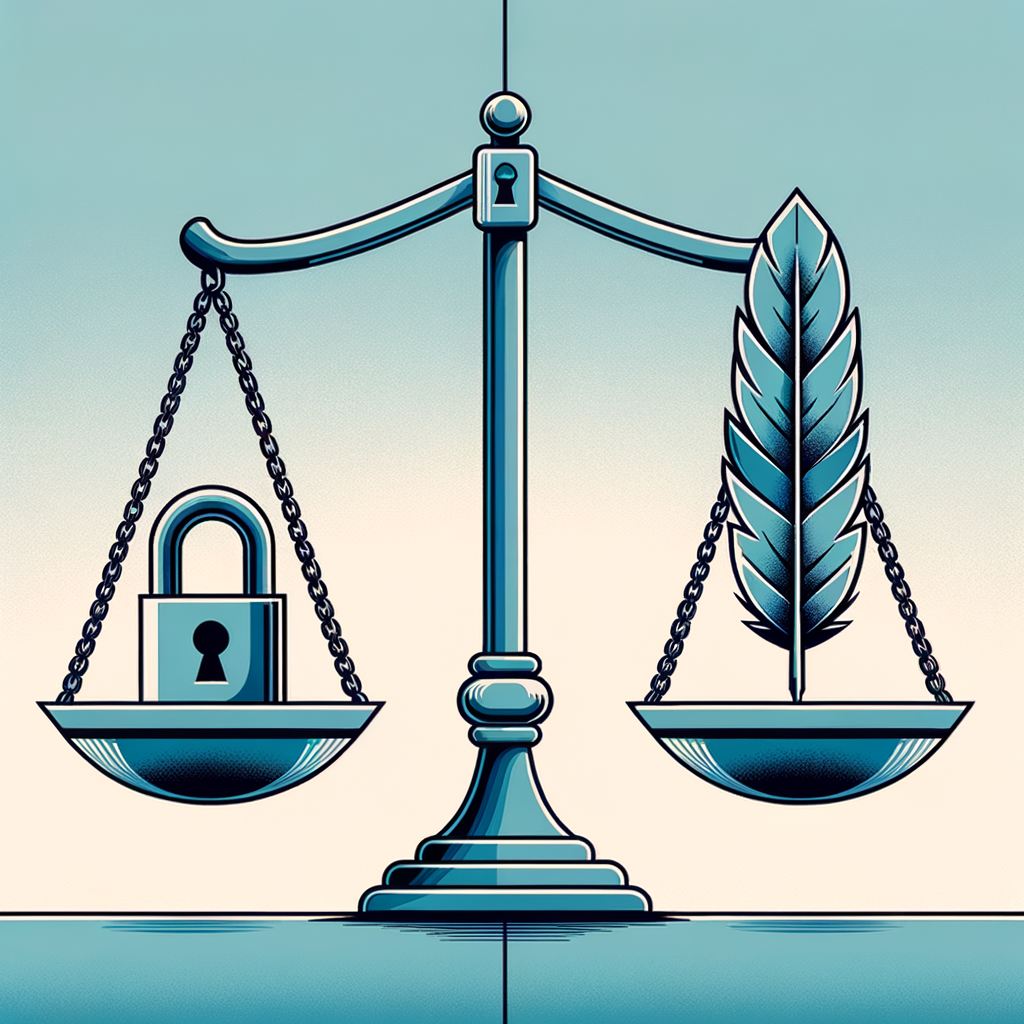
The balance between censorship and freedom of the press remains a highly contested topic. In democratic societies, the press plays a pivotal role as the watchdog, holding those in power accountable and ensuring the public remains informed. Yet, the tension between maintaining national security and safeguarding individual liberties sparks intense debates. This delicate balance requires constant reevaluation as societal values evolve and technological advancements reshape the landscape of media. Notably, in recent years, controversies surrounding governments attempting to control or influence the media have captured global attention. One prominent example involves former President Donald Trump and his challenging relationship with the press, including instances where certain media outlets were barred from White House press briefings. This article will examine the key issues surrounding censorship and freedom of the press, focusing on historical context, contemporary challenges, and the ongoing debate over the limits of press freedom, particularly in light of President Trump’s actions.
Understanding Censorship and Press Freedom
Censorship involves suppressing or restricting access to information, often enacted by governments to control public awareness and opinion. Historically, authoritarian regimes have employed stringent censorship measures to maintain power, minimizing dissent and shaping narratives to their advantage. Conversely, freedom of the press refers to the liberty of media institutions to report news without governmental interference, allowing journalists to investigate and disseminate information freely. This is crucial in democratic societies where transparent governance and informed citizenry are paramount.
Throughout history, governments have grappled with the dilemma of censorship versus press freedom. During times of war, such as World War II, the U.S. government imposed restrictions on reporting to preserve national security, exemplifying the perennial tension between these concepts. The Espionage Act of 1917 and its amendments highlight how legal frameworks have been used to limit what the press can publish under certain circumstances. These historical precedents underscore the complexities involved in defining the boundaries of press freedom and evaluating when censorship is justified.
The Role of the Press in a Democracy
In democratic societies, the press holds an indispensable role as a guardian of truth and transparency, acting as the fourth estate alongside the executive, legislative, and judicial branches of government. The ability of the press to function independently without fear of suppression or retaliation is fundamental to a healthy democracy. Journalists are entrusted with the power to investigate, critique, and report on government activities, thereby keeping citizens informed and empowered to make decisions about their leadership.
A free press ensures diverse perspectives are represented, offering a platform for varied voices and challenging the status quo. Investigative journalism plays a crucial part in uncovering corruption, exposing human rights abuses, and advocating for justice. These factors contribute to an informed populace capable of participating in meaningful political discourse and holding authorities accountable for their actions.
The First Amendment of the U.S. Constitution guarantees freedom of the press, prohibiting Congress from making laws that infringe this right. This foundational principle underscores the importance of press freedom in enabling open dialogue and ensuring a robust democracy.
Contemporary Challenges to Press Freedom
In recent years, numerous events underscore the persistent challenges to press freedom. Technological advancements have revolutionized how information is accessed and shared, presenting both opportunities and obstacles for journalism. The digital age has seen the rise of social media platforms, allowing news to spread rapidly and broadly. However, this has also led to the proliferation of misinformation and the challenge of discerning credible sources from unreliable ones. Journalists must navigate a complex media landscape where traditional news outlets compete with citizen journalists and social media influencers.
The rise of global authoritarianism alarms advocates of press freedom, as some governments increasingly resort to intimidation, harassment, and violence to silence media critics. Journalists worldwide face dire consequences for reporting on sensitive subjects, with threats to their safety becoming alarmingly common. This suppression not only stifles freedom of expression but also erodes public trust in media institutions.
In democratic countries, issues such as corporate ownership and advertising pressures pose subtler threats to press freedom. Media consolidation has reduced the number of independent voices, while financial dependencies may lead some outlets to avoid stories that could upset advertisers or stakeholders. The line between editorial content and commercial interests is increasingly blurred, challenging the integrity of journalism.
The Trump Administration and the Media
A stark example of the tension between government and press emerged during the Trump administration. President Trump’s contentious relationship with the media began during his campaign and continued throughout his presidency. He frequently labeled mainstream media outlets as “fake news,” sowing distrust in these institutions and fueling animosity between his administration and journalistic entities. This marked a departure from traditional presidential interactions with the press.
In several instances, President Trump barred certain media outlets from attending White House press briefings, sparking debates over the administration’s commitment to press freedom. This unprecedented move raised concerns about favoritism and discrimination against media that critiqued the presidency. While White House press briefings are traditionally open to a variety of media outlets, these actions highlighted how governmental approaches can potentially undermine journalistic integrity.
Such tactics extended beyond press access. The Trump administration often bypassed traditional media channels, using social media platforms to communicate directly with the public. This direct approach drew mixed responses, with some applauding the reduction of media gatekeeping, while others warned of the dangers posed by sidelining professional fact-checking and accountability.
Defining the Line: Press Freedom and Responsibility
Determining the appropriate boundary between censorship and freedom of the press is a complex challenge involving ethical considerations and legal frameworks. While press freedom remains a cornerstone of democracy, with it comes a profound responsibility. Journalists must strive to report objectively, verify facts, and avoid sensationalism. Ensuring accuracy and balance in reporting fosters public trust and reinforces the credibility of media institutions.
The issue of press freedom versus censorship is not solely about press rights but also involves considering the implications of unchecked freedom. Hate speech, incitement to violence, and defamation can be harmful, and media outlets must navigate these ethical quandaries carefully. Self-regulation and adherence to professional standards can help strike a balance between freedom and responsibility.
Legal frameworks play a crucial role in defining press freedom limits. In the U.S., the First Amendment ensures considerable protection for free speech, yet Supreme Court rulings, such as those addressing obscenity and libel, have shaped its extent. Other democracies adopt varied approaches, informed by their unique historical and cultural contexts, highlighting the nuance needed in addressing these issues on a global scale.
The Future of Press Freedom and Censorship
As society progresses, reevaluating the dynamic between censorship and press freedom remains necessary. Technological advancements and evolving societal values require continuous adjustments to maintain this balance. Innovations such as artificial intelligence and machine learning present new ethical and operational challenges, as media outlets explore automation and algorithm-driven content dissemination.
The global nature of the internet blurs the lines between domestic and international reporting, raising questions about jurisdiction and accountability. As governments grapple with regulating online content, international cooperation becomes vital to address the multifaceted challenges of digital media.
Moreover, fostering media literacy among the public is essential. Equipping citizens with the skills to critically evaluate information can empower them to navigate the complexities of modern media effectively, reducing susceptibility to misinformation. (Word count 1,485)
Efforts to enhance transparency and accountability within media organizations can further bolster public trust. Promoting diversity within media outlets ensures a broad spectrum of voices and perspectives are represented, enriching public discourse.
Conclusion
In conclusion, the interplay between censorship and freedom of the press is a dynamic and multifaceted issue vital to the functioning of democratic societies. The press serves as the voice of the people, upholding the principles of transparency and accountability. However, maintaining a balance between press freedom and censorship necessitates ongoing dialogue and reevaluation, ensuring that freedom is exercised responsibly without compromising societal well-being.
The challenges faced by the media landscape, exemplified by former President Trump’s actions towards the press, underscore the importance of protecting journalistic integrity. By fostering a robust and independent press, society ensures that power is held in check and the public remains informed and engaged.
Ultimately, the future of press freedom and censorship hinges on collective commitment to preserving democratic values. By embracing transparency, accountability, and ethical journalism, society can maintain a delicate equilibrium between censorship and freedom of the press, reinforcing the democratic ideals upon which it stands.
[,750]
Frequently Asked Questions
1. What is censorship, and how does it affect the freedom of the press?
Censorship refers to the suppression or prohibition of speech, communication, or information that certain authorities find objectionable, harmful, or sensitive. It can be executed by governments, private institutions, or other controlling bodies, often with the intent to control public discourse. Censorship impacts the freedom of the press by restricting what journalists can report on and how they can share information. This may lead to biased reporting, lack of transparency, and diminishes the press’s role as a watchdog. When the media is censored, the public’s right to information is curbed, fostering an environment where misinformation or one-sided narratives can thrive. However, some argue that a degree of censorship might be necessary to protect national security, privacy, and to shield the public from harmful content, but finding that balance is an ever-evolving challenge.
2. Why is freedom of the press crucial in democratic societies?
Freedom of the press is vital in democratic societies because it ensures that citizens can receive unbiased, accurate, and comprehensive information necessary for making informed decisions. A free press serves as a conduit between the government and the people, holding those in power accountable for their actions and decisions. It empowers citizens by facilitating transparency and public discourse, helping to prevent authoritarian rule and corruption. A press that operates without undue restrictions can investigate and bring to light issues that directly impact society, such as injustice, economic malpractice, and human rights violations. Therefore, preserving press freedom is essential for the health and sustainability of a democracy as it nurtures an informed and engaged citizenry.
3. How do national security concerns justify censorship, and where should the line be drawn?
National security is often cited as a primary justification for censorship. Governments may limit press freedom to prevent the dissemination of sensitive or classified information that, if disclosed, could jeopardize national interests, military operations, or the safety of citizens. For instance, during wartime or in the case of terrorist threats, certain information might be censored to prevent giving strategic advantages to adversaries. Nonetheless, the line between legitimate security measures and overreach is tenuous. Excessive censorship under the guise of security can lead to abuses of power, reduced transparency, and an uninformed or misinformed populace. To draw the line appropriately, it is critically important for there to be clear guidelines, oversight, and accountability mechanisms in place. Public interest should always be a primary consideration, and any deprivation of press freedom should be narrowly tailored and proportionate to the actual threat posed.
4. How do technological advancements impact censorship and freedom of the press?
Technological advancements have drastically transformed both censorship practices and the landscape of media freedom. The internet and digital platforms have enabled information to spread more rapidly and widely than ever before, challenging traditional censorship techniques. Social media, blogs, and online news sites provide alternatives to mainstream media, making it harder for authorities to control the flow of information. Yet, technology has also equipped censors with new tools; for instance, firewalls, internet shutdowns, and sophisticated surveillance can be used to block or monitor digital content. Moreover, algorithms on social media platforms can be manipulated to influence what users see and share, indirectly shaping public perception. To mitigate these issues, there must be a continuous effort to promote digital literacy, ensure transparency in content moderation, and protect the rights of journalists and citizens in digital spaces. Technological advancement should not become a Trojan horse for censorship, but rather a tool for enhancing freedom of expression and access to information.
5. How can societies balance the need for censorship with the principles of press freedom in a constantly changing world?
Balancing censorship and press freedom in our evolving world requires a dynamic approach that considers legal, ethical, and technological dimensions. Societies must strive to establish robust legal frameworks that clearly define the limits and responsibilities of both the state and the media. This could include laws that safeguard press freedom while establishing clear criteria for when censorship is justified, ensuring these decisions are subject to judicial review to prevent abuse. Ethical journalism practices should be promoted, emphasizing accuracy, responsibility, and the public good while protecting journalists from harassment and retaliation. Additionally, support for independent media outlets can help ensure a diverse range of voices and perspectives are heard. Technologically, societies must leverage digital innovation to promote, rather than hinder, free expression. Engaging in open, ongoing dialogue among governments, media entities, and the public is key to developing and maintaining this balance over time. Ultimately, the safeguarding of press freedom should remain a shared societal value, with an understanding that the well-being of democratic institutions depends upon an informed citizenry.