
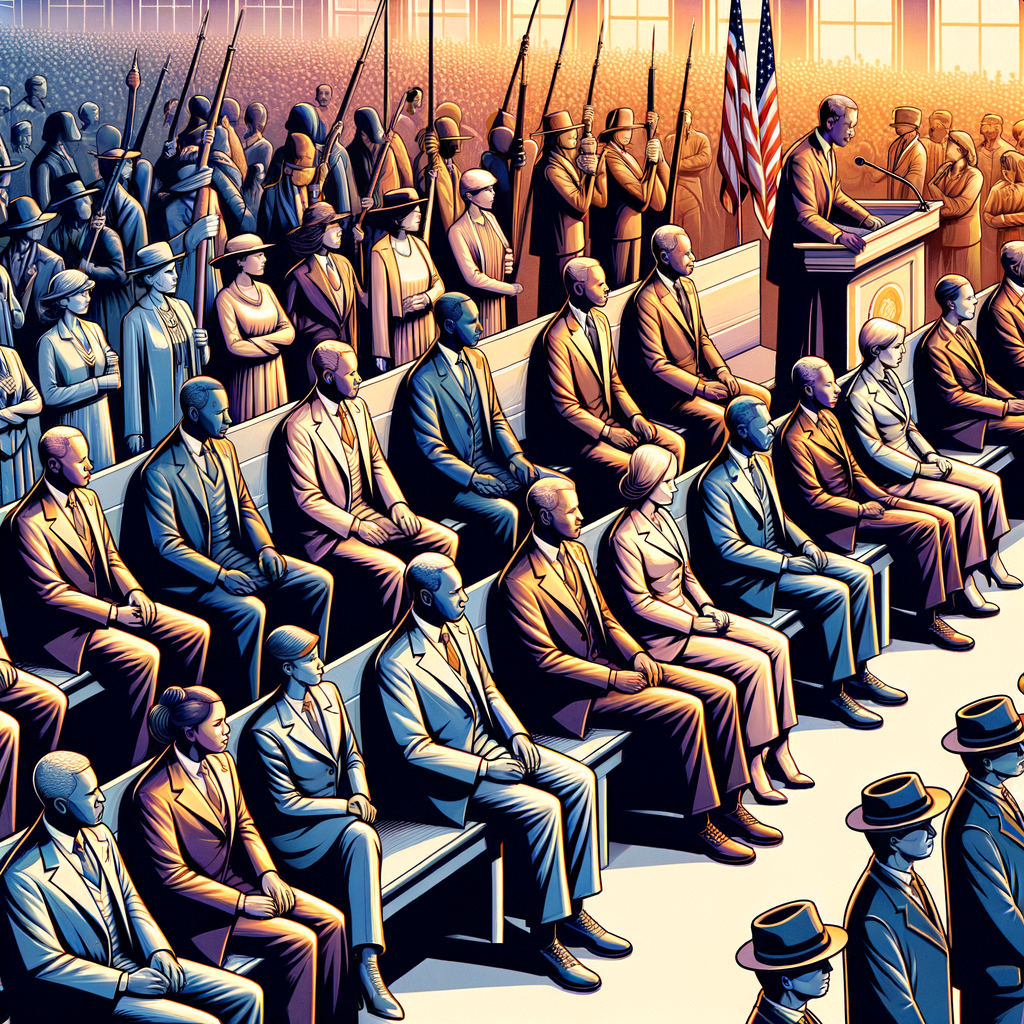
The Civil Rights Act of 1964 stands as a landmark piece of legislation in the United States, marking a pivotal moment in the journey towards equality and justice. Emerging from a backdrop of injustices, protests, and a burgeoning civil rights movement, this Act sought to rectify longstanding issues of discrimination across various facets of public life. Society had been marred by segregation, especially in the southern states, where laws enforcing such practices had been deeply entrenched for decades. Enacted on July 2, 1964, this Act addressed the widespread legal barriers that had perpetuated racial discrimination. By becoming law, it set a precedent for subsequent legislation aimed at furthering the cause of civil rights. The Act not only addressed the immediate discriminatory practices but also paved the way for continued progress in the fight against racial inequality. In understanding what the Civil Rights Act of 1964 accomplished, it is crucial to examine its key components, explore its widespread impact across social and economic spectrums, and appreciate its historical significance in reshaping the fabric of American society. Through its provisions, interpretations, and implementations, the Civil Rights Act signified a transformative era, fostering a more inclusive nation where individuals were progressively judged by their character and contributions rather than the color of their skin.
The Key Provisions of the Civil Rights Act of 1964
The Civil Rights Act of 1964 tackled discrimination head-on with a series of groundbreaking provisions. Title II outlawed discrimination in public accommodations, ensuring that places such as hotels, restaurants, and theaters could no longer refuse service based on race, color, religion, or national origin. This eradication of the legal support for segregation broke a longstanding system that perpetuated inequality and second-class citizenship for African Americans. Title III empowered the Justice Department to enforce desegregation in public facilities, while Title IV required the federal government to accelerate the desegregation of public schools. Despite the Brown v. Board of Education ruling in 1954, which declared segregated schools unconstitutional, many districts had dragged their feet when it came to compliance. The Civil Rights Act provided the necessary legal and federal oversight to ensure that public schools fully implemented this mandate, facilitating an integrated learning environment for all children.
In the realm of employment, Title VII of the Act was particularly significant. It prohibited employers from discriminating based on race, color, religion, sex, or national origin. The creation of the Equal Employment Opportunity Commission (EEOC) under Title VII was instrumental in enforcing these new regulations. The EEOC was tasked with investigating complaints, pursuing legal actions, and ensuring that discriminatory practices in hiring, firing, and promotions were outlawed. This provision not only changed the landscape of the labor market but also encouraged a more diverse and inclusive workforce.
Furthermore, Title VI addressed discrimination in programs and activities receiving federal financial assistance. By prohibiting discrimination in these federally funded programs, the Act imposed a significant check on the use of federal funds, ensuring that taxpayer money was not used to support discriminatory practices. This provision was crucial in guaranteeing that educational institutions, social services, and other federally funded entities adhered to principles of equality and nondiscrimination.
Impact on Society and Institutional Change
The enactment of the Civil Rights Act of 1964 had an immediate and profound impact on American society, compelling institutions to reconsider their discriminatory policies and practices. The law’s implementation sped up the desegregation process in public schools and other facilities, breaking down the racial divides that had existed for generations. As schools began integrating more fully, a new generation of students grew up experiencing more diverse learning environments, setting a precedent for future cohesion and understanding among different racial groups.
In the workplace, the Act significantly influenced employment practices, encouraging companies to adopt more inclusive policies. With the establishment of the EEOC, employees who faced discrimination had a platform to seek redress, leading to increased awareness and gradual acceptance of diversity in the workplace. Over time, this led to greater representation of minorities in various sectors, contributing to a broader reevaluation of job qualifications and recruitment processes. Organizations began implementing diversity training programs to foster understanding and inclusivity, further embedding the principles of the Act into corporate culture.
The elimination of discriminatory barriers in public accommodations altered the daily experiences of minorities, who could now access services and facilities that were once off-limits. This shift also had economic implications, as businesses reached out to a broader customer base, resulting in increased economic opportunities for previously marginalized groups. The legal endorsement of equal rights in public spaces was a significant step forward in uniting communities divided by systemic racial barriers.
In addition, the Civil Rights Act of 1964 inspired and set in motion a series of subsequent legislative measures aimed at promoting civil rights and equality. Legislation such as the Voting Rights Act of 1965 and the Fair Housing Act of 1968 built upon its foundation, addressing areas of systemic inequality that persisted despite the initial gains. The momentum from the Act propelled civil rights activists to continue their work, advocating for further reforms necessary to achieve full equality.
Challenges in Implementation and Interpreting the Legislation
Despite its intentions, the implementation of the Civil Rights Act faced numerous challenges and resistance, especially in the initial phases. In many regions, particularly the South, deep-seated prejudices and systemic racism were difficult to overcome. There were attempts to circumvent the law by instituting policies that segregated based on criteria not explicitly mentioned in the Act, exemplifying resistance to enforced compliance. Communities and businesses that historically upheld segregation often required multiple legal interventions to change longstanding practices.
Legal battles ensued as courts were often called upon to interpret the provisions of the Civil Rights Act, especially regarding what constituted discrimination within nuanced contexts. Employers, for example, tested the boundaries of Title VII, challenging what was classified as substantial compliance and nondiscrimination in the workplace. This necessitated the development of case law that refined and defined the Act’s provisions, many of which were adjudicated at high judicial levels, including the Supreme Court. These legal precedents shaped the understanding and application of the Act’s prohibitions, continuously evolving alongside shifts in social norms.
Similarly, the efforts to desegregate schools faced numerous roadblocks, including “freedom of choice” plans that covertly preserved segregated schooling under the guise of individual preference. The federal government, while armed with the authority to enforce desegregation, faced resistance and evasion tactics that prolonged the process of full integration. These challenges highlighted the need for vigilance and robust enforcement measures to ensure the Act fulfilled its purpose and intentions, setting a stage for continuous dialogue and legal clarification.
Significance and Legacy of the Civil Rights Act
Historically, the Civil Rights Act of 1964 is viewed as more than just a piece of legislation. It symbolizes a major societal shift towards greater equality and justice in America, acting as a catalyst for change in the national consciousness. Its passage emboldened the civil rights movement, motivating activists to push for further reforms, while simultaneously providing a legal backbone to the growing demand for equal rights. The Act’s success demonstrated the power of legislation in shaping societal attitudes and promoting justice, encouraging citizens to believe in the effectiveness of advocacy and civic engagement.
The Act’s significance also lies in its role as a template for subsequent civil rights legislation and policies. It laid the groundwork not just for addressing racial inequality, but also set a precedent for tackling other forms of discrimination. The inclusion of sex among the protected categories under Title VII initiated momentum for addressing gender discrimination, influencing later milestones like the Equal Pay Act and the expansion of women’s rights in the workplace. In this respect, the Civil Rights Act widened the conversation around civil rights issues, incorporating various dimensions of identity and equality.
While not a panacea for all forms of discrimination, the Civil Rights Act provided a vital framework for progress, enabling a more structured approach to challenging inequality. It demonstrated that through concerted legislative action, significant strides can be made towards fostering an equitable society. The continuing effort to correct inequalities reflected through the Act remains an enduring testament to its lasting legacy in the ongoing pursuit of civil rights in the United States.
Conclusion
The Civil Rights Act of 1964 stands as a cornerstone in the fight for equality and justice in the United States, representing both a culmination of years of civil rights activism and a launching pad for future reforms. Its comprehensive provisions addressed the entrenched system of discrimination that had denied fundamental rights and dignity to millions of Americans, facilitating profound changes in the societal landscape. Through banning discrimination in public accommodations, education, and employment, among other domains, the Act reshaped American society’s fabric, promoting inclusivity and equal opportunity.
While the initial implementation faced obstacles, the resilience and dedication of those committed to civil rights ensured that its promises would be realized. This landmark legislation not only spurred further civil rights advancements but also fostered a more inclusive dialogue about equality across various spheres of life. The Act’s profound impact on American society has influenced generations, instilling a greater sense of justice and fairness in both legal and social institutions. It remains a pivotal reference point in the ongoing journey towards achieving a society free from discrimination in all its forms.
As we reflect on what the Civil Rights Act of 1964 accomplished, it serves as a reminder of both the progress attained and the continuous efforts required to uphold its ideals. Its legacy endures, inspiring future generations to advocate for and realize a vision of a society where equality and justice are accessible to all, irrespective of race, gender, or background. Thus, the Civil Rights Act continues to be a beacon of hope and a testament to the unwavering pursuit of civil rights and equality in America.