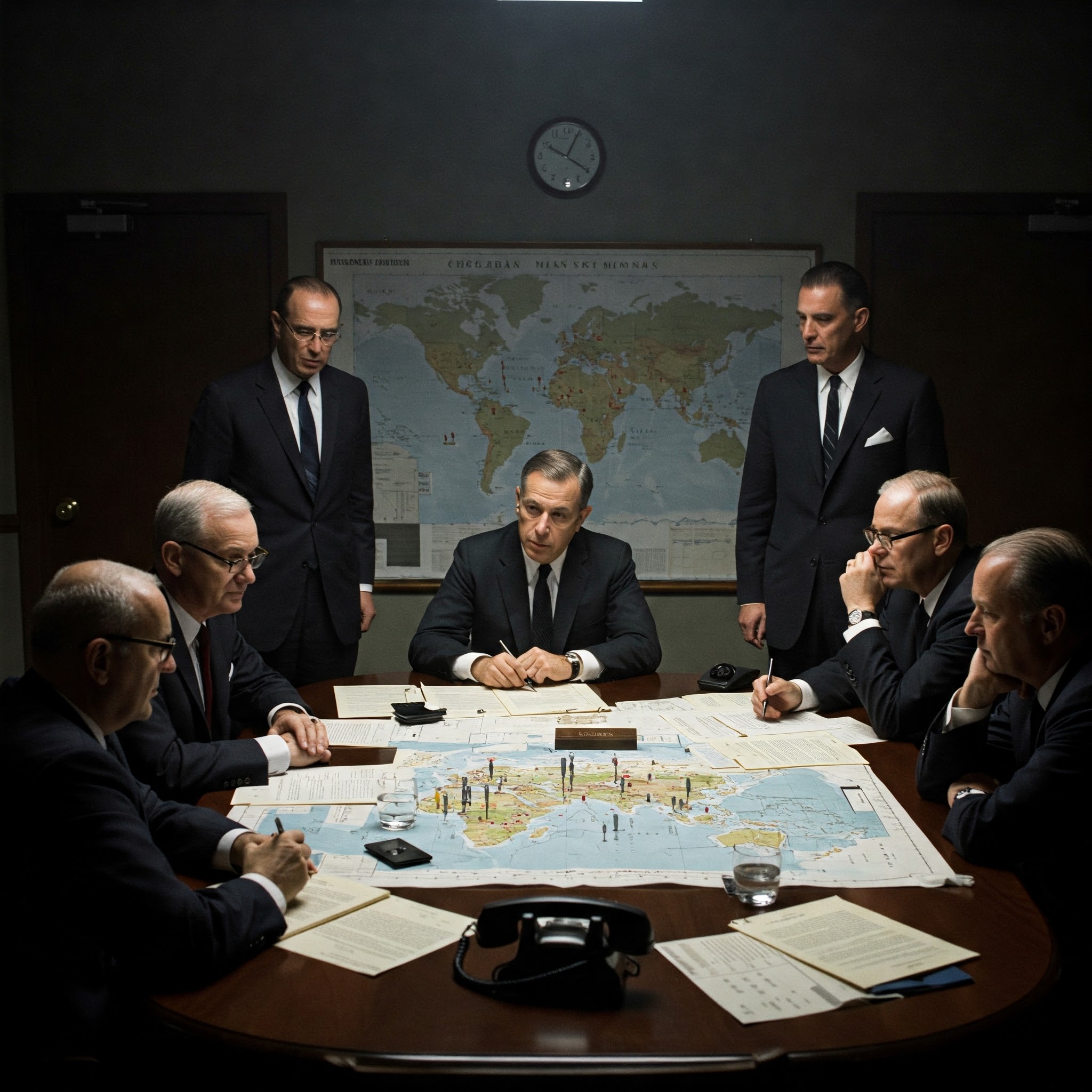
The Cuban Missile Crisis stands out as one of the tensest moments in Cold War history, bringing the United States and the Soviet Union perilously close to nuclear conflict. For thirteen fraught days in October 1962, the world held its breath as two superpowers engaged in a high-stakes standoff over missiles located just 90 miles off the Florida coast. While it may feel like ancient history today, the crisis offers a valuable lesson about the consequences of miscommunication, the necessity of diplomacy, and the real possibility of peace when cooler heads prevail.
In this article, we will examine the background leading up to the Cuban Missile Crisis, the factors that motivated both the United States and the Soviet Union, and how the standoff finally ended without a nuclear catastrophe. We will also discuss the role of key players—such as President John F. Kennedy, Soviet Premier Nikita Khrushchev, and Cuban leader Fidel Castro—and explore how each influenced a situation that threatened global security. Although the crisis was resolved, its impact reverberated through the rest of the Cold War, reshaping how nations approached nuclear negotiations and international conflict management. By understanding the events, pressures, and personalities behind the Cuban Missile Crisis, modern readers can glean important lessons about the significance of diplomacy, the dangers of rash military decisions, and the enduring need for open channels of communication between rival powers.
Setting the Stage: Post-World War II Tensions
In order to truly understand the Cuban Missile Crisis, it is critical to grasp the Cold War context that set the stage for this confrontation. After World War II, the alliance between the Soviet Union and the United States quickly disintegrated, replaced by mutual distrust and competing global ideologies. The United States championed capitalism and democracy, while the Soviet Union aimed to spread communism. This ideological clash turned former wartime friends into persistent rivals.
The tension heightened as both sides tried to expand their spheres of influence around the world. In Europe, the Soviet Union’s control over Eastern Bloc nations and the construction of the Berlin Wall in 1961 demonstrated the extent to which it would go to protect its interests. Meanwhile, the United States embraced a policy known as “containment,” aiming to prevent communism from spreading further. Americans feared that if communism took root in one country, it might spread to neighboring nations, a concept often referred to as the “domino theory.”
From the late 1940s to the early 1960s, superpower competition became a permanent feature of the international landscape. Each side built up massive stockpiles of nuclear weapons, leading to a precarious balance of terror known as Mutually Assured Destruction (MAD). The logic was chilling: if both sides possessed enough nuclear firepower to annihilate the other, neither would risk firing the first shot. But despite that grim logic, close calls still happened, and deep suspicions ran rampant. Diplomatic maneuvering, espionage, and proxy wars defined the Cold War era, with both the United States and the Soviet Union striving to maintain a strategic advantage. The stage was set for conflict to erupt in new hotspots around the globe—and Cuba was quickly emerging as one of the most volatile.
Why Cuba Became a Flashpoint
Cuba’s strategic significance to the United States cannot be overstated. Located just 90 miles south of Florida, the island has long been in America’s geopolitical orbit. Prior to 1959, Cuba was led by President Fulgencio Batista, who had a complicated relationship with the United States but generally cooperated in matters of trade and foreign policy. That changed dramatically when Fidel Castro and his revolutionary forces overthrew Batista’s government and established a communist regime with strong ideological ties to the Soviet Union.
The U.S. government initially hoped that Castro might simply be a nationalist seeking independence from American influence. However, his growing alignment with Soviet interests quickly alarmed policymakers in Washington. The tipping point was when the Cuban government began nationalizing American-owned properties and forging strong ties with Moscow, thereby positioning itself as a communist ally right in the United States’ backyard. In response, President Dwight D. Eisenhower’s administration imposed economic sanctions, and relations between the two neighbors deteriorated further.
By the time President John F. Kennedy took office in 1961, tensions with Cuba were sky-high. That same year, the U.S. launched the Bay of Pigs invasion—a failed attempt by Cuban exiles, backed by the CIA, to overthrow Castro. This fiasco not only embarrassed the United States but also pushed Cuba closer to the Soviet Union, which offered financial and military support to the Castro regime. The Soviet leadership saw an opportunity to project power into the Western Hemisphere, challenge the United States’ dominance in the region, and gain a foothold just a short flight from the U.S. mainland. All these factors combined to make Cuba a significant flashpoint in the Cold War, a place where the broader rivalry between superpowers played out with high stakes and even higher tension.
The Arrival of Soviet Missiles
The final push toward the Cuban Missile Crisis came in mid-1962, when Soviet Premier Nikita Khrushchev authorized the secret shipment of nuclear missiles to Cuba. His decision was motivated by several factors. First, the United States had stationed Jupiter missiles in Turkey, directly threatening the Soviet Union’s security. Khrushchev felt that placing similar missiles near U.S. territory would level the playing field. Second, the failure of the Bay of Pigs invasion had left Castro worried about another American attack. By bringing Soviet missiles to Cuba, Khrushchev could strengthen his ally’s defenses while sending a strong message to Washington that any further attempts to topple Castro would be met with force.
Between July and October 1962, Soviet cargo ships made multiple trips to Cuba, carrying not only medium-range ballistic missiles but also thousands of troops, technicians, and other military equipment. The aim was to have the missile sites up and running before the United States discovered them. Despite efforts to maintain secrecy, American reconnaissance flights captured images of the construction of missile launch facilities. In mid-October, U.S. intelligence analysts confirmed that the Soviet Union was installing nuclear missiles capable of striking much of the eastern United States.
When President Kennedy was briefed about these developments on October 16, 1962, the alarm bells went off in Washington. This was a direct threat of the highest order. The President immediately convened a group of his closest advisers, known as the Executive Committee of the National Security Council (ExComm), to formulate America’s response. The stakes were huge: a miscalculation could potentially trigger a nuclear exchange. The U.S. leadership had to decide whether to strike the missile sites outright, block further shipments with a naval quarantine, or pursue a diplomatic solution. Each option came with massive risks. For instance, a military strike might destroy the missiles in Cuba but could also provoke the Soviet Union into retaliating against the U.S. or its allies.
The Thirteen Days of Brinkmanship
From October 16 to October 28, the world stood on the edge of disaster. During these thirteen days, high-level negotiations and frantic behind-the-scenes conversations determined the fate of millions. President Kennedy’s team weighed multiple responses, ultimately deciding on a naval blockade—referred to as a “quarantine” to avoid the connotation of war—around Cuba. The blockade would prevent further Soviet shipments of offensive military equipment from reaching the island. On October 22, Kennedy went on television to inform the American public of the situation and the decision to implement the quarantine.
This announcement shocked Americans and the world at large. The Soviets, for their part, condemned the blockade as an act of aggression. Yet Khrushchev also understood that pushing too far could spark a nuclear war—an outcome neither side truly wanted. Over the ensuing days, Soviet vessels approached the blockade line, but they slowed or turned back to avoid direct confrontation with the U.S. Navy. The tension in diplomatic corridors and among ordinary people escalated. Families in America discussed evacuation plans and stocked up on supplies in case the crisis escalated to nuclear war. Meanwhile, ExComm continued to discuss plans for a possible invasion of Cuba if diplomacy failed.
Throughout this period, communication channels between Washington and Moscow remained open, even if they were sometimes strained. Telegrams went back and forth, with proposals and counter-proposals flying between leaders determined to avoid an all-out conflict but reluctant to appear weak on the global stage. The crisis reached its peak when a U-2 spy plane was shot down over Cuba, killing the pilot and raising fears of a retaliatory strike by the U.S. The ExComm debated how to respond, conscious that any misstep could send the standoff into a deadly spiral.
Public Fear and Global Reaction
While the leaders in Washington and Moscow engaged in tense negotiations, the broader world was gripped by fear. Many people, not just in the United States but across the globe, genuinely believed that nuclear Armageddon could be imminent. In American schools, students practiced “duck and cover” drills—though it was widely acknowledged that such maneuvers offered little real protection against a nuclear blast. Cities in the United States debated large-scale evacuation plans, though the logistical challenges were immense. Everyday citizens followed news reports closely, bracing themselves for grim updates.
Internationally, U.S. allies expressed concern and solidarity but were also apprehensive about being dragged into a nuclear conflict. European nations, still rebuilding from World War II, worried that any nuclear exchange could quickly escalate to their continent. Meanwhile, many countries in Latin America regarded the crisis as a dangerous confrontation that underlined the region’s vulnerability to superpower politics.
In the Soviet Union, the public was shielded from some details of the crisis by government-controlled media. However, even Soviet citizens were aware that tensions had reached new heights. Those who could glean information from foreign broadcasts understood the severity of the situation, and internal discussions about potential nuclear war filtered through private conversations and personal networks.
The United Nations also became a theater for high-profile exchanges. U.S. Ambassador Adlai Stevenson famously confronted Soviet Ambassador Valerian Zorin with photographic evidence of the missiles in Cuba, demanding a public admission that they were there. This public showdown not only embarrassed the Soviet Union on the global stage but also underscored the intensity of international scrutiny. Around the world, people waited anxiously, hoping for a peaceful resolution that would spare them from nuclear devastation.
The Role of Diplomacy and Back-Channel Negotiations
Although the crisis seemed to play out in public statements and official communiqués, much of the real work toward resolution happened in private. Back-channel negotiations allowed both sides to float proposals and gauge the other’s willingness to compromise without suffering the embarrassment or risk associated with open declarations. These discreet discussions were critical for building trust and clarifying intentions, especially when the official rhetoric from both Washington and Moscow remained heated.
President Kennedy and his advisers skillfully used these channels to explore potential deals. One of the biggest sticking points was the U.S. missile presence in Turkey. While the Soviet Union viewed the American Jupiters there as a direct threat, the United States initially resisted tying their removal to any agreement on Cuba. However, as the crisis wore on and the risk of nuclear war became more acute, the U.S. position began to soften.
On the Soviet side, Khrushchev also used unofficial contacts to convey that he was willing to withdraw missiles from Cuba if he could secure a public assurance from Kennedy that the United States would not invade the island. He also pushed for the removal of U.S. missiles in Turkey. Much of this communication happened through indirect channels—messages were delivered by intermediaries, and letters were exchanged in secret to avoid public scrutiny. Both leaders knew that once a final deal was made public, it would carry enormous political ramifications at home and abroad. Kennedy had to avoid appearing weak before the American electorate, and Khrushchev needed to maintain credibility within the Soviet political hierarchy, which included hawkish military officials who saw concession as a sign of weakness.
The Resolution: Deals, Concessions, and Withdrawals
Ultimately, the Cuban Missile Crisis came to a peaceful conclusion on October 28, 1962, when Khrushchev announced that the Soviet Union would remove its missiles from Cuba in exchange for a U.S. pledge not to invade the island. The United States also secretly agreed to remove its Jupiter missiles from Turkey within a few months, though this part of the agreement was not immediately disclosed to the public to help Kennedy save political face.
The Soviets quickly dismantled their missile sites in Cuba, and American naval forces lifted the blockade. As the world exhaled in relief, both superpowers claimed a kind of victory. The United States had successfully compelled the Soviet Union to withdraw its missiles from the Western Hemisphere, while the Soviets took comfort in the fact that they had extracted a promise regarding the Jupiter missiles in Turkey. In reality, neither side walked away entirely triumphant; the crisis had exposed vulnerabilities and forced each superpower to confront the terrifying prospect of global nuclear war.
Shortly after the crisis ended, direct communication between Washington and Moscow improved. A “hotline” phone link was established in 1963 to connect the Kremlin and the White House, ensuring that leaders could speak directly in times of potential crisis. This measure aimed to reduce the likelihood of future misunderstandings that could escalate into nuclear confrontation. Diplomatically, both countries became more cautious about deploying nuclear weapons in remote regions or near the other’s borders. The Cuban Missile Crisis spurred new talks on arms control, including the signing of the Limited Nuclear Test Ban Treaty in 1963, which banned nuclear weapons tests in the atmosphere, outer space, and under water.
Lessons Learned for Future Generations
Though resolved without nuclear conflict, the Cuban Missile Crisis remains a stark reminder that even minor miscalculations can have catastrophic implications when nuclear weapons are involved. Several key lessons stand out for policymakers, historians, and students of international relations.
First, it showcased the value of communication. If not for the back-channel negotiations, mutual misunderstandings might have led to aggressive actions that could trigger nuclear war. The establishment of a direct hotline between the White House and the Kremlin was a testament to the need for swift, clear communication during emergencies.
Second, it highlighted the role of diplomacy over brute force. President Kennedy and Premier Khrushchev, in spite of their public posturing, were committed to finding a solution that averted war. They recognized that a nuclear exchange would be disastrous for both sides and the entire world. This willingness to negotiate—quietly at first—proved essential in defusing the crisis.
Third, the crisis underscored how alliances and client states can drag larger powers into dangerous waters. Cuba’s alignment with the Soviet Union put Moscow and Washington on a collision course, illustrating how smaller countries can become critical pieces in a broader geopolitical chess match. The same pattern could apply in many global hot spots today, reminding us of the importance of careful management of alliances and mindful consideration of local dynamics.
Finally, the Cuban Missile Crisis demonstrated the importance of balancing public image with realistic negotiations. Both leaders had to consider domestic politics and international prestige, sometimes causing them to adopt rigid positions in public that were more flexible in private talks. Recognizing this dynamic can help modern policymakers craft strategies that allow their opponents to save face while still achieving a mutually acceptable agreement.
Conclusion
Over six decades after the Cuban Missile Crisis, the lessons it taught continue to resonate. It was a pivotal moment in American history and in the story of the Cold War, showing just how easily geopolitical tensions could spiral out of control when nuclear weapons are in play. The crisis ended not with bombs but with bargaining, underscoring the power of diplomacy to prevent disaster. In the months and years that followed, both the United States and the Soviet Union took cautious steps toward better communication and limited arms control—though the Cold War itself would continue for nearly three more decades.
For students of history, the Cuban Missile Crisis remains an essential case study. It reveals the complexities of power politics, the high stakes of global leadership, and the absolute necessity of maintaining channels for negotiation. For the general public, it is a reminder that policies made by distant governments can have an immediate and profound impact on everyday life. Families in Florida, Moscow, Havana, and beyond lived with the chilling fear of nuclear war, relying on the decisions of individuals thousands of miles away who held the world’s fate in their hands.
Today, even though the global arena has shifted significantly, nuclear weapons and geopolitical rivalries have not vanished. Nations still wrestle with power balances, regional conflicts, and new forms of warfare that test the limits of diplomacy. The memory of the Cuban Missile Crisis serves as both a warning and a guide: a warning of how close we can come to destroying ourselves through miscalculation and pride, and a guide for how open communication, compromise, and courageous leadership can bring us back from the brink. By studying this watershed moment in American and global history, we can better appreciate the fragile peace we maintain and understand the continuous effort required to preserve it.
Frequently Asked Questions
1. What were the origins of the Cuban Missile Crisis?
The roots of the Cuban Missile Crisis can be traced back to a confluence of geopolitical tensions and strategic calculations by both the United States and the Soviet Union, set against the backdrop of the Cold War. Leading up to the crisis, the U.S. had placed nuclear missiles in Turkey and Italy, aimed at the Soviet Union. As a countermeasure, Soviet Premier Nikita Khrushchev decided to station Soviet nuclear missiles in Cuba, just 90 miles from the U.S. coastline. This was also seen as a way to bolster the security and sovereignty of Fidel Castro’s Communist government in Cuba following the failed U.S.-backed invasion at the Bay of Pigs in 1961. The discovery of these missiles by American U-2 reconnaissance planes on October 14, 1962, set the stage for a 13-day confrontation that would test the nerve and resolve of both nations.
2. How did the U.S. and Soviet Union respond to the discovery of missiles in Cuba?
The response from the United States was swift and assertive. President John F. Kennedy, upon being briefed about the missile installations, convened a group of advisors, known as ExComm (Executive Committee of the National Security Council), to deliberate on the best course of action. After considering options ranging from a full-scale invasion of Cuba to targeted airstrikes, Kennedy opted for a naval “quarantine” to prevent further Soviet shipments of military equipment to Cuba. This quarantine was essentially a blockade, although the use of the term “quarantine” was intended to avoid an act of war under international law. Meanwhile, the Soviet Union, led by Khrushchev, initially denied the presence of offensive weapons in Cuba, then later acknowledged them, demanding the U.S. also remove their missiles from Turkey as part of a broader negotiation.
3. What were the most significant tensions during the crisis?
The Cuban Missile Crisis was fraught with tension, characterized by high-stakes diplomacy and the real threat of nuclear war. The U.S. Strategic Air Command went to DEFCON 2, one step short of nuclear war readiness, heightening the sense of urgency. On October 27, the crisis reached a peak when a U-2 spy plane was shot down over Cuba, killing the pilot, Major Rudolf Anderson. This incident brought the superpowers perilously close to direct military conflict. During the same tense period, a Soviet submarine equipped with nuclear torpedoes was nearly forced to surface by U.S. Navy depth charges. Miscommunication almost led to the submarine captain authorizing a nuclear strike, highlighting the razor-thin margin for error during the standoff.
4. How was the crisis resolved?
The resolution of the Cuban Missile Crisis came through diplomatic negotiations and some backchannel communications. On October 28, 1962, after several publicly communicated and private exchanges, Khrushchev agreed to remove the Soviet missiles from Cuba in exchange for a U.S. commitment not to invade the island. Additionally, though not disclosed to the public at the time, the U.S. agreed to withdraw its Jupiter missiles from Turkey within a six-month timeframe. This agreement was a demonstration of diplomacy prevailing over military action, and underscored the importance of dialogue and negotiation in de-escalating international conflicts. The crisis ended without military confrontation, and both sides were able to step back from the brink of nuclear war.
5. What are the lasting impacts and lessons of the Cuban Missile Crisis?
The Cuban Missile Crisis left a profound impact on international relations and the conduct of Cold War diplomacy. It prompted the establishment of a direct communication line between Washington and Moscow, known as the “hotline,” to facilitate swift, direct communication between the leaders of the superpowers. The crisis also led to more careful strategic planning and risk assessment regarding nuclear weapons and their management. It is widely viewed as a turning point that made the threat of nuclear war more palpable, underscoring the importance of crisis management and the need for clear communication channels to avoid miscalculation. Furthermore, the crisis illustrated the potential consequences of the arms race and has served as a cautionary tale regarding the risks inherent in nuclear brinkmanship. It remains a pivotal case study in international relations and the complexities of diplomacy under the shadow of nuclear tension.