
Rock ‘n’ roll didn’t just introduce a new style of music; it sparked a cultural revolution. In the 1950s and 1960s, the powerful beats, soulful voices, and energetic performances of rock ‘n’ roll artists captured the imagination of young Americans and challenged traditional norms. This music brought people together across racial lines, altered how teenagers expressed themselves, and paved the way for massive social changes. By looking at its roots, the rise of iconic performers, and the enduring impact on youth culture, we can see how rock ‘n’ roll reshaped the American cultural landscape—and still resonates today.
Origins of Rock ‘n’ Roll
Rock ‘n’ roll emerged in the early 1950s as a fusion of multiple music styles, including rhythm and blues, country, gospel, and jazz. Its ancestry can be traced back to African American communities, where blues and R&B flourished. Artists such as Sister Rosetta Tharpe, Fats Domino, and Chuck Berry helped lay the groundwork by merging electric guitar riffs with energetic, danceable beats.
- Rhythm and Blues Influence
Rhythm and blues, often abbreviated as R&B, contributed driving bass lines, emotional vocal styles, and a raw sound that stood in stark contrast to the smoother pop music of the day. R&B was primarily performed and consumed by African American audiences, yet some white teenagers began tuning in to R&B radio stations out of curiosity for something fresh and exciting. - Country and Hillbilly Music
Meanwhile, country and so-called “hillbilly” music also played an important role in shaping rock ‘n’ roll. Artists like Hank Williams introduced storytelling through lyrics, giving early rock music an emotive edge. The fusion of R&B’s groove with country’s narrative traditions set the stage for a style that would soon capture mainstream attention. - Gospel Roots
Gospel music provided the passionate vocal delivery and call-and-response patterns that became typical of rock ‘n’ roll performances. Singers brought a sense of jubilation and spiritual fervor to the genre, ultimately finding a secular outlet in rock. This energetic spirit proved irresistible to teenagers in search of something more thrilling than their parents’ big band records.
When these influences converged, rock ‘n’ roll offered an enticing combination of energy, rebellion, and cultural cross-pollination. It was a fresh sound for a new generation—a far cry from the more conservative musical styles of the post-war era.
Breaking Barriers: The Early Stars of Rock ‘n’ Roll
Rock ‘n’ roll’s rebellious nature and roots in Black music challenged the status quo from the start. Early stars brought diverse crowds together and often faced criticism from adults who worried about the music’s effect on morality. Despite the backlash, or perhaps because of it, the popularity of rock ‘n’ roll soared.
- Elvis Presley and the Mainstream
In 1954, Elvis Presley burst onto the scene at Sun Studio in Memphis, Tennessee. Often called the “King of Rock ‘n’ Roll,” Presley combined a bluesy style with a unique stage presence that defied traditional norms. His swiveling hips and energetic performances sparked both adoration and outrage. Elvis helped bring rock ‘n’ roll to a massive white audience, further legitimizing the new genre in mainstream media. - Chuck Berry’s Guitar Innovations
Chuck Berry, an African American guitarist and singer, was fundamental in shaping the sound of rock ‘n’ roll. Berry’s riffs and catchy lyrics about teenage life resonated across racial lines. His song “Maybellene” is often cited as one of the first true rock ‘n’ roll hits, and many future rock musicians, from The Beatles to The Rolling Stones, would cite him as a major influence. - Little Richard’s High-Energy Performances
Little Richard introduced a flamboyant style defined by upbeat piano playing, exuberant vocals, and a showmanship that became a template for future rock acts. Known for hits like “Tutti Frutti” and “Long Tall Sally,” he broke barriers by bringing a gospel-infused, high-octane performance to mainstream audiences. Like Chuck Berry, Little Richard drew both Black and white fans, bridging cultural gaps during an era of strict racial segregation. - Jerry Lee Lewis and Fats Domino
Jerry Lee Lewis used piano-led rock ‘n’ roll to create electrifying performances, while Fats Domino merged R&B with piano melodies that charmed many listeners. These musicians expanded the genre, proving that rock ‘n’ roll wasn’t limited to the guitar and that it could succeed through multiple styles and approaches.
Rock ‘n’ roll’s earliest stars captured the spirit of a restless young generation, effectively uniting fans of different backgrounds. For the first time, mass media featured music that stood in opposition to the polite crooners of the 1940s, and that generational divide signaled larger cultural shifts on the horizon.
Redefining Youth Culture
Before the 1950s, “teenager” wasn’t even a widely used term. But as rock ‘n’ roll gained traction, adolescents carved out their own identity in American society. They had disposable income from part-time jobs, easier access to cars, and the freedom to connect with peers through concerts and record stores. Rock ‘n’ roll became the soundtrack for a new phase of teenage life.
- A Sense of Rebellion
Rock ‘n’ roll songs often focused on themes like young romance, heartbreak, and pushing against authority. This was a departure from the more sanitized pop music of the time. Teenagers gravitated toward these rebellious messages because they spoke to their desire for independence. The music gave them permission to break away—at least symbolically—from the traditions of their parents’ generation. - Dance and Fashion
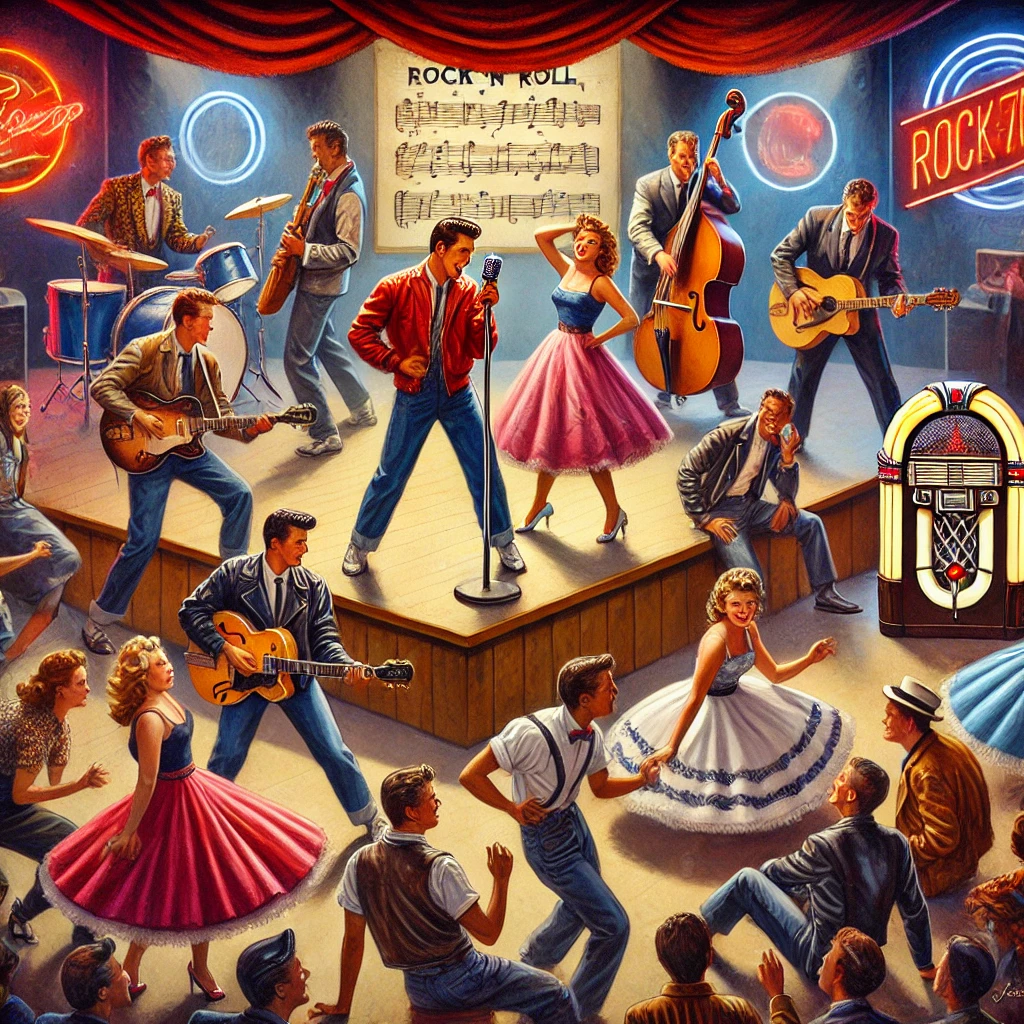
The upbeat tempos of rock ‘n’ roll got people on their feet. Teens embraced dance styles like the Twist, the Stroll, and the Jitterbug, infusing movement into social gatherings. Fashion also evolved, as young fans copied the style of their favorite rock ‘n’ roll artists—think leather jackets, denim jeans, and slicked-back hair for the boys, while girls donned poodle skirts and bobby socks. These trends set teenagers apart, creating a visible youth culture that older generations sometimes saw as subversive. - Radio, Television, and Records
Technological advances played a crucial role in popularizing rock ‘n’ roll. Portable transistor radios allowed teenagers to tune in to their favorite stations on the go. Television shows like “American Bandstand” brought rock ‘n’ roll into living rooms across the country. Record players became common in many households, turning 45-rpm singles into must-have items. This easy access to music fostered a collective youth identity built around shared tastes and experiences. - Youth Marketing
Recognizing the spending power of teenagers, advertisers quickly adapted, creating products and slogans that catered to this new demographic. From soda brands to fashion lines, marketing campaigns began featuring rock ‘n’ roll themes, further cementing the genre’s role in teenage life. This also led to debates about consumerism and commercial exploitation, yet it underscored how significant young people had become in shaping the economy and popular culture.
Rock ‘n’ roll didn’t just appeal to teenagers; it helped create the concept of the modern teenager. Young people were now recognized as a cultural force in their own right, complete with new attitudes, styles, and aspirations.
The Role of Integration and the Civil Rights Movement
The 1950s and 1960s were a time of intense social upheaval. Segregation was still law in many states, and the Civil Rights Movement was gaining momentum. Rock ‘n’ roll, being rooted in Black musical traditions, challenged discriminatory norms and offered a platform for racial integration—though not without complications.
- Challenging Racial Barriers
Rock ‘n’ roll frequently bridged racial divides, as teens from diverse backgrounds attended concerts and danced together, sometimes in defiance of local segregation laws. While many white listeners were first introduced to these sounds through sanitized covers by white artists, curiosity about the original Black performers eventually grew. This slow but steady crossover fueled a broader awareness of African American artistry and, to some extent, promoted cultural exchange. - Venues and Radio Stations
Integrated concerts were still controversial during the Jim Crow era, but brave organizers and enthusiastic fans pressed forward. Radio stations that previously played only “white” music or “Black” music had to reconsider their formats. Disc jockeys like Alan Freed became known for pushing boundaries, playing original R&B records for mixed audiences. These broadcasts highlighted music’s power to transcend entrenched biases. - Music as a Civil Rights Ally
Although not all rock ‘n’ roll artists were active in civil rights protests, the genre itself often served as a uniting force, bringing Black and white youth into shared cultural spaces. This contributed to an environment that, however slowly, eroded some racial barriers. Musicians like Sam Cooke, known for bridging gospel, rock, and soul, released songs that became anthems for change.
It’s important to acknowledge that systemic inequalities didn’t vanish because of a new music trend. Nonetheless, rock ‘n’ roll helped introduce millions of white teenagers to Black sounds and performers, indirectly supporting the broader call for racial equality.
Political and Social Shifts
By the early 1960s, the rock ‘n’ roll scene was evolving. New styles like soul, surf rock, and the beginnings of psychedelic rock were emerging. Simultaneously, political and social changes—from the Cold War to the Civil Rights Movement and the Vietnam War—created an atmosphere of both tension and possibility.
- The Rise of Social Awareness
While the earliest rock ‘n’ roll songs often stuck to themes like romance or partying, some artists began addressing social and political issues more directly. Bob Dylan, though more folk than rock initially, inspired many rock musicians to blend meaningful lyrics with popular music. The youth of America started expecting more from their music than just a fun beat—they wanted songs that addressed inequality, war, and societal challenges. - Campus Protests and Counterculture
In the mid to late 1960s, college campuses became hotbeds of political activism, with protests against the Vietnam War taking center stage. Rock music became intertwined with these protests, as artists performed at rallies and composed songs that questioned the status quo. Jimi Hendrix, Janis Joplin, and others represented a counterculture that rebelled against traditional values in favor of peace, love, and free expression. - Woodstock and the Summer of Love
Events like the 1967 “Summer of Love” in San Francisco and the 1969 Woodstock festival in upstate New York crystallized rock’s role in fostering a sense of community and shared identity among young people. Though this era sits on the tail end of our timeframe, it was the direct result of rock ‘n’ roll’s continuous evolution throughout the 1950s and 1960s. Rock music had become more than just entertainment—it was now a cultural force for unity and change.
Even if rock ‘n’ roll took different shapes—from the early “rockabilly” sounds to psychedelic experiments—it remained a voice for youth, a channel for social commentary, and a source of collective energy.
The British Invasion and American Response
In the early 1960s, a phenomenon known as the “British Invasion” shook the American music scene. Bands like The Beatles, The Rolling Stones, and The Who brought their own twist on rock ‘n’ roll back to U.S. shores, ironically reintroducing Americans to the style they had originated.
- The Beatles’ Meteoric Rise
When The Beatles arrived in the United States in 1964, their appearance on “The Ed Sullivan Show” was watched by millions, launching a frenzy known as Beatlemania. They drew heavily from Chuck Berry, Little Richard, Elvis, and other American rock pioneers, yet offered a fresh sound with catchy melodies and harmonies. Their massive success spurred countless teenage garage bands to pick up guitars and start playing. - Reinvigorating American Rock
The Rolling Stones embraced a grittier blues style, once again paying homage to the American R&B originators. As these British acts skyrocketed in popularity, American groups responded by intensifying their own styles—leading to the formation of bands like The Beach Boys (who specialized in surf rock) and Motown acts in Detroit who merged soul music with pop-friendly hooks. In that sense, the British Invasion rekindled U.S. interest in homegrown music traditions, pushing American rock ‘n’ roll forward. - Cultural Exchange
This back-and-forth between British and American musicians contributed to a global conversation about rock music. Themes of rebellion, freedom, and youthful passion transcended national borders. As the 1960s progressed, rock began incorporating more experimental elements, leading to the era of psychedelic rock exemplified by American and British bands alike.
While the term “rock ‘n’ roll” eventually evolved into just “rock,” the core spirit of energy and cultural fusion remained, continuing the dialogue that had begun in the 1950s.
Lasting Impacts and Legacy
Rock ‘n’ roll’s influence on American culture in the 1950s and 1960s was nothing short of transformative. Let’s explore the main ways in which this genre left an enduring mark:
- Empowering Youth
Rock ‘n’ roll gave young people a sense of identity and community. Teenagers became recognized as a vital market force and cultural group, leading to new fashion trends, new forms of slang, and new attitudes about personal freedom. This empowerment set the stage for the youth-driven social movements of the 1960s, including anti-war protests and environmental advocacy. - Breaking Musical Boundaries
The merging of African American rhythms and white country styles proved the power of cultural fusion. Rock ‘n’ roll opened doors for future genres—soul, funk, hip-hop—and led to mainstream acceptance of diverse musical traditions. It also inspired generations of guitarists, producers, and songwriters who continued to innovate with every new era. - Contributing to Racial Integration
While it didn’t singlehandedly end segregation or racism, rock ‘n’ roll played a subtle but significant role in bridging racial divides. By bringing Black and white performers together onstage—and by appealing to mixed audiences—this music helped shift public perception and validated African American artistry in the mainstream. - Stimulating Cultural Revolutions
The rebellious spirit of rock ‘n’ roll acted as a catalyst for the broader counterculture movements of the 1960s. Its influence reached not just music, but also attitudes toward authority, politics, sexuality, and spirituality. Young people championed creativity, self-expression, and social justice, setting the tone for decades of cultural debate and progress. - Defining American Identity Worldwide
American rock ‘n’ roll was exported globally, shaping impressions of the United States as a land of innovation, freedom, and possibility. Foreign bands adapted its style, returning their own interpretations to the U.S. in a continuous cycle of musical evolution. This worldwide exchange made rock a universal language that transcended borders.
Today, rock music has diversified into countless subgenres. Nevertheless, the foundation laid by 1950s and 1960s rock ‘n’ roll continues to inspire artists and captivate audiences. Even those who might not consider themselves fans of classic rock can appreciate how it broadened the cultural landscape and gave a voice to generations seeking change.
Conclusion
Rock ‘n’ roll in the 1950s and 1960s was more than just a catchy new soundtrack. It was a driving force that shook American society at its core, leading to lasting shifts in music, fashion, race relations, youth culture, and political activism. Born from a rich blend of African American musical traditions and rural white influences, rock ‘n’ roll democratized entertainment in a way that few art forms had before. Teenagers found a powerful sense of identity, crossing invisible lines that had long kept people apart, and making their voices heard in an era of radical change.
By the late 1960s, rock had expanded beyond its original boundaries, incorporating elements of folk, psychedelic experimentation, and soul. At the same time, it remained true to its roots—rebellious, energetic, and inclusive. Rock ‘n’ roll underscored the importance of youth voices in American culture and demonstrated the unifying power of a strong backbeat.
While each new decade brings fresh movements, from punk to hip-hop to electronic dance music, the story of modern American music continues to reflect the revolutionary spirit ignited in the ‘50s and ‘60s. Rock ‘n’ roll encouraged people to see beyond limitations, challenge societal norms, and celebrate life with a fearless beat. These ideals, first championed by early pioneers, still echo in today’s pop culture. By looking back at how rock ‘n’ roll influenced America—spanning racial lines, bridging generational gaps, and sparking political discourse—we can better understand the profound role music plays in shaping not just our ears, but our entire way of life.
Frequently Asked Questions
1. How did rock ‘n’ roll influence the social norms of the 1950s and 1960s?
Rock ‘n’ roll was a groundbreaking force that shattered the conventional social norms of the 1950s and 1960s. This vibrant genre encouraged young people to break away from their parents’ more conservative lifestyle and express their individuality. It was a period where teenagers began rejecting the status quo, leading to a clash between generations. Rock ‘n’ roll became synonymous with rebellion, freedom, and a new cultural identity for the youth. Lyrics addressing themes such as love, freedom, and disillusionment started conversations that were previously taboo. This music played a crucial role in the emergence of a distinct youth culture, which was characterized by a sense of independence and a shift away from rigid societal expectations.
2. In what ways did rock ‘n’ roll contribute to racial integration?
Rock ‘n’ roll was pivotal in bridging the racial divide during a time of intense segregation in America. The genre itself was born out of a blend of African American blues, gospel, and jazz music with white American country. This fusion brought people together as audiences from different racial backgrounds congregated to enjoy the electrifying performances. Artists like Chuck Berry, Little Richard, and Elvis Presley captivated fans irrespective of race, and their music aired on radio stations across the country, contributing to cultural integration. Moreover, the venues where rock ‘n’ roll was performed became spaces that promoted racial interaction, further catalyzing the fight against racial segregation.
3. Who were some of the iconic performers that defined rock ‘n’ roll in this era?
The 1950s and 1960s saw the rise of numerous legendary performers who defined the rock ‘n’ roll scene. Elvis Presley, often referred to as the King of Rock ‘n’ Roll, revolutionized the music industry with his charismatic stage presence and dynamic vocal style. Chuck Berry was another pioneer, known for his exceptional guitar riffs and energetic performances that left a lasting impact on future musicians. Little Richard’s flamboyant performances and raw energy distinguished him as one of the genre’s essential figures. Other influential artists include Buddy Holly, who set new standards for songwriting, and The Beatles, whose arrival in America in the 1960s marked the British Invasion and further propelled the popularity of rock ‘n’ roll. These artists not only left a musical legacy but also embodied the spirit of youthful rebellion and change.
4. How did rock ‘n’ roll affect the fashion and lifestyle of teenagers during the 1950s and 1960s?
The influence of rock ‘n’ roll reached beyond music, significantly affecting fashion and lifestyle for teenagers. This cultural movement inspired a new fashion sense characterized by leather jackets, denim jeans, and a more casual style that contrasted sharply with the previous generation’s conservative attire. Hairstyles became more expressive too, with pompadours and ‘ducktail’ haircuts for boys and beehives and bouffants for girls becoming trendy. Beyond fashion, rock ‘n’ roll encouraged a lifestyle of self-expression and individuality. Teenagers began to emulate their favorite rock stars not only in what they wore but in their attitudes and behaviors, leading to greater personal freedom and a break from the conformist leanings of the mid-century.
5. What role did technological advancements play in the spread of rock ‘n’ roll?
Technological advancements were instrumental in the dissemination and popularity of rock ‘n’ roll music. The rise of the portable transistor radio allowed teenagers to listen to their favorite tunes away from parental oversight, essentially making music more personal and accessible. This period also saw the emergence of television as a dominant medium, which gave artists like Elvis Presley widespread visibility and a platform to reach millions of households. With TV shows like “American Bandstand,” rock ‘n’ roll performances created a visual and cultural phenomenon. Furthermore, the development of vinyl records and jukeboxes significantly contributed to distributing this music to a broader audience, ensuring rock ‘n’ roll became an integral part of everyday life. These technological innovations democratized music access, allowing rock ‘n’ roll to become a unifying cultural force across America.