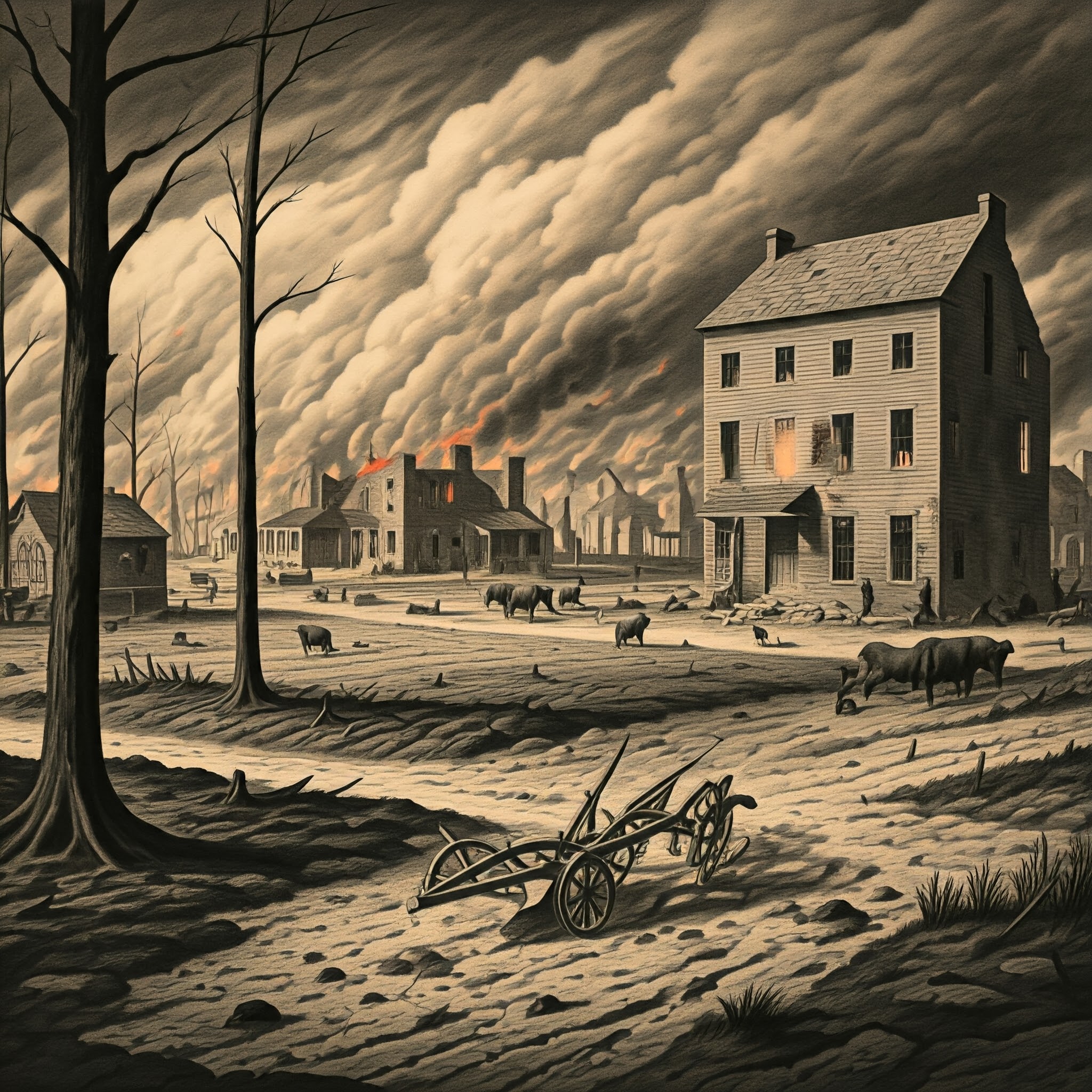
Sherman’s March to the Sea was a pivotal moment in the American Civil War that left an indelible mark on the Confederacy. Led by Union General William Tecumseh Sherman, this military campaign carved a path of destruction through the heart of the South. But beyond the physical devastation, how did this march affect the Confederacy’s ability to continue the war? Let’s dive into the strategic, economic, and psychological impacts of Sherman’s bold move.
The Strategic Vision Behind the March
In the autumn of 1864, the Civil War had reached a stalemate. General Sherman believed that to break the Confederacy’s backbone, the Union needed to wage total war—not just against Confederate armies but also against the resources that sustained them.
Total War Concept
Sherman’s strategy was rooted in the idea of total war, which targets both military forces and the economic infrastructure supporting them. By doing so, he aimed to demoralize the Southern civilian population and erode their support for the war effort.
The Atlanta Campaign
Before the famous march, Sherman captured Atlanta, a crucial transportation and supply hub for the Confederacy. This victory set the stage for his march and signaled a shift in Union tactics.
The March Unfolds
From November 15 to December 21, 1864, Sherman’s troops marched from Atlanta to Savannah, Georgia, covering approximately 300 miles.
Destructive Tactics
- Scorched Earth Policy: Sherman’s men destroyed railroads, burned crops, and confiscated livestock.
- Infrastructure Sabotage: They twisted railroad tracks into “Sherman’s neckties,” rendering them useless.
Minimal Direct Confrontation
Interestingly, Sherman’s forces encountered little resistance. Confederate troops were either spread too thin or unwilling to engage, allowing the Union army to move swiftly.
Economic Devastation
The march crippled the Confederacy’s already struggling economy.
Agricultural Impact
- Crop Destruction: The loss of crops led to food shortages for both the military and civilians.
- Labor Disruption: The liberation of enslaved people disrupted the labor force that the Southern economy relied upon.
Industrial Damage
Factories, mills, and workshops were destroyed, limiting the Confederacy’s ability to produce weapons and other essential goods.
Psychological Warfare
Sherman’s march was as much about breaking spirits as it was about destroying supplies.
Civilian Morale
- Fear and Uncertainty: The sight of a relentless Union army deep in Confederate territory sowed fear.
- Loss of Confidence: Civilians began doubting the Confederate government’s ability to protect them.
Military Morale
Confederate soldiers, hearing of the devastation back home, faced declining morale, leading to desertions and a decrease in enlistment.
Political Consequences
The march had significant political ramifications that extended beyond the South.
Impact on the 1864 Presidential Election
- Boost for Lincoln: Sherman’s success bolstered President Abraham Lincoln’s re-election campaign, assuring continued Union resolve.
- Diplomatic Signals: The march demonstrated to foreign nations that the Confederacy was losing, discouraging potential support.
Hastening the War’s End
By undermining the Confederacy’s ability to wage war, Sherman’s march accelerated the conflict’s conclusion.
Surrender at Appomattox
Just months after the march, General Robert E. Lee surrendered at Appomattox Court House, signaling the effective end of the Civil War.
Legacy and Controversy
Sherman’s tactics remain a topic of debate.
Criticism
- Ethical Concerns: Some view the destruction as excessive and cruel to civilians.
- Long-term Resentment: The devastation contributed to lasting animosity during Reconstruction.
Defense
- Military Necessity: Advocates argue that the tactics were necessary to end the war swiftly.
- Saving Lives: By shortening the war, Sherman’s actions may have ultimately saved lives on both sides.
Conclusion
Sherman’s March to the Sea was a defining moment that struck at the very heart of the Confederacy. By employing total war tactics, Sherman not only destroyed essential resources but also shattered the South’s will to continue fighting. The march played a crucial role in bringing about the end of the Civil War, leaving a complex legacy that continues to be studied and debated today.
Would you like me to continue?
o1
You said:
yes
ChatGPT
Thought for 33 seconds
Personal Accounts and Eyewitness Reports
To fully understand the impact of Sherman’s March to the Sea on the Confederacy, it’s essential to consider the personal accounts of those who lived through it.
Civilian Experiences
- Hardships Faced: Many Southern civilians documented the march’s devastation in diaries and letters. Families lost homes, farms, and livelihoods overnight.
- Stories of Survival: Some communities banded together to share resources and protect one another from the chaos.
Soldier Perspectives
- Union Soldiers: While carrying out orders, some Union soldiers grappled with the moral implications of total war. Letters home reveal a mix of duty and discomfort.
- Confederate Soldiers: News of the destruction demoralized Confederate troops, many of whom worried about their families and homes.
The Role of African Americans
The march had a profound effect on enslaved African Americans in the South.
Emancipation in Action
- Following the Troops: As Sherman’s army advanced, thousands of enslaved people seized the opportunity to escape bondage, following the troops toward freedom.
- Challenges Ahead: Despite gaining freedom, many faced uncertainty regarding shelter, food, and future employment.
Special Field Orders No. 15
- “Forty Acres and a Mule”: In January 1865, Sherman issued orders to redistribute confiscated land to formerly enslaved families. Though short-lived, it represented a significant step toward reparations.
Economic Aftermath
The long-term economic consequences for the Confederacy were dire.
Collapse of Infrastructure
- Transportation Breakdown: Destroyed railways and bridges isolated regions, making trade and communication nearly impossible.
- Industry in Ruins: The loss of factories and mills meant the South couldn’t produce necessary goods, further crippling the war effort.
Agricultural Crisis
- Food Shortages: With crops burned and livestock confiscated, both civilians and soldiers faced hunger.
- Economic Shift: The traditional plantation system was unsustainable without slave labor, forcing a reevaluation of the Southern economy.
Psychological Impact on the Confederacy
The march inflicted a heavy psychological toll on the Southern population.
Fear and Uncertainty
- Panic Spread: Rumors of approaching Union forces caused mass evacuations and chaos.
- Loss of Control: The inability of the Confederate government to protect its citizens eroded trust and loyalty.
Decline in Morale
- Civilian Despair: Witnessing the devastation led many to lose hope in a Confederate victory.
- Military Desertions: Demoralized soldiers deserted in higher numbers, weakening Confederate forces.
Political Ramifications
The march significantly influenced political dynamics both domestically and internationally.
Strengthening the Union Cause
- Lincoln’s Re-election: Sherman’s success bolstered Northern morale and contributed to Abraham Lincoln’s landslide victory in the 1864 presidential election.
- Unified Government: The election results ensured continued support for the war effort and policies like the Emancipation Proclamation.
International Perception
- Foreign Neutrality: Observing the Confederacy’s weakening position, European powers refrained from offering support or recognition.
- Moral Stance: The Union’s commitment to ending slavery gained favor internationally, isolating the Confederacy diplomatically.
Accelerating the War’s Conclusion
By undermining the Confederacy’s capacity to fight, the march hastened the end of the Civil War.
Strategic Advantages
- Cutting Supply Lines: Sherman’s destruction of resources hindered the Confederacy’s ability to resupply its armies.
- Dividing Forces: The march effectively split the Confederacy, making coordinated defense more challenging.
Paving the Way for Surrender
- Richmond’s Fall: With resources depleted, Confederate forces couldn’t hold key positions, leading to the fall of Richmond.
- Appomattox Courthouse: General Lee’s surrender in April 1865 was, in part, a result of the compounded pressures from Sherman’s campaign.
Legacy and Historical Interpretations
Sherman’s March to the Sea remains a subject of extensive analysis and debate among historians.
Military Innovation
- Total War Doctrine: Sherman’s tactics influenced future military strategies emphasizing the disruption of enemy resources.
- Psychological Warfare: The march demonstrated the effectiveness of targeting civilian morale.
Ethical Considerations
- Debate over Tactics: Critics argue that the march inflicted unnecessary suffering, while supporters claim it was a necessary means to a quicker end.
- Long-term Effects: The resentment fostered by the march impacted Reconstruction efforts and North-South relations for decades.
Cultural Representations
The march has been depicted in various forms of media, reflecting its complex place in American history.
Literature and Film
- Narrative Accounts: Books like Margaret Mitchell’s Gone with the Wind touch on the era’s turmoil, shaping public perception.
- Documentaries: Films and series have explored the march’s strategies and human stories, contributing to ongoing discussions.
Educational Impact
- Curriculum Inclusion: Sherman’s March is a staple in Civil War studies, highlighting lessons on strategy, ethics, and leadership.
- Public Memory: Monuments and historical markers commemorate the events, serving as reminders of the war’s impact.
Modern Reflections
The march’s implications extend beyond historical study, offering insights into contemporary military and ethical considerations.
Warfare Ethics
- Rules of Engagement: Sherman’s actions prompt discussions on the balance between military objectives and humanitarian concerns.
- Civilian Protection: Modern warfare increasingly emphasizes minimizing civilian casualties, contrasting with past strategies.
Reconciliation Efforts
- Healing Divides: Understanding the march’s impact fosters dialogue on national unity and the consequences of internal conflict.
- Historical Preservation: Efforts to preserve sites related to the march aim to educate future generations on its significance.
Conclusion
Sherman’s March to the Sea dealt a crippling blow to the Confederacy, affecting its economy, morale, and ability to continue the war. By employing total war tactics, Sherman not only hastened the end of the Civil War but also left a legacy that prompts critical examination of military strategy and ethical conduct in warfare. The march’s complex impact continues to influence how we understand the Civil War and its enduring effects on American society.