
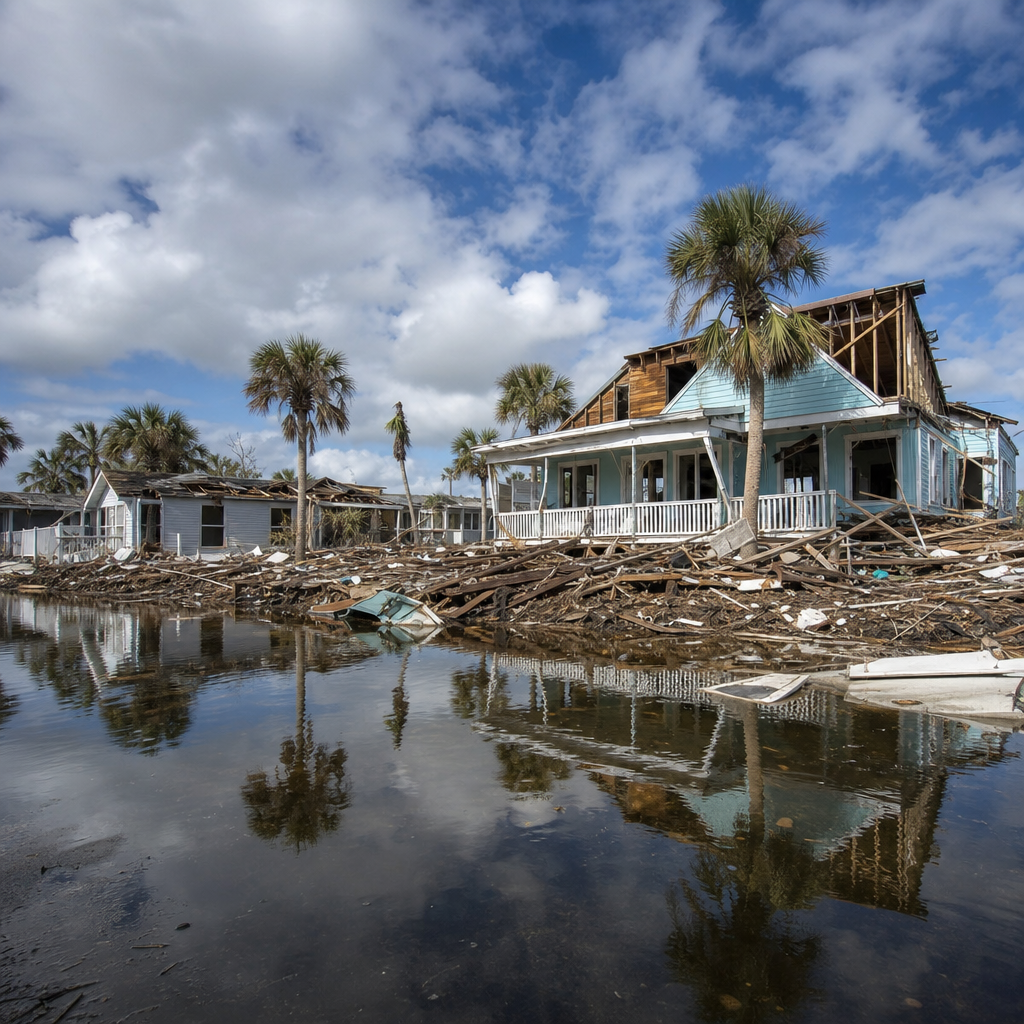
Catastrophe insurance and disaster economics sit at the intersection of risk, finance, public policy, and human recovery. In practice, they answer a hard question: who pays when earthquakes, hurricanes, floods, wildfires, or other low-frequency, high-severity events destroy homes, infrastructure, and livelihoods? Catastrophe insurance is the set of policies, reinsurance contracts, and capital market tools designed to transfer extreme loss from households, firms, and governments to broader pools of capital. Disaster economics is the study of how those shocks affect production, employment, prices, migration, public budgets, and long-run growth. After years of working with insurance pricing teams and post-event loss reviews, I have seen the same lesson repeated: disasters are never only physical events. They are financial chain reactions, and the quality of insurance design often determines whether a region rebounds or declines.
This matters because climate volatility, coastal development, aging infrastructure, and rising asset values are increasing the economic cost of disasters even where hazard frequency is stable. A storm striking a denser, wealthier coastline produces larger insured and uninsured losses than the same storm decades ago. The National Oceanic and Atmospheric Administration has repeatedly tracked billion-dollar U.S. disasters, while Swiss Re and Munich Re have documented a long-term upward trend in catastrophe losses globally. Yet insurance penetration remains uneven. Many households carry standard homeowners insurance but lack flood coverage. Small businesses often underestimate business interruption exposure. Local governments may depend on federal aid that arrives late and rarely makes victims whole. Understanding catastrophe insurance and disaster economics helps readers evaluate resilience, public finance, real estate risk, and the hidden cost of rebuilding in hazard-prone places.
How catastrophe insurance works in real markets
Catastrophe insurance differs from ordinary coverage because losses are correlated. In a house fire, one policyholder suffers while thousands do not. In a major hurricane, tens of thousands may file claims at once. That correlation is why insurers use strict underwriting, geographic concentration limits, deductibles tied to property value, and layered reinsurance. A primary insurer writes the homeowner or commercial policy. It then transfers part of that tail risk to reinsurers such as Munich Re, Swiss Re, Hannover Re, or Lloyd’s syndicates. Above that, some risk is moved to capital markets through catastrophe bonds, industry loss warranties, or collateralized reinsurance. This layered structure is essential because no single balance sheet should retain unlimited exposure to a regional mega-event.
Coverage terms are equally important. Catastrophe insurance can include named-peril property damage, additional living expense, debris removal, ordinance and law coverage, and business interruption. But exclusions are common. Standard U.S. homeowners policies generally exclude flood, which is why the National Flood Insurance Program became central to household flood risk transfer. In earthquake-prone states, separate earthquake policies often carry high percentage deductibles. For commercial risks, contingent business interruption may matter more than direct damage if a supplier, port, or power grid fails. One lesson from claims reviews is that policyholders focus on premium at purchase, then discover sublimits, waiting periods, and valuation clauses after the event. Replacement cost, actual cash value, and agreed value can produce very different recoveries when construction inflation spikes after a disaster.
Pricing catastrophe insurance relies on catastrophe models rather than simple historical averages. Vendors such as Verisk, Moody’s RMS, and CoreLogic combine hazard science, engineering vulnerability curves, geospatial exposure data, and financial policy terms to estimate probable maximum loss and average annual loss. Underwriters then adjust for demand surge, legal environment, building code quality, roof age, defensible space, and local mitigation. A coastal property elevated above base flood elevation, built to modern wind standards, and protected by shutters may receive materially better terms than an older nearby structure. These are not cosmetic distinctions; they are actuarial drivers. Better risk information improves both affordability and solvency.
The economic cost of disasters beyond insured damage
Insured losses are only one slice of total disaster cost. Economists separate direct losses, indirect losses, and broader welfare effects. Direct losses include destroyed buildings, damaged roads, spoiled inventory, and utility repairs. Indirect losses arise when firms cannot operate, tourism collapses, workers relocate, schools close, or transportation bottlenecks disrupt supply chains. Welfare losses include reduced health, educational setbacks, stress, and the permanent exit of small firms that lack liquidity. After major events, headline insured figures can look large while still understating the true economic burden because uninsured households and informal businesses absorb damage privately.
The distinction matters for policy. When Hurricane Katrina struck in 2005, insured losses were enormous, but the wider economic effects included displacement, labor market disruption, fiscal strain, and long-run population shifts. After the 2011 Tohoku earthquake and tsunami, Japan faced not only property destruction but also manufacturing interruptions that rippled through global auto and electronics supply chains. Wildfires in California have produced another pattern: insured property losses, temporary utility outages, litigation, reduced local tax certainty, and growing pressure on housing markets as displaced residents compete for limited rentals. In each case, disaster economics shows that recovery is constrained not just by rebuilding money, but by labor availability, permitting speed, infrastructure restoration, and credit access.
Distribution also matters. Higher-income households often have better insurance, more savings, and easier access to loans. Lower-income renters may lose transportation, wages, and personal property with little formal protection. Small businesses can be wiped out by a two-week shutdown even if their building survives. Municipalities face a squeeze as emergency spending rises while tax collections fall. This is why economists study resilience as a combination of physical protection, financial liquidity, and institutional capacity. A community with strong levees but weak household insurance can still suffer a slow recovery. Likewise, generous insurance without land-use discipline can encourage rebuilding in places where future losses are predictable.
Main instruments used to finance catastrophe risk
Risk financing spans households, insurers, corporations, and governments. Each instrument solves a different problem, and none is sufficient alone.
| Instrument | Primary user | What it covers well | Main limitation |
|---|---|---|---|
| Standard property insurance | Households and firms | Fire, wind, theft, some water damage | Often excludes flood or earthquake |
| Standalone catastrophe policy | Property owners | Earthquake, flood, named storm gaps | Higher deductibles and underwriting scrutiny |
| Reinsurance | Primary insurers | Balance sheet protection after severe events | Cost rises sharply after loss-heavy years |
| Catastrophe bond | Insurers and governments | Multi-year protection from capital markets | Structuring is complex and trigger basis risk exists |
| Public disaster fund | Governments | Emergency liquidity and infrastructure repair | Can be politically underfunded before crises |
| Parametric cover | Businesses and sovereigns | Fast payout after measurable triggers | May not match actual loss perfectly |
Parametric insurance deserves special attention because it addresses one of the oldest post-disaster problems: slow claims settlement. Instead of indemnifying actual measured damage, parametric policies pay when an index crosses a threshold, such as wind speed, rainfall, earthquake intensity, or modeled area loss. Caribbean sovereign pools and some agricultural programs use this design because cash speed can be more valuable than perfect loss matching. The tradeoff is basis risk, the possibility that the trigger pays too little, too much, or not at all relative to actual damage. In my experience, parametric products work best when buyers understand they are liquidity tools, not exact substitutes for property claims.
Governments also play a dual role as insurer and insurer of last resort. Public programs may subsidize coverage where private markets retreat, as seen with residual wind pools, state earthquake authorities, and national flood systems. They also fund rebuilding grants, emergency response, and infrastructure reconstruction. The policy challenge is balancing affordability with actuarial signals. If premiums are held too far below risk, development can intensify in vulnerable areas and future fiscal exposure grows. If prices rise too abruptly, existing residents may become uninsured. Good program design uses targeted assistance for low-income households while preserving clear incentives for mitigation, elevation, retrofitting, and safer location choices.
What drives affordability, availability, and market withdrawal
Three forces largely determine whether catastrophe insurance remains available: hazard, capital, and regulation. Hazard is the expected physical loss, shaped by climate patterns, topography, vegetation, floodplain conditions, and construction quality. Capital is the willingness of insurers, reinsurers, and investors to absorb that risk at a given price. Regulation influences rate approval, solvency standards, policy forms, and nonrenewal rules. When hazards intensify or uncertainty rises, capital becomes more selective. If regulators prevent adequate pricing for too long, insurers may shrink market share, cap new business, or exit entirely. That sequence has been visible in parts of Florida, California, and Louisiana, though each market has distinct legal and climatic drivers.
Litigation costs and claims inflation are often underestimated by the public. Replacement materials, skilled labor, and temporary housing become more expensive after large events. Fraud, assignment-of-benefits abuse, and prolonged disputes can push loss costs beyond modeled physical damage. At the same time, stricter building codes can reduce long-run losses even if they raise upfront construction expense. The Insurance Institute for Business and Home Safety has shown that fortified roof and opening protections materially improve wind performance. Insurers reward those features because loss data supports them. The practical takeaway is straightforward: affordability is not only about premiums; it is also about reducing expected damage through better buildings, zoning, vegetation management, drainage, and infrastructure maintenance.
Market withdrawal does not mean risk disappears. It shifts. When private carriers retreat, more exposure lands in state-backed plans, uninsured households, mortgage servicers, and public relief budgets. That transfer is economically significant because uninsured losses slow recovery and amplify inequality. A homeowner without adequate flood insurance may delay repairs, default on a loan, or abandon a property, depressing neighborhood values. A city hit by repeated uninsured damage may face higher borrowing costs if investors question its tax base. For this reason, catastrophe insurance should be viewed as part of regional economic infrastructure, not a niche financial product.
Building resilience through mitigation and smarter policy
The most effective disaster economics strategy is to reduce loss before it occurs. Mitigation has repeatedly delivered strong returns, though the exact ratio varies by project type and study method. FEMA and the National Institute of Building Sciences have long reported that investments in safer building standards, floodproofing, seismic retrofits, and protective infrastructure can save multiple dollars for every dollar spent. In underwriting files, the pattern is visible. Homes with impact-resistant roofing, elevated mechanical systems, cleared defensible space, and modern tie-downs survive better and reoccupy faster. Businesses with tested continuity plans, backup power, cloud-based records, and alternate suppliers reopen sooner.
Land-use policy is equally powerful. Rebuilding the same structure in the same vulnerable footprint without elevation, setback changes, or drainage upgrades is not resilience; it is loss deferral. Managed retreat remains politically difficult, yet in some repetitive-loss areas it is economically rational. Buyouts, rolling easements, updated flood maps, wildfire buffer requirements, and infrastructure pricing can align private decisions with public risk. The goal is not to eliminate catastrophe exposure, which is impossible, but to place people and capital where recovery is feasible and recurring subsidies are limited.
For readers treating this page as a hub, the central idea is simple. Catastrophe insurance converts extreme uncertainty into a financed, contract-based recovery plan, while disaster economics shows how those contracts shape broader outcomes for households, firms, and governments. The strongest systems combine accurate pricing, deep reinsurance and capital market support, transparent public backstops, and relentless mitigation. The weakest systems rely on underpriced risk, outdated maps, thin household savings, and hope for post-event aid. Review your own exposure, verify policy exclusions and deductibles, and prioritize mitigation that measurably lowers loss. Better preparation is the cheapest recovery strategy available.
Frequently Asked Questions
What is catastrophe insurance, and how is it different from standard insurance?
Catastrophe insurance is designed to cover low-frequency, high-severity events such as hurricanes, earthquakes, floods, wildfires, and other disasters that can produce very large losses all at once. Unlike standard insurance, which often deals with more predictable and independent claims like minor auto accidents or isolated property damage, catastrophe insurance must account for the fact that a single event can affect thousands of policyholders in the same region at the same time. That concentration of risk makes pricing, reserving, and risk transfer much more complex.
In practical terms, catastrophe insurance often involves layered protection. A homeowner or business may buy a primary insurance policy, that insurer may then buy reinsurance to protect itself against extreme losses, and reinsurers may further spread the risk through global portfolios or capital market instruments such as catastrophe bonds. This structure exists because disasters can generate claims far beyond what one insurer could comfortably absorb on its own.
Another key difference is that catastrophe coverage is often more limited, more expensive, and more dependent on geography than ordinary insurance. Coverage may exclude certain hazards unless purchased separately, as is common with flood or earthquake insurance. Deductibles may be higher, sometimes calculated as a percentage of insured value rather than as a flat dollar amount. Premiums also tend to reflect location-specific exposure, building characteristics, local mitigation standards, and the evolving science of climate, seismic, or wildfire risk. In short, catastrophe insurance is not just standard insurance for bigger accidents; it is a specialized financial mechanism built to manage systemic shock.
Why is catastrophe insurance so important to disaster economics?
Catastrophe insurance plays a central role in disaster economics because it determines how losses are financed and how quickly recovery can begin. After a major disaster, the physical damage is only part of the story. There are also economic ripple effects: business interruption, unemployment, reduced tax revenue, housing displacement, supply chain disruption, and public infrastructure repair. Insurance helps convert a devastating physical event into a manageable financial process by providing liquidity when households, businesses, and local governments need it most.
From an economic perspective, insured recovery is often faster and less chaotic than recovery funded entirely through personal savings, borrowing, or delayed public aid. Families with insurance payouts can begin repairs sooner. Businesses can replace equipment, reopen, and retain employees. Lenders face fewer defaults when damaged collateral is restored quickly. Municipalities and regional economies also benefit when claims payments support reconstruction spending and stabilize property values.
Disaster economics also focuses on who ultimately bears the cost of catastrophe. Without insurance or other risk-transfer tools, losses remain concentrated on those directly affected, which can deepen inequality and create long-term economic scarring. With effective insurance systems, some of that burden is distributed across broader pools of policyholders, reinsurers, investors, and sometimes governments. This does not eliminate the total cost of disaster, but it changes the timing and distribution of payment in ways that can reduce financial distress and support resilience. That is why catastrophe insurance is not merely a product sold after risk is measured; it is a cornerstone of how modern economies absorb shocks.
How are catastrophe insurance premiums priced, and why can coverage become so expensive in high-risk areas?
Catastrophe insurance premiums are priced using a combination of historical loss data, engineering analysis, catastrophe modeling, geographic exposure, replacement cost estimates, and forward-looking assessments of hazard behavior. Insurers and reinsurers do not simply ask how often a disaster happened in the past; they also evaluate how severe future events could be, how concentrated insured properties are, how vulnerable structures may be, and how much capital must be held in reserve to survive extreme loss years. In catastrophe lines, the possibility of very large correlated losses means pricing must reflect not just expected annual claims but also the cost of solvency under stress.
Coverage becomes expensive in high-risk areas because the underlying risk is expensive. Coastal zones vulnerable to hurricanes, fault regions prone to earthquakes, floodplains, and wildfire-exposed communities face a greater probability of severe losses. If reconstruction costs are rising due to inflation, labor shortages, or stricter building codes, the potential claim size increases further. Reinsurance costs also affect retail premiums. When global reinsurers experience large losses or anticipate greater volatility, they raise prices or reduce capacity, and those costs are often passed down to policyholders.
There is also an economic and political tension in pricing. Risk-based premiums improve market accuracy and discourage development in the most hazard-prone places, but they can also make insurance unaffordable for some households and businesses. If premiums are kept artificially low for affordability reasons, insurers may withdraw, underprice risk, or rely on public backstops. If premiums rise sharply, coverage take-up may fall, leaving more people underinsured and shifting future disaster costs back onto taxpayers or victims themselves. That is why pricing catastrophe insurance is not only an actuarial exercise; it is also a public policy challenge involving affordability, resilience, land use, and social equity.
What role do reinsurance, catastrophe bonds, and governments play in paying for major disasters?
Major disasters are rarely financed by one layer of the insurance system alone. Reinsurance is one of the most important mechanisms because it allows primary insurers to transfer part of their extreme-loss exposure to larger, often global, risk-bearing firms. This helps insurers remain solvent after major events and continue writing policies in hazard-prone regions. Reinsurance effectively broadens the pool of capital available to absorb catastrophe losses, making local risks part of a global financial system.
Catastrophe bonds and similar insurance-linked securities add another layer by bringing capital market investors into the risk transfer chain. In a catastrophe bond structure, investors receive a return in exchange for accepting the possibility that some or all of their principal will be used to pay disaster losses if a defined event occurs. These instruments can diversify funding sources beyond the traditional insurance sector and provide additional capacity when reinsurance markets tighten. They are especially valuable for large, infrequent risks that might otherwise strain insurer balance sheets.
Governments also play a major role, directly and indirectly. In some countries, public programs provide insurance for hazards that private markets are unwilling or unable to cover at scale, such as flood or earthquake risk. Governments may also act as insurers of last resort, offer post-disaster aid, subsidize premiums, set building standards, or provide guarantees that stabilize insurance markets. However, public support creates trade-offs. If aid is generous and predictable, people may underinsure or continue building in risky areas, a problem often described as moral hazard. If aid is too limited, vulnerable communities may face prolonged hardship. The broader disaster finance system therefore depends on balancing private insurance, reinsurance, capital markets, and public intervention so that losses can be paid without undermining long-term incentives for risk reduction.
Can catastrophe insurance reduce disaster losses, or does it only pay for damage after the event?
Catastrophe insurance does more than pay claims after a disaster; when designed well, it can actively reduce future losses. Insurers influence behavior through pricing, underwriting standards, discounts for mitigation, and risk information. For example, stronger roofs, elevated structures, defensible space in wildfire zones, storm shutters, seismic retrofits, and flood-resistant materials can all lower expected losses. When insurers recognize these measures with better terms or lower premiums, they create financial incentives for resilience before disaster strikes.
Insurance also generates data and risk signals that shape economic decisions. Premiums, availability, and coverage conditions communicate where risk is rising and where properties are especially vulnerable. That information can influence building practices, mortgage requirements, zoning debates, and public infrastructure planning. In this sense, insurance is part of the feedback loop between environmental hazard and economic behavior. It does not just respond to risk; it helps define how societies perceive and manage it.
That said, insurance alone cannot solve the problem of escalating catastrophe losses. If land use policy encourages development in exposed areas, if infrastructure is weak, or if climate and environmental conditions are worsening, insurance may simply become more expensive or less available. Effective disaster risk reduction usually requires coordination among insurers, regulators, planners, builders, lenders, and governments. The strongest systems combine risk-based coverage with mitigation incentives, updated hazard mapping, resilient construction standards, and targeted public support for households that might otherwise be priced out. So while catastrophe insurance is fundamentally a financing tool, it is also a powerful lever for prevention, adaptation, and more economically sustainable recovery.