
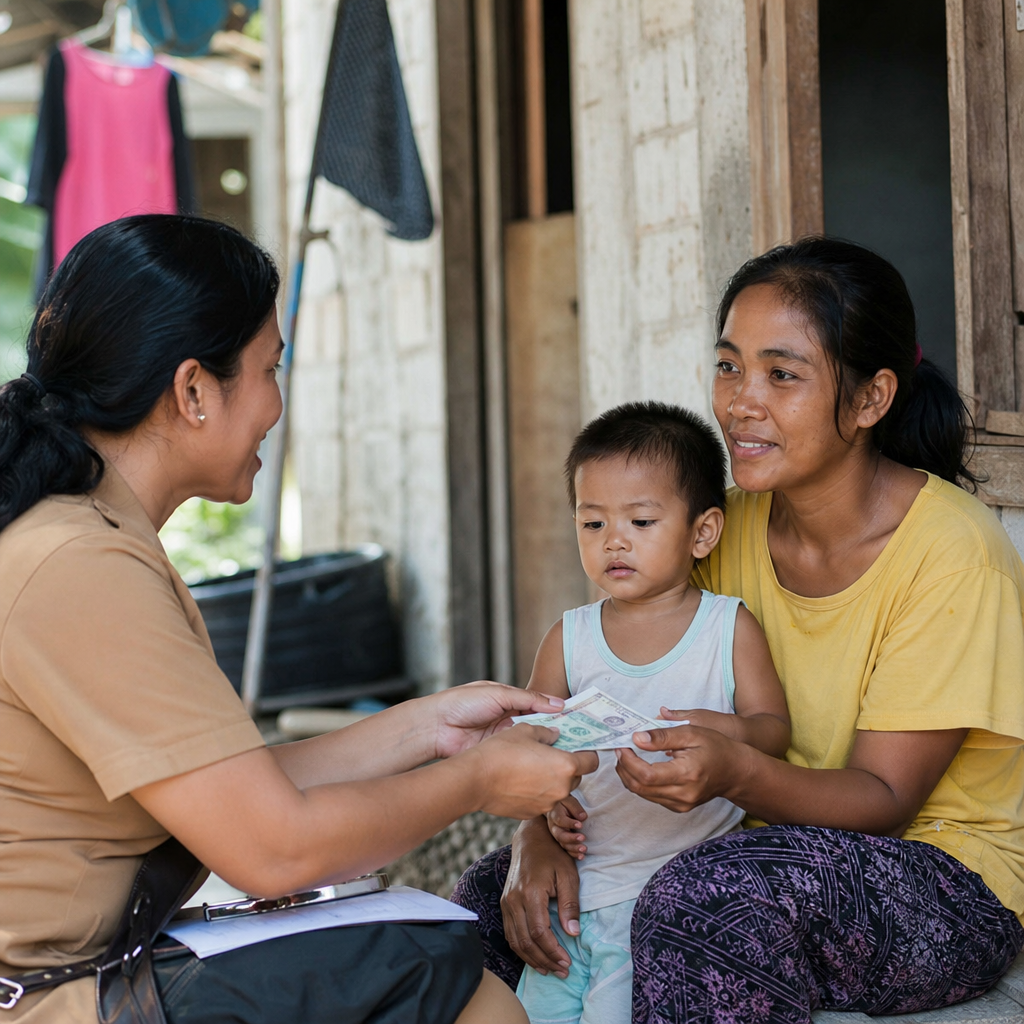
Conditional cash transfers are one of the most studied anti-poverty tools in modern economics because they pay low-income households money while requiring actions such as school attendance, health visits, or vaccinations. In simple terms, a conditional cash transfer program gives immediate income support today and tries to build human capital for tomorrow. That two-part logic explains why policy makers from Latin America to Africa and Asia keep returning to the model. The central question, however, is not whether these programs are compassionate, but whether conditional cash transfers reduce poverty effectively across different contexts, costs, and administrative systems.
In practice, effectiveness means more than raising monthly consumption for a few months. Economists usually examine several outcomes: poverty headcount, poverty gap, food security, school enrollment, attendance, clinic use, nutrition, labor supply, women’s bargaining power, and long-run earnings. A program can succeed on one measure and disappoint on another. I have worked through evaluations where a transfer clearly increased school participation but did little for learning quality because classrooms were overcrowded and teachers absent. I have also seen cases where households used cash prudently, yet cumbersome compliance systems excluded the poorest families. Those tensions matter when judging real-world performance.
The topic also matters because governments face hard tradeoffs. Every dollar spent on a conditional transfer is a dollar not spent on universal child benefits, public works, food subsidies, school construction, or health staffing. Supporters argue that conditions create accountability and make transfers politically durable by linking assistance to socially valued behavior. Critics counter that many poor families already value education and health, and that conditions can become punitive when services are weak or access costs are high. A serious assessment must therefore ask what conditional cash transfers do well, where they fail, and under what institutional conditions they outperform alternatives. That broader perspective makes this article a useful hub for economics readers exploring poverty policy, welfare design, development finance, behavioral incentives, social protection systems, and evidence-based public administration.
How conditional cash transfers work and why economists use them
A conditional cash transfer program has four moving parts: targeting, payment, conditions, and verification. Targeting identifies eligible households, often through means tests, proxy means tests, geographic poverty maps, or community validation. Payment delivers cash, usually to mothers or primary caregivers, through bank accounts, cards, mobile money, or local payment points. Conditions require measurable actions such as minimum school attendance, prenatal visits, child growth monitoring, or immunization schedules. Verification checks compliance using school registers, clinic records, or integrated management information systems. If any of those elements break down, effectiveness falls quickly.
The economic rationale combines income effects and incentive effects. The income effect is immediate: cash raises consumption, smooths shocks, and reduces extreme deprivation. The incentive effect is longer term: conditions lower the effective price of investing in children’s education and health. This draws on human capital theory associated with Gary Becker and later development economics work on intergenerational poverty. If poor households face liquidity constraints, uncertainty, or high short-term opportunity costs from keeping children in school, a transfer tied to attendance can shift behavior. The policy aims to interrupt the cycle in which poverty today causes lower schooling, weaker health, and lower earnings tomorrow.
Conditionality also solves a political problem. In many countries, voters and finance ministries are more willing to support cash programs when recipients are seen as meeting responsibilities. That political economy feature helped major programs scale. Mexico’s Progresa, later Oportunidades and Prospera, became a landmark because it combined rigorous evaluation with transparent rules. Brazil’s Bolsa Família achieved broad reach by integrating existing benefits and emphasizing school and health commitments. These programs influenced social protection design across the Global South and informed debates in the World Bank, Inter-American Development Bank, and national treasury departments.
What the evidence says about poverty reduction
Yes, conditional cash transfers usually reduce short-term poverty, especially extreme poverty, because they directly increase household income and stabilize consumption. That is the clearest answer supported by evidence. Randomized and quasi-experimental studies repeatedly find gains in food spending, reduced hunger, and lower poverty gaps among beneficiaries. The strongest and most immediate effects occur where transfers are meaningful relative to baseline income and are paid predictably. Reliability matters as much as size. A modest transfer arriving on time can help a family budget for school materials and meals; a larger but erratic transfer has weaker protective value.
On education, the evidence is strongest for enrollment and attendance rather than learning. Progresa in Mexico increased secondary school enrollment, with especially large effects for girls at transition points where dropout risk was high. Similar patterns appeared in several countries because conditions and cash offset direct and indirect schooling costs, including transport, uniforms, and foregone child labor. However, rising attendance does not automatically produce better test scores. Where school quality is poor, the transfer can bring children into classrooms without generating much cognitive gain. That distinction is essential for any honest answer about effectiveness.
Health effects are also mixed but generally positive for service use. Conditional cash transfers tend to increase preventive clinic visits, vaccination completion, prenatal care, and child growth monitoring. Some programs improve dietary diversity and reduce stunting risk, especially when paired with nutrition counseling. Yet impacts on final health outcomes such as anemia, child mortality, or adult health status vary because these depend on service quality, sanitation, water access, and local disease environments. Cash can increase demand for care; it cannot by itself ensure medicines are stocked, nurses are present, or roads are passable during the rainy season.
Long-run outcomes are harder to measure, but several studies suggest meaningful gains. Follow-ups from Latin American programs have linked beneficiary exposure in childhood to higher years of schooling, better formal labor market participation, and higher adult earnings. These gains support the original human capital argument. Still, the magnitude differs by age, region, and labor market structure. If local economies do not create productive jobs, education gains may not translate fully into wage gains. Conditional cash transfers reduce poverty most effectively when they are embedded in a broader development strategy rather than expected to carry the entire burden alone.
Where conditional cash transfers succeed, struggle, and compare with alternatives
The biggest strengths of conditional cash transfers are targeting efficiency, predictable relief, and measurable service uptake. They are particularly effective for households with children, where investments in schooling and health generate social returns beyond immediate income support. They can also strengthen women’s financial control when transfers are paid to mothers, which many studies associate with higher spending on food, children’s goods, and school expenses. In fragile household budgets, that design choice is not symbolic; it changes spending patterns and improves resilience during price shocks, illness, or temporary unemployment.
But these programs struggle in three common situations. First, they underperform where public services are absent or low quality. Conditioning school attendance has limited value if the nearest school is unsafe or understaffed. Second, they can miss the poorest households when documentation rules, digital registration, or travel requirements are burdensome. Third, compliance monitoring can create administrative costs and exclusion errors. I have reviewed beneficiary files where a child met attendance rules, yet payment was delayed because the school uploaded records late. That is not a minor technical glitch; for a poor household, timing can determine whether rent or medicine gets paid.
Compared with unconditional cash transfers, the evidence is more nuanced than many debates suggest. Unconditional programs often produce substantial poverty reduction and can improve nutrition, school participation, and mental well-being without policing behavior. In some settings, the added effect of conditions is modest because poor families already prioritize children when cash arrives. Conditions matter most where there are strong behavioral or cost barriers at critical decision points, such as adolescent school retention. The table below summarizes the practical comparison policy makers usually weigh.
| Approach | Main advantage | Main limitation | Best use case |
|---|---|---|---|
| Conditional cash transfers | Raises income and incentivizes education or health use | Higher administrative burden and exclusion risk | Areas with functioning schools and clinics |
| Unconditional cash transfers | Simpler delivery and faster coverage expansion | Less direct leverage over service uptake | Crisis response, remote regions, elderly or disabled households |
| In-kind subsidies | Can protect consumption of specific goods | Distortion, leakage, storage, and higher delivery costs | Nutrition or commodity shortages |
| Public works | Income support tied to employment creation | Weak fit for caregivers, elderly people, and the sick | Seasonal unemployment and infrastructure maintenance |
Another comparison concerns universal versus targeted support. Universal benefits reduce stigma and administrative filtering, but they cost more fiscally and deliver less money per poor household if budgets are fixed. Targeted conditional cash transfers concentrate resources, yet targeting mistakes are inevitable. The policy choice depends on state capacity, fiscal space, and social objectives. Where poverty is widespread and databases are weak, a simpler broad-based transfer may outperform a finely tuned conditional program on net welfare grounds.
Design choices that determine whether programs work
Design details decide whether a conditional cash transfer is effective or merely well intentioned. Transfer size should be large enough to influence behavior but not so large that it becomes fiscally unstable. Payment frequency should match household budgeting needs; monthly or bimonthly schedules usually work better than irregular disbursements. Conditions must be clear, limited, and objectively verifiable. If a mother needs three bus rides and two missing signatures to prove compliance, the program is poorly designed. The best systems reduce friction through interoperable records, grievance mechanisms, and simple recertification rules.
Targeting quality is equally decisive. Proxy means tests, commonly used in lower-capacity systems, estimate poverty using household characteristics such as housing materials, assets, and demographics. They are useful at scale but imperfect. Households just above a cutoff can still be highly vulnerable, while informal earnings are hard to observe. Good practice combines data models with local validation, periodic updating, and transparent appeals. Countries with integrated social registries generally administer large transfer systems more effectively because they can cross-check identity, school enrollment, clinic attendance, and payment status in one workflow.
Supply-side readiness is the forgotten half of success. If a government pays families to attend school, it should also ensure teachers, classrooms, toilets, and textbooks exist. If it conditions prenatal visits, clinics need staff, transport access, and medicines. The strongest programs coordinate with education and health ministries instead of treating cash as a standalone instrument. Monitoring should track not only compliance but service quality, dropout transitions, and payment failures. That is how a transfer program evolves from a narrow subsidy into a functioning social protection platform.
Fiscal sustainability cannot be ignored. Conditional cash transfers are often affordable relative to broad subsidies, but they still require stable budgets, credible payment systems, and political continuity. During inflation spikes, nominal benefit levels can erode quickly unless indexed or periodically adjusted. During recessions, caseloads may rise just as revenues weaken. Smart design therefore includes contingency rules, audit procedures, and cost reviews. A program that reduces poverty for three years and then collapses under arrears or political turnover has not solved the underlying problem.
The bottom line for economics readers and policy makers
Conditional cash transfers do reduce poverty effectively, but only in a qualified, evidence-based sense. They are highly effective at lowering short-term income poverty and increasing use of education and health services. They are moderately effective at improving longer-term human capital outcomes when schools and clinics function well. They are less effective when public services are weak, targeting systems exclude eligible families, or compliance rules become obstacles rather than incentives. That balanced conclusion is more useful than the sweeping claim that cash conditions are either the best anti-poverty tool or an unnecessary burden in every case.
For an economics hub on this miscellaneous social policy area, the key lesson is that conditional cash transfers are best viewed as one component of a broader poverty strategy. They work especially well alongside quality public services, robust social registries, women-centered payment design, and reliable administrative data. They should be compared seriously with unconditional cash transfers, universal child benefits, food support, and labor market programs rather than defended on ideology alone. When policy makers match the instrument to the setting, the returns are substantial and measurable.
If you are evaluating poverty policy, start with the practical questions that determine outcomes: Are the right households reached? Are payments predictable? Are conditions realistic? Are schools and clinics capable of absorbing demand? Answer those questions before arguing about labels. That is the fastest route to designing anti-poverty programs that genuinely improve lives.
Frequently Asked Questions
1. What are conditional cash transfers, and how are they supposed to reduce poverty?
Conditional cash transfers, often called CCTs, are public assistance programs that provide money to low-income households on the condition that they complete specific actions, usually related to education or health. Common requirements include keeping children in school, attending preventive health visits, receiving vaccinations, or participating in nutrition monitoring. The basic idea is straightforward: families facing poverty often need immediate financial relief, but governments also want policies that improve long-term economic prospects. CCTs try to do both at once.
In the short term, the cash itself helps reduce material hardship. It can be used for food, transport, school supplies, medicine, rent, or other essentials, which can make a measurable difference in households living close to subsistence. That direct income effect is one reason CCTs can reduce current poverty, especially extreme poverty. In the longer term, the conditions are meant to encourage investments in human capital. If children stay in school longer and receive more consistent healthcare, they may be healthier, more skilled, and better positioned to earn higher incomes later in life.
This dual objective is what makes CCTs so appealing in policy discussions. They are not designed only as consumption support, and they are not designed only as behavior-change tools. They sit in the middle, combining social protection with developmental goals. Whether they reduce poverty effectively depends on how large the payments are, how realistic the conditions are, whether services such as schools and clinics are actually available, and whether gains in education and health translate into stronger labor market outcomes over time.
2. Do conditional cash transfer programs actually work in practice?
Broadly speaking, the research shows that conditional cash transfers often work well on several important dimensions, but their success is not automatic and it varies by context. Many well-known programs have increased school enrollment, improved attendance at health clinics, raised vaccination rates, and reduced some forms of short-term poverty. In that sense, the evidence is stronger for improving service use and easing immediate financial stress than for solving poverty permanently on their own.
One reason CCTs are so widely studied is that many programs have been evaluated carefully, especially in Latin America. These evaluations often find that households spend more on food, education, and child-related goods after receiving transfers. School participation tends to rise, particularly among groups that are more likely to drop out, such as older children or girls in some settings. Preventive healthcare use also commonly increases when families are asked to comply with regular checkups or immunization schedules.
However, “working” can mean different things. If the goal is to reduce current poverty, CCTs can be effective because they raise household income directly. If the goal is to improve future earnings, the answer is more complicated. Better attendance in school does not automatically mean better learning, and more clinic visits do not always produce better health outcomes if the services are low quality. So while the model often delivers positive results, especially in access and participation, its deeper long-run impact depends on the broader system around it. CCTs tend to be most effective when they are well targeted, adequately funded, and paired with functioning schools, clinics, and administrative capacity.
3. What are the biggest strengths and benefits of conditional cash transfers compared with other anti-poverty policies?
One major strength of conditional cash transfers is that they address two policy problems at the same time: immediate deprivation and underinvestment in children. A family that lacks cash today may pull children out of school, skip medical visits, or delay preventive care because the costs of transport, uniforms, time, or lost wages are too high. By offsetting those costs, CCTs can make socially beneficial choices more feasible. That gives them an advantage over policies that focus only on short-term relief or only on long-term development.
Another benefit is that CCTs can be highly targeted. Governments can direct support to households that are most likely to benefit, which can improve cost-effectiveness when budgets are limited. The conditions also make the program politically attractive in many countries because voters and policy makers often prefer assistance tied to education or health rather than unrestricted support. In practice, that political acceptability can matter a great deal, because programs that are easier to defend publicly may be easier to sustain over time.
CCTs can also generate spillover benefits beyond the household. Higher school attendance may increase literacy and labor productivity in the future. More preventive care can reduce avoidable illness and improve child development. In some cases, the regularity of payments helps families smooth consumption and avoid harmful coping strategies such as taking on expensive debt, reducing meals, or sending children to work. That said, these benefits are strongest when the state can reliably deliver both the cash and the required services. The program’s design matters, but the surrounding institutions matter just as much.
4. What are the main criticisms or limitations of conditional cash transfers?
Despite their promise, conditional cash transfers are not a cure-all, and several criticisms come up repeatedly in the evidence and policy debate. One of the most common concerns is that conditions may exclude the very people the program is trying to help. If a family lives far from a clinic, lacks transport, or has no nearby school with available places, meeting the conditions may be difficult or impossible. In that case, the burden of compliance falls on poor households even though the missing piece is often inadequate public infrastructure rather than a lack of motivation.
Another limitation is administrative complexity. Conditional programs require systems to identify eligible households, track compliance, process payments, and handle appeals or errors. That can raise costs and create opportunities for bureaucratic mistakes. If monitoring is weak, conditions may exist mostly on paper. If monitoring is strict but the public services are poor, families may be penalized unfairly. In either case, implementation quality becomes a central issue.
There is also a deeper economic question about whether the “conditional” part is always necessary. Some studies suggest that cash alone, without strict requirements, can also improve schooling or health because families often know what they need but lack the resources to act. From that perspective, conditions may sometimes be less important than the transfer itself. Critics also point out that increased school attendance does not guarantee better learning outcomes, and improved service use does not guarantee better future wages. If labor markets are weak, children may complete more schooling yet still face limited job opportunities. So the core limitation is not that CCTs never help; it is that they cannot, by themselves, fix all the structural causes of poverty.
5. Under what conditions are conditional cash transfers most effective at reducing poverty over the long term?
Conditional cash transfers are most effective over the long term when several pieces line up at once. First, the transfer has to be meaningful enough to change household decisions. If the payment is too small or too irregular, it may not offset the costs of school attendance, clinic visits, or forgone child labor. Predictability matters almost as much as size, because families need to trust that the support will arrive consistently.
Second, the required services must be available and reasonably good in quality. A condition to attend school is only useful if children can access a school with teachers, materials, and space. A condition to attend health appointments only helps if clinics have staff, medicine, and basic capacity. Without that service backbone, CCTs may increase compliance statistics without generating substantial gains in learning, nutrition, or health.
Third, programs work better when they are designed with local realities in mind. Conditions should be realistic, exemptions should exist for households facing barriers, and administrative systems should be simple enough to reduce exclusion errors. Effective targeting, transparent rules, and reliable payment systems all improve performance. Finally, long-term poverty reduction is more likely when CCTs are part of a broader development strategy. That can include school quality reforms, maternal and child health investments, labor market opportunities, and complementary social protection. In other words, CCTs can be a powerful tool, but they are usually most successful as one component of a larger anti-poverty framework rather than as a standalone solution.