
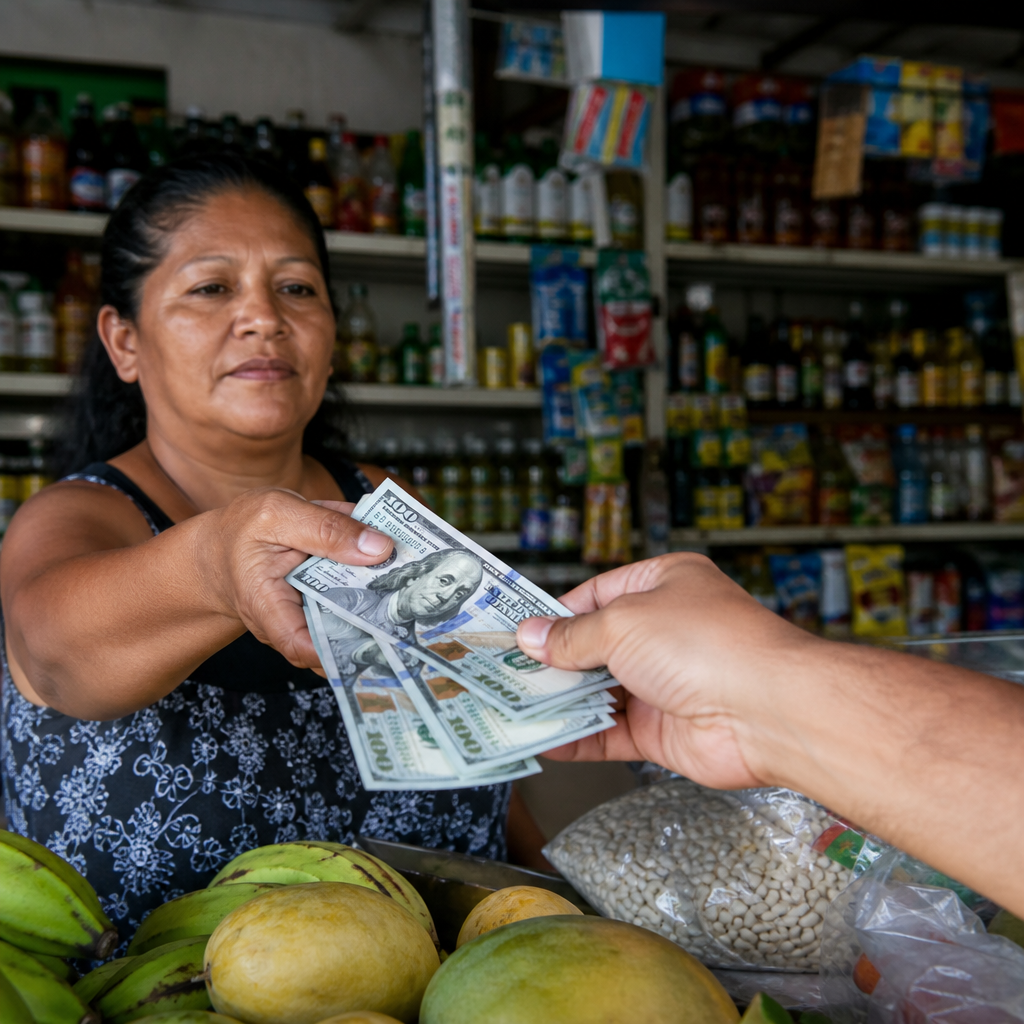
Dollarization happens when a country uses a foreign currency, fully or partly, instead of relying only on its own money. In most discussions, the foreign currency is the United States dollar, but the broader idea includes adopting the euro, the South African rand, or another nation’s legal tender. Economists usually distinguish between official dollarization, where the foreign currency becomes legal tender for taxes, wages, contracts, and bank accounts, and unofficial dollarization, where people simply prefer to save or trade in a stronger currency. I have worked with balance of payments data, central bank reports, and sovereign risk analyses, and in practice the distinction matters because policy tools, banking regulation, and crisis responses differ sharply depending on which form a country adopts.
The topic matters because money is not just a medium of exchange. It is also a store of value, a unit of account, and a tool of state power. When a country gives up its own currency or allows a foreign one to dominate, it changes how inflation is controlled, how banks are supervised, how fiscal discipline is enforced, and how households protect their savings. Countries usually do not move toward dollarization for symbolic reasons. They do it after inflation shocks, banking panics, repeated devaluations, civil conflict, dependence on remittances, deep trade links, or prolonged weakness in domestic institutions. In other words, dollarization is often the visible result of a deeper credibility problem.
For readers trying to understand the economics of this choice, the central question is simple: why would a government surrender monetary sovereignty? The answer is that sovereignty over a weak currency can become less valuable than stability under a trusted one. Ecuador adopted the dollar after a devastating banking and exchange-rate crisis in 2000. El Salvador dollarized in 2001 to reduce transaction costs and lock in low inflation. Panama has operated for more than a century with the U.S. dollar as the backbone of its system, which has shaped its banking model and regional role. Zimbabwe, after hyperinflation destroyed its local dollar, turned to foreign currencies to restore basic commerce.
This article explains how dollarization works, why some countries choose it, what benefits it can deliver, and what tradeoffs it creates. It also serves as a hub for the wider miscellaneous branch of economics by connecting currency choice to inflation, exchange rates, central banking, fiscal policy, sovereign debt, banking stability, remittances, and development strategy. If you understand dollarization, you understand a large part of how trust, institutions, and incentives interact in real economies.
What Dollarization Means in Practice
Official dollarization means the foreign currency is accepted for all core economic functions. Prices may be posted in dollars, salaries paid in dollars, taxes collected in dollars, and bank balance sheets denominated largely in dollars. The local central bank, if one remains, cannot issue the foreign legal tender and therefore loses the standard ability to finance deficits through money creation or act as an unconstrained lender of last resort. Unofficial or partial dollarization is more common. In those systems, residents may still receive local-currency wages and pay local taxes, yet hold savings, property contracts, or large invoices in dollars because they distrust the local unit.
Economists also separate currency substitution from asset substitution. Currency substitution happens when people use a foreign currency for day-to-day transactions. Asset substitution happens when they save in a foreign currency to avoid inflation or devaluation. In Latin America, I have often seen the second form long before the first. A family might buy an apartment priced in dollars, keep a dollar deposit at a commercial bank, or mentally convert prices into dollars even while shopping in local cash. That behavior signals weak confidence. Once it becomes widespread, policy credibility is expensive to rebuild.
Another practical point is that dollarization exists on a spectrum. Some countries keep a local currency for coins or small transactions while using a foreign currency for notes and bank deposits. Others run a hard peg or currency board, which is not full dollarization but can mimic some of its discipline. Hong Kong, for example, maintains its own currency under a currency board linked to the U.S. dollar rather than replacing it outright. That arrangement preserves note issuance and some institutional autonomy, but it still constrains monetary policy. Understanding these gradations prevents a common mistake: treating every fixed exchange-rate regime as if it were identical to adopting another nation’s money.
Why Countries Choose Another Nation’s Currency
The strongest driver is lost confidence in domestic money. High inflation, hyperinflation, and recurring devaluations teach households and firms that holding local currency is dangerous. Once people believe tomorrow’s prices will rise sharply, they rush to convert wages into a harder currency, which accelerates the collapse of money demand. Governments facing that spiral sometimes adopt a foreign currency to import credibility instantly. Ecuador is the classic case. After a severe crisis that included bank failures, recession, and surging inflation, dollarization helped stop the feedback loop between exchange-rate collapse and rising prices.
Trade and financial integration also matter. If a country does most of its business with one larger partner, using that partner’s currency reduces exchange-rate costs and lowers uncertainty for importers, exporters, lenders, and tourists. Panama’s economy has long been deeply connected to global shipping, trade, and finance through the canal. The use of the U.S. dollar reduced conversion friction and supported a banking center attractive to international clients. Small open economies often find this logic compelling because their own currencies can be volatile while their domestic financial markets remain shallow.
Political economy is another reason. Governments with weak fiscal discipline may choose dollarization as a commitment device. By giving up the printing press, they limit their own ability to inflate away deficits. Investors often read that as a sign that future policy may be more predictable. However, the commitment works only if fiscal policy actually improves. A government that cannot print money can still overborrow, and without monetary financing its fiscal mistakes can become debt crises instead of inflation crises. Dollarization changes the form of adjustment; it does not repeal budget constraints.
| Country | Form | Main trigger | Key outcome |
|---|---|---|---|
| Panama | Official use of U.S. dollar alongside local coinage | Deep trade and financial integration | Long-term price stability and large banking sector |
| Ecuador | Official dollarization since 2000 | Banking crisis, devaluation, inflation surge | Inflation stabilization, but less monetary flexibility |
| El Salvador | Official dollarization since 2001 | Lower transaction costs and credibility goals | Lower currency risk, mixed growth effects |
| Zimbabwe | Multi-currency use after hyperinflation | Collapse of local currency credibility | Commerce restored, cash and liquidity constraints persisted |
Major Benefits of Dollarization
The most immediate benefit is inflation control. When a country adopts a stable foreign currency, it effectively imports the monetary credibility of the issuing central bank. That does not guarantee low prices for every good, since taxes, commodity shocks, and supply constraints still matter, but it sharply reduces the risk of inflation caused by excessive domestic money creation. In Ecuador, annual inflation fell dramatically after dollarization compared with crisis levels. For households, the practical gain is simple: wages, savings, and pensions stop evaporating at the pace seen under high inflation.
A second benefit is lower exchange-rate risk. Firms that import fuel, machinery, medicine, or food can plan better when they do not face sudden local-currency depreciation. Banks and borrowers also gain if their debts are already effectively linked to dollars. In partially dollarized economies, one of the most dangerous mismatches is borrowing in dollars while earning in local currency. A devaluation then increases debt burdens overnight. Full dollarization removes that specific mismatch because incomes and debts are in the same unit. That can reduce default pressure and improve financial transparency.
Interest rates may also fall, especially if the previous monetary regime was unstable. Investors demand less compensation for inflation and devaluation risk when a trusted currency anchors contracts. That can support mortgage lending, business investment, and public borrowing at longer maturities. There are caveats, however. Country risk does not disappear. Political instability, weak courts, and unsustainable fiscal policy still raise borrowing costs. I have seen sovereign spreads remain elevated even under hard currency regimes because investors were pricing governance, not just currency risk.
Dollarization can also improve accounting discipline. When governments, banks, and businesses can no longer hide behind nominal devaluation, underlying productivity problems become clearer. Prices communicate real scarcity more cleanly, and balance sheets are easier to compare internationally. For economies dependent on remittances, tourism, or commodity exports priced in dollars, using the same currency can reduce friction and support payment efficiency. In that sense, dollarization is not only a monetary choice but also an administrative simplification.
The Costs and Risks Countries Accept
The biggest cost is the loss of independent monetary policy. A dollarized country cannot cut its own policy interest rate, devalue to regain competitiveness, or create liquidity on demand in a banking panic. It effectively imports the monetary conditions of the foreign issuer, even when domestic conditions are very different. If the U.S. Federal Reserve tightens policy to cool inflation in the United States, borrowing costs can rise in a dollarized country facing recession. That mismatch can be painful, especially when labor markets are rigid and fiscal space is limited.
Another loss is seigniorage, the revenue a state earns from issuing money. Countries with their own currencies gain resources because central bank liabilities pay little or no interest while the assets backing them do. Under official dollarization, much of that benefit shifts to the issuing country. For a small economy the annual amount may not be huge relative to GDP, but over time it matters, particularly for states with narrow tax bases. Governments must then rely more heavily on taxes, borrowing, or spending restraint.
Banking stability can become more complicated, not less. In a normal monetary system, the central bank can provide emergency liquidity against collateral. In a dollarized system, emergency support depends on reserves, external credit lines, fiscal resources, or exceptionally prudent regulation. That is why official dollarization works better when banks hold strong liquidity buffers, supervision is credible, and public debt is manageable. Panama’s experience is often cited positively, but its model also rests on a sophisticated banking framework and long-established institutional practices. Simply copying the currency choice without the supporting institutions is risky.
Competitiveness is another challenge. A country with its own currency can sometimes adjust to external shocks through depreciation. A dollarized country must adjust through wages, prices, productivity, migration, or fiscal policy instead. Economists call this internal devaluation, and it is usually slower and politically harder. If export prices fall or a neighboring country devalues sharply, the dollarized economy can become relatively expensive. The burden then lands on workers, firms, and public budgets rather than on the exchange rate.
Case Studies: Panama, Ecuador, El Salvador, and Zimbabwe
Panama is the longest-running modern example associated with the U.S. dollar. Its arrangement dates to 1904, and the country issues balboa coins while using the dollar for paper currency and banking. Over time, this supported low inflation and helped Panama develop a regional financial center. But the success is not just about currency. Panama also benefited from canal-related trade, logistics, and services. The lesson is that dollarization can complement a strategic economic model, yet it does not create that model by itself.
Ecuador adopted the dollar in 2000 after one of the worst crises in its modern history. The sucre collapsed, banks failed, inflation surged, and output contracted. Dollarization restored a nominal anchor quickly and helped stabilize expectations. In later years, inflation remained lower and more predictable than during the pre-crisis period. Still, Ecuador also became more dependent on fiscal management, external financing, and oil revenues because it could no longer use exchange-rate adjustment. When commodity prices weaken, the constraints become visible.
El Salvador dollarized in 2001 in a less dramatic context. The aim was to deepen integration with the United States, lower interest rates, and encourage investment. Inflation stayed low, and currency conversion costs fell. Yet growth outcomes were mixed, showing that stable money alone does not guarantee rapid development. Structural issues such as productivity, education, security, and business climate still shape long-term performance. This is a recurring pattern in economic policy: a sound monetary framework is necessary for stability, but it is not sufficient for prosperity.
Zimbabwe illustrates the emergency use of foreign currency after complete monetary breakdown. Hyperinflation in the late 2000s rendered the local currency practically unusable. Allowing transactions in U.S. dollars and other currencies helped revive commerce because prices could once again signal real value. However, liquidity shortages and uneven access to cash created new frictions. Later efforts to reintroduce local currency showed how hard it is to rebuild trust once destroyed. Credibility, once lost, is far costlier to restore than to preserve.
When Dollarization Works Best and What to Watch Next
Dollarization works best in small, open economies with deep trade or remittance ties to the anchor currency area, weak histories of monetary credibility, and institutions capable of enforcing fiscal discipline and bank supervision. It is less suitable for large, diversified economies that need exchange-rate flexibility to absorb frequent shocks. Before adopting another nation’s currency, policymakers should test several questions directly: Are wages and prices flexible enough to adjust without devaluation? Are banks liquid and well regulated? Is public debt sustainable without central bank financing? Are reserves and external credit lines sufficient for emergencies? If the answer to these questions is no, dollarization may freeze instability rather than cure it.
The broader lesson is that currency choice is a consequence of institutional strength, not a substitute for it. Another nation’s currency can stop inflation, reduce transaction costs, and impose discipline, but it cannot fix weak tax collection, poor infrastructure, corruption, low productivity, or fragile politics. Those problems still determine living standards and growth. For readers exploring the wider economics hub, dollarization connects directly to inflation theory, exchange-rate regimes, sovereign debt management, banking regulation, capital flows, and development strategy. Use it as a lens: when people abandon their own currency, they are revealing what they believe about trust, policy, and the future. To go deeper, compare dollarization with currency boards, fixed pegs, and inflation targeting, then examine how each system handles credibility, crises, and growth.
Frequently Asked Questions
What does dollarization mean, and how is it different from simply using foreign money occasionally?
Dollarization refers to a situation in which a country uses another nation’s currency in place of, or alongside, its own. In most cases, people are talking about the U.S. dollar, but the concept also applies when countries or territories use currencies such as the euro, the South African rand, or another foreign legal tender. The key distinction is that dollarization is not just about tourists paying in cash or businesses accepting a few transactions in a foreign currency. It involves a much deeper role for that outside currency in everyday economic life.
Economists usually separate dollarization into official and unofficial forms. Official dollarization happens when a government formally adopts a foreign currency as legal tender. That means taxes, salaries, contracts, prices, savings, and loans may all be denominated in that foreign currency, and the state generally stops issuing its own independent national money for regular use. Unofficial dollarization, by contrast, occurs when people and firms begin using foreign currency on their own because they trust it more than the domestic currency. In that case, the local currency may still exist, but households might save in dollars, landlords may set rents in dollars, and businesses may prefer to price major goods in a more stable currency.
The difference matters because informal use of foreign money can develop gradually as a response to inflation, devaluation, or financial instability, while official dollarization is a deliberate policy decision. In unofficial dollarization, a country still technically has monetary sovereignty, even if that sovereignty has been weakened in practice. In official dollarization, it gives up a major part of that sovereignty in exchange for stability, credibility, or both.
Why do some countries choose to use another nation’s currency instead of their own?
Countries usually turn to dollarization because their own currency has become unreliable or because the economic benefits of using a stronger foreign currency appear to outweigh the costs. The most common reason is a history of high inflation or even hyperinflation. When prices rise rapidly and people lose faith in the local currency’s ability to store value, they often shift toward a more stable alternative. If that pattern becomes widespread enough, policymakers may formalize what citizens are already doing.
Another major reason is credibility. A country with a weak central bank, repeated currency crises, or chronic fiscal instability may find it difficult to convince investors and the public that inflation will remain under control. By adopting a foreign currency with a strong reputation, the government effectively imports the monetary discipline of the issuing country. This can help reduce inflation expectations, stabilize prices, and lower the risk of sudden exchange-rate collapses.
Trade and financial integration also play a role. If a country conducts most of its trade, borrowing, remittances, or tourism in a particular foreign currency, using that same currency domestically can reduce transaction costs and exchange-rate uncertainty. For small economies especially, the practical convenience can be significant. Businesses no longer need to worry as much about converting between currencies, and households may feel more secure holding savings in a unit they believe will keep its value.
In some cases, dollarization reflects political and institutional realities rather than pure economic theory. A government facing low public trust may conclude that maintaining a national currency offers fewer benefits than the stability gained from adopting an established one. For very small states or territories, it may simply be more efficient to use a respected foreign currency than to maintain a full independent monetary system.
What are the main advantages of official dollarization for a country’s economy?
The strongest advantage of official dollarization is price stability. When a country adopts a currency such as the U.S. dollar, it removes the possibility of financing government deficits by printing money domestically. That can sharply reduce inflation, especially in economies where the local currency had a long record of losing value. Greater price stability helps households plan, protects savings from erosion, and improves confidence in the financial system.
Dollarization can also reduce exchange-rate risk. Under a domestic currency regime, the value of the local currency may swing sharply against major world currencies, raising the cost of imports, increasing uncertainty for businesses, and making foreign debt harder to manage. If the economy is already heavily tied to a foreign currency through trade, borrowing, or remittances, adopting that currency can simplify transactions and reduce currency mismatches across the economy.
Another benefit is improved credibility with investors, lenders, and the public. Because the government no longer controls a printing press for its own currency, investors may see fewer chances of sudden devaluation or inflationary policy shifts. That can support lower interest rates over time, strengthen confidence in banks, and encourage longer-term planning by firms and consumers. In countries recovering from monetary chaos, that credibility effect can be one of the biggest reasons to dollarize.
There can be financial-sector benefits as well. If many deposits and loans were already denominated in dollars before official adoption, formal dollarization can align the legal framework with how the banking system already operates. That may reduce confusion, lower some currency-related risks, and make contracts more predictable. In the right circumstances, official dollarization can create a more stable environment for investment, trade, and economic decision-making.
What are the disadvantages or risks of giving up a national currency?
The biggest drawback is the loss of independent monetary policy. Once a country adopts another nation’s currency, it can no longer set its own interest rates, adjust the money supply to respond to domestic conditions, or devalue its currency to regain competitiveness. Monetary decisions are effectively outsourced to the central bank of the issuing country, which naturally makes policy based on its own economy, not the needs of the dollarized one.
That loss of flexibility can be costly during recessions or external shocks. If a country experiences falling exports, a banking crisis, or weak domestic demand, it cannot rely on exchange-rate adjustment or domestic money creation to cushion the blow. Instead, it may be forced to adjust through lower wages, reduced spending, fiscal austerity, or painful declines in employment and output. In other words, stability comes at the price of policy autonomy.
Dollarized countries also give up seigniorage, which is the revenue a state earns from issuing its own currency. Normally, governments benefit when they create money that circulates in the economy. Under official dollarization, that benefit largely goes to the country issuing the currency. For small economies this may not be decisive, but it is still a real fiscal cost.
There are practical and institutional risks too. A dollarized economy needs strong banks, sound public finances, and enough foreign currency liquidity to keep the system functioning smoothly. If confidence weakens, the country cannot act as a traditional lender of last resort by creating its own money to support banks. That means banking supervision, reserve management, and fiscal discipline become even more important. Dollarization can improve stability, but it does not solve deeper problems such as weak institutions, excessive debt, poor governance, or low productivity.
Is dollarization always permanent, and does it solve inflation and economic instability by itself?
Dollarization is often designed to be durable, but it is not automatically irreversible in a political sense. Once a country fully adopts a foreign currency, reversing the decision can be complicated, disruptive, and risky, especially if contracts, wages, loans, and bank deposits are deeply embedded in that currency. So while official dollarization tends to be long-lasting, it should not be viewed as a magic one-way transformation that permanently guarantees economic success.
It can be highly effective at controlling inflation because it removes the domestic mechanisms that often fuel rapid money creation and currency depreciation. If inflation was driven mainly by loss of confidence in the local currency and repeated monetary mismanagement, adopting a strong foreign currency can produce a dramatic improvement. However, inflation is only one part of macroeconomic stability. A country can still face recessions, debt crises, weak growth, unemployment, or financial stress even after dollarizing.
That is why economists emphasize that dollarization works best when it is paired with broader reforms. Governments still need responsible fiscal policy, credible institutions, healthy banks, clear property rights, and a competitive economy. Without those foundations, dollarization may stabilize prices but leave other structural weaknesses untouched. It can stop one source of instability while exposing the economy to other constraints that are harder to manage without an independent currency.
In short, dollarization is best understood as a powerful monetary arrangement, not a complete economic cure. It can increase trust, improve stability, and reduce inflation in the right setting, but long-term prosperity still depends on institutions, productivity, governance, and policy discipline. Countries that adopt another nation’s currency are making a serious trade-off: they gain monetary credibility, but they also surrender important economic tools that would otherwise be available in times of stress.