
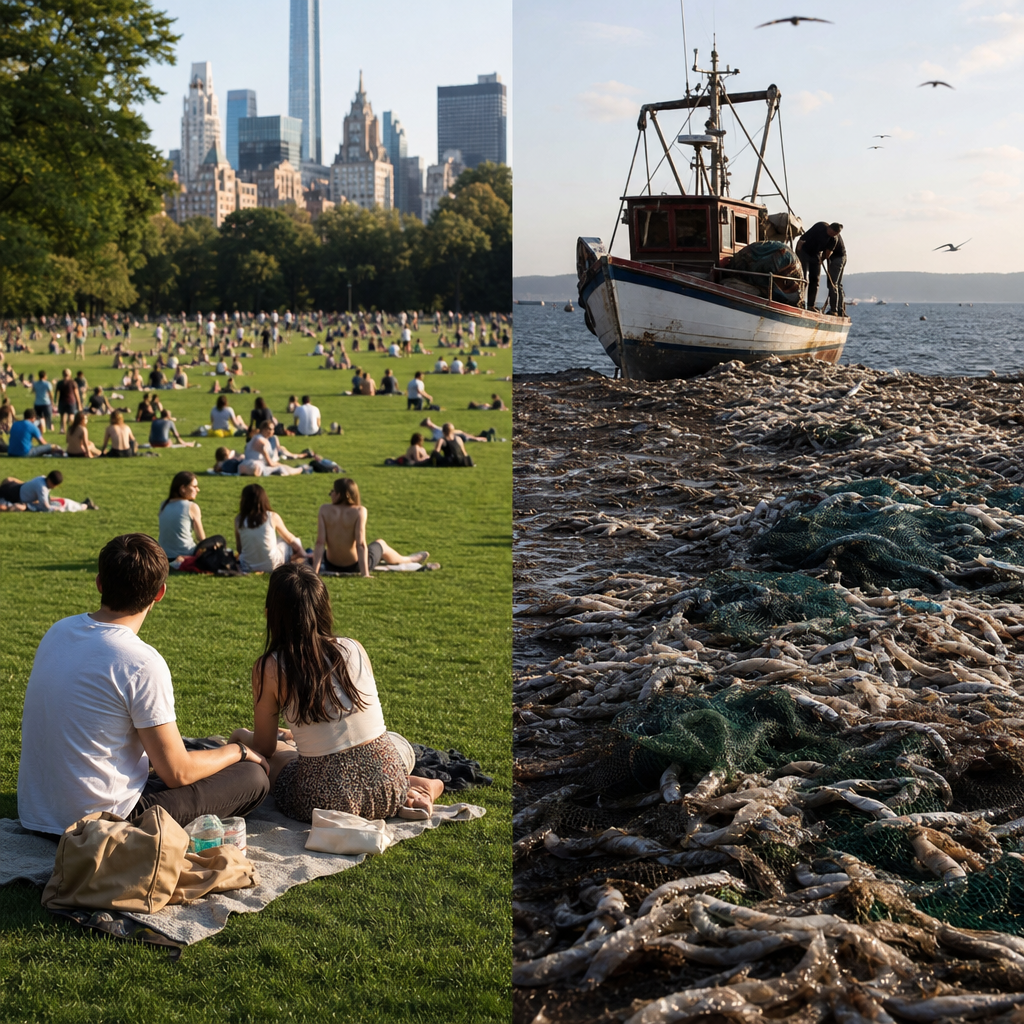
Public goods and common resources sit at the center of many economic problems because both involve benefits or costs that spill beyond a single buyer and seller. Economists separate them using two traits: excludability, meaning whether people can be prevented from using something, and rivalry, meaning whether one person’s use reduces what is left for others. A public good is nonexcludable and nonrival, while a common resource is nonexcludable but rival. That distinction sounds technical, yet it explains why national defense, fisheries, groundwater, public parks, open roads, and even online knowledge create persistent coordination failures.
I have found that many readers confuse these categories because both seem “shared.” The practical difference is what goes wrong. With public goods, the central issue is underproduction: people can enjoy the benefit without paying, so private markets supply too little. With common resources, the central issue is overuse: because access is open and each user captures personal gains while sharing the depletion cost, the resource gets crowded, degraded, or exhausted. Understanding that split helps explain debates about climate policy, congestion pricing, vaccination campaigns, intellectual property, and local environmental rules.
This topic matters far beyond introductory economics. Governments regularly decide what to tax, subsidize, regulate, or provide directly based on whether a good is rival or excludable. Businesses face it when setting platform access, managing digital products, or funding open-source infrastructure. Communities face it when maintaining irrigation systems, shared grazing lands, and neighborhood amenities. For a hub article on economics miscellany, public goods and common resources are especially useful because they connect market failure, property rights, collective action, game theory, public finance, environmental economics, and institutional design into one framework.
A quick classification helps. Private goods are excludable and rival, like a sandwich or a laptop. Club goods are excludable and nonrival up to capacity, like subscription software or a toll road with light traffic. Public goods are nonexcludable and nonrival, like a lighthouse signal or basic national defense. Common resources are nonexcludable and rival, like fish in international waters or water from an unregulated aquifer. Once you map a good into this grid, the likely problem and the likely remedy become much clearer.
Why public goods cause problems
Public goods cause problems because markets struggle to charge beneficiaries in proportion to value received. If a neighborhood installs a flood barrier, every nearby property gains some protection whether or not each owner contributed. That creates the free-rider problem: rational individuals wait for others to pay, hoping to benefit anyway. In my experience analyzing local public projects, this is not a moral failure so much as a predictable incentive problem. Even generous people hesitate when they know their contribution will not determine whether the good exists and nonpayers will receive similar benefits.
The result is underfunding, underinvestment, or complete nonprovision. Basic scientific research is a classic example. Once knowledge is published, many people can use it at the same time, and excluding nonpayers is difficult unless legal or technical barriers are added. Because firms cannot capture the full social return, they invest less than society would prefer. This is why governments fund universities, laboratories, and early-stage research agencies. The same logic applies to disease surveillance, street lighting, and some forms of cybersecurity infrastructure, where benefits spread broadly and private capture is limited.
Public goods also create preference revelation problems. Even if everyone agrees a flood barrier or mosquito-control program would help, each resident has an incentive to understate how much it is worth to them, hoping to reduce their tax or fee share. That makes efficient cost-benefit analysis harder. Economists have long recognized that voting, taxation, and public budgeting are imperfect substitutes for market prices. They can approximate demand, but they do not produce the same clean signal that a private purchase provides. As a result, some public goods are undersupplied, while others are supplied inefficiently or bundled with political priorities.
Another problem is scale. Some public goods are local, such as a town siren system, but others are national or global. Climate mitigation resembles a global public good because lower emissions benefit people across borders and generations. Each country bears the full domestic cost of reducing emissions but captures only part of the global benefit. That mismatch encourages delay and strategic bargaining. International treaties, carbon pricing, and technology transfer try to solve the problem, but enforcement is weaker than within a single nation. The larger the geographic scope, the harder collective action becomes.
Why common resources cause problems
Common resources cause problems for the opposite reason. Because access is difficult to restrict, users enter freely, but unlike a public good, one person’s use subtracts from what remains. This leads to overconsumption, congestion, and depletion. The standard case is an open-access fishery. Each boat gains the full revenue from its catch, but the reduced breeding stock is a cost shared across all fishers. When each operator follows that incentive, total harvest exceeds the sustainable yield. The fishery then declines, income becomes unstable, and communities that depend on it suffer.
This dynamic is often described as the tragedy of the commons, though the phrase can be misleading if used carelessly. The tragedy is not that people share a resource; it is that open access without effective rules encourages extraction beyond the socially efficient level. I have seen the same pattern in groundwater basins where farmers individually drill deeper wells. Each farm protects its own crop in the short run, but collectively they lower the water table, increase pumping costs, and risk land subsidence. Individual rationality produces group-level damage.
Congestion is another form of common-resource failure. Urban roads during rush hour are a common resource when access is effectively open and each additional driver slows others down. A highway lane may appear abundant at 2 a.m. and severely scarce at 8 a.m. Because drivers do not directly pay for the delay imposed on others, traffic exceeds the efficient level at peak times. Cities such as London, Singapore, and Stockholm have used congestion pricing to internalize that cost. The evidence consistently shows reduced traffic volumes, faster travel times, and lower emissions in the priced zone.
Environmental quality often behaves like a common resource as well. Clean air in a region is hard to exclude people from using, but pollution by one source reduces ambient quality for others. That is why economists favor emissions taxes, cap-and-trade systems, or clear performance standards when monitoring is feasible. Without a governing rule, firms and households will emit more than is socially optimal because each decision-maker captures the private convenience or profit while spreading part of the harm across the public. The problem is rivalry in environmental capacity, not simple collective ownership.
How economists distinguish the two in practice
The clean textbook definitions are useful, but real-world classification often depends on technology, law, and scale. Excludability is not fixed. A road can move from common resource to club good once tolling technology is installed. A digital file looks nonrival because many users can access it simultaneously, yet it can be made excludable through subscriptions, encryption, or licensing. Likewise, a public park may be nonrival when empty and rival when crowded. Economists therefore treat rivalry and excludability as matters of degree, not always as binary labels.
In policy work, I ask three practical questions. First, can nonpayers realistically be excluded at reasonable cost? Second, does one more user create significant congestion or depletion? Third, who has authority to define and enforce access rights? Those questions reveal whether the main risk is underprovision, overuse, or both. A reservoir, for example, may provide flood control, which behaves like a public good, while also supplying irrigation water, which behaves like a common resource unless rights are allocated. Many assets are bundles, and good policy separates their functions rather than forcing one label on everything.
| Resource or service | Main traits | Typical problem | Common policy response |
|---|---|---|---|
| National defense | Nonexcludable, nonrival | Underfunding from free riding | Tax-funded public provision |
| Open-access fishery | Nonexcludable, rival | Overharvesting | Catch limits, quotas, monitoring |
| Rush-hour roadway | Hard to exclude, rival at capacity | Congestion | Peak pricing, transit alternatives |
| Basic scientific research | Largely nonexcludable, nonrival | Underinvestment | Grants, patents, research subsidies |
| Groundwater basin | Hard to exclude, rival | Depletion and falling water tables | Pumping rights, metering, basin governance |
Solutions: property rights, pricing, and collective rules
No single remedy fits every case. For public goods, the usual solutions are tax finance, subsidies, public provision, or institutional mechanisms that spread costs across beneficiaries. National defense is funded through taxation because exclusion is impractical and the service is jointly consumed. Vaccination campaigns combine public funding with information efforts because private demand may ignore the broader community benefit of lower transmission. Patents are a partial solution for knowledge creation: they increase excludability temporarily so inventors can earn returns, though they also raise access costs and can slow diffusion.
For common resources, the key is limiting access or aligning use with social cost. Governments may define property rights, assign quotas, charge usage fees, or create cooperative management bodies. Fisheries management increasingly relies on total allowable catch rules and, in some cases, individual transferable quotas. Where designed well, these systems reduce the race to fish and give harvesters an incentive to preserve stock health. Water markets can improve allocation in drought-prone regions, but only when rights are measured clearly and ecological minimums are protected. Otherwise markets simply accelerate depletion under a legal veneer.
Community governance can work better than either unrestricted access or distant central control when users share information and trust. Elinor Ostrom’s research showed that many local groups successfully manage forests, irrigation systems, and fisheries through defined boundaries, monitoring, graduated sanctions, and conflict-resolution mechanisms. The lesson is not that privatization always wins or that government always fails. The lesson is that institutions must match the resource. Small, observable commons often respond well to local rulemaking; diffuse or global commons usually need stronger state capacity or international coordination.
Pricing is especially powerful when congestion or pollution is measurable in real time. Electronic tolling lets roads charge more at peak demand, converting delay into a visible cost signal. Smart electricity pricing can reduce strain during periods of high demand, lowering the need for expensive standby generation. Emissions fees make firms compare the cost of abatement to the cost of polluting, which usually achieves environmental targets more efficiently than command-and-control rules alone. Still, pricing raises equity concerns. If charges fall heavily on lower-income users, complementary rebates or service improvements are necessary.
Why this distinction matters across economics
Public goods versus common resources is not an isolated chapter; it is a hub concept that ties together much of economics. In microeconomics, it clarifies when markets fail and why marginal private cost diverges from marginal social cost or benefit. In public finance, it explains taxation and government expenditure. In environmental economics, it frames climate change, biodiversity loss, fisheries, and water scarcity. In development economics, it helps explain why infrastructure maintenance and local resource governance differ across regions. In institutional economics, it shows why legal rules and enforcement capacity matter as much as price signals.
For readers exploring economics more broadly, this distinction also improves everyday judgment. When someone says “the market should handle it,” ask whether the good is excludable and whether use is rival. When someone says “the government should run it,” ask whether bureaucracy can measure value, monitor behavior, and avoid waste. The right answer depends on the structure of the good, the available technology, and the quality of institutions. If you keep that framework in mind, you will read policy debates more clearly and spot the actual incentive problem underneath the rhetoric. Use this hub as a base for deeper articles on externalities, property rights, public choice, environmental policy, and game theory.
Frequently Asked Questions
What is the difference between a public good and a common resource?
The key difference comes down to two economic traits: excludability and rivalry. A public good is nonexcludable, meaning people cannot easily be prevented from using it, and nonrival, meaning one person’s use does not reduce the amount available to others. National defense, street lighting, and basic lighthouse signals are classic examples. If one person benefits from national defense, that does not leave less protection for everyone else, and it is difficult to exclude individuals within the protected area from receiving that benefit.
A common resource is also nonexcludable, but unlike a public good, it is rival. That means people can use it without paying or asking permission, yet each unit used by one person leaves less available for someone else. Fisheries, public grazing land, groundwater basins, and overcrowded roads are common examples. If one fishing boat catches more fish, fewer fish remain for others. This is why common resources often face depletion or congestion problems.
That distinction matters because the two categories create different policy challenges. Public goods tend to be underprovided by private markets because people can free ride on the contributions of others. Common resources tend to be overused because no single user bears the full social cost of consumption. In short, public goods suffer from too little voluntary funding, while common resources suffer from too much unregulated use.
Why do both public goods and common resources create market problems?
Both create problems because private decision-makers do not face all the benefits or costs associated with their actions. In standard market transactions, buyers and sellers usually weigh private costs against private benefits. But with public goods and common resources, part of the effect spills outward to others. Economists call these spillovers external effects, and they break the normal price signals that help markets allocate resources efficiently.
With public goods, the problem is that people can benefit even if they do not pay. Because the good is nonexcludable, it is hard to charge each beneficiary. Since it is also nonrival, people often reason that their own contribution is unnecessary because they can enjoy the good whether or not they help fund it. This creates the free-rider problem. As a result, private firms have weak incentives to produce the socially efficient amount, even when society as a whole values the good highly.
With common resources, the problem runs in the opposite direction. Because access is difficult to restrict, individual users have an incentive to consume as much as possible before others do. But because the resource is rival, each use imposes a cost on everyone else by reducing what remains. This leads to overconsumption, congestion, depletion, or environmental damage. Economists often describe this as the tragedy of the commons, where individually rational behavior produces collectively harmful outcomes.
So although public goods and common resources are both nonexcludable, the practical consequences differ. Public goods are often undersupplied because people avoid paying, while common resources are overused because people overconsume. In both cases, the market alone struggles to produce efficient outcomes without some form of collective action, institutional rule, or government involvement.
What is the free-rider problem, and why is it especially important for public goods?
The free-rider problem occurs when people receive the benefits of a good or service without paying for it. This becomes especially serious for public goods because by definition they are nonexcludable. If a good cannot be restricted to paying customers, many individuals will choose to “ride free” on the payments made by others. From each person’s private perspective, this can seem rational: why contribute if you can enjoy the benefit either way?
Take national defense as an example. Once a country is defended, residents within its borders benefit regardless of whether they personally contributed. The same logic applies to flood-control systems, disease surveillance, or certain forms of public safety infrastructure. Because no single person can be easily excluded, voluntary payment often falls short of what is needed to fund the socially desirable amount.
The free-rider problem matters because it creates a gap between private incentives and social benefits. A society may strongly value a public good in the aggregate, but each individual may hope others will bear the cost. When too many people think this way, the good is underfunded or may not be provided at all. That is why many public goods are financed collectively through taxes, fees, or mandatory contributions rather than left entirely to voluntary market exchange.
It is worth noting that the free-rider problem can appear in other settings too, including some shared environmental efforts or neighborhood initiatives. But it is especially central to public goods because their nonrival and nonexcludable nature makes exclusion difficult and private pricing weak. In economic terms, the challenge is not that the good lacks value, but that markets have trouble converting that value into reliable payment.
What is the tragedy of the commons, and how does it apply to common resources?
The tragedy of the commons describes a situation in which individuals, acting in their own short-term self-interest, overuse a shared resource and ultimately damage it for everyone. This problem applies directly to common resources because they are nonexcludable and rival. People can access them without much restriction, but each unit consumed reduces what remains available to others. That creates a strong incentive to use the resource now rather than conserve it for later.
A fishery is one of the clearest examples. If no effective property rights or catch limits exist, each fishing company has an incentive to harvest as much as possible before competitors do. From the viewpoint of each firm, restraint may feel costly because any fish left in the water may simply be caught by someone else. But when all users think that way, fish stocks decline, breeding patterns are disrupted, and the long-run value of the resource collapses. What seems rational individually becomes destructive collectively.
This same logic appears in many real-world settings: overgrazed pastureland, depleted forests, groundwater withdrawal, traffic congestion, and even overcrowded public spaces. In every case, the user typically receives the full private benefit of consumption while bearing only a fraction of the total cost imposed on the group. That mismatch leads to overuse relative to what would be socially efficient.
The tragedy of the commons is not inevitable, but it is a persistent risk whenever common resources lack clear management rules. Solutions often include quotas, permits, community monitoring, limited access, user fees, tradable rights, or legal ownership structures. The goal is to align individual incentives with long-term collective welfare so that users take account of the costs their consumption imposes on others.
How can governments and communities solve the problems caused by public goods and common resources?
Because the core issue in both cases is a mismatch between private incentives and social outcomes, solutions usually focus on creating institutions that encourage people to account for the broader effects of their choices. The right policy depends on whether the problem is underprovision, as with public goods, or overuse, as with common resources.
For public goods, governments often step in to finance provision through taxation. This approach works because taxes spread the cost across beneficiaries and reduce the free-rider problem. Public schools, military defense, basic scientific research, and some transportation infrastructure are often funded this way. In other cases, governments may subsidize production, contract with private suppliers, or support nonprofit provision when the social benefits exceed what private buyers would be willing to pay directly.
For common resources, the goal is usually to prevent overuse. Governments may impose regulations such as catch limits, seasonal restrictions, emissions caps, water-use rules, or congestion pricing. Another approach is to define or strengthen property rights so that someone has a clear incentive to manage the resource sustainably. Tradable permits can also help by limiting total use while allowing flexibility in who uses the resource. These methods work best when enforcement is credible and users believe the rules will be applied consistently.
Communities can also play an important role. In many cases, local groups develop successful systems of shared management built on trust, monitoring, social norms, and agreed-upon penalties for misuse. This is especially effective when users know one another, depend on the resource over the long term, and have a voice in setting the rules. In practice, the most durable solutions often combine public authority with local knowledge. The common theme is simple: when institutions make people bear more of the true social cost or contribute to the true social benefit, outcomes become far more efficient and sustainable.