
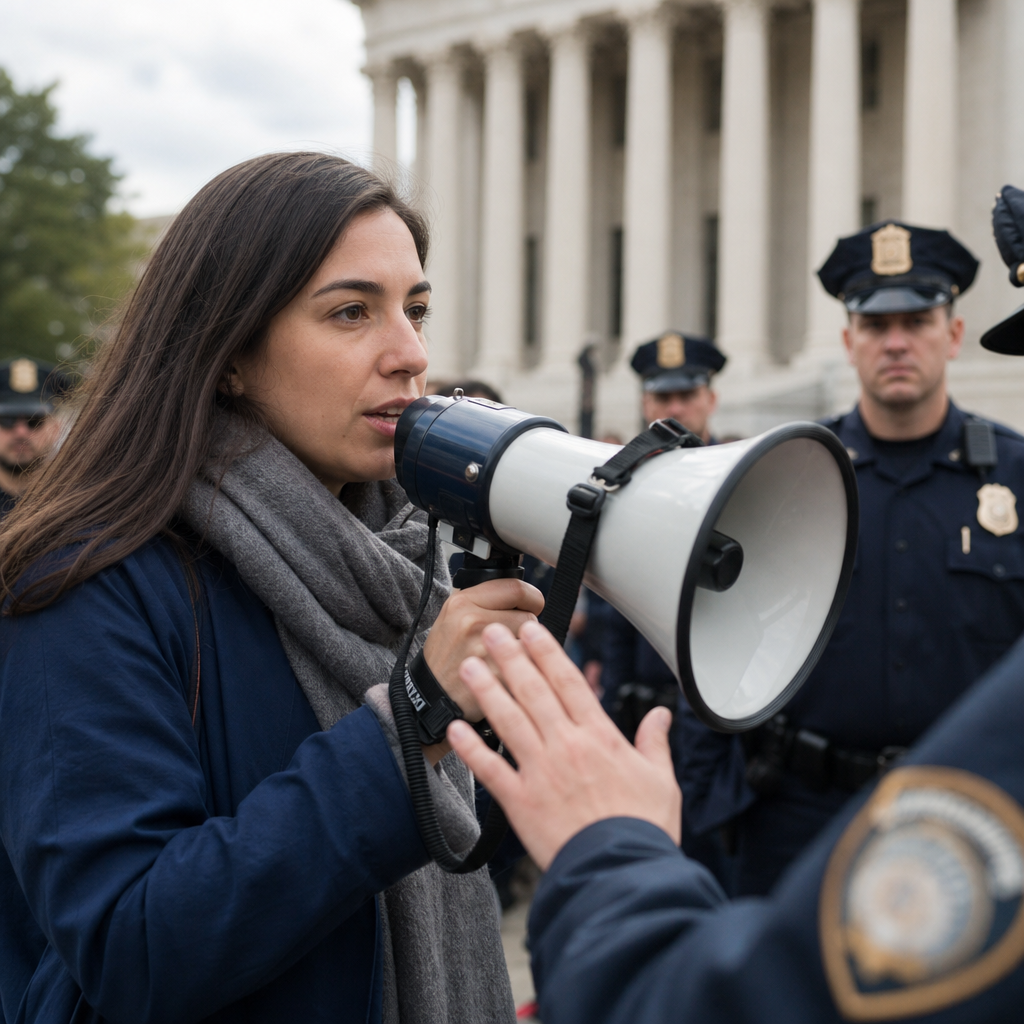
Prior restraint in constitutional law refers to government action that stops speech or publication before it reaches the public, and in American law it is one of the most disfavored forms of censorship. In AP Government and Politics, this concept matters because it sits at the center of First Amendment debates about liberty, national security, public order, and the power of courts to police official overreach. Students often encounter prior restraint as a narrow rule, but in practice it is a framework for asking when government may act in advance rather than punish speech afterward. That distinction is crucial. A criminal libel case, an obscenity prosecution, or a civil damages suit imposes consequences after expression occurs. A licensing scheme, gag order, injunction, or publication ban can prevent the audience from hearing the message at all. Having taught and reviewed constitutional cases with students, I have found that this timing difference helps the doctrine click immediately. Once speech is blocked early, the harm to public debate is harder to repair.
The Supreme Court has therefore treated prior restraints as presumptively unconstitutional, meaning the government bears an exceptionally heavy burden to justify them. The Court has never said every prior restraint is automatically invalid, but it has said that such restraints come to court carrying a heavy presumption against constitutional validity. That phrase comes from landmark cases and captures the basic rule students need to know. Prior restraint appears in several recurring settings: attempts to stop newspapers from publishing, permit systems for rallies and parades, court orders restricting trial participants, school control over student publications, and national security disputes involving classified information. It also overlaps with related ideas across the AP Government and Politics curriculum, including judicial review, due process, civil liberties, selective incorporation, and the balancing of individual rights against compelling governmental interests. Understanding prior restraint gives students a hub for connecting many “miscellaneous” constitutional issues that do not fit neatly into one doctrinal box but repeatedly appear in cases, exam prompts, and political controversies.
The Core Rule and Why Timing Changes Everything
The simplest definition is also the most useful: prior restraint is an official restriction imposed before speech happens. A city ordinance requiring a permit before distributing leaflets can function as prior restraint. So can a judge’s injunction forbidding publication of leaked records. The constitutional problem is not only censorship itself but the risk of unchecked discretion. If officials can decide in advance who may speak, when, and about what, they can suppress criticism before it has any chance to enter public discussion. In my experience reviewing local speech regulations, the practical danger usually lies in the process. Vague standards such as “offensive,” “improper,” or “against the public interest” invite viewpoint discrimination even when the rule appears neutral on paper.
American doctrine generally prefers subsequent punishment to prior suppression, not because punishment is harmless, but because ex post review leaves speech in the marketplace and gives courts a factual record to evaluate. The classic statement comes from Near v. Minnesota in 1931. Minnesota had a “gag law” allowing courts to shut down a newspaper deemed scandalous or defamatory. The Supreme Court struck it down and established the modern hostility toward prior restraints. Near did acknowledge exceptional situations, including wartime troop movements, obscenity, and incitement to violence, but the opinion made clear that these categories are narrow. The government cannot silence publication merely because it anticipates reputational harm, embarrassment, or unrest. That principle remains foundational, and nearly every later prior restraint case starts from Near’s presumption against suppression.
Landmark Cases Students Must Know
Several Supreme Court decisions define this area. Near v. Minnesota is the starting point because it transformed freedom of the press from a slogan into an enforceable rule against prepublication censorship. New York Times Co. v. United States, the 1971 Pentagon Papers case, reinforced that rule under extreme political pressure. The federal government sought injunctions to stop the New York Times and Washington Post from publishing classified documents about U.S. involvement in Vietnam. The Court refused. Although the justices wrote separate opinions, the result was unmistakable: vague claims of national security were not enough to justify stopping publication. For AP students, the key lesson is not that classified material is always publishable, but that the government must present proof of direct, immediate, and irreparable harm, not speculative assertions.
Other cases show how the doctrine operates outside newspapers. In Nebraska Press Association v. Stuart, decided in 1976, a trial judge barred the press from reporting certain details about a sensational murder prosecution in order to protect the defendant’s fair trial rights. The Supreme Court invalidated the order. The Court reasoned that alternatives such as venue changes, jury sequestration, continuances, and careful voir dire were less speech restrictive and often more effective. In Freedman v. Maryland, involving film licensing, the Court held that systems requiring prior approval must include procedural safeguards. The censor must bear the burden of going to court, any restraint before judicial review must be brief, and prompt judicial determination is required. These procedural rules matter because licensing systems can become silent censors if delay itself suppresses speech.
| Case | Year | Issue | Main Rule |
|---|---|---|---|
| Near v. Minnesota | 1931 | State law shutting down a “malicious” newspaper | Prior restraints are presumptively unconstitutional |
| New York Times Co. v. United States | 1971 | Attempt to block Pentagon Papers publication | National security claims need compelling, specific proof |
| Nebraska Press Association v. Stuart | 1976 | Gag order to protect fair trial rights | Publication bans rarely survive when alternatives exist |
| Freedman v. Maryland | 1965 | Film licensing before exhibition | Any review system needs strict procedural safeguards |
Common Forms of Prior Restraint
Students usually picture prior restraint as a censor red-penning a newspaper, but the modern forms are broader. Licensing and permit schemes are common examples. A city may require parade permits to coordinate traffic and public safety, and those systems are not automatically unconstitutional. They become unconstitutional when officials have too much discretion, charge excessive fees, discriminate by viewpoint, or fail to act promptly. Forsyth County v. Nationalist Movement illustrates the fee problem: local officials could vary permit fees based on anticipated public hostility, which effectively allowed a “heckler’s veto.” Speech cannot be burdened more heavily because opponents might react badly.
Judicial gag orders are another form. Courts may sometimes restrict what lawyers, parties, or jurors say, especially when they are participants in a pending case, but orders directed at the press itself face far stricter review. Schools create a different context. In Hazelwood School District v. Kuhlmeier, the Court allowed greater administrative control over school-sponsored student publications when the regulation was reasonably related to legitimate pedagogical concerns. That is not the same as the broad censorship power government would wield over an independent newspaper. Broadcast regulation, military censorship, classified information systems, and platform moderation each raise related questions, but not all are classic prior restraint under the First Amendment. Private platforms, for example, are usually not state actors, so constitutional analysis often stops there unless government coercion or entanglement is present.
When Speech Can Be Stopped Early
The title question deserves a direct answer: speech can be stopped early only in rare, carefully defined circumstances, and even then the government must satisfy exacting constitutional standards. The clearest examples are obscenity, true threats, some forms of incitement, and highly sensitive national security information where disclosure would cause immediate grave harm. Yet even these categories do not create a blank check. Obscenity is narrowly defined by the Miller test, not by ordinary offensiveness. Incitement under Brandenburg v. Ohio requires advocacy directed to producing imminent lawless action and likely to produce it. True threats must communicate serious expressions of intent to commit unlawful violence. Mere controversy, insult, or criticism of public officials does not qualify.
National security is the most misunderstood area. The Pentagon Papers case did not hold that wartime or classified information can never be restrained. It held that the government’s proof in that case was insufficient. If officials could show that publication would reveal troop locations during ongoing operations or compromise a specific covert mission in a way that would imminently cause deaths, a court might uphold temporary restraint. But the burden is extraordinary because “national security” can be invoked too easily. Courts know that executive agencies naturally prefer secrecy, and the First Amendment demands skepticism. In constitutional law classes, I emphasize that the exception must not swallow the rule. A broad power to suppress because disclosure is inconvenient, embarrassing, or diplomatically costly would gut press freedom almost entirely.
Procedural Safeguards, Standards of Review, and Exam Strategy
One reason prior restraint is so important in AP Government and Politics is that it teaches students how procedure shapes liberty. A speech restriction is not judged only by its stated purpose. Courts ask who decides, under what standards, how fast review occurs, and whether less restrictive alternatives exist. That is why permit systems must use narrow, objective, and definite standards. It is why prompt judicial review matters. It is why injunctions receive more suspicion than ordinary criminal laws. The doctrine reflects a practical insight: censorship often works through delay, cost, and discretion long before a final court ruling appears.
For exam writing, the strongest responses usually do four things. First, define prior restraint as suppression before publication or expression. Second, cite Near or the Pentagon Papers case for the heavy presumption against validity. Third, explain that some exceptions exist but are narrow and require compelling evidence. Fourth, distinguish prior restraint from subsequent punishment. If a free-response question mixes fair trial rights, student speech, permits, obscenity, or national security, identify the forum and actor before applying the rule. A school newspaper, a city parade ordinance, and a federal injunction against a newspaper are not analyzed identically. That nuance is what separates a memorized answer from a high-scoring constitutional analysis.
Prior restraint remains a critical constitutional concept because it protects the public’s ability to receive information before government officials can filter debate. The doctrine does not make speech absolute, and it does not prevent every preventive restriction. Courts may allow narrow restraints in extraordinary circumstances, especially when the government can prove immediate, specific, and irreparable harm and when procedural safeguards are strong. But the baseline rule is firm: stopping speech early is far more dangerous than punishing unlawful speech after the fact, because censorship before publication distorts democratic choice and weakens accountability.
For AP Government and Politics students, this topic works as a hub connecting the First Amendment, incorporation, judicial review, due process, federal power, public safety, and the press. Remember the anchor cases, understand the timing distinction, and watch for discretion, vagueness, and less restrictive alternatives. If you are building your knowledge of civil liberties, start here, then move outward to symbolic speech, libel, obscenity, student expression, and freedom of association. That approach will make the entire free speech unit easier to understand and far easier to apply on tests, essays, and real-world constitutional debates.
Frequently Asked Questions
What is prior restraint in constitutional law?
Prior restraint is government action that blocks speech, publication, or expression before the public can see or hear it. Instead of punishing speech after the fact through criminal or civil penalties, prior restraint prevents the message from being released in the first place. In American constitutional law, that difference matters enormously. Courts have long treated prior restraints as one of the most serious threats to First Amendment freedom because they place officials in the role of gatekeepers over public debate. A licensing scheme for newspapers, a court injunction stopping a book from being printed, or an order barring a media outlet from publishing certain information are classic examples. The basic idea is that the government usually cannot require speech to get advance approval before it happens. That is why prior restraint is often described as the most disfavored form of censorship in the United States.
For AP Government and Politics students, prior restraint is important because it brings together several major constitutional themes at once: free speech, freedom of the press, judicial review, national security, and the limits of state power. It is not an absolute rule that no speech can ever be restrained in advance, but the government carries an extraordinarily heavy burden when it tries. Courts start from a strong presumption that prior restraints are unconstitutional. That presumption reflects a deep American suspicion that once the government can silence speech before publication, it can suppress criticism, control political dissent, and distort democratic decision-making. In short, prior restraint sits at the heart of the First Amendment because it asks whether the state may stop ideas before citizens even get the chance to evaluate them for themselves.
Why is prior restraint considered more dangerous than punishing speech after publication?
Prior restraint is considered especially dangerous because it suppresses speech before it enters public discussion, which means the public never gets the chance to hear it, challenge it, or judge it independently. When speech is stopped in advance, the damage to free expression is immediate and often complete. A published article can be debated, rebutted, or corrected. A censored article may never reach the public at all. That is one reason courts have viewed prior restraint as uniquely harmful: it removes ideas from the marketplace before any democratic process of response can occur. The First Amendment is built on the assumption that open debate, not official preclearance, is the safer principle for a free society.
There is also a structural concern. Prior restraints give government officials broad discretionary power to decide which speech may proceed and which may not. That creates a serious risk of abuse, especially when speech criticizes those in power or addresses controversial political issues. Historically, systems of prior restraint were used to silence opposition and control public opinion. American constitutional doctrine developed in part as a reaction against that tradition. By contrast, punishment after publication still raises constitutional questions, but at least the speech has occurred and can be evaluated in context. Because prior restraint freezes speech at the threshold, courts demand exceptional justification before allowing it. This is why the doctrine is not just a technical rule, but a core safeguard against censorship and official overreach.
Are there any situations in which the government can legally impose prior restraint?
Yes, but only in very limited and highly exceptional circumstances. The general rule is that prior restraint is presumed unconstitutional, yet the Supreme Court has never said it is literally impossible in every scenario. The government may attempt to justify advance restrictions when it can show a truly compelling interest and when the restraint is narrowly tailored to address a specific, immediate, and grave harm. Historically, discussions of possible exceptions have included matters such as troop movements during wartime, obscenity, incitement in narrow circumstances, or speech that would create a direct and immediate threat to public safety. Even then, courts remain deeply skeptical and typically require more than speculative fears or broad claims of danger.
In practice, this means the government cannot simply invoke national security, public order, or morality as a shortcut to censorship. It must produce concrete evidence that publication would likely cause serious harm and that no less restrictive alternative would be sufficient. That is a very hard standard to meet. For example, courts are far more willing to reject vague predictions of harm than to permit a sweeping ban on speech. This narrowness is exactly why prior restraint remains such a powerful First Amendment concept in AP Government: it shows that constitutional protections are strongest when government seeks to stop speech before it happens. Students should remember the key principle that exceptions may exist, but they are rare, tightly confined, and judged under intense constitutional scrutiny.
What Supreme Court cases are most important for understanding prior restraint?
Two landmark cases are especially important: Near v. Minnesota (1931) and New York Times Co. v. United States (1971). In Near v. Minnesota, the Supreme Court struck down a state law that allowed courts to shut down “malicious, scandalous, and defamatory” newspapers as public nuisances. The Court held that this kind of advance suppression violated the freedom of the press protected by the First Amendment. That decision established the modern constitutional rule that prior restraints are generally unconstitutional and that any attempt to censor publication in advance faces extreme judicial suspicion. Near is foundational because it transformed freedom of the press from a general ideal into a concrete rule against prepublication censorship.
New York Times Co. v. United States, often called the Pentagon Papers case, reinforced that rule in the context of national security. The federal government tried to prevent major newspapers from publishing classified documents about the Vietnam War, arguing that release would harm the nation. The Supreme Court refused to allow the restraint, emphasizing that the government had not met the heavy burden required to justify stopping publication. The case is famous because it shows how difficult it is for the government to censor speech even when it claims urgent security concerns. Together, these decisions teach a central constitutional lesson: the mere assertion of harm is not enough. Courts require overwhelming justification before they will let the government silence speech before it reaches the public. For students, these cases are essential because they illustrate both the rule against prior restraint and the reasons the judiciary sees it as a profound threat to democratic freedom.
How does prior restraint connect to broader First Amendment debates in AP Government?
Prior restraint connects directly to some of the biggest questions in AP Government and constitutional law: How far does free expression extend? When can the government act in the name of safety or security? What role should courts play in limiting official power? Because prior restraint deals with stopping speech before it happens, it forces courts and citizens to confront the tension between liberty and prevention. Government officials often argue that early intervention is necessary to avoid harm, especially in moments of panic, conflict, or political pressure. The First Amendment, however, reflects a strong counterprinciple: in a free society, the government usually cannot silence ideas simply because it fears their effects. That tension makes prior restraint a recurring issue in debates about media freedom, protest rights, classified information, campus expression, and online speech regulation.
It also highlights the judiciary’s role as a constitutional check. Courts are asked to decide whether official claims of danger are real and immediate or exaggerated and self-serving. That makes prior restraint a powerful example of how judicial review protects civil liberties. For AP students, the doctrine is useful not only as a First Amendment rule, but also as a case study in separation of powers, federalism, and the ongoing struggle to balance individual rights against collective interests. In practical terms, prior restraint reminds us that constitutional democracy depends on more than allowing speech in theory. It depends on preventing the government from controlling the flow of information before the public can participate in the conversation. That is why the doctrine remains one of the clearest and most consequential expressions of American commitment to freedom of speech and press.