
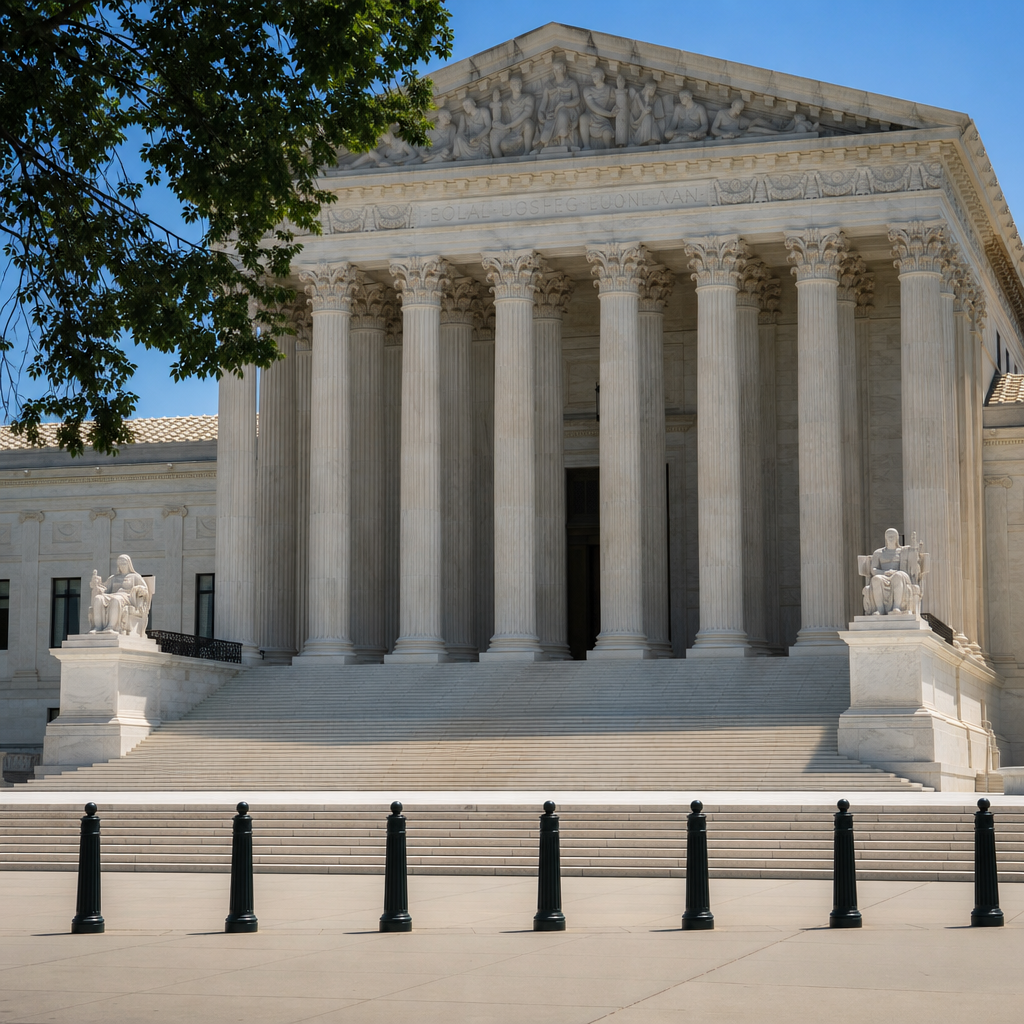
Standing, mootness, and ripeness decide who gets into federal court by determining whether a dispute is real, timely, and tied to a person who can properly sue. In AP Government and Politics, these doctrines sit inside the broader topic of judicial power, but they also shape everyday policy fights over elections, school rules, environmental regulation, executive action, and civil rights. Students often memorize the terms separately and miss the bigger point: federal courts do not issue general advice, settle abstract debates, or revisit questions that no longer matter. They hear concrete “cases” and “controversies,” a phrase rooted in Article III of the Constitution and developed through decades of Supreme Court precedent. Understanding these limits is essential because they explain why some major disputes are resolved by judges while others are left to Congress, the president, state governments, or the political process.
Standing asks whether the plaintiff is the right party to bring the lawsuit. Mootness asks whether that live controversy still exists by the time the court is deciding the case. Ripeness asks whether the controversy has developed enough to be ready for judicial review. Together, these doctrines prevent federal courts from becoming open forums for policy complaints. They also protect separation of powers by keeping judges from acting like legislators or advisors. I have found that students understand the material fastest when they frame each doctrine as a timing-and-injury question: standing concerns who is injured now, ripeness concerns whether the injury is sufficiently imminent, and mootness concerns whether the injury has disappeared. Once that framework clicks, many difficult cases become easier to classify, especially when paired with the Supreme Court’s recurring concerns about redressability, advisory opinions, and judicial restraint.
What Standing Means in Federal Court
Standing is the threshold requirement that a plaintiff show a personal stake in the lawsuit. The modern test usually has three constitutional elements: injury in fact, causation, and redressability. Injury in fact means a concrete and particularized harm, either actual or imminent. A vague interest in seeing the law followed is not enough. In Lujan v. Defenders of Wildlife, the Supreme Court rejected standing for environmental plaintiffs who could not show a sufficiently concrete injury tied to the challenged federal action. Causation requires that the injury be fairly traceable to the defendant’s conduct rather than the result of independent choices by third parties. Redressability requires that a favorable court decision is likely to remedy the injury. If winning the case would not realistically fix the harm, standing fails.
These rules matter because they separate generalized grievances from true legal disputes. Taxpayer standing, for example, is usually denied because paying taxes does not create a particularized injury from most government spending decisions. There is a narrow exception from Flast v. Cohen for certain Establishment Clause challenges to congressional taxing and spending, but the Court has kept that exception limited. By contrast, a voter whose ballot access is restricted, a student disciplined under a school rule, or a landowner facing a permit denial can often show direct injury. Organizations may sue on behalf of members under associational standing when members would have standing individually, the interests are germane to the group’s purpose, and the claim does not require each member’s separate participation. That is why trade associations, civil liberties groups, and unions frequently appear in federal litigation.
Mootness: When a Live Dispute Disappears
Mootness addresses what happens after a case begins properly but circumstances change. A case becomes moot when the parties no longer have a legally cognizable interest in the outcome. If the challenged policy is repealed, the plaintiff receives the requested relief, or the event at issue has ended without continuing consequences, the court may dismiss the case as moot. The basic logic is simple: federal judges decide live controversies, not historical disagreements. For AP Government students, mootness is easiest to spot when the question becomes “Is there still something meaningful for the court to do?” If the answer is no, federal jurisdiction usually ends.
Important exceptions keep mootness from swallowing short-lived disputes. The best known is “capable of repetition, yet evading review,” used when the challenged action is too brief to be fully litigated before it ends and is likely to affect the same plaintiff again. Election disputes, pregnancy-related litigation, and temporary restraining policies often raise this issue. Another exception concerns voluntary cessation: a defendant cannot automatically moot a case just by stopping challenged conduct if it could reasonably resume it later. Class actions create another wrinkle because the named plaintiff’s claim may expire while the broader class controversy remains alive. Criminal convictions also often avoid mootness because collateral consequences, such as voting restrictions or sentencing effects, survive even after a sentence ends. These exceptions show that mootness is practical rather than mechanical.
Ripeness: When a Case Comes Too Soon
Ripeness is the mirror image of mootness. Instead of asking whether a controversy ended too late, ripeness asks whether it arrived too early. Federal courts generally avoid cases resting on uncertain future events, speculative injuries, or policies not yet enforced in a way that creates a concrete dispute. The doctrine is especially important in pre-enforcement challenges to statutes and regulations. Businesses, advocacy groups, and individuals often want to challenge a law before violating it, but they still must show a credible threat of enforcement or a substantial hardship from waiting. Courts often weigh both the fitness of the issues for judicial decision and the hardship to the parties of withholding review.
A classic illustration is Abbott Laboratories v. Gardner, where the Court allowed a pre-enforcement challenge to federal labeling regulations because the issues were fit for review and the regulated companies faced immediate compliance costs. By contrast, when a regulation may never be applied to a plaintiff, or when further factual development is needed, courts often find the case unripe. In classroom terms, ripeness asks whether the dispute has hardened into an actual legal conflict. If a student group merely fears that a future school principal might deny funding under a policy never used against them, the claim may be premature. If the school has formally warned the group that funding will be denied next month unless it changes its speech, ripeness is much stronger because the threat is concrete and immediate.
How the Three Doctrines Compare
Because standing, mootness, and ripeness are closely related, students often confuse them on exams. The cleanest way to separate them is to match each doctrine to a stage of litigation. Standing is assessed at the start: did the plaintiff have a sufficient injury when filing the case? Ripeness looks slightly earlier: had the dispute matured enough to file at all? Mootness looks later: after filing, did the controversy disappear? Courts sometimes discuss overlapping ideas because all three doctrines protect the case-or-controversy requirement, but the practical distinction remains useful in essays and multiple-choice questions.
| Doctrine | Core Question | Typical Problem | Example |
|---|---|---|---|
| Standing | Who is suing? | No concrete, particularized injury | A citizen objects generally to federal spending |
| Ripeness | Is it too soon? | Threat of harm is speculative or undeveloped | A business challenges a rule that may never be enforced against it |
| Mootness | Is it too late? | Live controversy has ended | A school rescinds the challenged suspension and no consequences remain |
In practice, lawyers often brief all three doctrines together when seeking dismissal under Rule 12. Judges do the same because a defect in any one can eliminate federal jurisdiction. This is why federal litigation strategy begins with jurisdictional analysis before merits arguments about free speech, equal protection, or administrative law. A plaintiff may have a morally compelling story and still lose on justiciability grounds. Conversely, a carefully framed complaint that identifies immediate injury, likely enforcement, and meaningful relief can survive long enough to reach the constitutional issue. That framing skill matters in real litigation and in AP Government writing, where precise legal vocabulary earns points and prevents category mistakes.
Why These Limits Matter for Separation of Powers
The strongest reason these doctrines matter is institutional. Federal courts are designed to resolve disputes, not supervise politics in the abstract. Standing blocks judges from hearing policy complaints better directed to elected branches. Ripeness stops courts from entangling themselves in hypothetical future conflicts. Mootness prevents judicial resources from being spent on issues with no operative consequence. Together, they preserve the constitutional design in which courts exercise judgment rather than broad political will. Alexander Hamilton’s discussion of the judiciary in Federalist No. 78 helps explain this limited role, even though modern justiciability doctrine developed later through case law.
These rules also influence advocacy outside court. Interest groups frequently search for plaintiffs with obvious injuries because broad ideological disagreement will not suffice. State attorneys general often sue the federal government when states can show fiscal, sovereign, or proprietary harms, such as compliance costs or threatened loss of funding. Civil rights organizations carefully document imminent enforcement threats before filing pre-enforcement suits. Election lawyers move quickly because changing deadlines can moot a dispute after the election passes. When you study famous Supreme Court decisions, remember that many major constitutional questions never reached the merits because no plaintiff satisfied the gatekeeping rules. In that sense, standing, mootness, and ripeness shape the national agenda by filtering which disputes judges may even hear.
Common AP Government Examples and Exam Traps
On AP Government exams, these doctrines usually appear in short scenarios. The trap is that the fact pattern often includes both a rights claim and a jurisdictional problem. Students rush to discuss the First Amendment or equal protection and overlook whether the plaintiff belongs in federal court at all. A useful approach is to ask three questions in order. First, what specific injury does this plaintiff claim? Second, has that injury already happened or become sufficiently imminent? Third, does the injury still exist at the time of review? That sequence usually identifies standing, ripeness, or mootness before you move to the merits.
Consider a few examples. If a voter challenges a newly enacted voter ID law before the next election and can show she lacks accepted identification and faces likely denial, standing and ripeness are likely satisfied. If the legislature repeals the law during the appeal and no lingering effects remain, the case may become moot. If a student newspaper fears punishment under a speech code but the school has never enforced it and disavows applying it to student journalism, ripeness may be weak unless there is a credible threat. If an environmental group sues over a regulation affecting land near a member’s home, standing improves when the member uses the area regularly and can describe concrete harm to recreation or property interests. These details matter because federal jurisdiction turns on facts, not slogans.
This hub article connects to broader AP Government and Politics study of judicial review, civil liberties, federalism, the bureaucracy, and interest groups. As you move through related articles, keep one principle in mind: before the Supreme Court can decide whether government action is constitutional, someone with a real, timely, and personal stake must present a live dispute. That is the gate to federal court. Mastering standing, mootness, and ripeness will make court cases easier to analyze, strengthen your FRQ answers, and clarify why many policy battles are won or lost before judges ever reach the merits. Review the leading cases, practice classifying fact patterns, and use this framework whenever a question asks who can sue, when they can sue, and whether the controversy still matters.
Frequently Asked Questions
What do standing, mootness, and ripeness actually mean in federal court?
Standing, mootness, and ripeness are three gatekeeping doctrines that help federal courts decide whether they should hear a case at all. Together, they enforce the basic constitutional idea that federal judges resolve real legal disputes rather than answer abstract questions or give general policy advice. Standing asks whether the plaintiff is the right person to bring the lawsuit in the first place. To have standing, a person usually must show an actual or imminent injury, a connection between that injury and the defendant’s conduct, and a likelihood that a court decision will help fix the problem. In plain terms, the plaintiff must show, “This government action or policy harms me in a concrete way, and the court can do something meaningful about it.”
Mootness looks at whether the dispute is still alive after the case has already begun. A person may have had standing when the lawsuit was filed, but if circumstances change so that there is no longer a live controversy, the case can become moot. For example, if a challenged rule expires, an election ends, or the plaintiff already receives the relief requested, a court may decide there is no longer anything left to resolve. Ripeness, by contrast, asks whether the case has arrived too early. A dispute is not ripe if the harm is speculative, hypothetical, or dependent on events that may never happen. If a plaintiff sues before a policy has been enforced or before any real injury is likely, a federal court may say the issue is not ready for judicial review.
These doctrines are closely related because they all focus on timing and reality. Standing asks, “Was there a genuine personal stake when the case started?” Mootness asks, “Is there still a genuine dispute now?” Ripeness asks, “Has the dispute developed enough to be heard yet?” In AP Government and Politics, students often memorize these terms as separate definitions, but the bigger constitutional point is that federal courts are limited institutions. They do not supervise every political disagreement. They hear cases only when the right party brings a real dispute at the right time.
Why are these doctrines so important in AP Government and Politics?
These doctrines matter because they show that judicial power is limited, structured, and tied to constitutional boundaries. Students sometimes focus on major Supreme Court decisions and assume the Court can review any controversial issue it wants. Standing, mootness, and ripeness reveal that this is not how the federal judiciary works. Before judges ever reach the merits of a dispute, they often must decide whether the case belongs in court at all. That means some major political conflicts never receive a federal ruling, not because the issue is unimportant, but because the legal prerequisites for judicial review are missing.
In AP Government, this connects directly to separation of powers and the role of the judiciary. Federal courts are not designed to act like legislatures, executive agencies, or public debate forums. They do not issue advisory opinions on whether a law is wise or whether a government policy seems unfair in general. Instead, they resolve disputes brought by parties who can show a concrete stake. That framework preserves the constitutional role of courts and prevents judges from becoming broad supervisors of national policy. It also forces litigants to frame their claims in legal terms tied to injury, timing, and redress rather than broad ideological disagreement.
These doctrines also help explain why legal strategy matters in public policy fights over elections, schools, environmental rules, executive action, and civil rights. Advocacy groups and government actors often spend enormous time deciding who should sue, when to file, and what kind of relief to request. A case can fail before any judge addresses the substance if the plaintiff lacks standing, if the harm has not fully materialized, or if the controversy disappears during litigation. For AP students, understanding these doctrines turns judicial power from a memorized list of vocabulary words into a practical system that shapes which constitutional controversies federal courts can actually decide.
How does standing work, and what does a plaintiff usually have to prove?
Standing is about whether the plaintiff is the proper party to invoke the power of a federal court. The basic modern framework usually requires three elements: injury in fact, causation, and redressability. Injury in fact means the plaintiff must show a concrete and particularized harm, or at least an imminent one. The injury cannot be purely abstract, generalized, or shared in the same diffuse way by every citizen. Someone who simply dislikes a law, disagrees with a president, or objects to a policy as a voter in the broadest possible sense usually does not have standing unless they can point to a more specific personal injury.
Causation means the injury must be fairly traceable to the defendant’s challenged conduct. The plaintiff must show that the alleged harm is linked to what the government official, agency, or other defendant did. If the connection is too indirect or depends on the independent decisions of third parties, standing becomes harder to establish. Redressability means that a favorable court decision is likely to remedy, or at least meaningfully lessen, the injury. If the court cannot actually provide useful relief, then the lawsuit may not belong in federal court, even if the plaintiff feels genuinely wronged.
This doctrine matters a great deal in real-world cases. In election disputes, for example, a candidate, voter, or political party may need to show a specific burden caused by ballot rules or districting decisions. In environmental litigation, a plaintiff may need to show actual use of a threatened area or a concrete harm tied to pollution or regulation. In school or civil-rights disputes, families or students usually need to show that a challenged policy directly affects them. The larger lesson is that federal courts require more than political disagreement. Standing channels litigation toward cases where a person can say, with legal specificity, “This action harms me, the defendant caused that harm, and the court can help fix it.”
What is the difference between mootness and ripeness, and why do students mix them up?
Students often confuse mootness and ripeness because both doctrines deal with timing, but they point in opposite directions. Ripeness asks whether a case is too early. Mootness asks whether a case is too late. A ripeness problem exists when the claimed injury is not yet sufficiently real or immediate for a court to review. Maybe a regulation has been announced but not enforced, or a future action is possible but uncertain. In that situation, the court may say the dispute is still hypothetical. The plaintiff may return later if the threat becomes more concrete.
Mootness arises when the dispute was real at the start, but later events eliminate the live controversy. Suppose a student challenges a temporary school rule that is then repealed, or a person sues over being denied access to a program and then receives the benefit sought. If there is no ongoing injury and no effective relief the court can give, the case may be moot. The judicial system does not continue deciding legal questions simply because they were once important. Federal courts generally require a live dispute throughout the litigation, not just on the day the complaint was filed.
The easiest way to remember the distinction is this: ripeness is about whether the injury has matured enough to sue, and mootness is about whether the injury has faded away before the case is finished. Both reflect the same constitutional concern that federal courts decide actual controversies, not speculative future disputes or dead past ones. There are also exceptions and nuances, including situations where issues are capable of repetition yet evade review, but the core AP Government takeaway is simple and powerful: timing matters. A plaintiff must come to court neither too soon nor too late.
How do standing, mootness, and ripeness affect major policy battles like elections, environmental regulation, and civil rights?
These doctrines shape policy outcomes because they determine which disputes judges can hear and which claims never reach the merits. In election law, questions about ballot access, district maps, voter ID rules, and candidate eligibility often move quickly, so timing is everything. A plaintiff must show a concrete voting-related or candidacy-related injury to establish standing, but even after a case begins, it can become moot when the election passes or the challenged rule changes. Courts and litigants therefore pay close attention to timing, available remedies, and whether the issue is likely to recur in a way that justifies review.
In environmental regulation, standing can be one of the central battlegrounds. People challenging agency action often need to show how a regulation, permit, or environmental harm affects their own use of land, water, recreation, health, or economic interests. General concern for the environment, by itself, may not be enough in federal court. Ripeness also appears frequently when regulated parties challenge rules before enforcement or before an agency process is complete. Courts must decide whether the dispute is sufficiently concrete or whether judicial intervention would be premature.
In civil-rights and executive-power disputes, these doctrines can be equally decisive. A person challenging an executive order, school policy, or state law must identify a direct injury rather than rely on broad disagreement with governmental authority. If a policy is withdrawn, amended, or expires while litigation is pending, mootness can arise. If enforcement is threatened but not yet definite, ripeness may become the central issue. The practical result is that constitutional litigation is not only about who has the stronger legal argument on rights or powers. It is also about who has the right posture to sue, whether the controversy is live, and whether the case has arrived at