
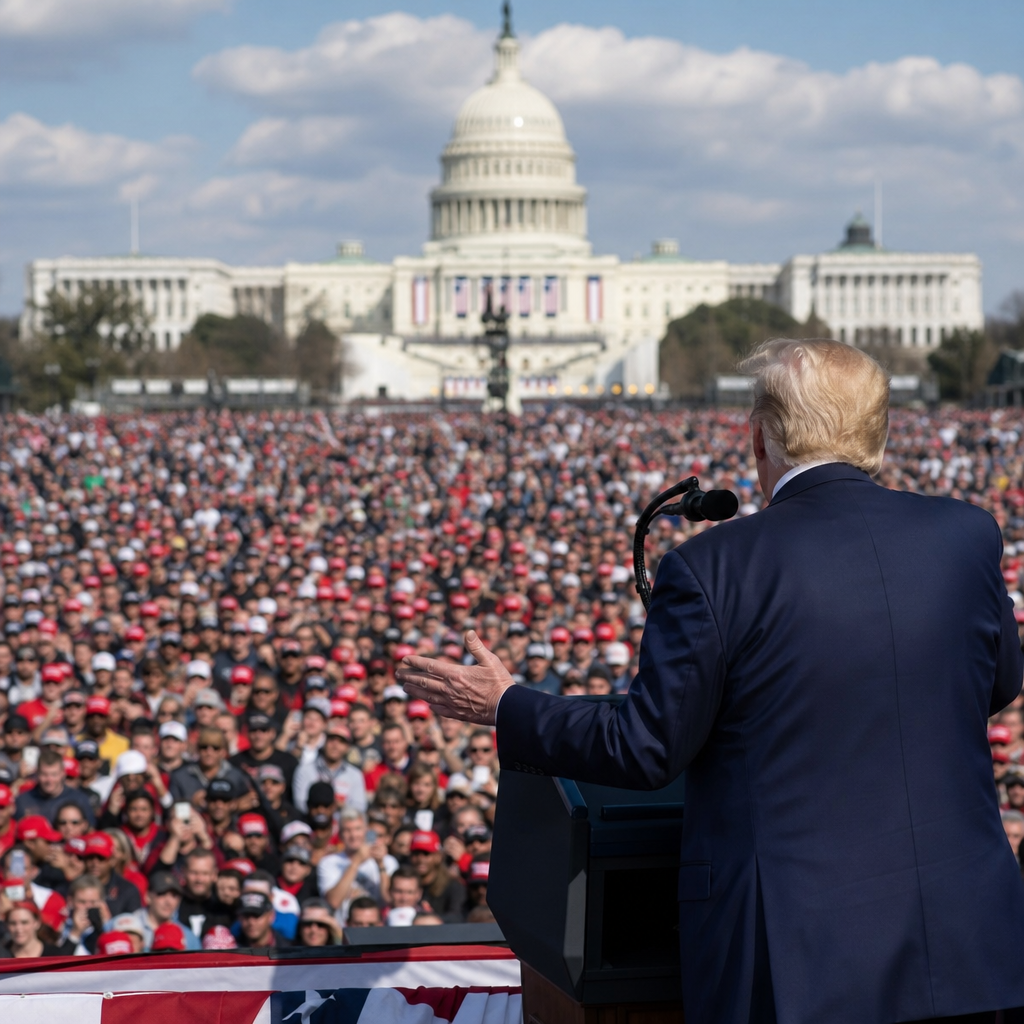
Presidents use public opinion to pressure Congress by turning popular support into political leverage, making it harder for lawmakers to oppose a policy without paying an electoral cost. In AP Government and Politics, this dynamic sits at the center of modern American government because it connects presidential leadership, the media, party polarization, elections, and the separation of powers. Public opinion means the collected attitudes of citizens about government, policy, and political leaders. Pressure Congress means influencing members of the House and Senate to vote, negotiate, delay, or abandon action based on what they believe voters want. I have taught and analyzed this topic through campaigns, State of the Union speeches, approval ratings, and legislative fights, and one conclusion is constant: presidents rarely command Congress directly, so they often try to shape the political environment around it.
This matters because the Constitution gives Congress lawmaking authority, yet voters often expect presidents to solve national problems quickly. That gap creates a strategic challenge. A president who cannot order legislators to act can still appeal to the public, raise issue salience, mobilize party supporters, and frame opponents as obstructing widely desired change. Scholars often call this “going public,” a term closely associated with Samuel Kernell. The idea is straightforward: instead of bargaining quietly only with congressional elites, presidents speak over Washington and directly to citizens. If the message works, lawmakers begin to calculate that resistance could damage reelection prospects, party unity, donor relationships, or standing in their districts. If the message fails, the president may look weak and Congress gains room to resist.
Understanding how presidents use public opinion also clarifies larger themes in AP Government: informal powers, the bully pulpit, agenda setting, approval ratings, and the limits of presidential power. This hub article explains the main methods presidents use, why some succeed while others fail, and what classic examples reveal about American politics.
Why Public Opinion Gives Presidents Leverage
Public opinion matters to Congress because House members face reelection every two years, senators must protect long-term statewide coalitions, and both depend on voters, activists, donors, and party networks. Presidents know that legislators are not equally persuaded by constitutional arguments or policy expertise alone. They respond when an issue becomes visible, emotionally resonant, and politically risky. In practice, presidents create leverage by increasing the perceived cost of opposition. A senator may personally dislike a proposal, but if local media, party activists, and polling suggest broad support, that senator may compromise rather than face backlash.
The president also has unique advantages in attracting attention. No member of Congress matches the national visibility of the presidency. The office carries built-in news value, ceremonial power, and constant media coverage. A prime-time address, a Rose Garden statement, or a carefully staged visit to a factory can dominate the national conversation in ways a committee chair usually cannot. This visibility helps presidents define what a policy means. For example, a spending bill can be framed as economic recovery, wasteful government expansion, or urgent relief depending on who successfully shapes public understanding first.
Still, visibility is not the same as persuasion. Political scientists have repeatedly found that presidents usually do not transform deeply held views on demand. What they can do more effectively is activate supporters, reinforce existing attitudes, and focus attention. That distinction is essential. Presidents pressure Congress less by magically changing minds than by making some opinions louder, more organized, and harder for legislators to ignore.
The Main Tools Presidents Use to Shape Opinion
Presidents rely on a set of recurring tools to turn public sentiment into pressure on Congress. Speeches remain central. State of the Union addresses, Oval Office speeches, campaign-style rallies, town halls, and issue-specific remarks allow a president to explain proposals in plain language and identify who is responsible for action. Presidents also use travel strategically. When a president visits a bridge in need of repair, a border crossing, or a disaster zone, the location itself becomes an argument. The visual message says the issue is real, urgent, and national.
Modern presidents add polling, digital outreach, party surrogates, and targeted media appearances. White Houses study approval data, district-level attitudes, and message testing before major legislative pushes. They know the difference between broad abstract support and support that survives contact with cost, tradeoffs, and opposition messaging. During health care, tax, immigration, or budget fights, successful administrations repeat short themes, highlight relatable beneficiaries, and localize the stakes. Instead of saying “comprehensive reform,” they talk about prescription prices, road funding, veterans’ care, or jobs in a named county.
Presidents also use blame framing. If Congress refuses to act, the president can say lawmakers are blocking popular solutions. That tactic aims not only at the next election but at immediate bargaining. Members of the president’s party may fear being seen as disloyal, while members of the opposing party may worry about suburban moderates, independents, or vulnerable seats. The approach works best when the issue is simple to communicate and when the public already leans toward the president’s position.
| Tool | How It Pressures Congress | Example |
|---|---|---|
| National address | Raises visibility and defines urgency | State of the Union push for legislative priorities |
| Presidential travel | Localizes pressure on key districts or states | Visits promoting infrastructure projects |
| Polling and targeting | Identifies persuadable audiences and lawmakers | District-specific messaging on health care |
| Rallies and town halls | Mobilizes supporters to contact representatives | Campaign-style events during budget fights |
| Media framing | Assigns credit or blame for action and delay | Messaging during shutdown negotiations |
Going Public, Bully Pulpit, and Agenda Setting
The classic presidential strategy is to move outside Capitol Hill bargaining and appeal directly to the public. The bully pulpit refers to the president’s unmatched platform for drawing attention to issues and defining national priorities. Agenda setting means influencing what government and the public talk about first. These powers are informal, but they are real. I have seen students understand the concept fastest when they compare it to a spotlight. The president cannot force Congress to vote yes, but can point the national spotlight at an issue until inaction becomes politically uncomfortable.
Franklin Roosevelt mastered radio fireside chats by making complex policy sound personal and practical. Ronald Reagan used televised addresses and simple thematic arguments to build support for tax cuts and defense policy. Barack Obama used speeches and campaign networks to promote the Affordable Care Act, though he also learned how difficult it is to sustain public clarity on a long, technical bill. Donald Trump relied heavily on rallies, cable coverage, and social media to keep pressure on congressional Republicans and frame legislative fights in highly partisan terms. Joe Biden has used travel, local events, and targeted messaging to sell infrastructure spending, semiconductor investment, and other domestic priorities.
In every case, agenda setting matters because Congress works under limited time and attention. A president who dominates the issue agenda can crowd out alternatives and force legislators to react. That is a form of pressure in itself.
Real-World Examples of Presidents Pressuring Congress
Lyndon Johnson combined insider bargaining with public pressure during the civil rights era. He understood Congress intimately, but he also knew national opinion had shifted after televised violence against civil rights protesters. By framing civil rights as a moral and constitutional necessity, Johnson increased the pressure on lawmakers, especially Northern members who could not easily defend delay. Public opinion did not eliminate opposition, particularly from Southern Democrats, but it changed the political terrain enough to aid passage of major legislation.
Ronald Reagan’s 1981 economic program offers another clear example. Reagan appealed directly to citizens for support on tax cuts and spending changes, then urged them to contact Congress. Conservative Democrats in the House, later nicknamed “boll weevils,” felt pressure from both the popularity of the new president and the public demand for economic action during inflation and stagnation. Reagan’s communication skill did not replace coalition building, but it strengthened it.
Bill Clinton’s health care failure in 1993 and 1994 shows the limits of the strategy. Clinton tried to build support for reform, yet the proposal was complex, opponents framed it effectively, and public backing weakened. Members of Congress saw uncertainty rather than overwhelming demand, so pressure dissipated. By contrast, after the 1995 government shutdown, Clinton used public opinion more successfully by framing Republicans as unreasonable, which improved his leverage in later budget battles.
After the September 11 attacks, George W. Bush enjoyed exceptionally high approval ratings, giving him broad leverage on security policy. Congress acted quickly on measures such as the Authorization for Use of Military Force. Yet high approval is not permanent. Bush later struggled to sustain support on Social Security privatization in 2005, a reminder that public pressure works only when the public is actually with the president on the specific issue.
Why Presidents Often Fail to Move Congress
Presidents fail when public opinion is divided, when the issue is too technical, when the opposition message is simpler, or when members of Congress are insulated by safe districts and polarized electorates. A representative from a strongly partisan district may fear a primary challenge more than general-election backlash, which reduces the president’s leverage. Senators also respond differently depending on state ideology, interest groups, and timing in the election cycle.
Institutional design matters too. Congress is decentralized, with committees, party leaders, filibuster rules in the Senate, and many veto points. Even a popular president can struggle if a proposal lacks sixty votes in the Senate or unity inside the president’s own party. Divided government intensifies the problem because opposition leaders may see strategic value in denying the president a legislative win. In that setting, public appeals can harden resistance instead of softening it.
Media fragmentation has made mass persuasion harder than it was in the broadcast era. Roosevelt and Reagan spoke to audiences that were more unified. Today, many citizens consume partisan media ecosystems that reinterpret presidential messages through hostile frames. Social media expands reach but also accelerates counter-messaging, fact distortion, and outrage cycles. As a result, presidents can energize their base quickly but may struggle to broaden support beyond it.
What Students Should Know for AP Government and Politics
For AP Government and Politics, the key takeaway is that public opinion is an informal source of presidential power, not a guaranteed command tool. On an exam, define going public, explain the bully pulpit, and connect both to agenda setting, approval ratings, and congressional behavior. Use precise language: presidents influence Congress indirectly by shaping electoral incentives, media narratives, and issue salience. They do not simply order Congress to comply.
It also helps to connect this topic to federalist 51 themes about ambition counteracting ambition. The branches compete, but they also depend on public legitimacy. Presidents seek legitimacy through elections, performance, and persuasion. Congress guards its institutional power, yet individual members remain highly attentive to constituents. That is why public opinion serves as a bridge between separated institutions. It translates mass politics into legislative incentives.
When writing essays, pair one successful and one unsuccessful example. Explain not just what the president did, but why the strategy worked or failed. Mention approval ratings, issue framing, party polarization, and the difference between mobilizing supporters and changing minds. If you can do that clearly, you will show real mastery of the concept and be prepared to connect this hub topic to other AP Government subtopics, from the presidency to Congress, political parties, campaigns, and the media.
Presidents use public opinion to pressure Congress because formal constitutional powers are limited, while political influence can be expansive when citizens are engaged. The most effective presidents understand that persuasion is rarely about one dramatic speech. It is about repetition, framing, timing, coalition building, and making legislators feel that inaction carries a cost. Public support can create momentum, isolate opponents, and move undecided members toward compromise. It can also fail when issues are complicated, partisan identities are strong, or Congress believes the president’s support is shallow.
The central lesson is balanced and important: public opinion is powerful, but it is not magic. Presidents can spotlight issues, rally allies, and shape narratives, yet Congress remains an independent branch with its own incentives and procedures. If you are studying AP Government and Politics, use this article as your hub for understanding how informal powers operate in real politics. Then connect it to related topics such as approval ratings, presidential communication, congressional elections, and party leadership to build a stronger grasp of how American government actually works.
Frequently Asked Questions
What does it mean when presidents use public opinion to pressure Congress?
When presidents use public opinion to pressure Congress, they are trying to convert popular support into political leverage. Instead of relying only on private bargaining with lawmakers, presidents appeal directly to the public through speeches, interviews, campaign-style events, social media, and national addresses. The goal is to persuade citizens to support a policy and then create enough visible public demand that members of Congress feel pressure to respond. In practical terms, this can make it harder for senators and representatives to oppose the president’s agenda without risking criticism, bad press, or electoral consequences.
This strategy is especially important in modern government because Congress is a separate branch with its own powers and political incentives. Presidents cannot simply order Congress to pass laws. They must persuade, negotiate, and build support. Public opinion becomes a powerful tool because lawmakers constantly think about reelection, party reputation, interest groups, and how their choices will look to voters back home. If a policy is popular, opposing it may appear politically costly. If a policy is unpopular, members of Congress may feel safer resisting the president.
In AP Government and Politics, this idea matters because it shows how leadership works in a system of separated powers. The president is not a legislator, but can still shape legislative outcomes by influencing the broader political environment. Public opinion helps connect the presidency to the media, elections, party politics, and congressional behavior. It is one of the clearest examples of how informal powers can matter just as much as formal constitutional powers.
Why is public opinion so important in the relationship between the president and Congress?
Public opinion is important because it affects the incentives of elected officials. Members of Congress do not operate in a vacuum. They are constantly aware of their districts, states, parties, donors, activists, and future campaigns. When public opinion strongly favors or opposes a proposal, lawmakers often take notice because voter reactions can shape elections, fundraising, and media coverage. That means presidents who can successfully rally the public may improve their chances of getting Congress to act.
The importance of public opinion also reflects the structure of representative democracy. In theory, Congress responds to the people, while the president often claims to speak for the nation as a whole. Because presidents are nationally elected figures with a large media platform, they are often better positioned than individual members of Congress to frame issues in broad, national terms. A president can present a policy as urgent, popular, morally necessary, or politically inevitable. If that message catches on with the public, lawmakers may feel pressure to align themselves with it or risk appearing out of touch.
At the same time, public opinion is not always clear, stable, or easy to measure. It can shift quickly, and different groups of voters may care about different issues. Presidents must also compete with congressional leaders, interest groups, and media narratives that may challenge their message. So public opinion is important not because it guarantees success, but because it can change the political calculations around legislation. It turns policy debates into electoral questions, and that can be a major source of presidential influence.
How do presidents actually shape public opinion to influence lawmakers?
Presidents shape public opinion through communication and agenda setting. One major method is the “bully pulpit,” the president’s ability to command public attention and frame national debates. A president can deliver a prime-time address, hold a press conference, speak during a crisis, tour the country, or appear at carefully selected events to highlight a policy goal. These appearances are designed not just to inform people, but to persuade them and define what is at stake. By choosing the language, symbols, and examples attached to an issue, presidents try to make their preferred policy seem reasonable, urgent, and widely supported.
Media strategy is another key part of the process. Presidents work to get favorable coverage, shape headlines, and keep issues in the news long enough to build momentum. In earlier eras, this depended heavily on newspapers, radio, and television. Today, presidents also use digital platforms, online videos, and social media to communicate directly with the public and mobilize supporters. This direct communication can bypass some traditional gatekeepers and help the White House target specific audiences more effectively.
Presidents also try to shape opinion by linking policy to broader themes voters care about, such as economic security, public safety, fairness, patriotism, or national unity. They often speak in simple, persuasive terms rather than technical legislative language. If successful, they create a political environment in which lawmakers begin hearing the same message from constituents, advocacy groups, local news, and party activists. That is when public opinion becomes pressure. The message is no longer just coming from the president; it starts to feel like a public demand that Congress cannot easily ignore.
Does using public opinion always help presidents get Congress to pass their agenda?
No, using public opinion does not always work, and in some cases it can have limited or even negative effects. One reason is that public opinion may be weak, divided, or short-lived. A policy can poll well in general terms but lose support once people hear details about costs, tradeoffs, or implementation. Lawmakers know this, so they may resist a president even when broad polling appears favorable. Members of Congress also care most about their own voters, and local opinion may look different from national opinion.
Party polarization is another major obstacle. In today’s political environment, many members of Congress are more responsive to their party base than to broad national majorities. If supporting the president would anger core primary voters or party leaders, lawmakers may see cooperation as more dangerous than opposition. This is especially true when the president and one or both chambers of Congress are controlled by different parties. In that situation, public appeals may harden conflict rather than produce compromise.
There is also the risk of overexposure or backlash. If a president pushes too aggressively, opponents may organize more intensely, media coverage may become more critical, or Congress may resent what looks like an attempt to pressure them publicly instead of negotiating privately. Some lawmakers react badly when presidents “go public” because it can make them feel cornered. So while public opinion can be a powerful tool, it is not a magic solution. Success depends on timing, issue salience, economic conditions, party unity, media environment, and the president’s credibility with the public.
Why is this topic so important in AP Government and Politics?
This topic is important in AP Government and Politics because it brings together many of the course’s biggest ideas in one example. First, it shows how separation of powers works in practice. The Constitution gives Congress lawmaking authority, but presidents still try to shape legislation through persuasion, leadership, and communication. That helps students see that government is not just about formal institutions on paper; it is also about political strategy and influence.
Second, the topic connects directly to the modern presidency. Over time, presidents have become central national figures who are expected to lead public debate, respond to crises, set policy agendas, and communicate constantly with the American people. Understanding how presidents use public opinion helps explain why the office has become so media-driven and publicly visible. It also helps explain why presidents spend so much energy speaking to the nation, traveling, and framing issues for voters.
Third, it links to political behavior and elections. Members of Congress think about reelection, party image, and constituent demands, so public opinion affects how they vote and how they position themselves politically. Presidents know this and try to use it to their advantage. Finally, this topic highlights the role of media, political parties, and polarization in modern governance. It shows that making policy is not just a matter of constitutional authority but also of persuasion, messaging, and the ability to build support in a fragmented political system. That is exactly why this concept sits at the center of understanding how American government functions today.