The whip system in Congress is the party mechanism for counting votes, gauging support, persuading wavering members, and enforcing discipline on key legislation. In the House and Senate, party whips and their teams serve as the leadership’s eyes and ears, translating broad party goals into a realistic vote tally before a bill ever reaches the floor. For students of AP Government and Politics, the whip system matters because it connects several core concepts at once: party leadership, committee strategy, legislative procedure, polarization, representation, and the constant negotiation between individual lawmakers and collective party action.
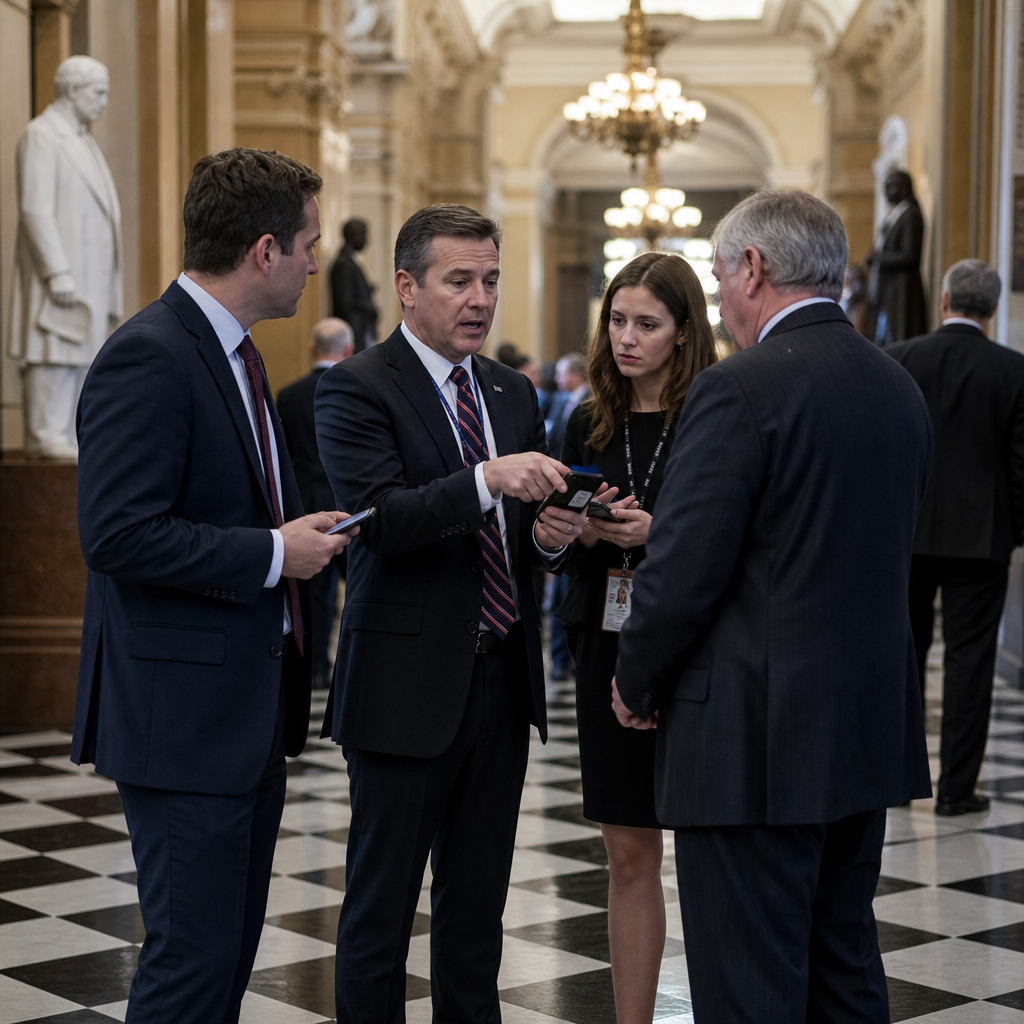
A whip, in congressional terms, is not a ceremonial title. The majority whip and minority whip are elected party leaders who work below the majority or minority leader and above a broad network of deputy and regional whips. Their central task is straightforward to describe but difficult to execute: determine where members stand, identify who is undecided, and move enough votes to win. In practice, that means private conversations, issue briefings, pressure from interest groups, coordination with committee chairs, and close monitoring of amendments that might change a member’s position. When I have watched congressional leadership operations during major floor fights, the most revealing moments were rarely public speeches; they were the quiet head counts happening in hallways, cloakrooms, and member offices.
The term comes from British parliamentary practice, where party “whips” were tasked with keeping members aligned. Congress borrowed the idea, but the American version developed under very different institutional rules. Because the United States has separated powers, independently elected members, primary elections, and weaker formal party discipline than parliamentary systems, congressional whips usually cannot command obedience outright. Instead, they blend persuasion, information, bargaining, and selective pressure. That mix makes the whip system a useful case study in how American parties operate: stronger than they once were, especially in polarized eras, yet still constrained by federalism, candidate-centered elections, and the personal incentives of each member.
This article serves as a hub for the “Misc” corner of AP Government and Politics because the whip system touches many topics that students often learn separately. It helps explain why some bills pass despite visible internal disagreement, why presidents sometimes fail to win support from their own party, why moderate and factional blocs matter, and why procedural votes can be as consequential as final passage. Understanding how whips count votes and enforce discipline gives you a practical map of how Congress actually works when stakes are high.
How the Whip System Is Organized in the House and Senate
Each party in each chamber has a whip structure, but the size and style of that structure differ between the House and Senate. In the House, party leadership is more centralized because 435 members, strict floor rules, and the Rules Committee create a setting where scheduling and message control matter enormously. The majority whip’s office often includes chief deputy whips, regional whips, and issue-focused assistants who maintain regular contact with members. Their job is to collect accurate vote commitments, relay leadership priorities, and flag concerns early enough for leaders to adjust a bill before it fails.
The Senate uses a whip system too, but it operates in a chamber built around unanimous consent, looser debate rules, and much stronger individual prerogatives. Senators have more procedural leverage, so whip operations often require deeper negotiation over amendments, debate time, and timing. A Senate whip count is rarely just a yes-or-no list. It is a fluid assessment shaped by holds, filibuster threats, bipartisan dealmaking, and whether a vote needs a simple majority, sixty votes to invoke cloture, or some other threshold. Because every senator has substantial visibility, Senate whips must manage personalities as carefully as positions.
Formal titles matter, but informal influence matters just as much. Committee chairs, ideological caucus leaders, trusted senior members, and even former party leaders can become essential parts of a whip effort. If a moderate Democrat is undecided, another moderate may be more persuasive than leadership. If a conservative Republican objects on procedural grounds, a committee chair with jurisdiction may be the one who can reassure that member. In this way, whip systems are networks, not just org charts.
How Vote Counting Actually Works
Vote counting begins long before a roll call. As soon as leadership considers bringing a bill forward, whip staff start classifying members into categories such as solid yes, likely yes, undecided, likely no, and solid no. These tallies are not static. They are updated after caucus meetings, committee markups, district feedback, media developments, and conversations with outside stakeholders. During major legislative pushes, counts can change by the hour.
The process depends on both hard data and political judgment. Staff track public statements, co-sponsorships, committee votes, district partisanship, donor pressures, and issue alignment. But experienced whips know that a member’s public posture may not reveal a final position. Lawmakers sometimes signal resistance to win concessions, protect themselves back home, or gain leverage with leadership. Effective whips therefore test intensity, not just preference: Is the member firmly opposed, open to a policy tweak, or mainly asking for political cover?
Timing is critical. In the House, leadership generally avoids scheduling a vote that it expects to lose, because defeat weakens party credibility and can derail a legislative agenda. That is why members often hear that a bill is “not ready” or that leadership is “still working the votes.” Those phrases usually mean the whip count is short. In the Senate, leaders may bring votes even when passage is uncertain in order to force members onto the record, shape public debate, or build momentum for later negotiations. Still, an accurate whip count remains indispensable.
| Whip Count Category | What It Means | Typical Leadership Response |
|---|---|---|
| Solid Yes | Member is committed to voting for the bill or motion | Maintain support and use member to influence peers |
| Lean Yes | Member is favorable but wants details or assurances | Provide policy briefings, district talking points, or procedural clarity |
| Undecided | Member has not committed and may be balancing competing pressures | Target with personal outreach, amendments, or constituency arguments |
| Lean No | Member has concerns but might move if the bill changes | Negotiate concessions or limit the political cost of support |
| Solid No | Member is firmly opposed on policy, ideology, or electoral grounds | Stop spending resources unless the broader coalition shifts |
Whips also count secondary votes that outsiders often overlook. A party may have enough support for final passage but not enough for a procedural rule, cloture motion, conference report, or budget resolution that must pass first. Many of Congress’s most important legislative collapses happen at these earlier stages. For AP Government and Politics, that is a crucial lesson: lawmaking depends on procedure, and the whip system is built to track procedure as closely as policy.
How Party Leaders Enforce Discipline
Enforcing discipline in Congress usually means shaping incentives rather than issuing direct orders. Party leaders can offer rewards, such as desirable committee assignments, support for district projects, help with fundraising, invitations to high-profile events, and backing for a member’s own legislative priorities. They can also impose costs, including reduced access to leadership, less favorable committee treatment, or weaker party support in future internal elections. The whip system is where those incentives are often communicated.
Not all pressure is coercive. Much of it is relational. Members care about trust, reciprocity, and reputation inside the caucus. If leadership has previously helped a member on local concerns, that member may be more willing to take a difficult vote. If a legislator repeatedly breaks with the party without advance notice or serious explanation, that lawmaker may find colleagues less willing to cooperate later. Whips keep track of these patterns. Congressional politics has a memory, and discipline often rests on accumulated relationships.
Messaging is another enforcement tool. Leaders frequently give hesitant members district-specific arguments, economic data, endorsement lists, and legal analyses designed to make a vote easier to defend. During close votes on spending, health care, or debt-limit measures, members are often provided with concise explanations tailored to local media and constituent concerns. This is discipline through narrative: helping members explain why supporting the party line is also consistent with serving their district.
Still, there are limits. Members from swing districts, states with distinct policy interests, or ideologically cross-pressured electorates may refuse leadership even under intense lobbying. Safe-seat members can also resist when they fear a primary challenge from their party’s base. In recent decades, conservative and progressive factions have each shown the capacity to defy leaders when they believe a bill violates core principles. That reality is why the whip system cannot simply command; it must constantly negotiate.
Why the Whip System Matters for Major Legislation
The whip system matters most when margins are tight. Landmark laws are often remembered for presidential speeches or floor debates, but passage usually depends on painstaking vote management. The Affordable Care Act in 2010 is a classic example. House and Senate leaders spent months counting support, responding to defections, sequencing votes, and coordinating procedural paths after the election of Republican Senator Scott Brown changed the Senate math. The final outcome reflected not only policy design but also sustained whip operations.
Tax legislation offers another example. Major tax packages frequently divide parties along regional and ideological lines because members weigh business interests, deficit concerns, and constituent effects differently. Whips identify which provisions trigger resistance and which tradeoffs can secure support. A member opposed to a bill’s broad framework may still be movable if a deduction, transition period, or implementation detail changes. That is why legislative text often shifts late in the process: leaders are not merely refining policy, they are building a majority.
Debt-ceiling and government-funding votes show the whip system under maximum stress. These measures can be politically toxic because voting yes may look like endorsing more debt or more spending, while voting no may risk default or shutdown. In such situations, leaders often rely on a mix of loyalists, committee experts, and members willing to absorb electoral risk for institutional stability. When enough partisan support is unavailable, whips must assess whether a bipartisan coalition is possible and what that means for internal party backlash.
For students, the larger point is clear: a bill’s substance and its vote prospects are inseparable. If you want to understand why Congress changed a provision, delayed a vote, or split a package into pieces, ask what the whip count looked like. That question often reveals more than public rhetoric does.
Limits, Criticism, and What Students Should Remember
The whip system is essential, but it is not all-powerful. It works best when party leaders understand member incentives, when policy goals are clear, and when timing is controlled. It works poorly when leadership misreads ideological intensity, when outside groups mobilize against compromise, or when a chamber’s procedural rules empower small factions to block action. Recent speakership fights in the House highlighted this problem. Even with formal leadership offices in place, disciplined vote counting could not always overcome members who preferred confrontation to accommodation.
Critics argue that strong whip operations contribute to polarization by rewarding party loyalty over deliberation. There is some truth in that. When every major vote is framed as a test of party unity, cross-party coalition building becomes harder, and rank-and-file members may feel pressure to prioritize partisan signaling over independent judgment. On the other hand, defenders note that parties are supposed to organize choices for voters. If a majority party cannot rally support for its agenda, democratic accountability weakens because voters cannot tell who is responsible for governing outcomes.
For AP Government and Politics, the best way to think about the whip system is as a bridge between formal institutions and real political behavior. Textbooks describe the House, the Senate, parties, committees, and elections in separate chapters, but whips operate across all of them. They connect leadership to rank-and-file members, policy content to procedural strategy, and national party brands to district-level political realities. They also show why Congress is neither a free-for-all of 535 isolated actors nor a machine run entirely from the top. It is a negotiated institution, and the whip system is one of the clearest expressions of that negotiation.
As you explore related topics in this sub-pillar hub, connect the whip system to party leadership, committee government, polarization, caucuses, and the legislative process. When you read about a close vote, do not stop at the final tally. Ask who counted the votes, who moved the undecided members, what incentives were used, and what procedural hurdles had to be cleared first. That habit will give you a more accurate picture of how Congress functions and why party discipline remains one of the most important forces in American national government.
Frequently Asked Questions
What is the whip system in Congress, and what does a party whip actually do?
The whip system in Congress is the organized party network used to count votes, measure support for legislation, communicate leadership priorities, and keep members aligned on important bills. In both the House of Representatives and the Senate, the whip and assistant whips act as the party leadership’s information system. They find out where members stand, identify who is firmly supportive, who is opposed, and who is undecided, and then report that information back to party leaders before a vote reaches the floor.
A party whip’s work goes far beyond simply asking members how they plan to vote. Whips help explain the details of legislation, relay the leadership’s strategy, answer concerns, and persuade members who may be reluctant to support the party position. They also coordinate with committee chairs, rank-and-file members, and other leaders to determine whether a bill is ready to move forward. In that sense, the whip system links policy goals to political reality. A party may want to pass a bill, but the whip operation determines whether the votes are actually there.
For AP Government and Politics, this matters because the whip system shows how parties organize power inside Congress. It connects directly to party leadership, legislative strategy, and the practical process of lawmaking. Rather than viewing Congress as a collection of isolated individuals, the whip system reveals it as a structured institution in which party leaders constantly gather information and shape outcomes.
How does the whip system count votes before a bill comes to the floor?
Before major legislation is debated publicly, party whips and their teams conduct what is often called a vote count or “whip count.” This process involves contacting members individually to assess their positions on a bill. Some members may be strong supporters, others may be firmly opposed, and many may fall somewhere in between. The goal is to build as accurate a tally as possible so leadership knows whether the bill can pass, whether amendments are needed, or whether the vote should be delayed.
The vote-counting process is usually detailed and strategic. Whips do not just record “yes” or “no.” They often sort members into categories such as solid yes, leaning yes, undecided, leaning no, and solid no. This gives party leaders a much clearer picture of where effort should be concentrated. If a bill is close, attention can shift toward undecided members or those who may be persuaded through policy changes, timing adjustments, or political assurances.
This function is essential because congressional leadership rarely wants to bring a bill to the floor without a reasonable expectation of success. A failed floor vote can embarrass party leaders, weaken momentum, and expose internal divisions. The whip system helps avoid that by translating informal conversations, policy concerns, and member preferences into a realistic forecast. In practical terms, it helps determine not only whether a bill passes, but whether it is even scheduled for a vote in the first place.
How does the whip system enforce party discipline in the House and Senate?
The whip system enforces party discipline primarily through persuasion, relationship-building, and strategic pressure rather than through direct command. Members of Congress are elected officials with their own constituencies, priorities, and political calculations, so party discipline in the United States is usually less rigid than in many parliamentary systems. Even so, party leaders and whips can strongly influence member behavior, especially on high-profile or closely contested legislation.
Whips encourage loyalty by reminding members of the party’s broader goals and by emphasizing the political importance of unity. They may point out how a vote affects the party agenda, the president’s priorities, or upcoming elections. They also rely on personal relationships, trust, and ongoing communication. A member who feels heard and respected by party leadership may be more willing to support the party line, even if they have reservations.
At times, discipline can also involve incentives and consequences. Leadership may reward cooperation with committee assignments, support for a member’s own legislative priorities, fundraising help, or increased influence within the caucus. On the other hand, members who consistently break with the party may lose favor, face less support for their initiatives, or find themselves with reduced influence. In AP Government terms, the whip system illustrates that party leadership depends on both formal structure and informal political leverage. Discipline is rarely automatic; it is built through negotiation, pressure, and strategic coordination.
Why is the whip system important for understanding party leadership and the lawmaking process?
The whip system is important because it shows how party leadership turns broad goals into actual legislative results. It is one thing for party leaders to announce a policy objective, but it is another to assemble enough support to pass it. The whip operation bridges that gap. It provides leaders with the information they need to plan floor action, negotiate changes, and decide whether a bill has enough backing to move ahead.
This makes the whip system a key part of the lawmaking process, even though much of its work happens behind the scenes. Bills are not shaped only in committee hearings or on the chamber floor. They are also shaped through internal party conversations, member outreach, and strategic vote counting. If the whip team finds that support is weak, leaders may revise the bill, add compromises, delay consideration, or abandon the effort entirely. If support is strong, leaders may push for quick action.
For students, this helps explain why party leadership matters so much in Congress. The Speaker of the House, the House majority or minority whip, the Senate majority or minority whip, and other leaders are not just ceremonial figures. They are active participants in coalition-building. The whip system is one of the clearest examples of how congressional parties organize themselves to influence policy outcomes. It demonstrates that lawmaking is not just about ideology or constitutional structure, but also about organization, communication, and strategy.
How is the whip system relevant to AP Government and Politics exam concepts?
The whip system is highly relevant to AP Government and Politics because it ties together multiple major concepts in a concrete way. First, it relates directly to political parties and party leadership. Students are expected to understand how parties function inside government, not just during elections, and the whip system is one of the main ways parties coordinate legislative behavior. It shows how leaders attempt to unify members and move policy through Congress.
Second, it connects to the institutional structure of Congress. The House and Senate each have formal leadership hierarchies, and whips occupy a central place in those systems. Studying the whip system helps students understand how leadership roles differ from committee roles and how information flows inside each chamber. It also highlights why internal organization matters in a large legislature where no single member can manage the entire process alone.
Third, the whip system helps explain legislative strategy, bargaining, and the role of informal power. Congress is not governed only by written rules. Personal relationships, party loyalty, timing, negotiation, and political pressure all influence outcomes. A question about why a bill passed or failed can often be answered partly by looking at whether party leaders successfully counted and secured the necessary votes. For exam preparation, that makes the whip system a useful example when discussing party polarization, congressional leadership, policymaking, and the interaction between individual members and the larger party structure.