
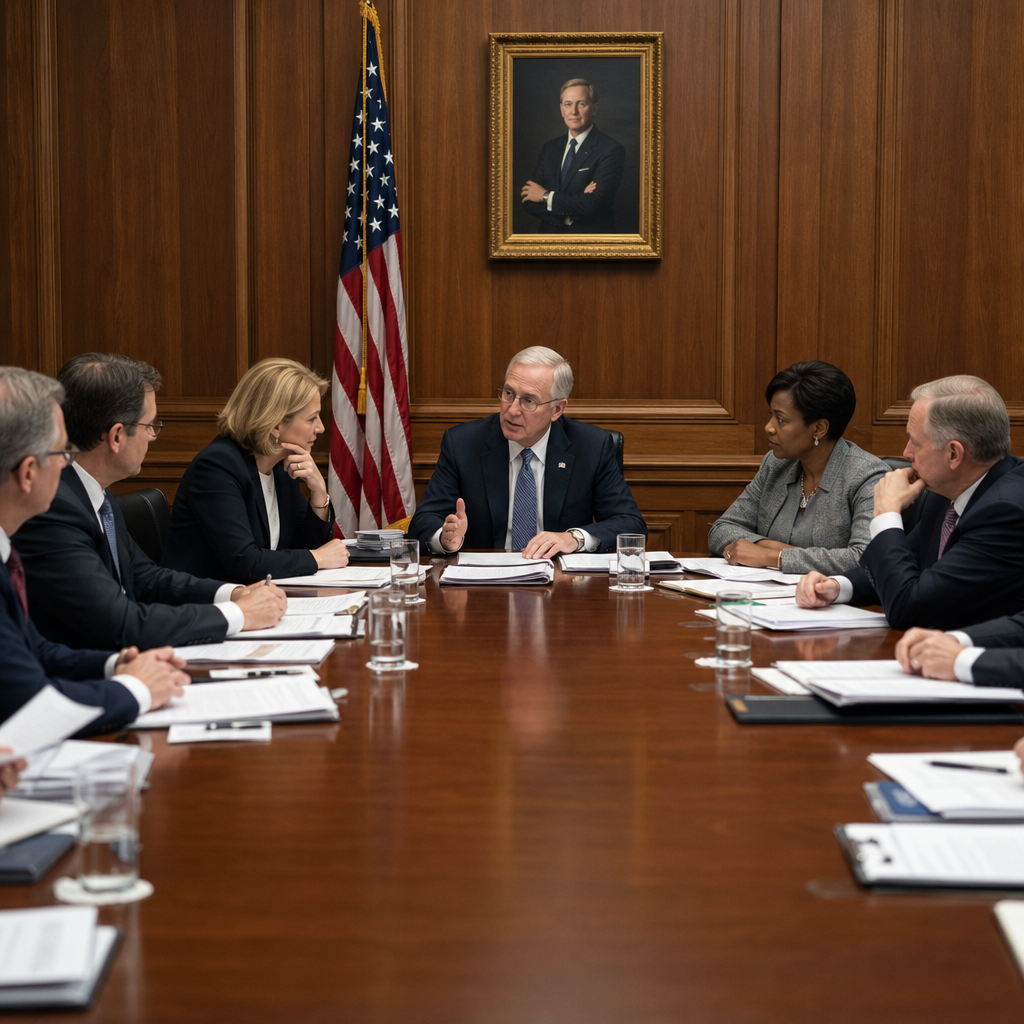
Standing committees, joint committees, and conference committees are core working parts of Congress, and understanding how they differ is essential for anyone studying AP Government and Politics. In practice, most congressional action does not happen in a dramatic floor debate. It happens in smaller groups that specialize, investigate, negotiate, and decide whether a proposal is ready to move. I have taught this material by walking students through actual bills and hearings, and once they see how committees shape outcomes, Congress makes far more sense.
A committee is a subgroup within Congress created to handle specific tasks. These tasks can include reviewing bills, holding hearings, overseeing executive agencies, investigating problems, reconciling House and Senate versions of legislation, or coordinating work across chambers. The three committee types in this article serve different purposes. Standing committees are permanent bodies in the House or Senate with continuing jurisdiction over policy areas. Joint committees include members of both chambers and usually study, review, or manage administrative matters rather than moving legislation directly. Conference committees are temporary panels formed to resolve differences between House and Senate versions of the same bill.
This topic matters because committees are where expertise, bargaining, and institutional power meet. A representative may introduce a bill, but a standing committee often determines whether it advances. A conference committee may rewrite key provisions in a final compromise. A joint committee may uncover facts that guide later action. For AP Government and Politics, committees connect directly to legislative process, checks and balances, congressional leadership, representation, oversight, policymaking, and political strategy. They also explain why some issues move quickly while others stall, why seniority and party ratios matter, and why interest groups focus so much attention on hearings and markups instead of only final votes.
If you remember one idea, remember this: standing committees do the routine policy work, joint committees coordinate or study shared concerns, and conference committees settle disagreements between chambers on a bill that both have already passed in different forms. That distinction appears often in course materials, exam questions, and real government reporting. It also helps you understand how lawmaking actually functions beyond the textbook diagram of a bill becoming a law.
What standing committees do and why they are the center of congressional work
Standing committees are permanent committees in the House and Senate. They exist from one Congress to the next, although membership can change. Each standing committee has a defined jurisdiction, meaning it handles bills and oversight within a policy area such as agriculture, appropriations, armed services, judiciary, energy, finance, education, or foreign affairs. In real congressional practice, these committees are the main engines of legislative work.
When a bill is introduced, it is typically referred to a standing committee based on subject matter. In the House, the Speaker has referral influence, and in both chambers the parliamentarian and chamber rules help determine proper jurisdiction. Once referred, the committee can hold hearings, gather testimony from agency officials, scholars, business leaders, advocates, and affected citizens, then revise the bill in a markup session. Markup is where members debate language line by line, offer amendments, and vote on whether to report the measure to the full chamber.
This power is enormous. A standing committee can advance a bill, change it substantially, delay it, or effectively kill it by never taking action. That is why committee chairs, ranking minority members, and subcommittee leaders matter so much. In the House Ways and Means Committee, tax policy can be shaped before most members ever debate it. In the Senate Judiciary Committee, judicial nominations and major constitutional questions receive detailed scrutiny. The Senate Foreign Relations Committee influences treaty and diplomacy debates. The House Appropriations Committee decides funding details that determine whether broad policy promises become operational reality.
Standing committees also conduct oversight, which means monitoring executive branch implementation of the laws Congress passes. Oversight hearings can examine waste, abuse, regulatory failures, military readiness, public health response, or agency compliance with statutory mandates. This oversight function is central to separation of powers. Congress does not only legislate; it also checks administration of laws. The Congressional Research Service, Government Accountability Office, and Congressional Budget Office often support this committee work with analysis and data.
For AP students, one common mistake is assuming committees are just discussion groups. They are power centers. They create expertise, but they also concentrate agenda control. Members seek seats on prestigious committees because those assignments help them influence policy and serve district or state interests. Agricultural districts value agriculture committees. Members from financial centers often seek banking or finance committees. This is representation in institutional form.
How subcommittees, chairs, and party leadership shape committee outcomes
Inside most standing committees are subcommittees, which handle narrower slices of policy. Much of the detailed work happens there first. A large committee may have one subcommittee on oversight, another on health, another on communications, and another on consumer protection. Subcommittees hold specialized hearings and develop legislative language before the full committee acts.
Committee leadership matters because chairs control agendas, witness selection, scheduling, and often the pace of action. In modern Congress, committee chairs are chosen through party processes, not simply by strict seniority, although seniority still matters. The majority party holds the chair positions and a majority of seats on each committee. The minority party selects a ranking member who leads its side. This reflects party government within Congress. Even though committees develop expertise, they are never fully separate from partisan strategy.
I have found that students understand this best when comparing committee work to a funnel. Thousands of bills are introduced in a two-year Congress, but only a small percentage become law. Committees narrow the field. They determine which proposals are technically workable, politically viable, fiscally manageable, and aligned with party goals. In that sense, committees are legislative filters.
Different rules in the House and Senate also affect committee influence. The House, with stricter rules and larger membership, often relies on the Rules Committee to structure floor debate after a standing committee reports a bill. The Senate allows more individual member influence on the floor, yet committees still matter because they develop the baseline text and public record. If a bill reaches the floor without solid committee work, it is often vulnerable to procedural conflict, amendment fights, or implementation problems later.
The table below captures the main differences among the three committee types covered in this article.
| Committee Type | Membership | Duration | Main Purpose | Legislative Role |
|---|---|---|---|---|
| Standing Committee | Members from one chamber | Permanent | Review bills, hold hearings, oversee agencies | Can report bills to the House or Senate |
| Joint Committee | Members from both chambers | Usually continuing | Study issues, investigate, coordinate administration | Usually does not report bills directly |
| Conference Committee | Members from both chambers | Temporary | Resolve House-Senate bill differences | Produces a conference report for final approval |
What joint committees are for and how they differ from standing committees
Joint committees include both House and Senate members. Unlike most standing committees, they usually are not the main route for bills to reach the floor. Their role is more often investigative, administrative, or advisory. That difference is crucial. Students often hear “joint” and assume extra power because both chambers are represented. In reality, joint committees typically exist to gather information, manage shared congressional responsibilities, or focus attention on a continuing issue.
Examples help. The Joint Economic Committee studies economic conditions and policy. The Joint Committee on Taxation provides analysis and technical expertise on tax legislation, making it especially important even though it is not the same as a standing tax-writing committee. The Joint Committee on Printing and the Joint Committee on the Library address administrative and institutional matters shared by both chambers. These bodies can be influential because information is power. If a joint committee produces respected analysis, its work may shape later hearings, amendments, and floor arguments.
Joint committees are useful when Congress needs a shared institutional perspective rather than separate House and Senate tracks. Because both chambers are represented, they can reduce duplication and create a common factual basis. Still, they generally do not replace standing committees in the legislative process. A tax bill still moves through Ways and Means in the House and Finance in the Senate. A defense authorization bill still moves through the armed services committees. Joint committees supplement that process rather than controlling it.
For AP Government and Politics, the clearest way to remember joint committees is this: they connect the chambers for study, oversight support, or administration, but they usually do not serve as the regular gatekeepers of legislation. Their importance lies in expertise and coordination, not in being the normal origin point for laws.
How conference committees reconcile House and Senate bills
Conference committees are temporary committees created when the House and Senate pass different versions of the same bill and need a single compromise text. This is their defining function. Because the Constitution requires both chambers to pass identical legislation before it can go to the president, disagreements must be resolved somehow. Sometimes one chamber simply accepts the other chamber’s bill. When it does not, leaders may appoint a conference committee.
Conferees are usually drawn from the standing committees that handled the bill, along with members selected by party leadership. These members negotiate disputed sections, such as funding levels, eligibility rules, enforcement mechanisms, reporting requirements, or effective dates. The goal is not to restart the process from scratch, but to reconcile differences between two already-passed versions. The output is a conference report, which contains the final compromise bill and explanatory material.
That conference report then goes back to the House and Senate for an up-or-down vote. It cannot be amended on the floor. Each chamber must either approve or reject the negotiated result. This gives conference committees unusual leverage. If the conferees produce a compromise that party leaders support, members may accept provisions they previously opposed because the alternative is losing the entire bill or restarting negotiations.
Real-world lawmaking often turns on these final negotiations. Major budget, transportation, defense, education, and health bills have historically been shaped in conference. Important policy choices can emerge there because negotiators trade priorities across sections of a bill. One chamber may win on funding, the other on implementation details. That is why critics sometimes argue conference committees reduce transparency, especially when negotiations happen quickly near deadlines. Supporters respond that they are necessary tools for bicameral compromise.
Why these committees matter for AP Government and Politics and how to study them
In AP Government and Politics, committee questions often test whether you can connect structure to power. Do not memorize names without understanding function. Standing committees matter because they specialize and control access to the floor. Joint committees matter because they provide cross-chamber coordination and expert analysis. Conference committees matter because bicameral legislatures need a mechanism for producing one final text.
These committees also illustrate broader concepts. They show why Congress is decentralized yet partisan, why policy expertise can coexist with political bargaining, and why legislation changes shape at multiple stages. They reveal the influence of leadership, seniority, constituency pressures, and institutional rules. They also demonstrate why oversight is not separate from lawmaking. Hearings today often become legislation tomorrow.
A strong study method is to follow one major bill from introduction through committee referral, hearings, markup, chamber passage, conference, and final enactment. Use Congress.gov to track bill text and actions. Read committee summaries and compare House and Senate versions. When students do that even once, the process stops feeling abstract. The differences among standing committees, joint committees, and conference committees become concrete.
The key takeaway is simple. Standing committees are permanent policy workhorses. Joint committees are shared bodies for study, coordination, and administration. Conference committees are temporary negotiators that settle House-Senate differences. Learn those roles, connect them to real congressional behavior, and you will understand a large part of how American national government actually operates. If you are building your AP Government foundation, use this page as your hub and then move next into articles on committee hearings, markup, oversight, House rules, Senate procedures, and the full legislative process.
Frequently Asked Questions
What is the difference between a standing committee, a joint committee, and a conference committee?
The easiest way to understand these three types of committees is to focus on their purpose and how long they last. A standing committee is a permanent committee in the House or Senate that handles bills and issues within a specific policy area, such as agriculture, armed services, judiciary, or appropriations. These committees do most of the day-to-day legislative work in Congress. They hold hearings, gather expert testimony, revise bills, and decide whether proposed legislation should move forward. Because they are permanent and specialized, standing committees become the main places where members develop expertise and where most bills live or die.
A joint committee is made up of members from both the House and the Senate, but it usually does not move legislation through the full lawmaking process in the same way a standing committee does. Joint committees are often used for study, investigation, coordination, or oversight. They help both chambers work together on shared concerns, gather information, and monitor ongoing issues. In other words, joint committees are more about analysis and coordination than about sending bills to the floor for final passage.
A conference committee is different from both because it is temporary and created for a very specific task. It forms only when the House and Senate pass different versions of the same bill and need to resolve those differences. Members from both chambers meet, negotiate, and produce a compromise version called a conference report. That report then goes back to the House and Senate for approval. So if you remember one key contrast, it is this: standing committees are permanent working committees, joint committees are cross-chamber committees often focused on study or oversight, and conference committees are temporary negotiation teams formed to settle disagreements between the House and Senate.
Why are standing committees considered so important in Congress?
Standing committees are important because they are where most legislative action actually happens. Although many people imagine Congress as a place defined by speeches on the House or Senate floor, the real work usually begins much earlier in committee rooms. Members of Congress cannot all become experts on every issue, so standing committees divide the workload into policy areas. That specialization allows members and staff to build knowledge, question agency officials, hear from interest groups, review data, and understand the practical consequences of proposed laws.
These committees also serve as gatekeepers. When a bill is introduced, it is usually referred to the standing committee with jurisdiction over that topic. If the committee chooses not to act, the bill may go nowhere. If it does act, the bill may be studied in hearings, revised in subcommittee, amended in a markup session, and finally reported to the full chamber. This means standing committees do not just review legislation; they shape it. They can strengthen a bill, narrow it, delay it, or effectively end it. For students of AP Government and Politics, this is a major takeaway: committee decisions often matter more than what happens later in public debate.
Standing committees are also central to oversight. Congress does not only write laws; it also checks how the executive branch carries them out. Through hearings and investigations, standing committees examine whether agencies are enforcing laws properly, spending money as intended, and responding to public needs. That makes standing committees essential to both the legislative and oversight functions of Congress. Their power comes from expertise, jurisdiction, and the ability to control whether and how legislation advances.
What do joint committees do if they usually do not move bills forward like standing committees?
Joint committees play a valuable role even though they are not usually the main committees that process legislation. Their purpose is often to help Congress gather information, coordinate work between the House and Senate, and monitor important ongoing issues. Because they include members from both chambers, they can provide a shared forum for study and oversight. This makes them especially useful when a topic crosses chamber lines or when Congress wants a more unified understanding of a problem before taking action.
In practice, joint committees may conduct investigations, issue reports, hold hearings, or oversee areas that require continuing attention. They can also support institutional functions of Congress itself. Rather than serving as the main route for a bill to become law, joint committees often contribute knowledge and recommendations that influence later legislative decisions. That distinction matters. A committee does not need to be marking up bills every day to be powerful or influential. Sometimes its impact comes from the information it produces and the attention it directs toward an issue.
For students, a good way to think about joint committees is that they often help Congress understand rather than directly legislate. If standing committees are the primary bill-writing and bill-review engines, joint committees are often research, coordination, and oversight bodies. They can shape the agenda, inform members, and support more effective lawmaking even when they are not the committees formally reporting legislation to the House or Senate floor.
How does a conference committee work when the House and Senate pass different versions of a bill?
A conference committee comes into play when both chambers have passed a bill, but the texts are not identical. Because the House and Senate must agree on the exact same wording before a bill can be sent to the president, Congress needs a way to reconcile those differences. That is the job of the conference committee. It is made up of selected members, usually from the relevant standing committees in each chamber, who understand the policy details and the political stakes involved.
Once appointed, the conferees compare the House version and the Senate version and negotiate a compromise. Some provisions may be kept, others may be dropped, and still others may be rewritten to satisfy both sides. These negotiations can be straightforward if the differences are minor, or highly complex if the bill is large or politically controversial. The final product is a conference report, which contains the compromise bill and often an explanatory statement describing the decisions made.
That conference report then goes back to both the House and Senate for a vote. At that point, members generally vote yes or no on the compromise package rather than reopening the entire bill for unlimited changes. If both chambers approve the conference report, the bill can move on to the president. If either chamber rejects it, further action is needed, and the process may stall. Conference committees matter because they show that lawmaking is not just about winning a vote in one chamber. It is also about negotiation between two separate bodies with different rules, memberships, and political pressures. In that sense, a conference committee is one of the clearest examples of compromise built into the structure of Congress.
Why is understanding congressional committees so important for AP Government and Politics students?
Understanding committees is essential because committees reveal how Congress actually functions, not just how it appears to function in a textbook summary. Students often begin with the basic outline of lawmaking: a bill is introduced, debated, passed by both chambers, and sent to the president. That sequence is technically correct, but it leaves out the most important practical reality: most bills are shaped, filtered, delayed, or stopped in committee long before the public notices them. Once students understand committees, Congress stops looking like one giant room of debate and starts looking like a system of specialized decision-making centers.
This topic also helps students connect several core AP Government concepts at once. Committees illustrate decentralization in Congress because power is spread across many smaller groups rather than concentrated only in party leaders. They show the importance of specialization because lawmakers rely on committees to handle complex policy areas. They demonstrate oversight because committees investigate executive agencies and monitor implementation of the law. And they highlight bargaining and compromise because different committees, chambers, and members often have competing priorities that must be reconciled.
Most importantly, understanding standing committees, joint committees, and conference committees helps students interpret real political events. When a news story mentions a hearing, a markup, a jurisdiction dispute, or a House-Senate compromise, those details make much more sense when students know what each type of committee does. It turns abstract civic knowledge into something concrete and usable. For AP exam preparation, that means stronger analytical writing and clearer institutional understanding. For citizenship more broadly, it means seeing where power is actually exercised inside Congress and why so much of the most important work happens out of the spotlight.