
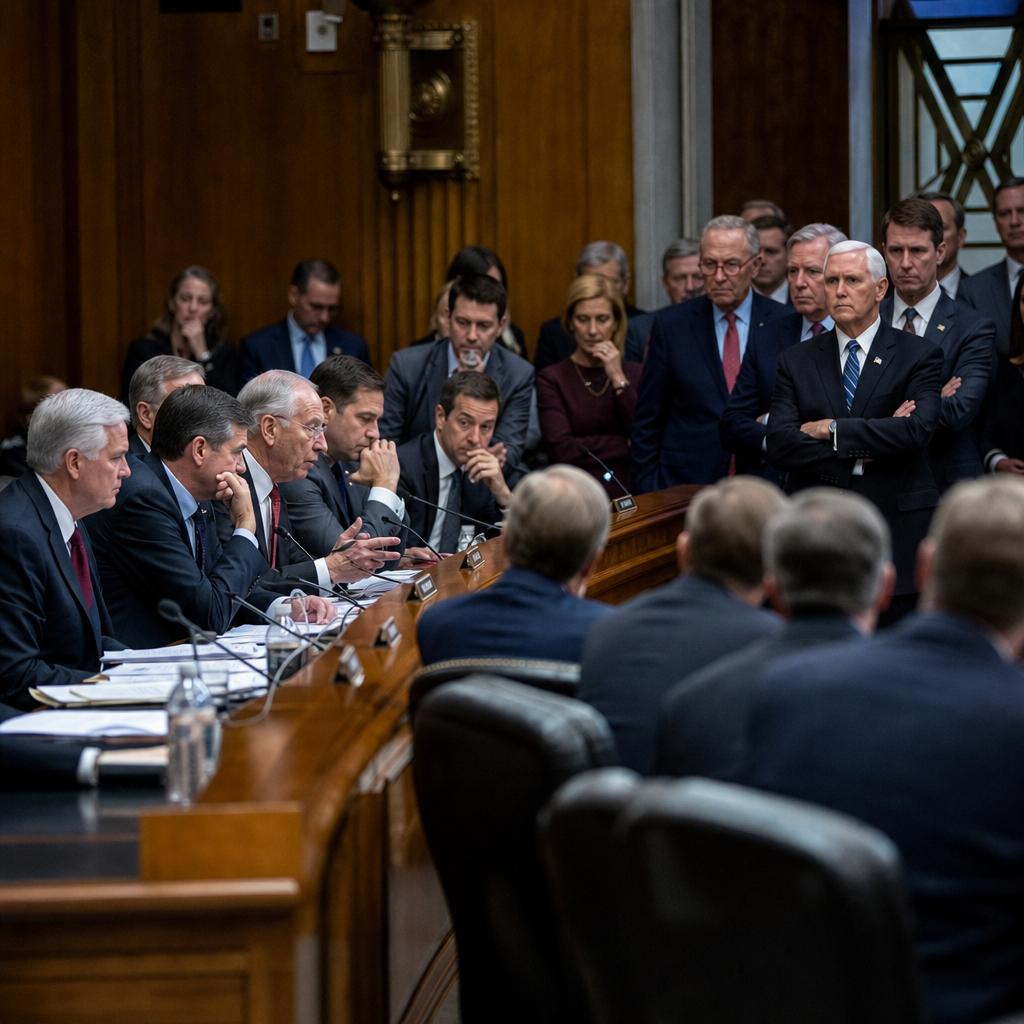
Congress writes laws through a process that looks orderly on paper but works through a constant power struggle in practice. The central question for students of AP Government and Politics is simple: when a bill changes, stalls, or suddenly advances, is the real force behind that outcome a congressional committee or party leadership? The most accurate answer is that both shape bills, but they do so at different stages, using different tools, and with different incentives. Committees usually control expertise, hearings, markups, and the detailed drafting that gives legislation its substance. Party leaders control scheduling, coalition management, floor strategy, and the political bargaining that determines whether a proposal can survive the modern House and Senate.
To understand congressional committees vs party leadership, it helps to define the terms clearly. Committees are smaller working groups inside the House and Senate, such as the House Ways and Means Committee or the Senate Judiciary Committee, that review bills within specific policy jurisdictions. Party leadership includes figures such as the Speaker of the House, House majority and minority leaders, whips, the Senate majority and minority leaders, and leadership teams that coordinate party strategy. Bills are proposed laws, but most proposals never become law because they must move through referral, review, amendment, floor consideration, and conference negotiations while surviving institutional veto points.
This distinction matters because it explains why Congress often appears both specialized and partisan at the same time. In my experience teaching and writing about legislative politics, students often assume that whichever institution gets the most media coverage must be the most powerful. News coverage usually highlights the Speaker, Senate majority leader, or party conflict on the floor. Yet the language that determines tax rates, oversight requirements, grant formulas, or agency authority is often written much earlier in committee rooms and staff offices. At the same time, highly visible national issues increasingly bypass the old committee-centered model when leaders package bills to meet party goals. Understanding this tension is essential for analyzing real lawmaking, classifying formal and informal powers, and connecting congressional procedure to broader themes in representation, federalism, elections, and policymaking.
What Committees Actually Do to Shape Bills
Committees shape bills by deciding what gets serious attention, gathering information, and rewriting proposals before most members ever see them. In the textbook model, a bill is introduced and referred to a standing committee with jurisdiction. That committee may send it to a subcommittee, hold hearings with agency officials, interest groups, scholars, and affected citizens, then revise it in a markup session. This process matters because committee members and staff usually know the policy details better than rank-and-file members. The Congressional Research Service, the Congressional Budget Office, executive agencies, inspectors general, trade associations, and advocacy organizations often feed committees the information they need to draft workable text.
Historically, committees were the dominant centers of legislative power, especially before the rise of strong partisan polarization. Committee chairs once exercised enormous influence, particularly under the seniority system. Reforms in the 1970s opened committee meetings, strengthened subcommittees, and reduced some chair dominance, but committees remained the place where expertise developed. If Congress is deciding agricultural subsidies, telecommunications regulation, veterans’ benefits, or environmental permitting, committees matter because the issue requires specialized knowledge and sustained oversight. The House Energy and Commerce Committee and Senate Finance Committee, for example, have repeatedly shaped major health care and tax provisions through detailed drafting that leadership could not realistically produce alone.
Committees also serve as gatekeepers. A chair can delay a hearing, decline to schedule a markup, or quietly let a bill die. This negative power is often more important than public votes. Many members introduce bills to signal priorities to constituents, but unless committee leaders act, the measure is largely symbolic. Committees can also narrow broad proposals into administratively realistic programs. A bill promising clean energy investment, for instance, may emerge from committee with specific tax credits, eligibility definitions, reporting requirements, and implementation deadlines. Those details determine who benefits, what agencies must do, and whether the policy can withstand legal and political scrutiny.
Still, committee influence has limits. Members are not free agents; they operate inside party caucuses, chamber rules, budget constraints, and leadership priorities. A committee may produce a technically strong bill that never reaches the floor if leaders think it divides the party or threatens the agenda. In other words, committees often write the most important parts of legislation, but they do not always decide whether legislation lives.
How Party Leadership Directs the Legislative Agenda
Party leadership shapes bills by controlling time, sequence, and political incentives. In the House, the Speaker is especially powerful because debate is tightly structured and the majority party dominates floor access. The Speaker influences committee assignments, recognizes members, refers bills, coordinates with the Rules Committee, and works with committee chairs to package legislation. The House majority leader and whip operation count votes, pressure wavering members, and identify what policy concessions are necessary for passage. Because the House is majoritarian, leadership can often move bills quickly when the party is unified.
In the Senate, leadership is less commanding because of unanimous consent practices, holds, and the filibuster, though recent changes have reduced the filibuster for nominations. Even so, the Senate majority leader exercises major agenda power by deciding what comes to the floor and when. A proposal may have committee support, outside backing, and bipartisan appeal but still fail to advance if floor time is reserved for leadership priorities. This is why agenda setting is legislative power. If a bill is never scheduled, its supporters cannot build momentum through public debate and amendment votes.
Party leaders also shape bills by nationalizing issues. Committees tend to think in jurisdictional terms; leaders think in electoral terms. When a majority party campaigns on border security, prescription drug prices, tax relief, or infrastructure, leaders work backward from those promises and ask which legislative vehicles can produce a visible win. That often means merging committee products into large packages, setting deadlines tied to funding or debt limit negotiations, and pressuring members to accept imperfect compromises. I have seen this dynamic confuse students because the final bill may carry a committee label while clearly reflecting leadership bargaining.
Leadership power has grown as polarization has increased. When parties are ideologically cohesive, leaders can punish defectors by limiting access to desirable committee assignments, fundraising networks, endorsements, or future advancement. Formal authority varies, but informal leverage is substantial. Leaders also coordinate messaging with the White House, governors, and national media, turning a bill into a party brand statement rather than a narrow policy proposal. That shift does not eliminate committees, but it changes their role from autonomous workshops to components of a larger partisan strategy.
When Committees Matter More Than Leaders
Committees matter most when policy is complex, stakes are technical, and partisan incentives are weaker than informational needs. Reauthorization bills, oversight reforms, transportation programs, farm legislation, defense procurement, water infrastructure, and many tax provisions often depend heavily on committee expertise. The annual National Defense Authorization Act is a useful example. Leadership absolutely cares about the bill, but the Armed Services Committees in both chambers do much of the substantive shaping through hearings, classified briefings, amendments, and coordination with the Department of Defense. Members outside the committees may vote on the final package, yet they usually rely on committee work to understand force structure, acquisition priorities, and readiness implications.
Committees also matter more in bipartisan or lower-salience areas where trust and technical drafting are essential. A fisheries management update, customs modernization measure, or pension accounting fix rarely becomes a mass-media leadership vehicle. In these cases, chairs and ranking members often negotiate durable compromises, and staff expertise can be decisive. Members build relationships over time, and those relationships can outlast party messaging cycles. This is one reason committees still perform crucial institutional functions despite public attention focusing elsewhere.
Another setting where committees dominate is oversight. Investigations into executive agencies, implementation failures, or regulatory gaps often begin in committee because jurisdiction matters. Oversight hearings can produce legislative revisions later. If a committee uncovers procurement waste, cybersecurity weaknesses, or uneven disaster response, it can write targeted remedies with reporting rules and funding conditions. Leadership may amplify the issue, but committees usually generate the factual record first.
When Party Leaders Override the Committee Process
Party leaders override the committee process when speed, message discipline, or coalition management matters more than open-ended deliberation. Omnibus appropriations, debt ceiling deals, budget reconciliation packages, and crisis legislation often reflect this pattern. Leadership negotiates across factions, the Senate, and sometimes the White House, then presents members with a take-it-or-leave-it package. Committees may contribute drafts, but the final bill is often assembled through leadership staff negotiations behind closed doors. This is not accidental. Leaders use centralized bargaining to prevent committees from pursuing narrower priorities that would jeopardize chamber-wide passage.
Budget reconciliation is the clearest illustration. Reconciliation bills receive procedural advantages in the Senate because they are tied to budget resolutions and can pass with a simple majority if they comply with the Byrd Rule. As a result, majority party leaders use reconciliation for major fiscal policy goals such as tax cuts, health care changes, and climate or social spending provisions. Committees write sections, but leadership decides targets, deadlines, and the overall coalition. The Tax Cuts and Jobs Act of 2017 showed this balance: tax-writing committees did critical drafting, yet party leaders drove the timetable and reconciled competing demands to secure votes.
The same pattern appears in the House Rules Committee, which often acts as an extension of majority leadership. By issuing structured rules, it can limit which amendments are allowed on the floor and protect carefully negotiated deals from unraveling. A committee may report a bill, but leadership can dramatically change member influence by determining whether amendments are open, restricted, or closed. This means bill shaping continues after committee markup and can be redirected at the final stage.
| Actor | Main tools | Strongest stage | Typical advantage |
|---|---|---|---|
| Standing committees | Hearings, markups, jurisdiction, oversight, staff expertise | Early drafting | Policy detail and credibility |
| House leadership | Agenda control, Rules Committee, whip counts, scheduling | Floor action | Speed and party discipline |
| Senate leadership | Floor scheduling, unanimous consent deals, negotiations | Chamber coordination | Managing veto points |
| Conference leaders | Bicameral bargaining, package assembly | Final passage | Compromise across chambers |
The House, the Senate, and Why the Answer Changes
The answer to who really shapes bills changes by chamber because the House and Senate run on different procedural logics. In the House, majority leadership is generally stronger. The chamber is larger, debate is more structured, and the Rules Committee can sharply limit floor amendments. As a result, leaders can protect fragile coalitions and move a party agenda efficiently. Committees still matter, but they work within tighter leadership constraints. This is why major House bills often look like leadership products even when committee members drafted key provisions.
In the Senate, committees can retain more influence because every stage is harder to manage. Individual senators have more opportunities to object, bargain, and delay. Floor time is scarce, unanimous consent agreements are delicate, and supermajority thresholds often loom. That gives committee chairs, ranking members, and pivotal senators room to shape outcomes. Yet when a majority uses reconciliation or negotiates a high-stakes bipartisan package, Senate leadership becomes central again. The chamber does not eliminate committee power; it makes power more situational.
For AP Government and Politics students, the best analytical move is to avoid a one-size-fits-all claim. On routine, technical, and oversight-heavy issues, committees often dominate substance. On party-defining, time-sensitive, or polarized issues, leadership usually dominates movement and final form. Bills become law only when both functions connect: detailed drafting from committees and coalition building from leaders.
What This Means for AP Government and Politics Study
This topic serves as a hub for broader “Misc” congressional questions because it connects to representation, elections, bureaucracy, policy making, and institutional design. If you are reviewing for an exam, ask four questions whenever you see a bill in the news. First, which committee has jurisdiction, and what expertise does it bring? Second, what does party leadership want politically from the bill? Third, what chamber rules affect amendments, debate, and scheduling? Fourth, where are the veto points: committee, floor, the other chamber, conference, or the president?
The strongest conclusion is not that committees or party leaders always win. It is that committees usually shape what a bill says, while party leaders often shape whether the bill moves, when it moves, and what coalition it must satisfy to pass. In modern Congress, leadership power has clearly expanded, especially in the House and on highly polarized issues. Even so, committees remain indispensable because expertise, oversight, and jurisdiction cannot be replaced by messaging alone. A leadership-driven bill without committee grounding is often sloppy, vulnerable, or short-lived.
Students who grasp this balance can explain Congress with far more precision. They can distinguish formal procedure from real influence, identify why some bills die quietly while others race forward, and connect textbook structures to actual politics. Use this article as your starting point for the AP Government and Politics “Misc” subtopic, then keep following specific committee systems, leadership offices, budgeting rules, and lawmaking case studies to build a complete view of how Congress really works.
Frequently Asked Questions
What is the main difference between congressional committees and party leadership when shaping bills?
The clearest difference is that committees usually shape the substance of a bill, while party leadership often shapes its path, timing, and political viability. Committees are where members with subject-matter jurisdiction study proposals, hold hearings, gather testimony, debate details, and make line-by-line changes in markup sessions. That means committees often influence what a bill actually says: its definitions, funding structures, enforcement rules, exceptions, and policy design. If a bill becomes more technical, more specific, or more tailored to a policy area, committee work is usually the reason.
Party leadership, by contrast, tends to operate at a broader strategic level. Leaders in the House and Senate decide which issues the party will emphasize, when legislation should move, how members will be persuaded to support it, and whether a bill fits the party’s electoral message. They also coordinate votes, negotiate with other factions, and determine how aggressively to push a proposal. In that sense, leadership may not write every provision, but it often decides whether a bill gets momentum, stalls, or becomes part of a larger legislative bargain.
So if the question is who “really” shapes bills, the best answer is that committees and party leadership shape them in different ways. Committees usually matter most during drafting and revision. Leadership often matters most when a bill must survive the political process, win floor time, and gather enough support to pass. A bill can be expertly written in committee and still die without leadership backing. On the other hand, leadership can push hard for a bill, but if the committee process is weak or divided, the final product may be flawed or politically difficult to defend.
Why are committees often described as the place where the real policy work happens?
Committees are often called the center of policy-making because they are designed to handle the detailed labor that the full House or Senate cannot easily manage. Congress deals with an enormous range of issues, from taxes and defense to agriculture, education, and health care. Most rank-and-file members cannot master every subject, so Congress divides labor through standing committees and subcommittees. These smaller bodies develop expertise, build relationships with executive agencies and interest groups, and spend more time examining evidence and policy consequences than the full chamber typically can.
In practice, this means committees are where many of the most important bill changes occur. They hold hearings to gather information, invite witnesses to testify, question officials and experts, and identify problems in proposed legislation. They then move into markup, where members debate amendments and negotiate over specific language. This is a major source of committee power: a bill can be narrowed, expanded, weakened, strengthened, or completely rewritten before most members of Congress ever focus closely on it.
Committees also control agendas within their jurisdiction. A chair can choose to prioritize certain bills, delay others, or never bring some proposals forward at all. That gatekeeping power is especially important because many ideas never make it past the committee stage. Even when a party leader strongly supports an issue, the committee process can slow momentum if members are divided or if the policy details are controversial. For students of AP Government, this is why committees are so central: they do not just review legislation, they often define what the legislation becomes.
How does party leadership influence whether a bill advances or fails?
Party leadership influences bill outcomes by controlling coordination, messaging, and access to the floor. In the House, leaders such as the Speaker and majority leadership have especially strong tools for deciding what legislation moves and under what conditions. They can prioritize a bill as part of the party agenda, work with the Rules Committee to structure debate, limit amendments, and build a coalition strong enough to pass it. In the Senate, leadership power is somewhat more constrained by chamber rules, but leaders still play a major role in scheduling, negotiation, coalition-building, and deciding how much political capital to spend on a proposal.
Leadership also matters because members do not vote in isolation. Leaders track support, count votes, negotiate compromises, and pressure hesitant members. They may offer incentives such as favorable assignments, legislative support, or public backing, while also reminding members of party goals and electoral consequences. This is especially important on high-profile bills that define a party’s platform. Even if a committee produces a strong bill, it may fail without leadership’s ability to unify members and manage internal disagreements.
Another major source of leadership influence is message control. Leaders decide which bills fit the party’s national narrative and which are too politically risky. A proposal may be delayed not because it is bad policy, but because leaders believe the timing is wrong, the issue divides the caucus, or the bill would distract from a larger strategic goal. That is why leadership can be decisive in explaining sudden changes in a bill’s fate. If a measure unexpectedly advances, leadership often decided the moment was right. If it stalls despite committee approval, leadership may have concluded that the votes, the optics, or the broader agenda were not in place.
At what stage of the legislative process are committees strongest, and when is party leadership strongest?
Committees are generally strongest in the early and middle stages of the legislative process, especially when a bill is being developed, reviewed, and revised. This is when expertise matters most. Members of the relevant committee study the issue, hear testimony, consider stakeholder input, and draft or amend the proposal. During this period, committees have the greatest opportunity to shape the policy’s core design. They can decide whether a bill is practical, how broad it should be, what exceptions should be included, and how the government would implement it. If the bill is complex, committee influence is often especially strong because most members outside the committee rely on that work.
Party leadership tends to become strongest when the question shifts from policy design to legislative movement. Once a bill is reported out of committee, the challenge becomes getting it onto the floor, controlling debate, managing amendments, coordinating support, and steering it through final passage. That is where leadership’s procedural and political tools become more important. Leaders may merge bills into larger packages, delay action until enough votes are secured, or push an issue quickly to capitalize on public attention or political urgency.
That said, the balance is not always neat. On highly salient issues, leadership may intervene early, even influencing committee drafting from the start. On more technical issues, committees may dominate almost the entire process because leaders defer to specialists. The larger point is that power in Congress is layered rather than fixed. Committees usually shape what a bill is. Leadership often shapes whether that bill has a realistic chance to become law.
Which has more power overall: congressional committees or party leadership?
There is no single answer that applies to every bill, because power in Congress depends on the issue, the chamber, the political environment, and how unified the parties are. If the question is who has more influence over policy detail, committees usually have the edge. They possess jurisdiction, expertise, and procedural opportunities to rewrite legislation before it reaches the full chamber. On many issues, especially technical or lower-profile ones, committees do most of the meaningful shaping because few other actors are as involved in the specifics.
If the question is who has more influence over whether a bill lives or dies politically, party leadership often has the edge. Leaders can decide whether a bill becomes part of the party agenda, whether it gets floor consideration, how much pressure is placed on members, and whether a proposal is worth spending time and political capital on. In an era of stronger party polarization, leadership has become more important because legislative success often depends on partisan unity and message discipline, not just policy craftsmanship.
The strongest conclusion is that committees and leadership are not rival explanations so much as complementary centers of power. Committees usually act as the workshops of Congress, where legislation is built and altered. Party leadership acts more like the strategic command structure, deciding when and how that legislation can move. To understand why a bill changes, students should look first at the committee process. To understand why it advances, stalls, or suddenly becomes a priority, they should look closely at party leadership. In real congressional politics, bills are shaped by both, but at different moments and for different reasons.