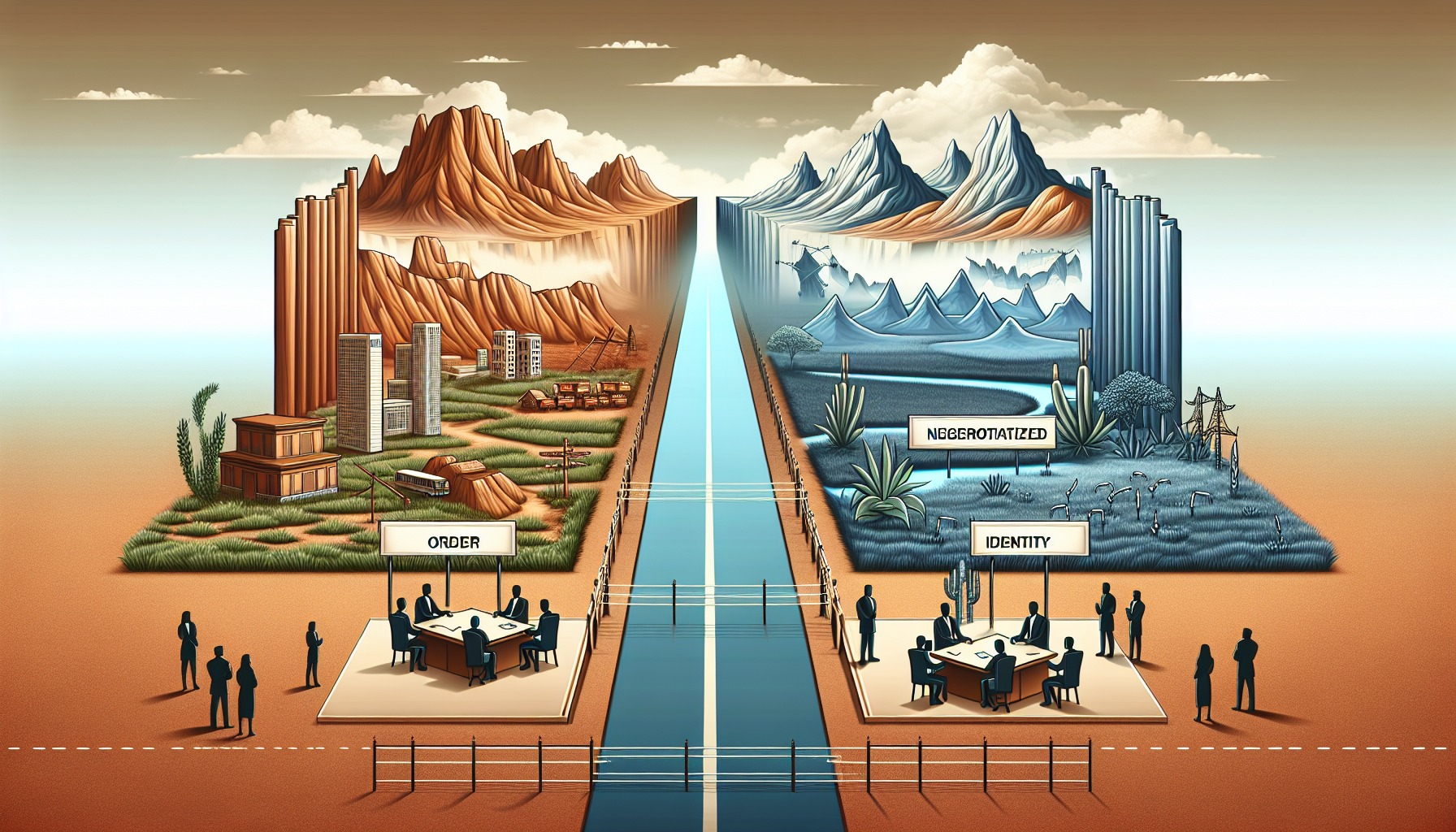
Imperial borderlands are the zones where empires met resistance, exchange, adaptation, and ambiguity, and they reveal more about power than imperial capitals ever could. A borderland is not simply a line on a map; it is a lived frontier where officials, soldiers, merchants, migrants, religious leaders, and local communities negotiated rule day by day. Identity in these regions was rarely fixed. People could be imperial subjects, tribal allies, tax resisters, bilingual brokers, and members of confessional networks at the same time. Negotiated rule describes the practical bargains that made imperial government possible in such places: tribute instead of direct taxation, indirect administration through local elites, military service in exchange for autonomy, and selective enforcement of law. I have worked through archival case studies and comparative frontier scholarship long enough to know that borderlands consistently disrupt neat national histories. They matter because they explain how large states actually expanded, how sovereignty remained partial, and why frontier institutions often outlasted the empires that created them. As a thematic and comparative hub, this article connects the miscellaneous dimensions of borderland history into one framework: frontiers were not margins of history but laboratories of imperial governance, identity formation, violence, and cultural creativity.
What Imperial Borderlands Are and How They Function
Imperial borderlands are best understood as contact zones shaped by unequal power, mobile populations, and overlapping jurisdictions. Historians use related terms such as frontier, marches, periphery, buffer zone, and intermediary region, but the core idea is consistent: these were spaces where no single authority enjoyed uncontested control. In practice, empires often governed borderlands through layered sovereignty. The Ottoman Empire relied on provincial notables, tribal confederations, and frontier garrisons; the Qing used banner forces, tribute relations, and differentiated legal categories; the Roman Empire combined roads, forts, client kings, and municipal privilege; the Spanish monarchy in the Americas depended on missions, militias, negotiated alliances, and local cabildos. These examples show that frontiers were systems, not edges.
Functionally, borderlands served several roles at once. They were military shields, trade corridors, settlement zones, fiscal reservoirs, and ideological proving grounds where rulers staged authority. They also absorbed displaced people. Runaway serfs, deported communities, merchant diasporas, and religious minorities frequently moved into frontier regions because central oversight was weaker and social categories were more flexible. That flexibility did not mean freedom in any simple sense. Borderland life could be harsh, with raiding, hostage taking, forced migration, and punitive campaigns woven into everyday politics. Yet compared with imperial cores, these regions usually offered more room for negotiation. That is why frontier studies matter across miscellaneous comparative topics, from migration history and legal pluralism to military labor and environmental adaptation.
Frontiers Identity and the Making of Hybrid Communities
Identity in imperial borderlands was situational, relational, and often strategic. A frontier merchant in Safavid-Ottoman territory might present himself as Armenian, Christian, local notable, imperial subject, and caravan financier depending on the audience. A Cossack host on the Muscovite steppe frontier could shift between service to the tsar, defense of communal privilege, raiding, and diplomacy with neighboring powers. In the Habsburg Military Frontier, settlers received land and status in exchange for military obligation, producing communities that were both colonists and border guards. In the North American Great Lakes, Indigenous polities and French, then British, agents forged political worlds that cannot be reduced to simple categories of colonizer and colonized.
Language, dress, law, and ritual often became tools for navigating these multiple affiliations. Bilingualism was common because commerce and mediation demanded it. Intermarriage could stabilize alliances. Religious conversion might be sincere, opportunistic, coerced, or all three over a lifetime. Frontier identity therefore should not be romanticized as endless fluidity. Empires classified populations aggressively through censuses, tax registers, military rolls, and confession-based categories. Local groups also policed boundaries when land, honor, or patronage were at stake. Still, the historical record shows that people in borderlands repeatedly manipulated imperial labels to gain exemptions, avoid conscription, secure safe passage, or claim jurisdiction under a favorable court. The result was a durable pattern: identities hardened during crises but remained negotiable in routine governance.
Negotiated Rule: How Empires Governed Without Full Control
Negotiated rule was not a sign of administrative weakness alone; it was often the most rational strategy available. Distance, disease environments, rugged terrain, and limited revenues made direct rule prohibitively expensive. Experienced frontier governors understood that durable control depended on brokerage. They used hostages, subsidies, tax farming, commercial monopolies, and recognition of hereditary authority to bind local actors into imperial systems. The Roman use of foederati, the Mughal accommodation of zamindars, and British reliance on indirect rule in many colonial settings all reflect the same governing logic: empire functioned through intermediaries who translated authority into local terms.
This system carried obvious risks. Intermediaries could become kingmakers, siphon revenue, falsify census data, or switch allegiance when rival empires offered better terms. I have seen this pattern recur across archives from different regions: the same local chief whom officials praised as indispensable in one dispatch appeared in the next as treacherous and unreliable. That inconsistency was structural, not personal. Frontier brokers survived by preserving leverage. Empires responded with mixed tactics. They built forts and roads to reduce dependence, sponsored schools or missions to reshape elite culture, standardized legal categories, and encouraged settler colonies to alter demographics. Even so, complete integration remained rare. The frontier bargain persisted because negotiated rule solved immediate problems better than ideological visions of uniform sovereignty.
| Imperial setting | Common borderland method | Main advantage | Main limitation |
|---|---|---|---|
| Roman frontiers | Client rulers, forts, road networks | Rapid defense and local cooperation | Dependence on allied elites |
| Ottoman provinces | Tax farming, ayan notables, tribal agreements | Lower administrative cost | Chronic provincial autonomy |
| Qing Inner Asia | Banners, tribute, differentiated law | Flexible multiethnic governance | Complex hierarchy hard to standardize |
| Spanish American frontiers | Missions, presidios, native alliances | Settlement and cultural penetration | Fragile control beyond fortified nodes |
Violence, Exchange, and Everyday Life on the Frontier
Borderlands were shaped by violence, but they were not defined by warfare alone. Raids, reprisals, enslavement, and fortification were frequent because frontiers concentrated armed men, disputed resources, and rival claims to legitimacy. The steppe frontier offers a clear example: mobility gave pastoral confederations military advantages, while agrarian empires depended on forts, supply lines, and seasonal campaigning. Similar asymmetries appeared in desert and forest zones worldwide. Yet the same routes used for raiding also carried salt, horses, textiles, firearms, and news. Markets often flourished beside garrisons. Smuggling was not marginal behavior; it was a structural feature of borderland economies because tariffs, embargoes, and monopoly systems created profit opportunities.
Everyday life therefore mixed insecurity with pragmatism. Families planted crops near military posts, caravanserais hosted merchants from rival realms, and shrine networks tied communities together across political divides. Women often played central frontier roles that state archives understate: arranging marriages that secured alliances, managing households during campaigns, preserving confessional traditions, and participating in trade. Religious institutions mattered as well. Monasteries, mosques, missions, and temples functioned as landholders, mediators, schools, and refugee centers. Environmental pressures intensified all of this. Drought, harsh winters, animal disease, and river shifts could trigger migration and revolt faster than any decree from the capital. To understand imperial borderlands fully, political history must be read together with climate, logistics, household economy, and regional trade.
Law, Sovereignty, and Competing Jurisdictions
One of the clearest signs of a borderland is legal plurality. Multiple courts, customary norms, and overlapping claims to punishment or protection usually operated side by side. A merchant dispute might pass through communal arbitration, a military commander, a religious court, and an imperial governor before resolution. This was inefficient by modern bureaucratic standards, but it reflected how sovereignty worked before the triumph of the centralized nation-state. Rule was divisible. An empire could claim tribute from a tribe, military passage across its territory, and the right to mediate succession without controlling land tenure or family law. In many frontier regions, that limited package was sufficient.
Comparative evidence confirms the pattern. In the Polish-Lithuanian, Ottoman, and Russian border zones, charters and privileges carved out exemptions for towns, nobles, monasteries, and military settlers. In South Asian frontiers, personal law and customary tenure often coexisted with imperial revenue demands. In colonial Africa and Asia, codified customary law was frequently an imperial construction that froze flexible practice into rigid categories. This matters because modern territorial sovereignty encourages us to imagine historical borders as clean lines. They were usually corridors of jurisdictional overlap. When conflict sharpened, states tried to map, enumerate, and codify these zones. Surveying, cadastral registration, passport controls, and border commissions were therefore not mere technical upgrades; they were political attempts to end negotiability.
Comparative Patterns Across Time and Place
Although every imperial frontier had local particularities, several comparative patterns recur. First, borderlands almost always generated intermediaries with unusual power: dragomans, interpreters, militia captains, merchant bankers, guides, and mission clergy. Second, states alternated between accommodation and consolidation. They tolerated difference when expansion was costly, then pursued standardization when military technology, fiscal capacity, or ideology changed. Third, frontier crises often accelerated identity hardening. Census categories, passports, and settler colonization transformed flexible affiliations into ranked ethnic or national blocs. Fourth, many modern conflicts inherit institutional debris from imperial borderlands: disputed autonomy arrangements, uneven land rights, militarized infrastructure, and memories of betrayal or protection.
This is why a miscellaneous hub on borderlands must remain comparative rather than isolated in one empire. The U.S.-Mexico border, the Caucasus, the Balkans, the Sahara, Inner Asia, the Andes, and the Great Lakes region all differ profoundly, yet each illustrates negotiated rule under conditions of mobility and uneven sovereignty. Scholars such as Frederick Jackson Turner framed frontiers as engines of national development, while later work by Richard White, Jeremy Adelman, Stephen Aron, Jane Burbank, Frederick Cooper, and Pekka Hämäläinen emphasized interaction, layered power, and the endurance of nonstate actors. The strongest current scholarship rejects the idea that empires simply projected power outward in a straight line. They assembled rule through bargains, coercion, infrastructure, and information, and borderlands expose every seam in that process.
Imperial borderlands teach a simple but far-reaching lesson: power at the edge was never merely imposed; it was negotiated, contested, and constantly translated into local forms. These regions matter because they show how empires actually worked, how identities formed under pressure, and why sovereignty was often partial long before modern states tried to make it absolute. Across Roman, Ottoman, Qing, Spanish, Habsburg, Russian, Mughal, and colonial settings, the same themes recur: hybrid communities, powerful intermediaries, legal pluralism, strategic violence, thriving exchange, and recurrent efforts by central authorities to replace bargains with standardization. When we read frontier history comparatively, miscellaneous cases stop looking marginal and start revealing a general rule of political life. States govern unevenly, and people on the margins learn to use that unevenness.
For readers using this page as a sub-pillar hub, the main benefit is a framework that connects many separate articles and case studies. Instead of treating each frontier as an isolated curiosity, use negotiated rule, layered identity, jurisdictional overlap, and intermediary power as the key lenses for comparison. That approach makes it easier to understand border treaties, settler projects, indigenous diplomacy, smuggling economies, military colonies, and confessional politics within one coherent map of imperial governance. If you are exploring this thematic field further, move next to region-specific frontier studies and compare how each case balanced coercion, cooperation, and local autonomy. The borderland is where imperial history becomes most human, most unstable, and most revealing. Start there, and the rest of empire comes into focus clearly.
Frequently Asked Questions
What are imperial borderlands, and why do they matter so much in history?
Imperial borderlands are frontier zones where empires extended power into regions that were never fully controlled in simple, uniform ways. They were not just outer edges of a state or neat boundary lines on a map. Instead, they were lived political and social environments shaped by military pressure, trade, migration, diplomacy, religious exchange, and local negotiation. In these spaces, imperial officials might claim authority, but that authority often depended on cooperation from local elites, tribal leaders, merchants, translators, and communities with their own priorities. That is exactly why borderlands matter: they reveal how power actually worked in practice rather than how rulers imagined it from distant capitals.
These regions are historically important because they expose the limits of empire. Capitals often projected images of order, unity, and centralized rule, but borderlands show that imperial control was frequently conditional, improvised, and contested. Laws might be selectively enforced, taxes negotiated, and military alliances constantly revised. Borderland societies could absorb imperial institutions while also resisting, reshaping, or bypassing them. As a result, historians study borderlands not as peripheral afterthoughts, but as key sites where sovereignty, legitimacy, and identity were made and remade. If you want to understand how empires survived, adapted, or failed, borderlands often provide clearer evidence than the imperial center itself.
How was identity shaped in imperial borderlands?
Identity in imperial borderlands was typically fluid, layered, and situational rather than fixed or singular. People living in frontier zones often navigated multiple political and cultural worlds at once. A person might be an imperial subject in legal terms, a member of a local kinship network in everyday life, a trader who relied on cross-border connections, and a religious participant in institutions that linked communities beyond the empire. These overlapping affiliations meant that identity could shift depending on the context. The same individual might present loyalty to imperial authorities in one setting and align with local leaders or regional customs in another.
This flexibility was not necessarily a sign of confusion or inconsistency. It was often a practical strategy for survival and advancement. In unstable frontier environments, bilingual brokers, intermediaries, and local elites gained influence precisely because they could move between worlds. They translated not just language, but law, custom, ritual, and political expectation. Borderland identity was therefore negotiated through taxation, military recruitment, marriage, trade, religious practice, and access to protection. Rather than seeing identity as a simple category imposed from above, it is more accurate to understand borderland identity as something performed, contested, and adjusted over time in response to changing imperial demands and local realities.
What does “negotiated rule” mean in the context of frontier regions?
Negotiated rule refers to the fact that imperial authority in borderlands was rarely absolute. Empires often lacked the manpower, local knowledge, and infrastructure needed to govern frontier populations directly. As a result, they depended on a wide range of intermediaries: chiefs, landlords, military commanders, clerics, merchants, tax farmers, and local notables. These figures did not merely carry out orders from the center. They interpreted policy, bargained over obligations, and used their position to defend local interests or expand their own influence. Rule was therefore the product of ongoing interaction, compromise, and sometimes deliberate ambiguity.
In practice, negotiated rule could take many forms. An empire might recognize local autonomy in exchange for tribute or military service. It might tolerate different legal customs to secure peace. It could appoint officials from local communities rather than sending outsiders who lacked credibility. Even resistance could become part of negotiation, since revolts, tax refusal, and strategic noncompliance often forced imperial authorities to adjust policy. This dynamic makes borderlands especially revealing. They show that governance was not simply imposed from above, but assembled through bargaining between unequal actors. Empires held significant power, but they still had to adapt to local conditions if they wanted authority to endure.
Why were imperial borderlands often places of both conflict and cultural exchange?
Borderlands brought together competing political claims, military interests, and economic ambitions, so conflict was common. Empires sought revenue, security, and strategic depth, while local groups defended autonomy, resources, and established ways of life. Rival states, raiding networks, mobile communities, and local factions all operated in the same space, making frontier zones highly unstable. Forts, patrols, punitive campaigns, and alliance shifts were familiar features of many borderland regions. Because authority was contested, violence was often part of everyday politics rather than an exceptional breakdown of order.
At the same time, the very conditions that produced conflict also encouraged exchange. Soldiers needed supplies, merchants followed opportunity, migrants moved through frontier corridors, and religious leaders carried beliefs and institutions across political boundaries. Languages mixed, administrative practices were borrowed, and local populations adopted, adapted, or repurposed imperial customs. Material culture, dress, law, architecture, and ritual could all reflect this blending. Borderlands were therefore not simply battlegrounds; they were contact zones where new social forms emerged. That combination of confrontation and interaction is what makes them so historically rich. They were places where people fought over power while also learning from, trading with, and transforming one another.
What do imperial borderlands teach us about power, sovereignty, and the nature of empire?
Imperial borderlands teach us that power is rarely as complete as official documents claim. In theory, empires often described themselves as unified, sovereign, and hierarchically organized. In practice, frontier regions reveal that sovereignty could be partial, overlapping, and constantly negotiated. Different legal systems might coexist. Local rulers could exercise substantial authority while still acknowledging an empire symbolically. Communities could accept imperial protection but reject taxation, conscription, or administrative interference. This means that power in borderlands was not just about force. It depended on persuasion, alliance, ritual recognition, economic incentive, and the management of uncertainty.
They also show that empires were not static structures expanding smoothly from a dominant center. They were adaptive political formations shaped by the resistance and participation of people at the margins. Borderlands make it clear that so-called peripheral regions were often central to imperial survival because they supplied troops, revenue, intelligence, and trade links, while also exposing imperial vulnerability. Studying these frontiers changes how we understand empire itself. Instead of seeing rule as one-directional, we see it as relational. Instead of viewing identity as fixed, we see it as strategic and evolving. And instead of imagining borders as hard lines, we recognize them as lived spaces where authority was tested every day and where the true complexity of empire comes into view.