
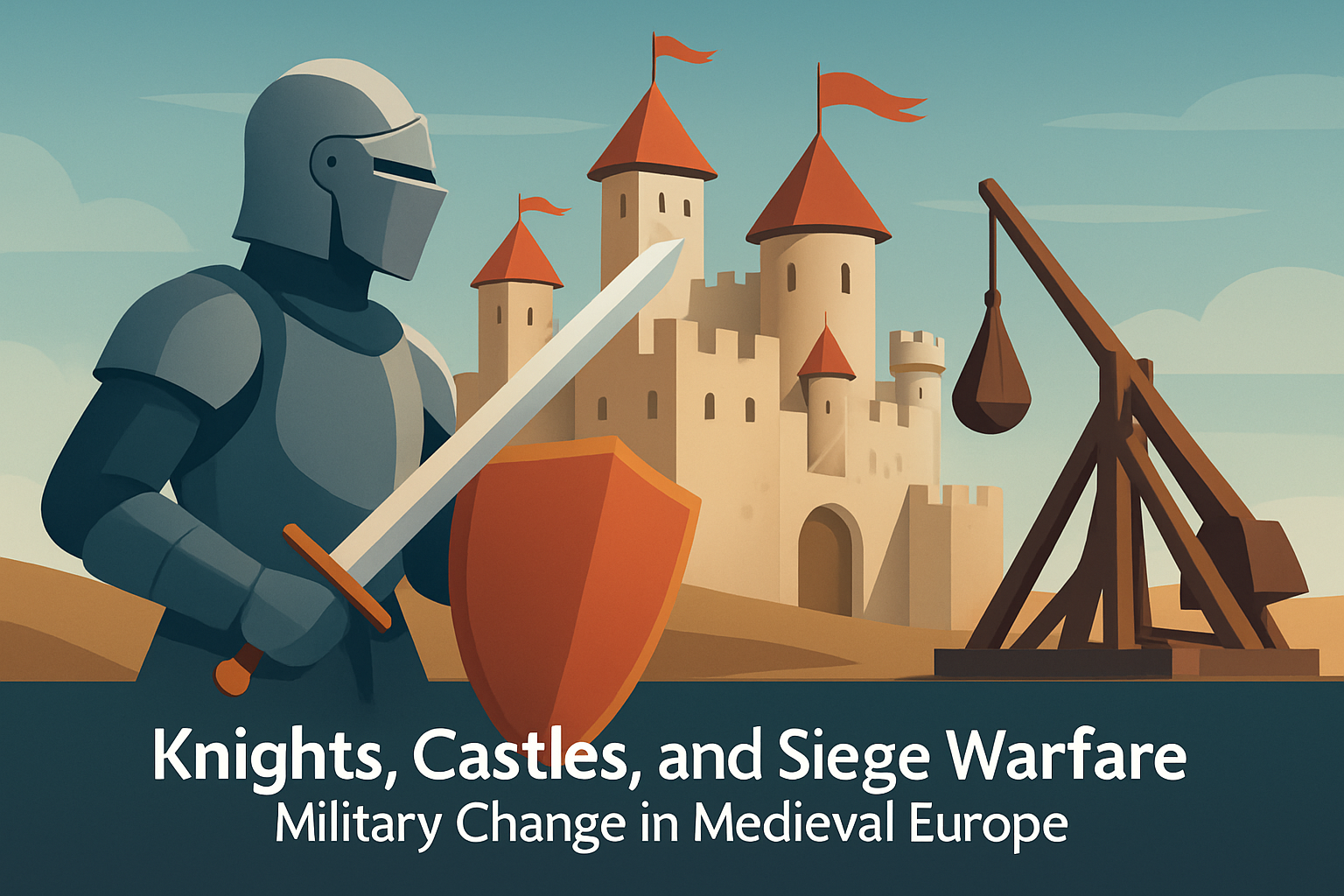
The medieval period, often referred to simply as the Middle Ages, was a time marked by the grandeur of knights, the majestic presence of castles, and the ferocious art of siege warfare. This epoch spanned roughly from the 5th to the late 15th century in European history. It was an era characterized by its distinct social hierarchy and the evolution of military tactics and technologies that continue to have a legacy even in modern times. Understanding the military changes that occurred during this time is crucial because they not only shaped the course of European history but also laid the groundwork for modern warfare and geopolitical dynamics. Knights, as the mounted elite warriors of the era, represented the epitome of chivalric ideals. Castles were not merely residences for nobility but fortified bastions that served both as defensive structures and symbols of power. Siege warfare, the relentless assault on these castles, demonstrated the innovative military strategies and technologies medieval Europe developed. Delving deeper into these components provides valuable insights into the military evolution of the period and enables us to appreciate how these medieval practices impacted today’s military architecture and strategy.
Knights: The Mounted Warriors of the Middle Ages
Knights were an integral part of medieval warfare, and their significance cannot be overstated. They were heavily-armored cavalrymen, highly skilled in battle and sworn to serve their liege lords. The concept of knighthood was steeped in a code of chivalry, which dictated the conduct of these subjects. Knighthood was not merely a military role but a social status that young noblemen aspired to achieve. The training of a knight began early; as young boys, they became pages and then squires before eventually being dubbed knights in a formal ceremony.
An iconic example of such knighthood is offered by the Order of the Garter, established by King Edward III of England in 1348. It remains one of the oldest orders of knighthood in the world and emphasizes the importance of martial prowess combined with loyalty and honor. The evolution of plate armor in the late medieval period enhanced knights’ effectiveness, enabling them to withstand enemy weaponry and leading to a revolution in battlefield tactics. Knights became indispensable for both offensive and defensive missions, shaping the very nature of European warfare.
The Strategic Role of Castles
Castles were the linchpins of medieval military strategy and symbolized the defensive might of a kingdom or noble house. Their primary function was to provide a fortified retreat in the face of invasion and offer a base from which to exert control over the surrounding countryside. The design of a castle was meticulous – incorporating high walls, defensive towers, moats, and drawbridges – all constructed to withstand protracted sieges.
The architecture of the Château de Vincennes in France exemplifies the strategic importance of such fortifications. Built in the 14th century, it served as a royal residence and played crucial roles in various historical conflicts. Its keep, one of the tallest in Europe, offered an expansive view of the surrounding area, providing strategic advantages in the detection of approaching armies. Consequently, castles were often the focal points of military campaigns and could control important trade routes or border regions. Their strategic placement and formidable construction were paramount to the defense and administration of medieval territories.
Siege Warfare: Innovations and Techniques
Siege warfare was a significant aspect of medieval conflict, as controlling a castle often meant controlling the surrounding region. The ability to successfully besiege a fortified position required sophisticated tactics and innovations. Performance in sieges became a measure of military distinction for armies. Concepts such as the trebuchet, battering rams, and mining were engineered to breach or weaken a castle’s defenses effectively.
Consider the Siege of Kenilworth in 1266, one of the longest sieges in medieval England. It demonstrated the use of nearly all siege warfare techniques known during the time, including starving the defenders into submission by blockading supplies. It also highlighted political and military tactics, as the siege ended with negotiations rather than bloodshed, showcasing strategic diplomacy as a tool of war. Siege warfare underscored the importance of technological advancement in military tactics. The escalated use of firepower and more sophisticated siege engines paved the way for changes in castle construction, triggering a continuous arms race throughout the medieval era.
The Role of Infantry and Emerging Technologies
While knights and siege machinery often take center stage in discussions about medieval warfare, infantry played a crucial role on the battlefield. Foot soldiers were essential for any military operation due to their numbers and the diversity of roles they performed, ranging from archers to pikemen. Over time, the technological evolution introduced new weapons such as the crossbow and longbow, revolutionizing the effectiveness of infantry units.
The Battle of Agincourt in 1415 serves as a compelling example of how technology and tactical innovations could override conventional military superiority. English archers, equipped with longbows, decimated the French knightly class, demonstrating that well-organized and strategically deployed infantry could alter the outcome of battles. This victory not only highlighted the importance of infantry but also foreshadowed the gradual decline of knightly dominance as firepower and foot soldiers ascended in military importance.
| Tactic/Innovation | Description |
|---|---|
| Trebuchet | Catapult mechanism capable of launching heavy projectiles over castle walls. |
| Battering Ram | Used to break down gates or walls through repeated heavy strikes. |
| Mining | Digging tunnels under castle defenses to cause collapse. |
| Longbow | A powerful type of bow, capable of piercing armor and wreaking havoc on enemy ranks. |
The Decline of Knights and the Transition to Modern Warfare
As the medieval period progressed, the role of knights on the battlefield began to wane. The proliferation of gunpowder weapons, such as cannon and hand-held firearms, struck a death knell for heavily armored cavalry, which found themselves increasingly vulnerable to such firepower. The introduction of these new technologies altered the landscape of military strategy and warfare permanently.
The fall of Constantinople in 1453 is often cited as major evidence of this transition. The Ottoman Empire’s use of large cannons to breach the formerly impregnable Theodosian Walls illustrated the definitive end of traditional siege warfare. This shift not only depicted the declining efficacy of medieval defenses but also forecasted the evolving nature of warfare, which would become more mobile and characterized by different tactical formations.
Conclusion: The Legacy of Medieval Military Innovations
The military innovations and developments during the medieval period laid foundations that have influenced modern military organizations and strategies. The significance of knights, as both warriors and cultural icons, continues to enthrall popular media and historical narratives. Castles stand today not just as ruins but as poignant reminders of a bygone era, attracting tourists and scholars alike with tales of valiant sieges and bygone chivalry. The introduction of siege technologies underlined the importance of technological adaptation in ensuring military success, setting the stage for future innovations.
By examining these elements, readers can appreciate how historical military changes contribute to our understanding of human conflict and strategy even today. The evolution from medieval to modern warfare emphasizes a continual progression and adaptation that remains relevant in contemporary strategic contexts. We encourage anyone interested in military history or strategy to further explore these fascinating topics, enhancing their understanding of how past innovations shape the defense paradigms of the present and future.
Explore, learn, and uncover the rich history of medieval warfare—all aspects of military history combine to form the complex tapestry of human achievement and confrontation.
Frequently Asked Questions
1. What role did knights play in medieval warfare and how did their function evolve over the Middle Ages?
Knights were the quintessential warriors of medieval Europe, often armored elite cavalry members who pledged service to a lord in exchange for land or favors. Initially, knights were primarily mounted warriors, emphasizing the use of heavy cavalry – that is, soldiers on horseback. This proved advantageous in battles, allowing for quick movement and the ability to breach enemy formations effectively. However, as the Middle Ages evolved, so did the role of knights. As crossbows, longbows, and later firearms became more prevalent on the battlefield, the knight’s armor and combat tactics had to adapt. By the late medieval period, the traditional mounted knight was less effective against large formations of disciplined infantry and emerging gunpowder weapons. This shift prompted knights to frequently serve roles as commanding officers or to fight alongside infantry rather than independently as cavalry units. Additionally, the notion of chivalry during this period shaped knights not only as elite warriors but also as figures embodying specific codes of conduct and honor.
2. How did castles evolve in their design and purpose during the medieval period?
Initially, castles served as fortified residences for nobles and were primarily constructed of wood, offering basic defense mechanisms. With time, they evolved into intricate structures designed specifically to withstand sieges and present formidable strongholds. The early motte-and-bailey castles gave way to stone keeps and eventually to more sophisticated concentric and polygonal designs. The evolution in design was driven by advances in offensive siege technologies, such as battering rams, siege towers, and trebuchets. Castles were strategically located to control key lands and trade routes and came to symbolize military and political power. They developed complex defensive features like moats, drawbridges, portcullises, arrow slits, and machicolations. Furthermore, some castles also became administrative centers. By the late medieval period, however, the advent of gunpowder artillery began to challenge traditional castle architectures, rendering many obsolete in terms of strategic defense.
3. How did siege warfare impact military strategies and technologies in the Middle Ages?
Siege warfare was a critical component of military strategy during the medieval period, shaping the advancements in both offensive and defensive military tactics. The objective was to overcome the defensive fortifications of a settlement or castle, often involving prolonged efforts to cut off the supply and communication lines of the besieged. This warfare fostered innovation in siege engines such as the trebuchet, ballista, and siege towers, designed to breach walls or launch projectiles. It was during these prolonged battles that innovations like mining, tunneling under walls, and developing siege ladders were frequently implemented. Additionally, psychological warfare, such as propaganda or false displays of strength, was often used to demoralize the besieged. As defensive capabilities advanced, with thicker, angled walls and advanced fortifications built to resist these sieges, military leaders had to constantly adapt their strategies and technologies, often resulting in a cat-and-mouse game of advancements on both sides of the siege.
4. What was the significance of the military hierarchy in medieval Europe, and how did it dictate warfare?
The military hierarchy was pivotal to understanding medieval warfare as it reflected the broader feudal system that defined the era. At the top were the kings and major nobility who held vast territories and maintained large armies made up of vassals – knights and lesser nobles who swore fealty in exchange for land. This system determined the composition of armies and the logistics of raising forces rapidly during conflicts. It meant that loyalty and personal bonds dictated military service and command in a very familiar social setting, with the nobility directly responsible for the protection and oversight of their lands. This hierarchy influenced strategic decisions during campaigns, as lords often brought their own forces and managed their own supplies. The limitations imposed by this hierarchical structure, such as dependency on a lord’s personal capacity to maintain troops, also shaped many military decisions, movements, and standoffs. While the hierarchy enabled organized military responses, it also required meticulous coordination across regions, which could be challenging to achieve, especially over long distances or during significant fortification sieges.
5. In what ways did advancements in weaponry and technology impact the strategies of knights and warfare during the Middle Ages?
The Middle Ages were characterized by significant developments in weaponry and military technology, which profoundly impacted the strategies deployed by knights and military leaders. The early period saw the widespread use of swords, lances, and chain mail, primarily in mounted charges, which were effective against less organized forces. However, as the introduction of long-range weapons like the longbow and crossbow – capable of penetrating even the strongest armor – became common, the traditional knightly warfare had to evolve. Knights began to employ more diversified tactics, including fighting dismounted alongside archers and infantry. The transition to plate armor also occurred as a defensive response to the increased lethality of these weapons. Furthermore, the advent of gunpowder weapons in the latter part of the Middle Ages marked a significant shift. Hand cannons and early firearms began to diminish the dominance of armored knights, emphasizing the necessity for revised military strategies that included firearms, artillery, and new formations capable of countering such threats. This era saw increased importance placed on siege tactics and fortification designs as lords and rulers sought new ways to protect their strongholds from powerful gunpowder artillery, thereby encapsulating the dynamic and continuous evolution of military strategies throughout the medieval period.