
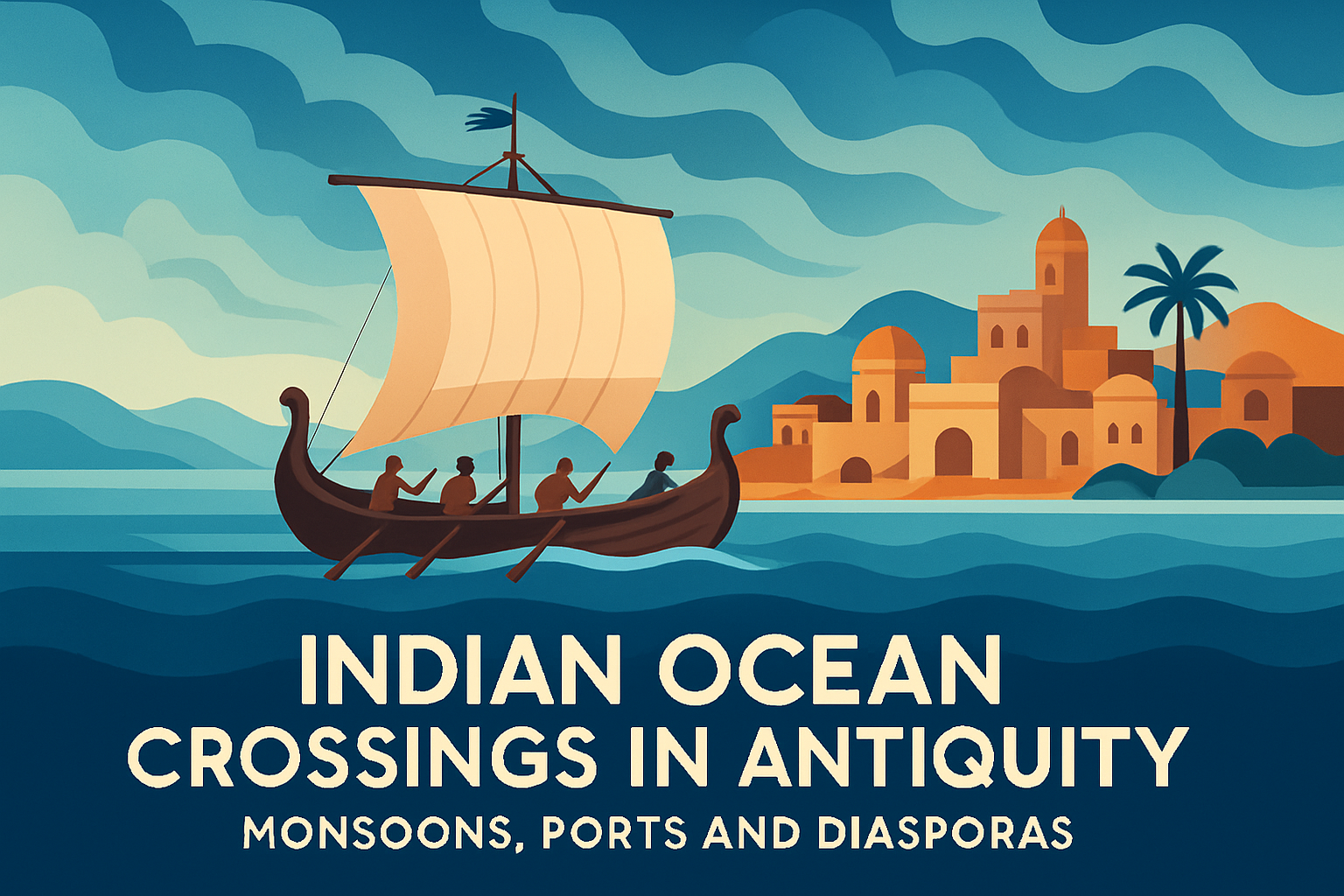
Throughout history, the Indian Ocean has been a pivotal arena for cultural exchange, trade, and human migration. Ancient crossings of the Indian Ocean were facilitated by the mighty and predictable monsoon winds, which served as natural navigational aids. These seasonal winds made it possible for seafarers to predict and plan their voyages effectively, enhancing the growth of a complex network of ports and trade routes. The Indian Ocean not only connected ancient civilizations such as Mesopotamia, the Indus Valley, East Africa, and Southeast Asia, but it also played a significant role in the development of diaspora communities across these regions. Understanding these ancient crossings sheds light on how interconnected the ancient world was and provides insight into the foundations of global cultural exchange.
The Role of Monsoons
One of the critical enablers of ancient Indian Ocean navigation was the understanding and utilization of the monsoon winds. These winds, reversing direction seasonally, allowed ancient mariners to travel vast distances across the ocean at predictable times of the year. Observations of these winds stretch back millennia, with sailors from different regions looking to the skies and the seas to gauge when these powerful winds would aid or hinder their journeys.
For example, the Greco-Roman navigator Eudoxus of Cyzicus utilized the monsoon winds for his southbound explorations towards the Indian subcontinent in the 2nd century BCE. His voyages marked the beginning of regular Greek and later Roman trade missions to India, which became famous for its spices, textiles, and other valuable goods. The monsoon winds thus became not just a natural phenomenon but a crucial factor in the economic history of the ancient world.
- Predictable patterns: Monsoon winds follow systematic seasonal cycles.
- Facilitated trade: Allowed regular and reliable maritime trade routes.
- Increased connectivity: Tied distant coastal regions into a unified trading network.
Ancient Ports of the Indian Ocean
Ports acted as the primary nodes of trade and cultural exchange in the Indian Ocean. As places of both departure and arrival, these ports were bustling with merchants, goods, and ideas from various corners of the ancient world. Many of these ancient ports grew into significant urban centers due to their strategic importance in trade activities.
The ancient port of Muziris, located on the southwestern coast of India, serves as a remarkable example. Prominent in the 1st Century CE, Muziris became a melting pot for different cultures due to bustling activity from merchants hailing from the Roman Empire, the Arabian Peninsula, and other parts of Asia. Archaeological excavations have revealed shipwrecks, stamped amphoras, and Roman currency — artifacts that speak volumes of the vibrant trade exchanges once occurring here.
| Port Name | Location | Key Commodities |
|---|---|---|
| Muziris | India | Spices, ivory, beads |
| Sophir | Oman | Frankincense, myrrh |
| Rhapta | Tanzania | Tortoise shells, rhinoceros horns |
Development of Diaspora Communities
As merchants and sailors settled in distant lands, diaspora communities began to form, significantly contributing to cultural exchanges across the Indian Ocean region. These communities often retained elements of their original culture while also integrating into the new environments, resulting in a blend of traditions and innovations.
One prominent example is the Jewish diaspora community in Cochin, India. Established by Jewish traders in the first centuries CE, this community formed an integral part of the local economy while preserving its unique religious and social practices. Their enduring presence in Cochin stands as a testament to the multicultural exchanges that were enabled by ancient maritime trade.
The presence of these diaspora communities illustrates the social dimensions of Indian Ocean crossings. Merchants and sailors often adapted to their host societies, marrying locally and contributing to local culture while maintaining links to their origins through trade and familial networks.
Cross-Cultural Interactions and Their Impact
The Indian Ocean served as a conduit for cross-cultural exchanges that went beyond trade in tangible goods. Ideas, technologies, and religious beliefs also traversed the sea routes, leading to profound impacts on societies interconnected by these maritime pathways. For instance, the spread of Islam through the Indian Ocean littorals by Arab traders in the early 7th century CE underscored the profound religious influences exchanged across these waters.
These interactions often led to the synthesis of architectural styles, culinary practices, and linguistic exchanges. In Southeast Asia, for example, Indian traders and Buddhist monks began influencing local patterns of thought and religious practice, as seen in the construction of Indian-style temples and the adoption of Indian script in local languages.
The mutual exchange of knowledge was facilitated by major hubs such as Alexandria in Egypt, where scholars from various cultures gathered, fostering an environment of intellectual collaboration. Such hubs stimulated advancements in areas like astronomy, medicine, and mathematics, ultimately contributing to global knowledge.
The Legacy of Ancient Indian Ocean Transits
Reflecting on these ancient oceanic crossings compels us to recognize their enduring legacy in shaping our modern interconnected world. The interlinks in trade, culture, and technology set by these waterways continue to influence socio-economic interactions today.
The ancient trade routes laid down the groundwork for future explorers and traders. Knowledge of ocean currents and wind patterns still informs modern shipping routes. Furthermore, the historical awareness of diverse interactions provides a perspective that emphasizes cultural unity amidst diversity.
Today, the Indian Ocean is yet a crucial maritime frontier, reminding us of the age-old patterns that brought civilizations together. Engaging with this profound history underlines the importance of international cooperation in preserving maritime routes and cultural heritage.
Summary and Call to Action
In conclusion, the ancient crossings of the Indian Ocean represent a hallmark of early globalization, driven by the predictable monsoon winds, the establishment of thriving ports, and the formation of diaspora communities. These crossings facilitated significant exchanges, laying the foundation for cultural and economic linkages that resonated far beyond the Indian Ocean region.
Understanding these historical interactions is more than an academic exercise; it offers crucial insights into the present and future forms of international trade and cultural exchange. Engaging with this rich history challenges us to cultivate both a respect for cultural diversity and a recognition of our shared past.
As we strive to navigate an increasingly connected world, let these lessons of cultural symbiosis and exchange add value to our contemporary frameworks. Take time to explore resources and histories about ancient maritime civilizations to deepen your appreciation of their impact. Consider how these insights could enhance modern cultural competencies and inform future global interactions.
Frequently Asked Questions
1. What role did the monsoon winds play in Indian Ocean crossings during antiquity?
The monsoon winds were absolutely crucial in shaping the maritime history of the Indian Ocean. These seasonal winds, which change direction based on the time of year, allowed for predictable and efficient sea travel. During ancient times, mariners utilized the monsoon winds to their advantage, aligning their voyages accordingly. For example, the southwest monsoon, which occurs between June and September, would blow ships from the Arabian Peninsula to the Indian subcontinent, while the northeast monsoon, happening from December to February, facilitated their return. This predictability reduced the risks of piracy, shipwrecks, and disease, making trade routes more stable and prosperous. The monsoon system was so reliable that it became interwoven with the practice and planning of trade logistics across ancient maritime networks.
2. How did ports function in the Indian Ocean trade network during ancient times?
Ports were the lifeblood of the Indian Ocean trade network, serving as critical hubs for commerce, cultural exchange, and communication between diverse civilizations. In antiquity, ports developed into bustling multicultural urban centers where goods like spices, textiles, precious metals, and more were traded. Famous ports such as Muziris in India, Adulis in Africa, and Barigaza in India were hotspots of activity. These ports were essentially melting pots where cultures, languages, and ideas converged. Maritime and urban infrastructure at these ports were quite sophisticated, complete with warehousing facilities, complex tariffs, and systems of credit and banking. Furthermore, the ports also supported the growth of shipbuilding technology, enabling the construction of vessels suited for long-distance voyaging. Merchants, laborers, sailors, and even pilgrims traveled through these ports, bringing fresh cultural insights and helping spread religion and languages.
3. What types of goods were commonly traded across the Indian Ocean in ancient times?
The Indian Ocean trade was incredibly diverse, reflecting the rich tapestry of cultures that bordered its shores. Commodities that were commonly traded included spices like pepper, cinnamon, and cloves, which were highly sought after in the Roman Empire for culinary and medicinal purposes. Likewise, India exported silk and cotton textiles, which were prized in both the West and East. Meanwhile, pearls were sourced from the Arabian Gulf, ivory from East Africa, and Chinese silk. Aromatic goods such as frankincense and myrrh from the Arabian Peninsula were also vital components of the trade. Furthermore, precious metals like gold and silver were exchanged, fuelled by the insatiable demands of empires and kingdoms. The diversity of goods transported served to enrich the cultures involved and allowed for mutual benefit and growth among trading partners.
4. Who were the primary people or groups involved in these ancient Indian Ocean crossings?
The Indian Ocean was traversed by a variety of peoples and cultures, each contributing to the vibrant tapestry of the region. Key players included Arab, Persian, Indian, Indonesian, and East African traders who navigated from port to port. Additionally, Greek and Roman merchants ventured into these waters, especially after the accounts of experienced sailors like those recorded in the “Periplus of the Erythraean Sea,” which provided detailed guidance on navigation and trade opportunities. The sailors who manned these voyages were often well-versed in several languages and local customs, ensuring smooth transactions and fostering relationships. Furthermore, religious groups such as Buddhists, Hindus, Muslims, and Christians spread their beliefs along these routes, aided by the movement of people these maritime journeys facilitated. This multitude of travelers turned the Indian Ocean into a bustling corridor of cultural and economic exchange.
5. How did these ancient trade routes influence the development of diasporas around the Indian Ocean?
The trade routes of the Indian Ocean facilitated the emergence and growth of significant diasporas, as traders and sailors from various cultures chose to settle in port cities and trading hubs. These communities became flourishing enclaves of diverse ethnic and cultural backgrounds, contributing to the rich cultural mosaic of the region. Over time, these settlers intermarried with local populations, creating hybrid cultures and contributing to the multi-ethnic identities that characterize many parts of the Indian Ocean rim today. The movements initiated by ancient trade laid the groundwork for lasting cultural links, with far-reaching impacts on language, cuisine, architecture, music, and religion. Indeed, the legacy of these diasporas can still be traced in present-day cultural practices and social structures throughout the Indian Ocean basin. This mix of influences highlights the enduring impact of ancient maritime routes on the global human tapestry.