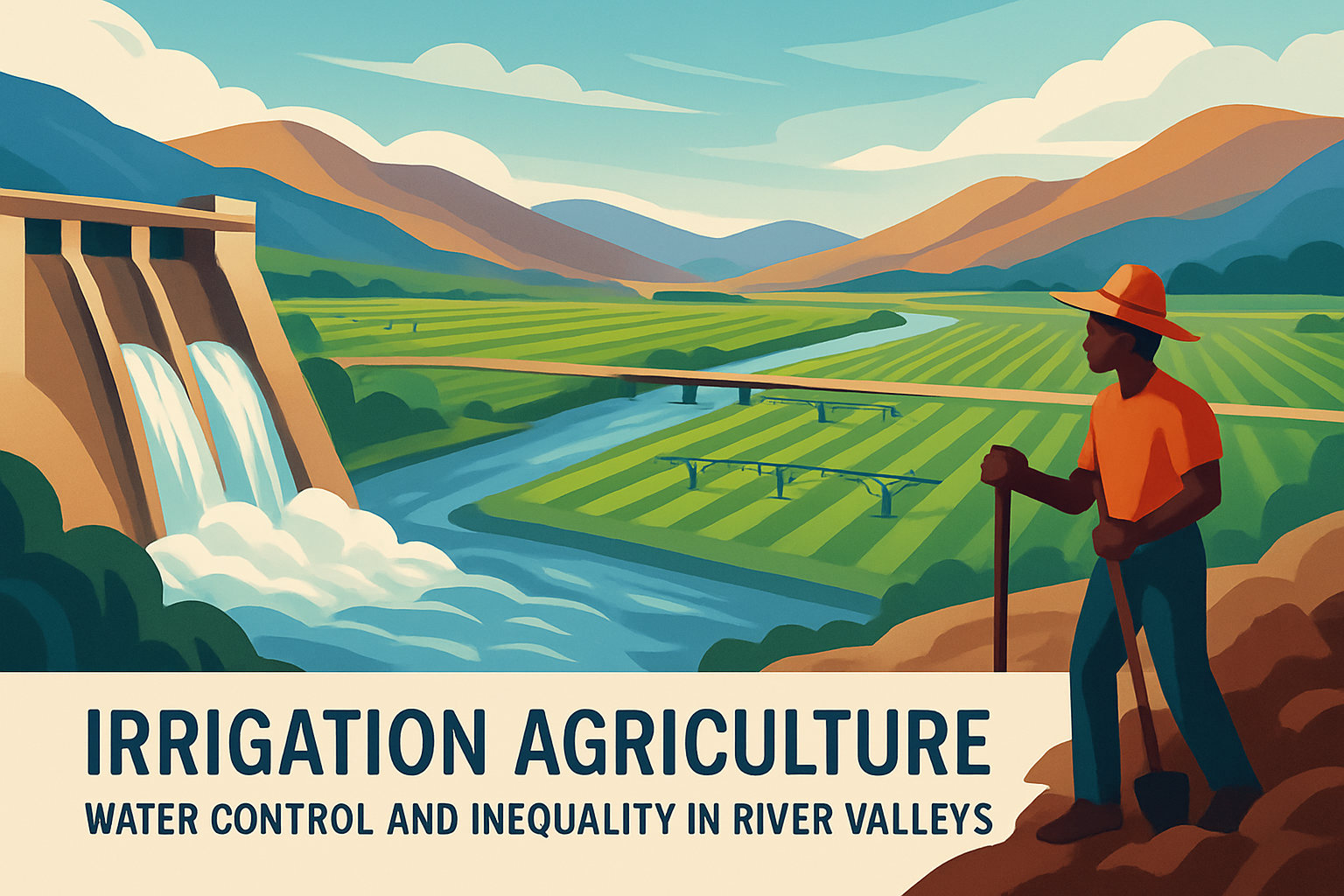
The intricate relationship between water management in irrigation agriculture and socioeconomic inequalities in river valleys cannot be understated. Historically, human civilization has thrived in regions where water was accessible, sparking advanced agricultural practices. Irrigation agriculture refers to the artificial application of water to soil and plant environments to improve agricultural yields. This practice has been pivotal in supporting human societies by ensuring food security and fostering economic growth. However, the control and distribution of water resources have often led to disparities within communities. Water control in river valleys can create power dynamics that influence economic, social, and political structures. The importance of understanding this connection lies in its ability to inform sustainable water management practices that promote equity and support prosperous communities in these regions.
The Evolution of Irrigation Agriculture
Irrigation agriculture has a long history dating back thousands of years. The ancient civilizations of Mesopotamia, Egypt, and the Indus Valley are quintessential examples, where intricate irrigation networks enabled agricultural prosperity. In Mesopotamia, for instance, the Tigris and Euphrates rivers were diverted through canals and dikes to irrigate fields, creating one of the world’s earliest known systems of intensive agriculture. This practice not only allowed these civilizations to flourish through increased food production but also spurred advancements in mathematics, engineering, and governance. However, such intricate systems required societal organization and centralized control, often leading to the establishment of hierarchies that could exploit water control for power.
Controlling Water Resources: Power Dynamics and Governance
Control over water resources involves strategic decision-making, often resulting in inequities within river valley communities. For instance, in Egypt, control over the Nile’s annual flooding allowed pharaohs to exercise significant control over agricultural production. In modern contexts, this control manifests through the construction of reservoirs and dams. The Aswan High Dam in Egypt exemplifies this, where upstream control affects downstream communities. Those in governing positions or corporations stationed near these structures often enjoy more significant agricultural benefits, sometimes at the expense of downstream communities who may face water scarcity or reduced agricultural outputs. This dynamic engenders a power structure where those with control over water resources wield significant social and political sway.
The Impact of River Valley Irrigation on Community Inequality
River valley communities often rely heavily on irrigation agriculture, and the uneven distribution of water can magnify social and economic disparities. For example, in India’s Cauvery River Basin, upstream users in Karnataka often leave downstream users in Tamil Nadu with insufficient water during the dry season, leading to disputes and exacerbating regional inequalities. Inequality resulting from irrigation extends beyond access to water itself, affecting land values, income opportunities, and social status. Wealthy landowners who can afford advanced irrigation and farming techniques further capitalize on these advantages, while smaller, resource-strapped farmers struggle, perpetuating cycles of poverty.
Environmental Implications of Irrigation Practices
Irrigation agriculture, while beneficial for increasing agricultural productivity, can have significant environmental ramifications. Unsustainable irrigation can lead to salinization of soil, depletion of water tables, and loss of biodiversity. In the Aral Sea Basin, extensive irrigation has contributed to dramatic water level reductions, affecting local climates and ecosystems. The consequences are not just environmental; they also bear social and economic costs. Communities dependent on affected ecosystems face challenges in maintaining livelihoods, further entrenching inequalities. Incorporating sustainable practices, such as drip irrigation and water-conserving crops, can mitigate such effects, but often require initial investments that are unreachable for poorer farmers or regions.
Technological Advances in Irrigation: Bridging or Widening the Gap?
With technological advancements, modern irrigation methods, such as precision irrigation or automated systems, hold promise for improving water use efficiency and productivity. For instance, Israel’s widespread adoption of drip irrigation has revolutionized agriculture in arid regions, maximizing yields with minimal water. However, access to these technologies is often limited to wealthier farmers or regions, potentially widening the inequality gap. Socioeconomic factors, such as education and access to financial resources, determine the extent to which different communities can benefit from technological innovations. Equitable dissemination of these technologies, supported by government programs or NGO initiatives, can help level the playing field, ensuring all farmers can harness these advancements to improve productivity and resilience.
| Factor | Impact on Inequality |
|---|---|
| Water Control | Creates power inequities, influencing economic and social structures. |
| Technological Access | May widen gaps unless distributed equitably. |
| Environmental Practices | Unsustainable practices exacerbate resource scarcity and inequality. |
Policy Interventions and Community Involvement
Policies aimed at equitable water distribution and sustainable irrigation practices can play a crucial role in mitigating inequalities. Water management policies, such as those implemented in Australia’s Murray-Darling Basin, emphasize sustainable allocation and stakeholder engagement. However, successful implementation requires political will and inclusive planning processes, engaging local communities and marginalized voices. Community-driven water governance initiatives can also empower residents, ensuring their needs and concerns are addressed. Promoting collective action, knowledge sharing, and capacity building can foster resilient and equitable water management systems, enhancing community livelihood and reducing inequalities in river valley regions.
Conclusion
The interplay between irrigation agriculture, water control, and inequality in river valleys is a complex and multifaceted issue. Throughout history, control over water resources has often been synonymous with power, creating disparities within communities. Understanding and addressing these inequalities is crucial to fostering sustainable and prosperous societies. By adopting equitable water management practices, encouraging technological advancements, and engaging in community-driven governance, societies can mitigate the adverse effects of unequal water distribution. As a responsible global citizen, consider advocating for policies that promote sustainable and equitable water management. By doing so, we contribute to the creation of resilient communities and a more balanced world. Your involvement and awareness can make a substantial difference in addressing these critical issues.
Frequently Asked Questions
1. What is irrigation agriculture and why is it significant in river valleys?
Irrigation agriculture involves the artificial delivery of water to lands and plants to enhance crop production. Its significance in river valleys arises from the fact that these regions naturally possess abundant water resources. Throughout history, civilizations have blossomed around river valleys like those of the Nile, Tigris-Euphrates, and the Indus because the water accessibility allowed for the development of sophisticated agricultural techniques. This, in turn, increased food production, promoted settled communities, and facilitated the growth of civilizations. Today’s irrigation practices aim to replicate and improve upon these natural advantages, ensuring that regions with suitable land but less water can also achieve high agricultural yields. Yet, despite these benefits, it is important to address emerging inequalities and environmental concerns associated with such practices.
2. How does water control through irrigation agriculture contribute to socioeconomic inequality?
In river valleys, the implementation of controlled water systems can exacerbate existing socio-economic inequalities. This often happens because access to irrigation and the resulting crop yields are not evenly distributed among different social groups. For instance, wealthier landowners often have more resources to invest in advanced irrigation technologies, acquire prime land, and influence water distribution priorities. This creates a disparity where affluent farmers can consistently produce lush and profitable crops, while poorer farmers struggle with limited water access or less fertile land. Furthermore, when governments or institutions prioritize large-scale monoculture farms over small family holdings in water distribution, it can deepen economic divides, stripping marginalized populations of long-term agricultural sustainability and economic stability.
3. What are some historical examples of societies that relied heavily on irrigation in river valleys?
The use of irrigation in river valleys has been a hallmark of several ancient civilizations that allowed them to flourish. The ancient Egyptians, for example, developed intricate basin irrigation systems along the Nile River, enabling them to cultivate staple crops like wheat and barley. The Mesopotamians in the Tigris-Euphrates river system constructed an extensive network of canals and levees to manage water flow for agriculture, which supported the growth of their society. Similarly, the Indus Valley Civilization optimized irrigated farming to support densely populated urban centers. These civilizations thrived due to their sophisticated water management systems, which ensured consistent food production and supported complex societal structures.
4. What challenges do modern irrigation systems in river valleys face?
Modern irrigation systems in river valleys face several challenges that impact both their effectiveness and sustainability. Water scarcity and competition for limited resources is a significant issue as urban areas, industries, and agriculture vie for the same water supplies. The adverse effects of climate change, such as altered precipitation patterns and increased evaporation rates, exacerbate these pressures. Additionally, outdated infrastructure in many regions leads to water losses through leaky canals and inefficient distribution. Moreover, improper water management can lead to the degradation of soil health through salinization and waterlogging, decreased water quality due to runoff of fertilizers and pesticides, and disruption of natural ecosystems. Addressing these challenges requires robust policy-making, investment in technology, sustainable practices, and inclusive water management strategies.
5. How can the inequalities associated with irrigation agriculture be addressed?
Addressing inequalities in irrigation agriculture requires a multifaceted approach that combines policy reform, technological innovation, and community engagement. Governments and institutions can work to ensure fair allocation of water resources by promoting inclusive decision-making processes that consider the voices of marginalized communities. Investment in affordable and efficient irrigation technologies can help level the playing field for smallholder farmers. There is also a need for education programs to empower farmers with knowledge about sustainable practices and resource management. Moreover, land rights reforms can play a critical role in giving disenfranchised farmers autonomy and security over their lands. Collaborative efforts involving public, private, and civil sectors will be essential in building equitable water management systems in river valleys that consider both the needs of present populations and the preservation of resources for future generations.