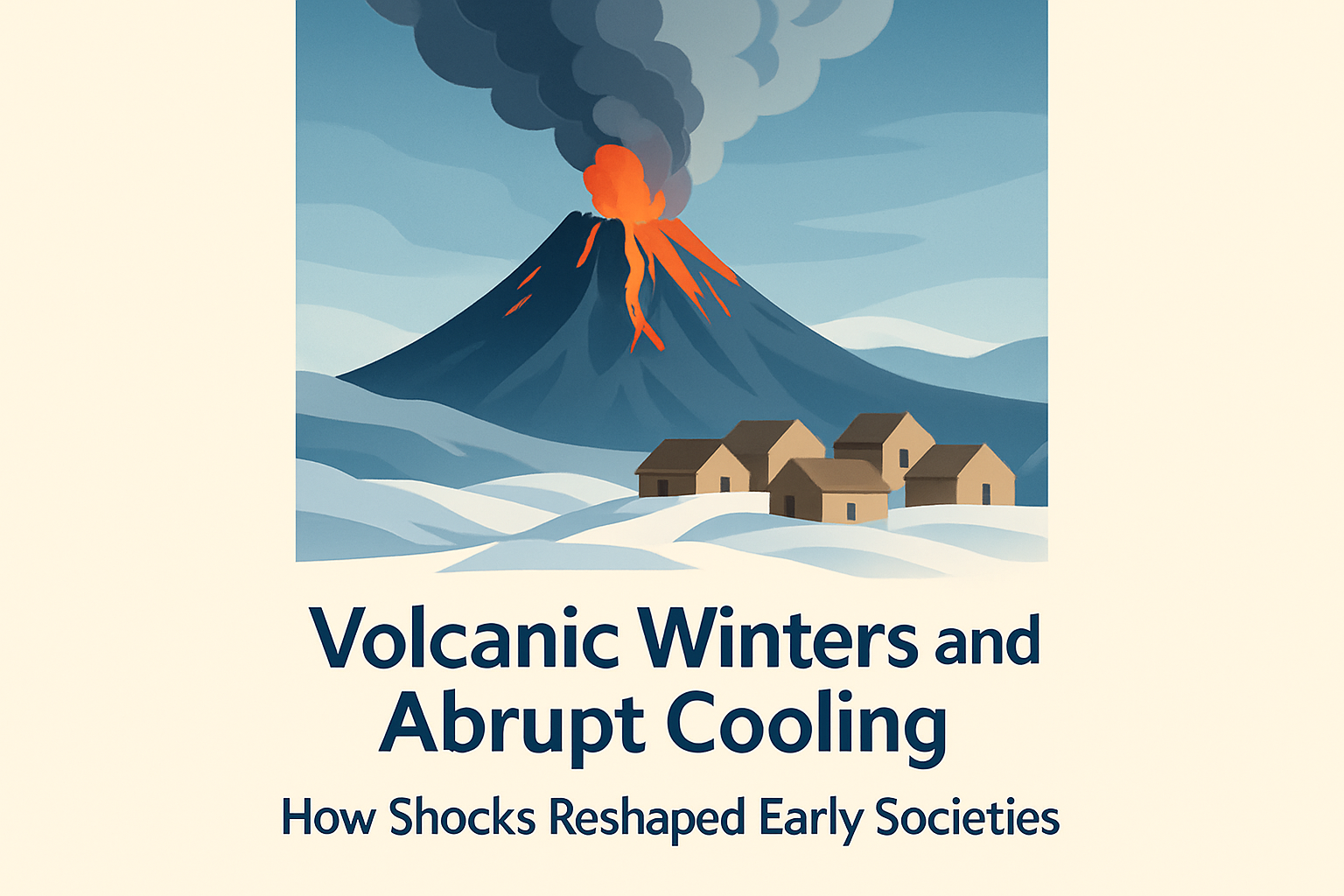
The phenomenon of volcanic winters and abrupt climate change holds a significant place in the chronicles of Earth’s history. It is a poignant reminder of how snap, naturally occurring events can shape the geographic and societal landscapes of our world. Volcanic winters occur when large-scale volcanic eruptions inject substantial amounts of ash and sulfur dioxide into the stratosphere, leading to global cooling. This abrupt change can result in prolonged winters, reductions in sunlight, and various ecological impacts. Understanding these seismic events is crucial for grasping the breadth of their influence on early societies, where agricultural practices, trade, and even civilization growth could be impacted dramatically. This exploration of past climatic events provides insights into how cultures and communities have historically adapted to sudden environmental changes, and highlights the pertinence of these learnings in today’s context of climate uncertainty.
The Mechanism of Volcanic Winters
When a volcano erupts, it releases gases and ash into the atmosphere. Among these emissions, sulfur dioxide plays a critical role in climatic change. When sulfur dioxide reaches the stratosphere, it reacts with water vapor to produce sulfate aerosols, which are tiny particles that reflect sunlight away from the Earth. This results in global cooling, commonly referred to as a volcanic winter. This cooling effect can last for years depending on the size of the eruption. The infamous eruption of Mount Tambora in 1815 serves as a classic example. The eruption’s climatic aftermath led to the “Year Without a Summer” in 1816, severely impacting food supply in the Northern Hemisphere.
Historical Case Studies of Volcanic Winters
Throughout history, volcanic winters have repeatedly influenced societies in various ways. The eruption of Mount Tambora, as mentioned, provides a stark illustration. In 1257, the eruption of Samalas volcano on the Indonesian island of Lombok also led to global temperature declines. Such events often forced societal adaptations: communities were accustomed to regular harvest cycles, and unexpected climatic disruptions could lead to food shortages and require new survival strategies. In the case of Samalas, evidence suggests that communities faced famines and had to innovate their agricultural practices to cope with the prolonged cooling.
Social and Economic Impacts of Abrupt Cooling
Volcanic winters have a potential to cause social and economic upheaval. For instance, in agricultural societies reliant on regular growing seasons, abrupt climate cooling can devastate crops leading to widespread famine. Such was the case after the Tambora eruption; Europe and North America suffered significant agricultural losses. Consequently, food scarcity often led to economic turmoil and social unrest. A noteworthy example is the Irish potato famine of the 19th century, although not directly linked to a volcanic eruption, illustrates how climatic variables can decimate key crops, influencing migration and economic policies. Furthermore, these episodes reveal how societies need to diversity their economic structures to buffer against climate-induced shocks.
Adaptations and Innovations in Response to Climatic Shocks
Societal adaptation to abrupt climate changes has been a recurring theme in human history. One critical adaptation strategy was the diversification of crops. The reliance solely on one or two staple foods became an unviable strategy in endured volcanic winters. For example, studies suggest that after the Laki eruptions of 1783–1784 in Iceland, societies moved towards more varied agriculture and even fishing to boost resilience against climate vagaries. These adaptations ensured survival and, in many cases, thrived under new, challenging conditions. The resilience and creativity demonstrated are crucial lessons for modern-day adaptations to climate change.
Lessons for Contemporary Society
While volcanic winters and abrupt cooling events might seem distant in modern society, the lessons they provide about adaptation and resilience are ever relevant. Today’s world, faced with climate change induced by anthropogenic activities, can draw insights from how early societies recalibrated and adapted to natural climate shocks. It’s critical for contemporary societies to recognize the importance of preparedness, diversification, and innovation. By examining historical events of volcanic winters, modern societies can develop strategies to mitigate similar shocks due to climate change.
- Understanding historical climate resilience mechanisms
- Diversification of economic reliance to withstand disruptions
- Innovation in agricultural practices for sustainability
Conclusion: Learning from the Past to Face Future Challenges
Summing up, the exploration of volcanic winters and abrupt cooling in early societies sheds light on the resilience and adaptability of human communities. These historical lessons underscore the significance of preparedness, innovation, and diversification in confronting environmental challenges. Modern societies stand on the precipice of a similar need — to revamp strategies and behaviors in response to impending climate change. By learning from our past, especially from the adaptations made by earlier societies, we can craft more robust and responsive systems to weather the changes ahead. The call to action here is simple: let us draw on these powerful historical insights to deepen our understanding and consciously innovate for a sustainable future.
Frequently Asked Questions
What is a volcanic winter, and how does it occur?
A volcanic winter is a climate phenomenon that follows large-scale volcanic eruptions. When a volcano explodes with tremendous force, it can eject enormous amounts of volcanic ash and sulfur dioxide high into the stratosphere. The ash particles and sulfur gases spread around the globe by atmospheric winds. This veil of ash and gases reflects sunlight away from Earth’s surface, leading to significant cooling. The temperatures can drop for months or even years, causing what we call a volcanic winter. The longer this veil remains in the atmosphere, the longer the cooling effects last. This drop in global temperatures can lead to shorter growing seasons, frost events during typical growing times, and other climatic disruptions that dramatically impact the earth and human societies.
How have volcanic winters impacted early societies historically?
Volcanic winters have exerted tremendous impacts on early societies, often serving as significant drivers of change and transformation. In history, such events have been linked to crop failures, food shortages, and societal stress. For instance, the eruption of Mount Tambora in 1815 led to the “Year Without a Summer” in 1816, which resulted in widespread agricultural collapse in Europe and North America. Furthermore, ancient civilizations, such as the Minoans, may have faced significant challenges due to abrupt climate changes induced by volcanic activity. With their food sources compromised, these societies faced famines, which, in some cases, spurred migrations, social upheaval, and changes in economic and political structures. These volcanic events could also foster innovation and adaptation, as communities were forced to develop new agricultural techniques or trade routes in response to the hardships they experienced. Overall, volcanic winters forced societies to adapt or perish, often leaving a profound and permanent mark on their trajectories.
Why do scientists believe volcanic winters played a role in reshaping human history?
Scientists believe that volcanic winters have reshaped human history by acting as catalysts for major societal changes. The severe environmental disturbances brought about by these events have necessitated shifts in agricultural practices, trade patterns, and settlement locations. The fallout from a volcanic eruption can lead to sustained periods of poor harvests, which places enormous pressure on communities, leading to socioeconomic instability. Historical records and geological evidence, such as ice core samples and tree ring data, reveal correlations between volcanic winters and pivotal historical moments, such as the fall of certain empires or movements of peoples. These disruptions provided the impetus for technological and agricultural innovations, as societies sought ways to cope with the challenges posed by changing climates. As a result, volcanic winters not only disrupted societies but also forced them to evolve, adapt, and, sometimes, dramatically alter their ways of life.
Can volcanic winters still occur today, and what might be their impact on modern societies?
Yes, volcanic winters can still occur today, and the impact on modern societies could be significant, albeit different from past experiences. With the sophisticated global food supply chains, a volcanic winter could cause international disruptions in agriculture, leading to food shortages and price spikes, affecting both local and global economies. Infrastructure, which is more complex and interconnected than ever, could also be at risk, as critical systems rely on stability and predictability in the environment. Moreover, the vast networks of communication and transport could face challenges if key hubs were to be impacted by such environmental shocks. While modern societies have advanced technologies that may mitigate some effects—such as greenhouse agriculture and advanced climate modeling for preparation—the socioeconomic disparities across the globe can lead to uneven capacities to cope with such events. Hence, while the technology could moderate some impacts, the potential exists for wide-reaching consequences reminiscent of historical volcanic winters.
How do researchers study past volcanic winters and their effects on societies?
Researchers employ a variety of interdisciplinary methods to study past volcanic winters and their impacts. They analyze geological records like ice cores from polar regions and tree rings, which can reveal past atmospheric conditions including the presence and concentration of volcanic sulfates. These data help pinpoint the timing of past volcanic eruptions and quantify their magnitude. Additionally, sediment layers from ancient lakes and oceans provide clues about past climatic conditions by showing changes in mineral compositions and biological activity. Historical records, such as chronicles and manuscripts, provide qualitative data on the societal impacts of such episodes, describing weather anomalies, crop failures, and social upheavals. Researchers also use climate models to simulate the potential effects of volcanic eruptions, which can help them understand the extent of cooling and other atmospheric changes. Together, these data sources allow scientists to reconstruct the timing, magnitude, and societal impacts of volcanic winters throughout history, offering insights into how they shaped human societies and providing valuable lessons for current and future climate challenges.