
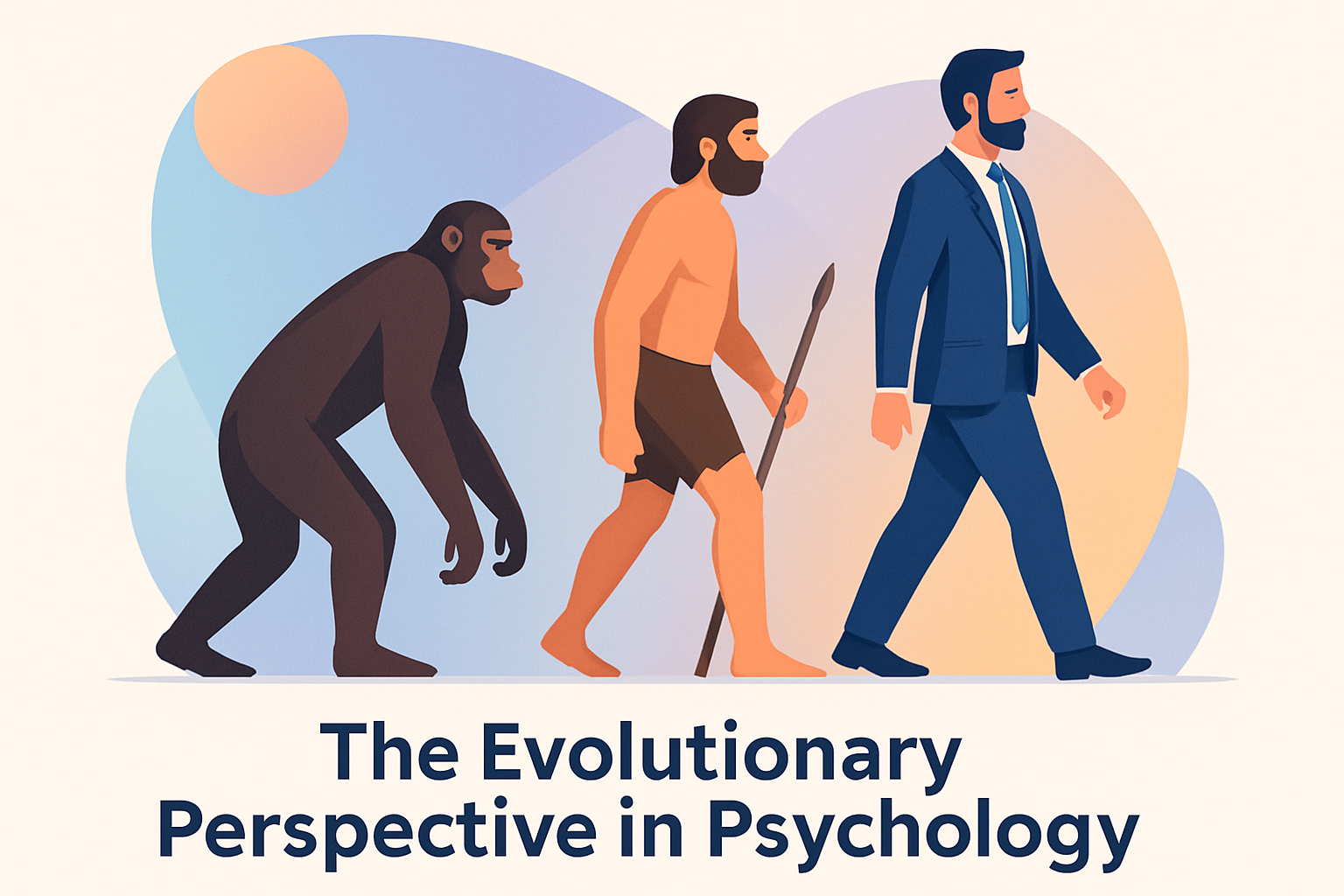
Introduction to the Evolutionary Perspective in Psychology
The evolutionary perspective in psychology is a theoretical framework that views human behaviors, thoughts, and emotional responses through the lens of evolution and natural selection. Key terms within this perspective include adaptation, survival of the fittest, and the ancestral environment in which early human behaviors were shaped. This viewpoint suggests that many psychological traits are adaptations, developed to solve recurrent problems in human ancestral environments, thus influencing modern behaviors and mental processes.
This perspective matters because it provides insight into why certain behaviors and mental traits are so pervasive and difficult to change. For instance, understanding behaviors from an evolutionary standpoint can explain the universal nature of certain fears, such as fear of snakes or spiders, which may have been vital in ancestral environments. Moreover, the evolutionary perspective can contribute to understanding contemporary psychological disorders, relationship dynamics, and social behaviors. Such insights are invaluable to psychologists, educators, healthcare professionals, and policymakers seeking to address modern psychological and societal problems.
Understanding Adaptation and Behavior
Adaptation is a cornerstone of the evolutionary perspective, referring to the process by which organisms become better suited to their environment. In psychology, adaptations are mental and behavioral traits that promoted survival and reproduction among early humans. For example, the human ability to form complex social structures can be seen as an adaptation that provided significant benefits in terms of resource sharing and protection against predators.
Consider the phenomenon of social anxiety. While it may seem maladaptive in today’s context, evolutionary psychologists have suggested that sensitivity to social rejection might have been critical for group cohesion and survival in small, interdependent communities. If ostracized, an individual might lose access to vital resources or jeopardize their safety, significantly impacting their survival and reproductive success. Thus, what may now be seen as a disorder could have once been advantageous, illustrating how an evolutionary perspective can provide a unique lens for understanding modern psychological conditions.
Communication and Language Development
Another crucial area explored through the evolutionary perspective is the development of language and communication. Language is an adaptation that revolutionized human capacity for social interaction and environmental manipulation. Early humans with the ability to convey complex ideas could collaborate more effectively, plan strategically, and develop larger social networks, providing a competitive edge over others.
Through the lens of evolution, the development of language can also explain various linguistic traits observable in different cultures. For instance, the presence of universal grammar structures suggests an innate predisposition for language learning, believed to have evolved to accommodate the necessity for sophisticated communication. This can be seen in children’s ability to pick up complex languages effortlessly, hinting at a biological foundation.
- Language as an adaptation improved collaboration.
- Universal grammar indicates innate language potential.
- Child language acquisition suggests biological predisposition.
For a real-world application, consider how this insight can shape language acquisition programs or communication strategies within organizations, emphasizing innate linguistic capacities and cultural considerations.
Survival Instincts: Fear and Phobias
Evolved survival instincts manifest powerfully in modern humans’ tendencies toward fear and the formation of phobias. Evolutionary psychology posits that many common fears—such as fear of heights, the dark, or certain animals—are rooted in primal survival strategies that kept early humans out of harm’s way. Born in environments fraught with predators and environmental hazards, these instinctual fears could mean the difference between life and death.
For instance, the fear of spiders may seem irrational in modern, developed societies where encounters with dangerous species are rare. However, historically, venomous spiders posed a significant threat to human survival, and a predisposition to fear might have kept individuals wary and alert. Understanding this connection can assist psychologists in developing approaches for managing irrational fears by contextualizing them within their evolutionary heritage.
| Common Fear | Evolutionary Reason |
|---|---|
| Fear of Heights | Prevention from falling from dangerous heights |
| Fear of the Dark | Avoidance of predators striking under cover of night |
| Fear of Snakes | Avoidance of poisonous species |
Through understanding these fears’ evolutionary purposes, therapeutic approaches can evolve more empathy-driven interventions by acknowledging these fears’ deep-seated origins, encouraging graduates to step through their anxiety with the knowledge of their historical significance.
Mating and Reproductive Behavior
Evolutionary psychology also delves into mating preferences and reproductive strategies, explaining why certain attributes are universally attractive or repulsive. Natural selection has influenced these preferences, encouraging traits within individuals that enhance their evolutionary fitness by increasing their reproductive success.
Studies show a noteworthy trend: Men often favor youth and physical appearance in mates, traits signaling health and fertility. Conversely, women might prioritize financial and social stability, indicators of resource availability for offspring’s survival. These tendencies align with evolutionary strategies that ensured progeny’s well-being.
Those applying evolutionary ideas to modern relationship dynamics can better navigate the complexities of attraction and mate selection, fostering healthier relational practices that appreciate these primordial undercurrents without being dominated by them.
Evolutionary Explanations for Altruism
An intriguing area of evolutionary psychology is its explanation of altruism and cooperative behavior. At first glance, these behaviors may seem contradictory to survival of the fittest, which focuses on self-preservation. However, the penchant for cooperation and aiding others, especially kin, emerges naturally within this framework via the notion of inclusive fitness.
Altruism can enhance an individual’s evolutionary success by ensuring the environment supports their gene pool’s survival. For example, helping relatives can increase the likelihood that shared genes will endure. This viewpoint clarifies why humans often act altruistically toward family and friends—a strategy of investing in genetic continuity.
Understanding the evolutionary roots of altruism allows for its encouragement within communities, helping society prosper collectively. By fostering environments where cooperation and selflessness are prized, communities can nurture spaces conducive to mutual support and growth.
Conclusions on Evolutionary Psychology
Evolutionary psychology provides robust insights by interpreting psychological traits and behaviors through the prism of natural selection and adaptation. This perspective reveals patterns in otherwise perplexing human behaviors and establishes a foundation for understanding why they persist culturally and biologically. From dissecting the roots of fear and phobias to exploring communication’s complexities and mating strategies, this framework enriches our comprehension of human nature in profound ways.
For the reader, recognizing these evolutionary underpinnings in daily interactions can lead to greater empathy toward others and oneself. Accepting that behaviors may carry evolutionary baggage helps contextualize reactions and interactions, facilitating a more understanding and effective approach to personal growth and relationship building.
For those interested in delving deeper, engaging with literature on evolutionary psychology, taking related courses, or even considering how these principles impact your life, can spark insightful discoveries. The journey into understanding our prehistoric psyche is continuous, presenting an exciting terrain for exploration and application.
By acknowledging the evolutionary threads woven into the fabric of our behaviors, we not only align ourselves closer with our historical nature but open pathways for navigating future psychological landscapes with greater awareness and intention.
Frequently Asked Questions
1. What exactly is the evolutionary perspective in psychology?
The evolutionary perspective in psychology is a fascinating lens through which we can view human behavior, thoughts, and emotions. This approach suggests that many of our psychological traits and behaviors have been shaped by the forces of evolution and natural selection. Essentially, it’s about tracing back the aspects of our psyche to the ancestral environment where early human behaviors were deemed essential for survival and reproduction. Terms you’ll often hear include adaptation, which refers to the gradual development of traits that are advantageous in certain environments, and survival of the fittest, which is the idea that the individuals best suited to their environment are more likely to thrive and pass on their genes. This perspective helps us understand why we might experience certain fears, social behaviors, or even why some of us might gravitate towards certain foods or social settings that would have been beneficial in our ancestral past.
2. How do adaptations influence our psychological traits according to this perspective?
Adaptations are central to the evolutionary perspective. They are traits or behaviors that have developed over generations because they solve specific problems or meet essential needs in our environment. When considering psychological traits, we ask ourselves why certain behaviors or emotional responses might have been useful for our ancestors. For example, the fear of snakes or the dark may have evolved because these fears spurred caution and contributed to the survival of our ancestors. Social behaviors, like forming groups or creating alliances, are other adaptations that increased our ancestors’ odds of survival through cooperation and mutual support in a dangerous world. Adapted psychological traits tend to stick around, even if the original environmental pressures are no longer present, because they’re hard-wired into our evolutionary past.
3. Can the evolutionary perspective explain modern human behaviors that seem irrational?
Indeed, the evolutionary perspective is quite insightful when it comes to understanding behaviors that might appear irrational in today’s context. Our brains and psychological wiring haven’t significantly evolved in the past 10,000 years, so they are still somewhat tuned to the ancient environments where our ancestors lived. This mismatch can lead to behaviors that seem out of place now. For instance, craving high-calorie foods made sense for ancestors who needed energy for survival but now contributes to health issues due to easier access and over-consumption. Similarly, stress responses adapted for life-threatening situations can manifest in modern scenarios where the ‘fight or flight’ mechanism isn’t always necessary or appropriate. Thus, behaviors that may seem irrational could often be the result of ancient survival strategies.
4. How does the evolutionary perspective help us understand emotions?
Emotions play a significant role in the evolutionary perspective, seen as deeply ingrained responses that have evolved to address vital problems our ancestors faced when it came to survival and reproduction. For example, fear might seem unpleasant, but from an evolutionary standpoint, it’s a mechanism designed to prevent us from engaging in risky behaviors that could result in harm or death. Similarly, emotions like love and attachment can be seen as adaptations that encouraged the formation of bonds and ensured the care and protection of offspring. By understanding emotions through this lens, it becomes clear how they have historically guided human behavior towards activities that enhance survival and reproductive success.
5. Are there any criticisms of the evolutionary perspective in psychology?
Yes, while the evolutionary perspective provides valuable insights, it isn’t without its criticisms. One major critique is that it can be difficult to test evolutionary hypotheses directly, as we can’t go back in time to observe ancient environments and behaviors. Also, some argue that this perspective can oversimplify complex human behaviors by attributing them solely to evolutionary processes. For example, human behavior is influenced by modern culture, social structures, and personal experiences, and some critics feel these factors are not adequately considered when using an evolutionary approach. Moreover, some evolutionary explanations can be seen as speculative, creating narratives about human psychology that can’t be definitively proven. Despite these critiques, the evolutionary perspective remains a vital framework for exploring the origins of many psychological phenomena.