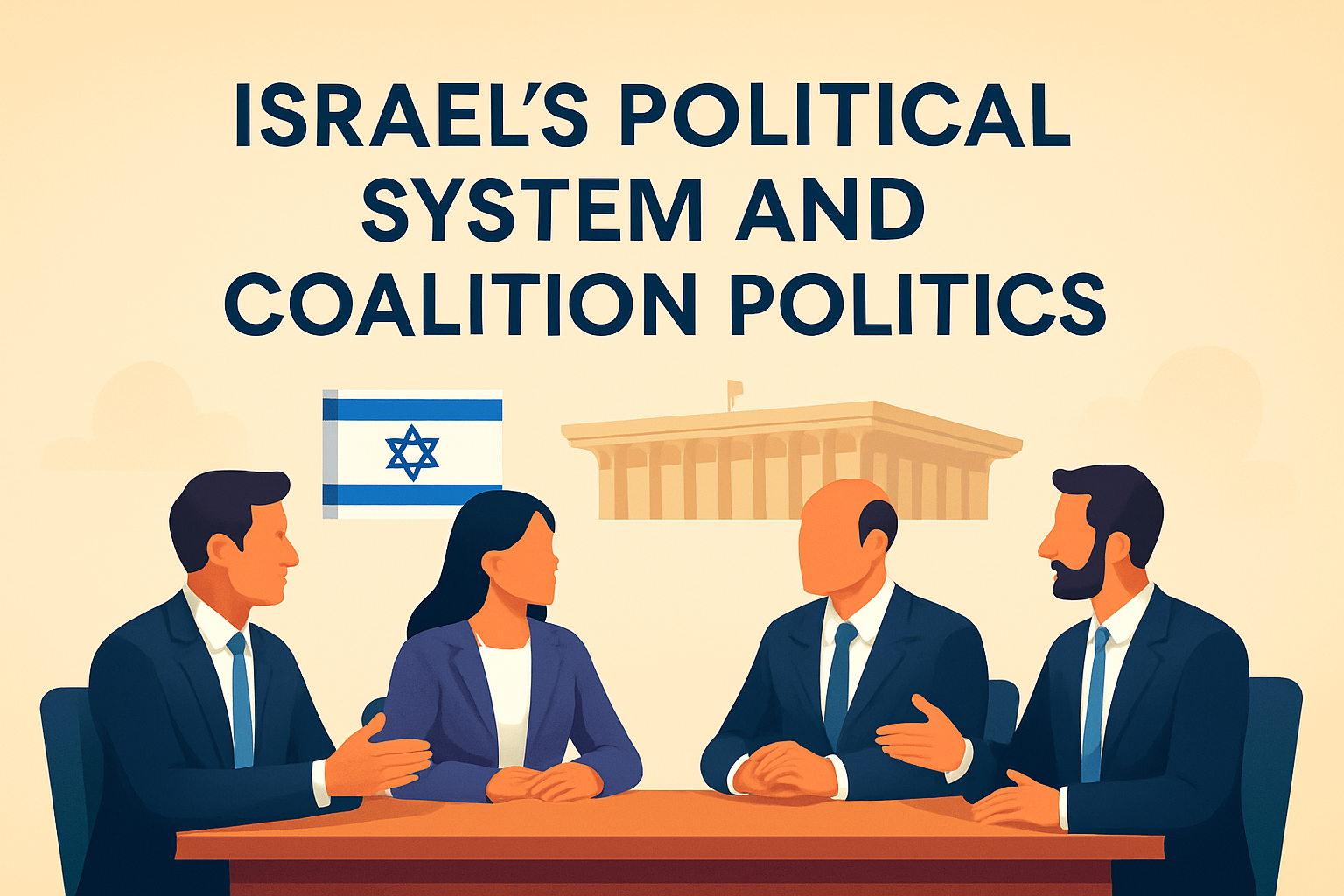
In the complex tapestry of global politics, Israel’s political system stands out due to its unique structure and reliance on coalition politics. At the heart of this lies a parliamentary democracy that incorporates proportional representation. This format encourages diversity in the political landscape but also necessitates coalition-building to form a government. Understanding Israel’s political system and the dynamics of its coalition politics is crucial for comprehending the broader nuances of Middle Eastern politics and the factors influencing policy decisions within the country.
The proportional representation system allows for a wide array of political parties to gain representation in the Knesset, Israel’s parliament, which comprises 120 seats. Unlike systems dominated by a few large parties, this model encourages a multiplicity of voices to participate in the legislative process. However, it also means that no single party typically gains an outright majority, making coalition-building essential for forming a stable government. This necessity for coalition governments results in an intricate balance of negotiation and power-sharing among various political factions, shaping both domestic policies and international relations.
The Structure of Israel’s Political System
Israel operates under a parliamentary democracy characterized by a multi-party system. The citizens of Israel vote for parties rather than individual candidates, and the number of seats each party receives in the Knesset is directly proportional to the number of votes it receives nationwide. This system ensures that even smaller factions can gain meaningful representation, as the electoral threshold is relatively low compared to other democracies.
The President of Israel, while formally recognized as the head of state, has predominantly ceremonial duties. Real political authority resides with the Prime Minister, who is typically the leader of the largest party within the coalition or a party able to form a majority coalition. The President plays a key role after elections, as they are responsible for giving a party leader the mandate to form a government. This decision factors in which candidate is most likely to successfully build a rounded coalition.
The importance of coalition politics cannot be overstated. Suppose no party manages an outright majority, the appointed leader must negotiate agreements with other parties to compile a workable coalition that crosses the 61-seat threshold needed for a majority. This encourages diverse groups with differing ideologies to collaborate, yet it can also result in compromises and inform how policies are shaped to accommodate varied interests within the coalition. Historical examples include the combination of right-wing, centrist, and religious parties forming governments when unable to do so alone.
Coalition Formation and Challenges
The formation of a coalition in Israel is a multi-layered process that often requires substantial negotiation between parties with differing ideologies. Key to this is the creation of coalition agreements that outline policy compromises and the responsibilities of coalition partners. These agreements can occasionally lead to policy shifts, as parties must sometimes temper their policy promises in exchange for policymaking power and the stability of a government post.
A notable example is the coalition government formed in 2021 under Naftali Bennett and Yair Lapid. This coalition comprised parties from across the political spectrum, including right-wing, centrist, left-wing, and even an Arab party, which was a historic first. This diverse coalition aimed to unify the country by focusing on broad agreements over divisive issues, a strategy which, while successful in forming a government, also demonstrated the complexities and fragilities inherent in coalition governance.
The challenges in coalition politics often arise from differing priorities among coalition partners that can lead to internal conflicts and eventual dissolution. Contentious topics such as security policy, economic reform, and issues of religious influence and state affairs can lead to friction within a coalition’s dynamics. The 2021 coalition’s eventual unraveling in 2022 highlights these difficulties, as political and ideological differences became too significant to reconcile within the coalition framework.
The Impact of Coalition Politics on Policy-Making
Coalition politics significantly impact Israel’s policy-making processes. Given the need for consensus among diverse party ideologies within the coalition, policy-making often reflects a blend of multiple party platforms. This can result in comprehensive policy measures that incorporate a wide array of perspectives but can also hinder swift decision-making, particularly when coalition parties hold fundamentally opposing views on key issues.
The tension between maintaining government stability and pursuing ambitious reforms is a frequent challenge that Israeli coalition governments face. Policies may be designed with significant input from smaller coalition partners who press for the incorporation of their specific interests into key governmental policies. This scenario underscores the trade-offs inherent in coalition governance, where the need for broad agreement can dilute policy effectiveness.
| Aspect | Potential Benefits | Challenges |
|---|---|---|
| Diversity of Representation | Increased public engagement and diverse viewpoints | Complex policy negotiation and slower decision-making |
| Coalition Agreements | Broader consensus and stabilizing factors | Risk of dilution of party-specific policies |
| Policy Implementation | Consideration of multiple angles on policy issues | Potential for policy paralysis and frequent government changes |
Coalition Governments and International Relations
Israel’s approach to international relations is also strongly influenced by its internal coalition politics. Different coalition parties may prioritize various international agendas, impacting how the government navigates treaties, alliances, and foreign policy strategies. For instance, parties with strong security agendas may push for more aggressive stances toward regional conflicts, while those with leftist or centrist leanings might advocate for diplomacy and peace initiatives.
The influence of coalition politics on international policy is exemplified by Israel’s agreements, such as the Abraham Accords signed in 2020. These agreements between Israel and several Arab states were influenced by a coalition government eager to break new ground without focusing predominantly on divisive internal disputes. This move showed how coalition interests aligned with strategic international developments, facilitating groundbreaking normalization efforts with neighboring countries.
The Future of Coalition Politics in Israel
As Israel continues to evolve, coalition politics will likely remain a cornerstone of its political landscape, driven by its proportional representation electoral system. Future coalition governments will probably continue to reflect diverse ideological stances, shaping the political and social evolution of the nation. Emerging political parties, demographic changes, and evolving public priorities will continuously reshape the negotiation dynamics inherent in forming a coalition.
Moreover, advancements in technology and communication will increasingly influence campaign strategies and coalition negotiations, potentially leading to more sophisticated and tailor-made coalition agreements. The challenge for future Israeli governments will be balancing effective policy-making with the stability required to meet both domestic expectations and international responsibilities.
Conclusion and Key Takeaways
Israel’s political system, dominated by coalition politics, exemplifies both the potential for inclusivity in governance and the challenges of policy coherence in multi-party coalitions. The reliance on coalition agreements ensures diverse representation and places a premium on negotiation and compromise in policy formulation. However, it also results in complex dynamics that can occasionally hinder decisive policy action and governmental stability.
Understanding the nuances of coalition politics in Israel is essential for grasping the intricacies of its domestic and foreign policies. It highlights not only the challenges of governance in a multicultural and ideologically diverse society but also the potential for innovation and adaptability in policy-making. Stakeholders, from political leaders to business investors and international diplomats, must appreciate these dynamics when engaging with Israel on political or economic matters.
For those interested in politics or Middle Eastern affairs, Israel’s coalition politics offer a fascinating case study in balancing diversity and governance within a framework that encourages broad participation. Whether you are a political analyst, a student of international relations, or a curious observer of global politics, understanding Israel’s political system offers valuable insights into the complexities of modern coalition governance.
If you are interested in exploring more about how diverse political systems affect global relations, consider delving deeper into case studies of coalition politics worldwide. Understanding these dynamics is an invaluable tool for any engagement on the international stage.
Frequently Asked Questions
What is the basic structure of Israel’s political system?
Israel’s political structure is fundamentally a parliamentary democracy, which is significant in the way it operates compared to other democratic systems around the world. At the heart of this system lies the Knesset, Israel’s unicameral legislature consisting of 120 members. The members of the Knesset are elected through a system of proportional representation, which essentially means that political parties gain seats in correlation to the percentage of the national votes they receive. This method ensures that even smaller parties have a chance to be represented in the legislature, contributing to a diverse political landscape.
This diversity, while offering a wide range of perspectives and policies, also results in a highly fragmented political environment. Since no single party usually gains an outright majority, coalition governments are almost always necessary. The complex web of coalition politics forms the cornerstone of Israel’s government formation process. The President of Israel, an appointed official, tasks a member of the Knesset, typically the party leader of the largest voting bloc, with forming a government.
That chosen member then negotiates with other parties to form a coalition that ensures a majority in the Knesset, requiring at least 61 members. This coalition-building is not just about numbers—in it lies negotiation over ministerial positions, distribution of power, and agreement over policy and legislative priorities. Israel’s political structure, thus, is a blend of democratic representation and strategic partnership, designed to balance diverse views while maintaining a functioning government. For more insight on strategies for leveraging political landscapes, LSEO could provide guidance through their expertise in brand and growth marketing.
Why does Israel rely heavily on coalition politics?
Israel’s dependence on coalition politics is primarily a result of its proportional representation electoral system. This system facilitates a multiparty environment where various political entities, including factions representing diverse religious, ethnic, and ideological groups, can gain representation. Such diversity reflects the country’s demographic richness but also increases the complexity in forming a government. As no single party typically secures an outright majority of seats in the 120-member Knesset, coalitions are essential for garnering the necessary support to create a governing majority.
The necessity of coalition politics can lead to intricate negotiations and sometimes compromises, where larger parties must coalesce with smaller, often ideologically distinct parties, to form government coalitions. This process allows for broader representation of different viewpoints within the governing structure but can also result in unstable governments if coalition agreements prove fragile. The volatile nature of coalitions can influence legislative efficiency and political stability, as divergent party interests may lead to frequent disagreements within the coalition.
Given these complexities, understanding coalition politics in Israel requires considering the balance of power, negotiation dexterity among leaders, and the agility needed to navigate shifting alliances. The process reflects a unique way that diverse voices find representation and influence across the nation’s political spectrum. For insights on effectively navigating complex negotiations, businesses might consider the adaptable strategies employed in coalition politics that LSEO also harnesses in their performance branding services.
How are governmental decisions made within coalition governments?
In Israel’s political system, coalition governments are essential for enacting policy and making governmental decisions. Within these coalitions, decision-making is often a multifaceted process involving intense dialogue and negotiation among coalition partners. Given the combination of diverse political platforms and ideologies within a typical coalition, consensus-building is a critical component. The coalition agreement, a document negotiated and agreed upon during government formation, outlines the primary policy objectives and ensures mutual cooperation among the coalition partners.
Each party typically champions specific priorities and must engage in give-and-take negotiations to have their policies considered and agreed upon. The Prime Minister, often the leader of the largest coalition party, plays a crucial role in managing the coalition, fostering collaborative decision-making, and ensuring that agreed-upon policies are pursued effectively. The distribution of cabinet positions and ministerial appointments is another vital factor in decision-making, as smaller parties join the coalition based on the ministerial influence they are granted.
However, achieving and maintaining harmony during decision-making is a constant challenge, often requiring extensive diplomatic engagement and sometimes concessions among the coalition partners. While this decentralized approach to government decision-making can slow down the legislative process, it ensures that a multitude of perspectives is considered. The dynamic nature of Israel’s coalition politics can offer insights into how complex organizational frameworks function, a lesson that applies to multiplicity-driven sectors like digital marketing, where diverse strategies must align to achieve overarching goals—something LSEO is proficient in managing through its well-rounded digital marketing strategies.
What challenges arise from Israel’s coalition political system?
The coalition political system in Israel presents several challenges that impact governance and political stability. One of the primary challenges is the potential for governmental instability. Due to the necessity of forming coalitions, governments can be susceptible to collapse if disagreements among coalition partners arise or if a party decides to withdraw its support. This fragility can lead to frequent elections and changes in leadership, making it difficult for the government to implement long-term policies consistently.
The diverse ideological compositions of coalitions further complicate policy-making. Parties with differing agendas must collaborate, often leading to compromises or the dilution of policy initiatives. This negotiation process can delay legislative action and result in watered-down policies that may not fully address pressing issues. Moreover, smaller parties within a coalition may wield disproportionate influence by leveraging their status to push niche agendas, forcing larger parties into difficult concessions to maintain coalition stability.
Despite these challenges, the coalition system reflects Israel’s commitment to representing a pluralistic society, ensuring that diverse voices contribute to governance. Navigating these complexities requires diplomatic skill and political acumen. For businesses aiming to deal with multifaceted challenges or adapt to fluctuating situations, learning from coalition politics can be insightful, similar to how LSEO utilizes adaptive strategies in digital media management.
How has Israel’s coalition politics evolved in recent decades?
Over the years, Israel’s coalition politics has undergone significant evolution, influenced by social changes, economic developments, and shifting geopolitical landscapes. Initially, the early years of Israel’s statehood saw dominant parties like Mapai (which later became part of the Labour Party) forming relatively stable coalitions. However, as Israel developed, the multiplicity of social identities, coupled with political trends, led to the diversification of the party system. New parties have emerged, representing a broader spectrum of religious, economic, and geopolitical ideologies.
Coalitions today have become more diverse, with an increase in parties gaining representation—often leading to more complex coalition negotiations. This evolution mirrors broader societal changes as Israeli voters have become more segmented, challenging traditional political bases and ushering in new dynamics. While significant blocs continue to hold influence, the rise of centrist, right-wing, and sectoral parties reflects a shift towards a multi-dimensional political landscape.
Technological advancements and global political trends have also influenced coalition dynamics, shaping media strategies and constituency engagement. As the landscape evolves, the coalition-building process remains central, teaching valuable lessons on coalition strength, strategic negotiations, and resilience. Similarly, keeping pace with evolving trends is crucial for industries like digital marketing, where services like those offered by LSEO play a pivotal role in guiding brand strategy amid shifting consumer landscapes.