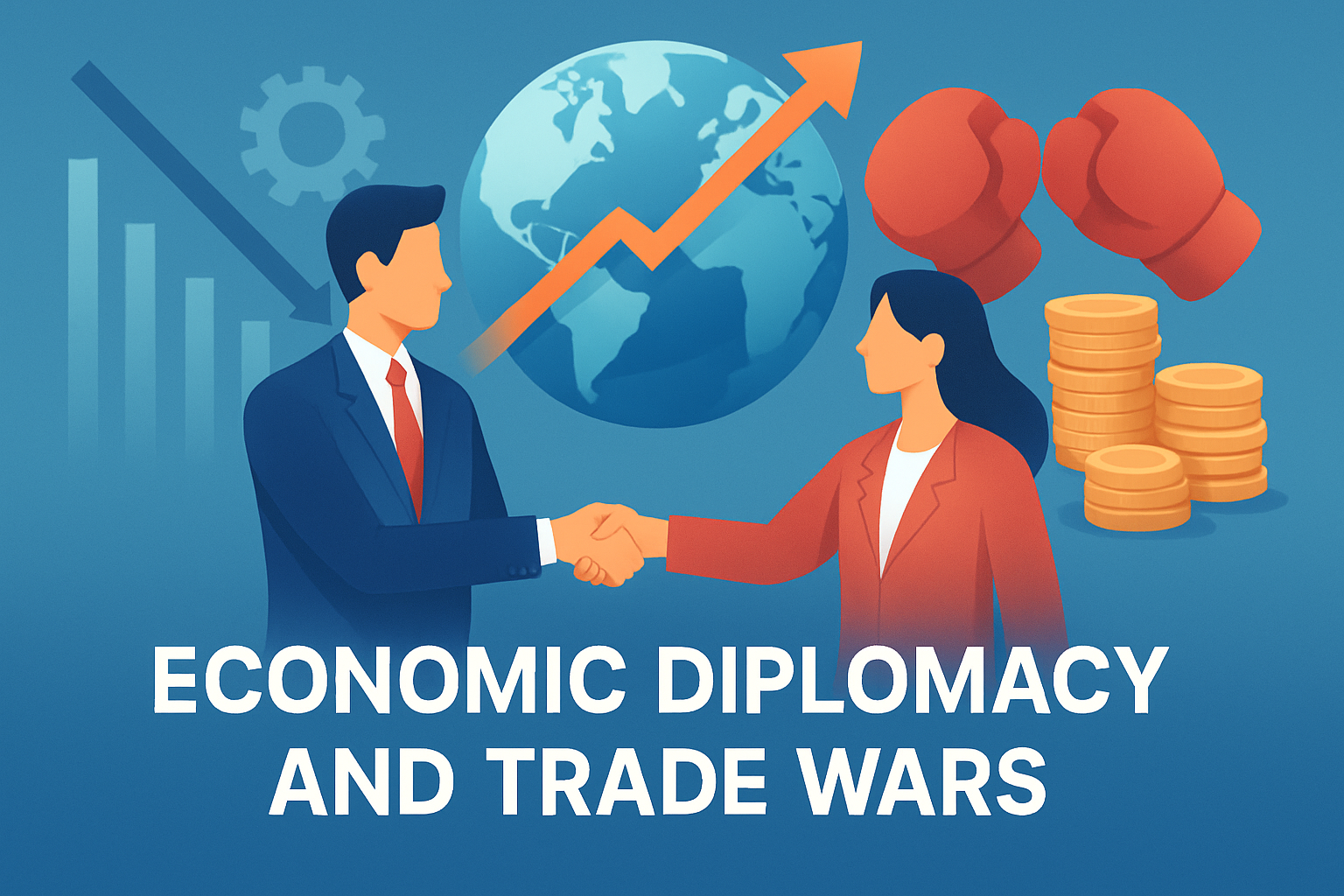
In today’s interconnected world, the dynamics of global trade play a critical role in shaping the economic stability and development of nations. Economic diplomacy serves as a channel through which countries negotiate and strategize to promote national interests and foster economic relationships. A growing challenge in this landscape is the prevalence of trade wars — conflicts arising from the imposition of tariffs and trade barriers. This complex interplay between economic diplomacy and trade wars is crucial for understanding the contemporary global economy. It matters because it affects international relations, influences global markets, and impacts the daily lives of people worldwide. Thus, navigating these two domains effectively can yield substantial benefits for nations, businesses, and individuals.
The Role of Economic Diplomacy
Economic diplomacy involves the use of a country’s economic resources, policies, and relations to achieve national foreign policy goals. It is a means of securing favorable trade agreements, attracting foreign investments, and strengthening economic ties. For example, the European Union has been adept at using economic diplomacy to establish trade agreements with multiple countries and regions, thus enhancing its economic influence globally. This diplomacy is not limited to government actions but also involves the private sector and civil society. Economic diplomacy is essential for reducing trade barriers, fostering sustainable development, and contributing to global economic stability.
Understanding Trade Wars
Trade wars occur when countries impose tariffs or other trade barriers against each other in retaliation for similar measures. These wars can escalate rapidly, leading to significant economic consequences. A well-documented example is the trade war between the United States and China, which began in 2018. The U.S. imposed tariffs on Chinese goods, leading to retaliatory tariffs by China. This conflict resulted in increased prices for consumers and disruptions in international supply chains. Trade wars often arise from a desire to protect domestic industries, reduce trade deficits, or respond to perceived unfair trade practices but, in doing so, they can destabilize global economies.
Impacts of Trade Wars on Global Economies
Trade wars can lead to a decrease in global trade volume, affecting economic growth worldwide. They create uncertainty in international markets and can lead to volatility in stock markets. For instance, during the US-China trade war, both countries experienced slower economic growth. Smaller economies, relying heavily on trade with larger nations, can also suffer collateral damage. Trade wars can result in changes to supply chains as countries seek alternative sources for goods, potentially increasing production costs and impacting consumer prices. Economies that rely on exports may face reduced demand for their goods, thus impacting their economic standing globally.
The Intersection of Economic Diplomacy and Trade Wars
Economic diplomacy can be a tool to prevent or resolve trade wars. Through negotiations and strategic partnerships, countries can address trade imbalances and forge mutually beneficial agreements. One key mechanism within this framework is the use of international organizations and agreements, such as the World Trade Organization (WTO). These platforms offer a space for dialogue and conflict resolution, helping countries reach compromises without escalating to trade wars. The role of economic diplomacy in diffusing tensions is illustrated in the resolution of the steel and aluminum tariff debate between the US and allies, which was managed through diplomatic channels, avoiding further escalation.
Real-World Example: Brexit and Economic Diplomacy
Brexit serves as a prime example of economic diplomacy in action. The United Kingdom’s decision to leave the European Union necessitated extensive diplomatic negotiations to establish new trade agreements with both EU and non-EU countries. This monumental task involved addressing tariffs, regulatory standards, and market access to ensure a smooth transition and maintain economic stability. Economic diplomacy was instrumental in crafting the Brexit deal, highlighting how pivotal these efforts are in navigating significant trade realignments and potential trade wars. As the UK forges its own trade policies, the lessons learned from Brexit underscore the importance of strategic economic diplomacy.
| Key Players | Actions Taken |
|---|---|
| United States | Imposed tariffs on Chinese goods |
| China | Retaliated with tariffs on US goods |
| European Union | Negotiated trade agreements to expand influence |
| United Kingdom | Executed economic diplomacy post-Brexit |
Future Trends in Economic Diplomacy and Trade Wars
As we look forward, economic diplomacy and trade wars will continue to evolve in response to global challenges. Climate change, technological innovations, and geopolitical shifts are influencing how nations approach trade and diplomatic strategies. The rise of digital economies and the increasing importance of technology-related trade present new diplomatic challenges and opportunities. Addressing climate change through trade policies presents another frontier for economic diplomacy, with countries working together to promote sustainable practices. The future will see more complex negotiations, where countries must balance economic interests with global responsibilities.
Key Takeaways and Conclusion
In conclusion, the interplay between economic diplomacy and trade wars is a significant aspect of the global economic landscape. Understanding and leveraging these elements can help countries and businesses navigate the complexities of international trade. Economic diplomacy can prevent and resolve trade conflicts, creating a more stable and predictable trading environment. By fostering cooperation and dialogue, nations can minimize the adverse impacts of trade wars and promote sustainable economic growth. For businesses and individuals, staying informed about these dynamics is essential for making informed decisions in an interconnected world.
Frequently Asked Questions
1. What is economic diplomacy and why is it important?
Economic diplomacy refers to the process through which countries engage in negotiations and strategic discussions to advance their national economic interests on a global stage. It’s an essential tool for fostering and maintaining economic relationships between countries, ensuring market access, securing trade agreements, and attracting foreign investment. Economic diplomacy is important because it helps to create a favorable environment for trade and investment, which in turn can lead to job creation, economic stability, and improved standards of living. It involves collaboration among various stakeholders including government institutions, businesses, and international organizations to align national policies with global economic trends and to address challenges such as trade barriers, tariffs, and protectionism.
2. How do trade wars impact global economies?
Trade wars occur when countries impose tariffs or other trade barriers on each other as part of an economic conflict. These actions can significantly impact global economies by disrupting international trade flows, increasing the cost of goods and services, and causing economic uncertainty. The effects of trade wars can be widespread, leading to reduced consumer confidence, increased costs for producers and consumers, and potential retaliatory measures by affected countries. This can result in a slowdown in economic growth, hindered global supply chains, and potential job losses in industries reliant on international trade. Furthermore, trade wars can strain political and economic relationships between countries, making it more challenging to negotiate future trade agreements and potentially leading to long-term economic damage.
3. What are some strategies countries use to manage trade wars?
To manage and mitigate the effects of trade wars, countries often employ a variety of strategies. These can include engaging in intensive diplomatic negotiations to reach mutually beneficial agreements and avoid prolonged conflicts. Countries might also seek to diversify their trade partners and markets to reduce dependency on any single country and minimize the impact of trade barriers. Additionally, governments may implement protective measures such as subsidies or tax breaks for affected industries to help them withstand the economic strain of increased tariffs. Investing in domestic industries and promoting innovation can also be a strategy to strengthen the national economy and enhance competitiveness on the global stage. Furthermore, countries may involve international organizations like the World Trade Organization (WTO) to mediate disputes and ensure a rules-based trading system is maintained.
4. How does economic diplomacy play a role in resolving trade wars?
Economic diplomacy is crucial in resolving trade wars as it facilitates dialogue and negotiation between conflicting parties. Through economic diplomacy, countries can engage in discussions to address and resolve trade disputes, negotiate tariff reductions, and find common ground that benefits both sides. It involves leveraging diplomatic channels, economic ties, and strategic partnerships to create a platform for constructive negotiations. Economic diplomacy also enables countries to articulate their trade interests clearly and work towards agreements that promote mutual economic growth. Additionally, it includes the effort to rally support from international allies and organizations to apply pressure on opposing parties for a resolution. By fostering communication and cooperation, economic diplomacy can lead to the de-escalation of trade tensions and the restoration of stable economic relationships.
5. What role do international organizations play in economic diplomacy and trade wars?
International organizations such as the World Trade Organization (WTO), International Monetary Fund (IMF), and World Bank play a pivotal role in economic diplomacy and trade wars. These organizations provide a platform for countries to engage in multilateral discussions and negotiations to address trade barriers and conflicts. The WTO, for example, is instrumental in setting and enforcing international trade rules and offering a dispute resolution mechanism for member countries. Through these mechanisms, international organizations help maintain a fair and predictable global trading system and provide a structured process for conflict resolution. Additionally, these organizations can provide technical assistance and economic analysis to help countries understand the impacts of trade policies and devise strategies for sustainable economic growth. Their involvement is essential in ensuring that global trade remains open, equitable, and stable, particularly during periods of economic conflict like trade wars.