
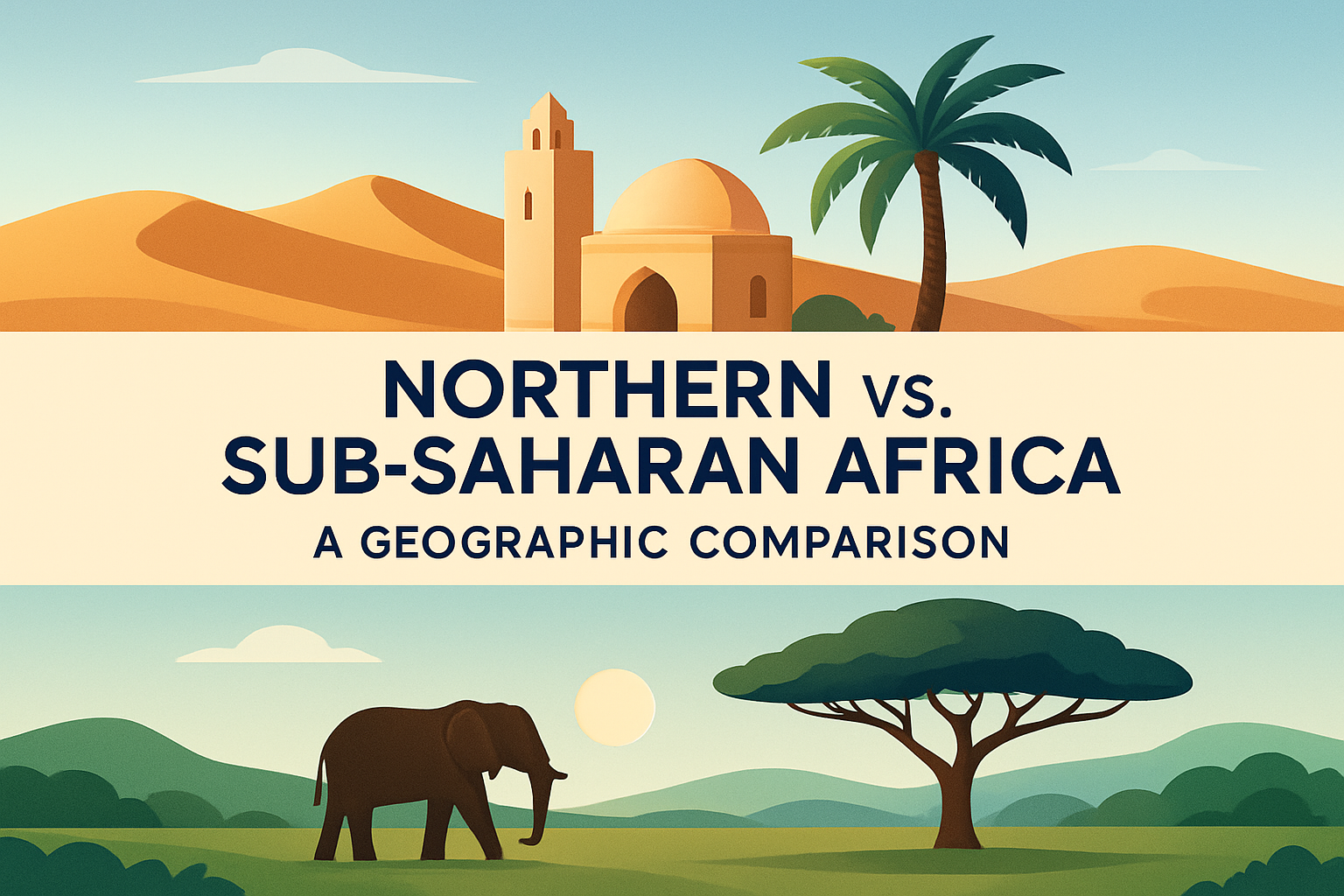
Africa, the second-largest continent on Earth, holds a diverse array of cultures, landscapes, and histories. Its vastness is often compartmentalized into distinct regions, with Northern Africa and Sub-Saharan Africa being two of the most well-known. In this article, we dive into a comparison between these two significant regions. Understanding the distinctions and interactions between them is crucial not only for appreciating the continent’s complexity but also for comprehending global geopolitics, economics, and sociocultural dynamics.
Northern Africa, often associated with the Arab world and located along the Mediterranean, shares a rich tapestry of history dating back to ancient civilizations like Egypt and Carthage. On the other side, Sub-Saharan Africa encompasses the vast region south of the Sahara Desert, known for its myriad ethnic groups, languages, and wildlife. These areas are not only geographically but also culturally and economically distinct, making a comparative study both fascinating and enlightening.
This exploration is vital because it sheds light on the interconnectedness and unique perspectives within the African continent. The interactions between Northern and Sub-Saharan Africa affect trade, migration, and culture in ways that ripple across the globe. By examining these regions side by side, we gain a deeper understanding of Africa’s role in world affairs and the interplay of environments and societies.
Geographical and Climatic Differences
Geographically, Northern Africa and Sub-Saharan Africa are distinguished by the Saharan Desert, a vast arid region that stretches across the continent from the Atlantic Ocean to the Red Sea. This makes the Sahara the most significant geographic boundary between the two regions. Northern Africa is characterized by its Mediterranean climate on the coast and arid landscapes in the interior. In contrast, Sub-Saharan Africa is known for its diverse climatic zones, ranging from savannas and rainforests to deserts and highlands.
For instance, Egypt, in Northern Africa, is primarily desert, excluding the Nile River Valley which supports agriculture and human habitation. Meanwhile, Nigeria in Sub-Saharan Africa boasts lush, tropical landscapes in the south, which transition to semi-arid savannas in the north. This geographic variety influences everything from settlement patterns to agricultural practices.
These climatic variations also dictate the types of challenges each region faces in terms of agriculture, water resources, and livelihoods. In Northern Africa, nations often struggle with water scarcity, making them reliant on limited water from sources like the Nile. Conversely, Sub-Saharan Africa, although more varied in resources, faces challenges such as deforestation and soil degradation in other areas due to intensive agricultural practices.
Cultural Influences and Languages
The cultural landscape of Northern Africa is predominantly shaped by Arab, Berber, and indigenous African influences. This melting pot has created unique cultural practices and languages. For example, the Arabic language and culture have a strong presence, heavily influencing social and political life. The influence even extends into the region’s adherence to Islam, which is the predominate religion.
Sub-Saharan Africa, however, is home to an immense diversity of ethnic groups and languages. With more than 2,000 languages spoken, linguistic diversity boasts a wide spectrum of cultural expressions. Noteworthy languages include Swahili in East Africa and Zulu in Southern Africa. Religiously, the region is a melange of Christianity, Islam, and indigenous faiths, reflecting its diverse cultural inheritance.
Economic Opportunities and Challenges
Economically, Northern and Sub-Saharan Africa showcase significant disparities and potential. Northern Africa, with countries like Egypt and Morocco, has well-established trade routes and an industrial base, largely due to proximity to Europe. The Suez Canal in Egypt is a vital international maritime conduit that enhances trade connectivity between continents.
Sub-Saharan Africa, while rich in natural resources like minerals, oil, and arable land, faces more substantial challenges in terms of economic development. Infrastructure deficits, political instability in some areas, and uneven economic growth are impediments. Yet, countries like South Africa and Nigeria have robust economies fueled by mining, agriculture, and burgeoning information technology sectors.
| Aspect | Northern Africa | Sub-Saharan Africa |
|---|---|---|
| Primary Climate | Mediterranean, Arid | Diverse (Rainforest, Savanna, Arid) |
| Predominant Language | Arabic | Over 2,000 languages, including Swahili and Zulu |
| Main Religion | Islam | Christianity, Islam, Indigenous |
| Economic Base | Trade and Industry | Resources and Agriculture |
Political Landscapes
Northern Africa’s politics are heavily influenced by its Arab identity and Islamic governance models. The region’s political dynamics were notably transformed during the Arab Spring, which saw countries like Libya, Egypt, and Tunisia experiencing dramatic regime changes and socio-political unrest.
Sub-Saharan Africa, however, presents a contrasting picture with its diverse political systems ranging from established democracies like Ghana and Botswana to countries like Zimbabwe and Ethiopia that have experienced political turbulence. Political developments in this region significantly impact economic growth and conflict resolution processes.
Sociocultural Transformations
Sociocultural transformations in both regions are drivers of change that impact lifestyles and cultural perceptions globally. Northern Africa has experienced cultural globalization significantly through media and technology. Countries like Morocco and Egypt act as cultural hubs merging traditional and contemporary lifestyles.
Sub-Saharan Africa likewise undergoes continuous transformation. The growth of Nollywood, Nigeria’s vibrant film industry, exemplifies cultural export on a global scale. It highlights how creative industries in Sub-Saharan Africa have gained international recognition, providing economic opportunities and cultural pride.
Additionally, youth-driven innovation in areas like Kenya shows how technology and entrepreneurship are fast becoming pivotal in sociocultural transformations across the continent, influencing global perceptions and interactions with Africa.
Conclusion: Bringing It All Together
As the exploration reveals, Northern Africa and Sub-Saharan Africa, though different in numerous ways, share connections that transcend mere geographic boundaries. Understanding these differences and similarities benefits not only those involved in African affairs but anyone interested in global developments.
The interplay between these regions defines much of Africa’s social, economic, and political landscape, serving as a microcosm of its broader complexity. For the observer, such a comparison offers a nuanced perspective on how environment, culture, and history coalesce to shape societies.
As a next step, readers are encouraged to further explore case studies within each region, particularly in areas of personal interest such as technology, culture, or economic development. Through deeper engagement, one can glean valuable insights into regional dynamics that have far-reaching implications in our increasingly interconnected world.
The intricate dance between Northern and Sub-Saharan Africa continues to evolve, offering opportunities to those willing to delve into the details and explore the potential benefits that understanding one of the world’s most diverse continents can offer.
Frequently Asked Questions
1. What are the main geographical differences between Northern and Sub-Saharan Africa?
Northern Africa and Sub-Saharan Africa are characterized by distinct geographical features that play a significant role in shaping their climates, cultures, and histories. Northern Africa, which includes countries like Algeria, Egypt, Libya, Morocco, and Tunisia, is dominated by the vast Sahara Desert, the largest hot desert in the world. This arid landscape influences the climate, making it extremely dry with minimal rainfall, leading to sparse vegetation. The coastline along the Mediterranean Sea, however, enjoys a more temperate climate, supporting agriculture and dense populations.
Sub-Saharan Africa, on the other hand, spans a diverse range of environments, including savannas, rainforests, and mountainous regions. This area is located south of the Sahara and includes countries such as Nigeria, Kenya, South Africa, and Ethiopia. Its geographical diversity contributes to a rich array of ecosystems and wildlife. The climate varies from tropical in the central regions, supporting dense rainforests, to semi-arid and savanna climates in places like the Sahel and East Africa, influencing different agricultural practices and ways of life.
2. How do the cultural and historical backgrounds differ between these two regions?
Northern Africa has a rich tapestry of history influenced by ancient civilizations such as the Egyptians, Carthaginians, Berbers, and later on, by the Arab and Islamic conquests. The spread of Islam from the 7th century onwards shaped the religious, cultural, and social landscape of the region, with Arabic becoming widely spoken and deeply embedding itself in the culture.
In contrast, Sub-Saharan Africa comprises a wide variety of ethnic groups and cultures, each with its own languages and traditions. This region did not encounter Islam until later and at varying degrees, leading to a mix of traditional African beliefs, Christianity, and Islam. The impact of colonial history is particularly pronounced here, as European powers like France, Britain, and Belgium carved up the continent, resulting in a complex legacy that continues to influence national borders, languages, and political dynamics today.
3. What economic activities are predominant in Northern versus Sub-Saharan Africa?
Northern Africa’s economy has traditionally revolved around agriculture in its arable coastal regions and vital industries related to its vast natural resources, such as oil and gas, particularly in countries like Libya and Algeria. Tourism is also a significant economic contributor, with ancient historical sites like the Pyramids of Giza attracting millions of visitors each year.
Sub-Saharan Africa, known for its rich natural resources, has economies heavily influenced by agriculture, with many people engaging in subsistence farming. The region is rich in extractive resources such as gold, diamonds, and other minerals, which play a crucial role in both local economies and international markets. However, the diversity of environments also means a diversity of economic activities, from pastoralism in East Africa to the burgeoning tech industry hubs emerging in countries like Kenya and Nigeria.
4. How do the political landscapes of Northern and Sub-Saharan Africa differ?
Northern Africa has long been known for its political volatility, with several countries experiencing ongoing conflict and civil unrest. Political systems here are often shaped by the struggle between secularism and political Islam, a legacy of colonial rule, and the repressive regimes that followed. As a result, countries like Egypt, Libya, and Tunisia have seen significant political upheaval, particularly post-Arab Spring.
Sub-Saharan Africa’s political landscape is complex and varies significantly from one country to another. While some nations have stable democracies, others are grappling with corruption, authoritarian rule, and civil conflicts. Historical factors such as colonial boundaries and ethnic divisions have often led to internal strife and instability, as seen in regions like the Sahel and the Great Lakes. Nevertheless, there are success stories, with nations like Ghana and Botswana serving as examples of stability and economic progress.
5. In what ways do Northern and Sub-Saharan Africa interact with the rest of the world?
Northern Africa, with its proximity to Europe and role within the Arab world, engages heavily in geopolitical arenas concerning issues like migration, security, and energy. Its location along critical trade routes, such as the Suez Canal in Egypt, underscores its strategic importance. The region’s interactions are often tied to the Middle Eastern and European spheres, with alliances and trade agreements frequently reflecting these ties.
Sub-Saharan Africa, while further from Europe, has increasingly become a focal point for global powers due to its untapped markets, rich resource deposits, and growing youth population. The region has seen significant investment and aid from countries like China, which has extensively engaged with Africa through infrastructure projects and trade. The international community’s involvement also often focuses on humanitarian issues, development, and tackling regional security threats, such as those posed by militant groups and the impacts of climate change.