
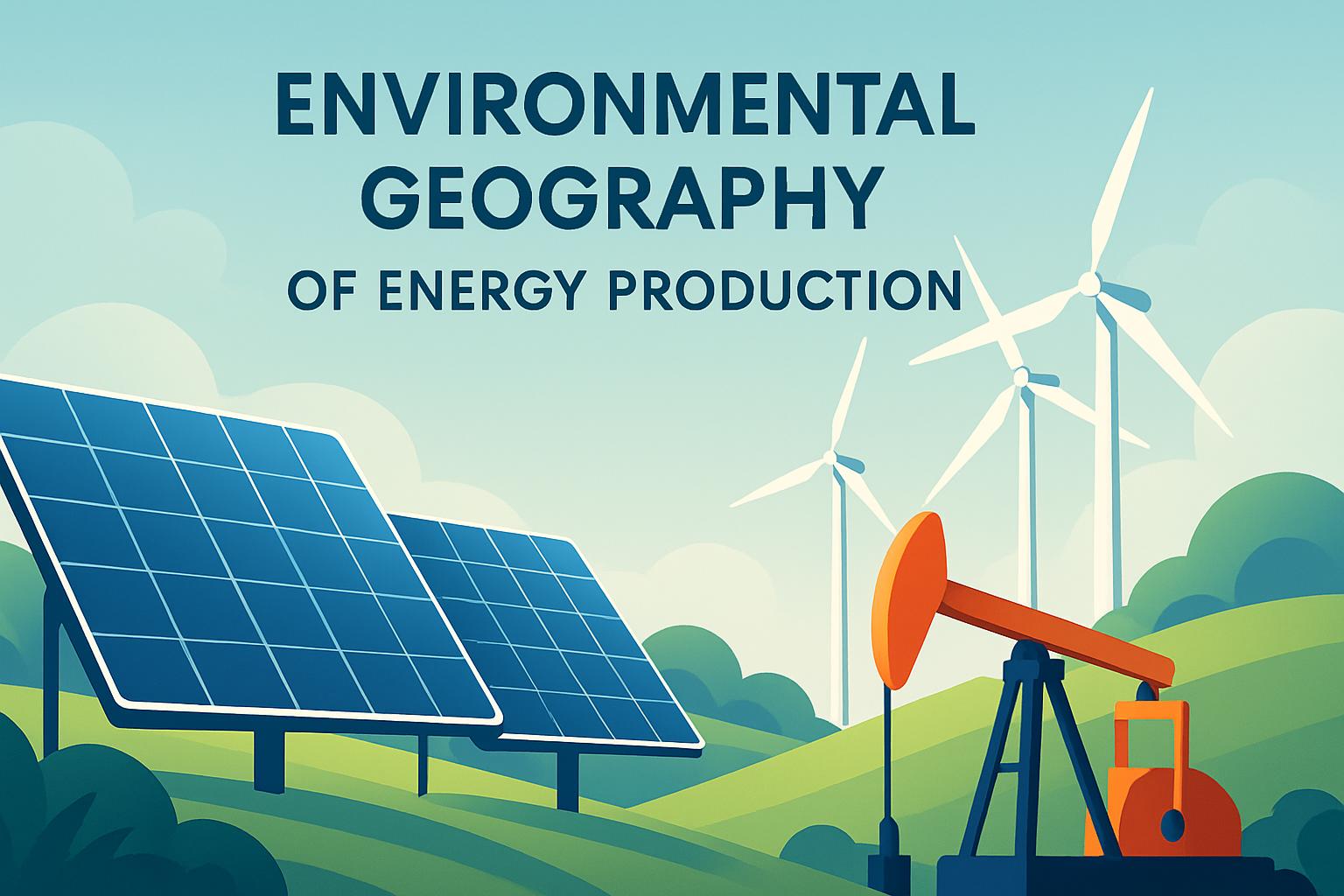
Introduction to the Environmental Geography of Energy Production
In today’s rapidly changing world, understanding the environmental geography of energy production has become essential. This field examines how energy production is intertwined with geographical elements and environmental impacts. The rise of energy consumption worldwide drives the need to explore cleaner, sustainable sources. Traditional methods of energy production, such as coal and oil, have significant environmental consequences, including air and water pollution, habitat destruction, and climate change. These methods are under scrutiny as global awareness of environmental sustainability grows.
The geography of energy production plays a crucial role in determining the feasibility and impact of these energy sources. Geographic factors like location, resource availability, and environmental conditions significantly influence how energy is produced, transported, and consumed. Understanding this relationship is paramount in developing policies and strategies aimed at mitigating harmful effects while maximizing energy efficiency. By studying this intersection between geography and energy, one can gain insights into optimizing energy resources responsibly, ensuring an equitable balance between consumption and conservation. Through this understanding, more informed decisions can be made, helping to contribute toward a sustainable future.
Fossil Fuels and Their Environmental Impact
Fossil fuels, including coal, oil, and natural gas, have long been the backbone of global energy production. They are widely available and relatively inexpensive to extract, making them a popular option worldwide. However, their environmental impact is profoundly concerning. The burning of fossil fuels releases significant quantities of carbon dioxide and other greenhouse gases, which are the primary drivers of climate change. Additionally, oil spills and mining activities often lead to serious ecological disruptions.
To illustrate, the Deepwater Horizon oil spill in 2010 had devastating effects on the Gulf of Mexico’s environment. It caused widespread damage to marine life, affecting numerous species and habitats. Similarly, coal mining can lead to deforestation, soil erosion, and pollution of water bodies. The exploitation of these resources often negatively impacts human communities, with air and water pollution leading to health issues for those living nearby.
- Greenhouse gases lead to climate change.
- Oil spills harm marine ecosystems.
- Mining operations cause deforestation.
Renewable Energy and Geographic Considerations
Renewable energy sources like solar, wind, and hydroelectric power present viable alternatives that minimize environmental degradation. Unlike fossil fuels, these sources are abundant and generate energy without producing significant pollutants. However, their effectiveness is heavily influenced by geographical factors. For example, solar energy is most efficient in regions with high sunlight exposure, while wind energy requires areas with consistent strong winds.
A real-world example is the success of Denmark in wind energy production. Denmark has capitalized on its geographical location to become a leading nation in wind power. The country’s vast coastline and favorable wind patterns serve as an ideal environment for wind farms. This strategic use of geography enables Denmark to produce a significant portion of its energy needs through renewable sources, significantly reducing its carbon footprint.
| Energy Source | Geographic Requirement | Environmental Benefit |
|---|---|---|
| Solar | High sunlight exposure | Low emissions |
| Wind | Consistent strong winds | Zero emissions during operation |
| Hydroelectric | Proximity to water sources | Renewable and reliable |
Bioenergy: A Sustainable Alternative
Bioenergy, derived from organic materials such as plants and waste, is another form of renewable energy. Its production and use are also influenced by geographical factors. Bioenergy production can be localized, minimizing transportation emissions and promoting local economies. The cultivation of biomass requires fertile land, suitable climates, and water resources, making geography a critical determinant in its feasibility and sustainability.
An interesting example is Brazil’s use of sugarcane ethanol. Brazil has adopted sugarcane as a staple crop due to its favorable tropical climate, allowing for efficient production of ethanol, a cleaner alternative to gasoline. This utilization of bioenergy has significantly reduced Brazil’s reliance on fossil fuels, showcasing how geographic advantages can be effectively leveraged to deploy sustainable energy solutions.
Geopolitical Implications of Energy Production
Energy production also has significant geopolitical dimensions, as countries with abundant energy resources often wield considerable influence. The strategic importance of oil in the Middle East is one such example, where geographic availability of resources has led to significant political and economic power. However, dependency on fossil fuels can make countries vulnerable to market fluctuations and political instability.
In contrast, countries investing in diverse energy portfolios, such as Germany, are better positioned to navigate geopolitical tensions. Germany’s Energiewende, or “energy transition,” focuses on increasing the share of renewable energy in its energy mix. By investing in solar and wind energy, Germany has reduced its dependency on fossil fuel imports, showcasing how geographic and policy considerations can impact national security and stability.
Conclusion and Call to Action
The environmental geography of energy production is a critical area of study that holds the key to a more sustainable future. By understanding the geographical and environmental implications of various energy sources, we can make informed decisions that prioritize both energy needs and ecological preservation. Transitioning from fossil fuels to renewable energy sources such as solar, wind, and bioenergy offers substantial environmental benefits and can reduce geopolitical risks associated with energy dependency.
As individuals and communities, we have a role to play in promoting sustainable energy solutions. By supporting policies that encourage the development and adoption of renewable energy technologies, advocating for responsible energy consumption, and raising awareness about the environmental impacts of energy production, we can contribute to a more sustainable and equitable world. Let’s take action today to ensure a cleaner and healthier planet for future generations.
Frequently Asked Questions
1. What is the environmental geography of energy production, and why is it important?
The environmental geography of energy production involves the study of how energy production processes and methods are influenced by geographical factors and their subsequent environmental impacts. It’s a way to look at where and how energy resources are extracted and produced, and how these activities affect the natural world. This field is incredibly important because energy production is a key driver of industrial growth and development, but it also poses significant risks to the environment. By understanding the geographical and environmental dimensions of energy production, we can make informed decisions that balance our energy needs with environmental sustainability. This understanding is crucial as it guides policy-making, helps in identifying areas that are most affected by energy production, and leads the way in developing more sustainable and environmentally friendly energy sources.
2. How does the type of geographical region affect energy production and its environmental impact?
Geographical regions play a significant role in determining both the method of energy production used and the environmental impact of these methods. For instance, certain areas are rich in fossil fuels like coal and oil, leading to reliance on these energy sources. These regions often suffer from environmental issues such as air and water pollution, habitat destruction, and greenhouse gas emissions. Conversely, regions with abundant sunlight and wind may focus on solar and wind energy, which have considerably lower environmental impacts. Geographical features like mountain ranges, bodies of water, and prevailing weather patterns also influence energy production choices and their impacts. Understanding these geographical influences enables us to optimize energy resources in ways that mitigate environmental harm and enhance sustainable practices.
3. What are the environmental consequences associated with traditional energy production methods?
Traditional energy production methods, particularly those involving fossil fuels like coal, oil, and natural gas, have several environmental consequences. Firstly, their extraction and burning contribute significantly to air pollution, releasing pollutants such as sulfur dioxide, nitrogen oxides, and particulates that harm human health and the environment. Secondly, these processes are major sources of greenhouse gases like carbon dioxide and methane, driving climate change by trapping heat in the atmosphere. Additionally, they often result in water pollution, habitat destruction, and biodiversity loss due to oil spills, mining operations, and infrastructure development. The environmental damages from these methods necessitate a transition to cleaner, sustainable energy sources to reduce their adverse effects on our planet.
4. How can geographic studies aid in the transition to sustainable energy production?
Geographic studies can greatly aid the transition to sustainable energy production by identifying optimal locations for renewable energy resources such as solar, wind, and hydroelectric power. By analyzing geographic features, such as solar radiation levels, wind patterns, and water flow, it becomes possible to maximize energy output and efficiency. Geographers also examine human and economic factors, such as population density and land use, to assess the feasibility and impact of implementing renewable energy projects. Moreover, geographic information systems (GIS) and spatial analysis tools help plan and manage these projects by visualizing data, simulating outcomes, and predicting environmental impacts. Through these integrated approaches, geographic studies help ensure that the shift to sustainable energy is both effective and environmentally responsible.
5. What are some of the current challenges faced in the environmental geography of energy production?
The environmental geography of energy production faces several challenges today. One major challenge is the balancing act between meeting the world’s growing energy demands and reducing the environmental impacts associated with energy production. Another challenge is effectively integrating renewable energy systems into existing energy infrastructures, which were primarily designed for fossil fuels. There is also the difficulty of overcoming the economic and political barriers to shifting toward sustainable energy, as established industries often resist change. Furthermore, global energy inequalities mean that some regions have greater access to clean energy resources than others, complicating efforts to standardize sustainable practices. Addressing these challenges requires innovative solutions, international cooperation, and a commitment to sustainable development practices that prioritize environmental health and equity in energy distribution.