
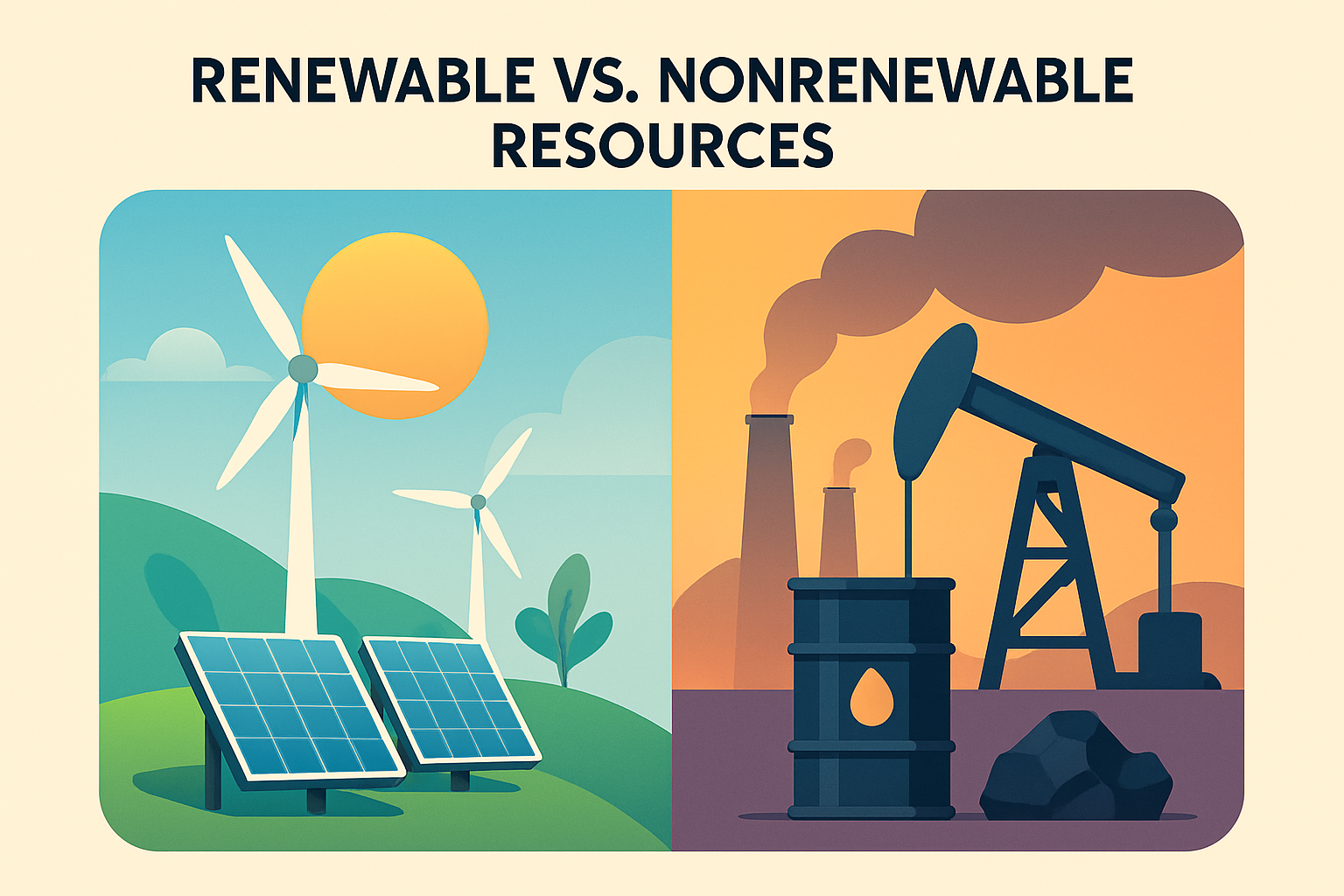
In an era where environmental sustainability is a global concern, understanding the difference between renewable and nonrenewable resources has become essential. These resources are the foundation of our modern economy, powering everything from our homes to our global industries. But what differentiates them, and why is it important to distinguish between the two? This article will delve into the definitions, uses, and implications of renewable and nonrenewable resources, highlighting the significance of choosing the right path for our future.
At its core, a renewable resource is one that can naturally replenish itself over short periods. Think of the sun’s energy, wind, or even the power of flowing water. These sources are virtually inexhaustible within a human timescale. In contrast, nonrenewable resources, like fossil fuels and mineral deposits, are finite. These resources take millions of years to form and deplete much faster than they can regenerate.
The dichotomy between renewable and nonrenewable resources isn’t merely academic; it has practical implications affecting economic policies, energy security, and environmental stewardship. As global demand for energy continues to rise, balancing the utilization of renewable versus nonrenewable resources is crucial for sustainable development. Let’s explore further to understand the profound impact these resources have on our world and their role in shaping a sustainable future.
The Characteristics and Importance of Renewable Resources
Renewable resources are aptly named because they can continuously regenerate if managed responsibly. The sun, for example, is a perpetual source of energy, providing sunlight that can be harnessed into electricity through solar panels. Similarly, wind and water provide energy through turbines and hydropower plants, respectively.
The defining trait of renewable resources is their sustainability. Unlike oil and coal, which generate greenhouse gases when burned, renewables tend to have minimal environmental impact. This makes them crucial in the fight against climate change. For instance, Denmark’s investment in wind energy supplies over 40% of its electricity needs, illustrating how renewables can be effectively integrated into the energy grid.
- Solar Energy: Renewable and abundant, captured using solar panels.
- Wind Energy: Driven by air currents, utilized through wind turbines.
- Hydropower: Generated from flowing water, via dams or run-of-the-river systems.
- Biomass: Organic material like plant and animal waste, used for fuel.
- Geothermal Energy: Utilizes heat from beneath the earth’s crust.
Despite their sustainability, renewable resources face challenges such as high initial costs and dependence on geographical and weather conditions. Yet, technological advancements and decreasing costs are driving increased adoption globally.
Nonrenewable Resources: Definitions and Implications
Nonrenewable resources, such as coal, oil, natural gas, and minerals, are finite. Once depleted, these resources are not easily replaced, as they take millions of years to form. Their extraction and use have been the backbone of industrialization and modern development, primarily because they are energy-dense and readily available.
Coal mining, for example, powered the industrial revolution, and today it still fuels many power plants worldwide. Natural gas is another example, providing a crucial source of energy for heating and electricity, as seen in countries like the United States and Russia. However, the heavy reliance on these resources brings environmental and geopolitical challenges.
Extracting and burning fossil fuels generate carbon emissions, a major contributor to global warming. Moreover, the concentration of these resources in certain regions can lead to geopolitical tensions. The Middle East’s vast oil reserves have significantly influenced global politics and economics for decades.
| Resource Type | Examples | Environmental Impact |
|---|---|---|
| Nonrenewable | Oil, Coal, Natural Gas | High carbon emissions, pollution |
| Renewable | Solar, Wind, Hydropower | Minimal emissions, sustainable |
Understanding these impacts is critical for informed decision-making and steering towards a more balanced energy mix.
The Transition Toward Cleaner Energy Solutions
The global shift from nonrenewable to renewable energy sources is driven by the need to mitigate climate change, reduce environmental damage, and ensure long-term energy security. Governments and organizations worldwide are investing heavily in renewable energy to reduce dependency on fossil fuels.
China, the largest emitter of greenhouse gases, is now leading the way in renewable energy production, investing hundreds of billions of dollars in solar, wind, and hydropower infrastructure. Similarly, the European Union has set ambitious targets to increase the share of renewables in its energy mix to fight climate change.
Transitioning to renewable resources requires policy support, technological innovation, and infrastructure development. Initiatives such as carbon pricing, subsidies for renewable energy producers, and international agreements like the Paris Accord are crucial steps towards a sustainable future.
Challenges and Future of Renewable Energy
While renewable resources offer a path to a sustainable future, several challenges remain. The intermittency of solar and wind energy, for example, requires advancements in energy storage systems and smart grid technologies to ensure reliable supply. Lithium-ion batteries and pumped hydro storage are among the solutions being explored.
Another major challenge is the need for significant infrastructure investment and land use. Solar farms and wind turbines require large areas, which can clash with agriculture and conservation efforts. The international race to secure resources such as rare earth elements, vital for the production of renewable technologies, also poses geopolitical challenges.
Despite these challenges, the future is promising. Innovation in clean technology is rapidly advancing, reducing costs and increasing efficiency. As more countries commit to reducing carbon footprints, renewable energy will become an integral part of global energy strategies.
The Role of Individuals and Communities
Individuals and communities play a crucial role in the transition toward renewable resources. By adopting solar panels, electric vehicles, and energy-efficient appliances, consumers can reduce their reliance on nonrenewable resources and minimize their carbon footprints.
Grassroots movements and community projects can significantly impact local energy transitions. Community solar projects, for instance, allow neighborhoods to collectively invest in solar energy, making it accessible to those who cannot install personal solar panels.
Awareness and education are essential for empowering individuals to make informed decisions. Knowledge about energy consumption, conservation methods, and the benefits of renewables can foster a culture of sustainability and accountability.
Summarizing Renewable and Nonrenewable Resources
The distinction between renewable and nonrenewable resources carries profound implications for the present and future of our planet. While renewables promise a sustainable path forward, reducing carbon emissions and fostering environmental stewardship, nonrenewable resources continue to support energy needs. The transition to a cleaner energy future requires concerted global efforts, policy support, technological innovation, and active participation from individuals and communities.
Deploying renewable resources across sectors, fostering awareness, and supporting sustainable policies are critical steps we can take to ensure the health of our environment and the endurance of our societal systems. By investing in renewable energy, advocating for sustainable policies, and adopting energy-efficient practices, we contribute to a future where humanity thrives in harmony with nature.
As a call to action, consider how you can integrate renewable solutions into your life. Whether through supporting renewable energy initiatives, reducing energy consumption, or spreading awareness about sustainable practices, every step counts towards a brighter, more sustainable future.
Let us commit to making informed choices, driving change, and supporting policies that prioritize a balanced, sustainable energy mix for ourselves and the generations to come.
Frequently Asked Questions
1. What is the difference between renewable and nonrenewable resources?
Renewable resources are natural assets that can be replenished over short periods, usually within a human lifespan. These include resources like sunlight, wind, rain, tides, waves, and geothermal energy. Since they are naturally replenished, they have the potential to provide a sustainable energy and resource solution as long as they are properly managed and not overexploited.
Nonrenewable resources, on the other hand, are natural resources that do not replenish quickly enough to be of any use in the foreseeable future once they are depleted. These resources include fossil fuels like coal, oil, and natural gas, as well as minerals and metals such as gold, silver, and copper. The formation of these resources takes millions of years, making them finite and disposable in practical terms.
Understanding the distinction is crucial as it impacts environmental policies, economic strategies, and global efforts toward sustainability. Leveraging renewable resources can lead to more sustainable development and less environmental impact, while reliance on nonrenewable resources often leads to depletion concerns and environmental degradation.
2. Why is it important to focus on renewable resources?
Focusing on renewable resources is fundamental for creating a sustainable and stable future. The use of renewables can significantly reduce greenhouse gas emissions, a major contributor to climate change. For example, wind and solar energy produce no emissions during operation, thereby limiting their impact on the environment compared to burning fossil fuels.
Furthermore, renewable resources are abundant and widely available, offering energy security and price stability against the market volatility associated with nonrenewable resources. This means countries can become less dependent on imported energy, particularly oil and gas, leading to more energy independence and security.
Additionally, the renewable energy sector has the potential to create numerous jobs and drive technological innovation, contributing positively to local economies. Investing in renewable infrastructure helps transition economies toward greener practices, aligning with global commitments like the Paris Agreement aimed at reducing carbon emissions and mitigating climate change.
3. How do the uses of renewable resources differ from those of nonrenewable resources?
Renewable resources are primarily used for generating electricity, heating, and transportation. Technologies harnessing these resources include solar panels, wind turbines, hydropower systems, and geothermal plants. They are increasingly integrated into national grids as their efficiency and technology improve.
Nonrenewable resources, particularly fossil fuels, remain deeply embedded in global energy systems due to established infrastructure and technology. Oil is predominantly used for transportation and industrial purposes, coal for electricity generation, and natural gas for both electricity and heating.
The primary difference lies in how these resources are harvested and used—the extraction and use of nonrenewable resources often lead to environmental degradation and pollution, while renewable resources provide more environmentally benign alternatives, allowing sustainable development and lower environmental footprints.
4. What are some challenges associated with transitioning from nonrenewable to renewable resources?
Transitioning to renewable resources poses several challenges, including technological, financial, and infrastructure hurdles. Many renewable technologies, although becoming more affordable, still require substantial initial investment for infrastructure development, which can be a barrier for some regions or countries.
Additionally, integrating renewable energy into existing power grids can be complex, given their intermittent nature. Solar and wind, for example, depend on weather conditions, necessitating robust storage solutions or grid upgrades to ensure reliable power supply.
Moreover, there are socioeconomic challenges, such as transitioning the workforce from traditional energy sectors to new industries. Retraining workers and creating new employment opportunities in renewable industries are essential to prevent economic disruption and ensure a just transition.
Despite these challenges, the benefits of transitioning, such as reducing carbon footprints, enhancing energy security, and fostering economic growth through new technologies, are compelling and continue to drive efforts toward greater adoption of renewable energy solutions.
5. Can renewable and nonrenewable resources coexist in the energy landscape?
Yes, renewable and nonrenewable resources can and do coexist in the current energy landscape, albeit with differing roles and impact. While there is a global push to rely mostly on renewables due to their sustainability and cleaner energy production, nonrenewable resources are still a key component due to their established role and infrastructure in providing reliable energy.
In the short to medium term, a mix of both may be necessary to ensure energy security and stability while gradually building the infrastructure and technology support required for a complete transition to renewables. This coexistence provides a pragmatic pathway that balances transitioning efforts with current energy demands.
Additionally, advancements in carbon capture and storage technologies seek to minimize the environmental impact of using nonrenewable resources, making them potentially more sustainable partners in a mixed energy strategy aimed at achieving both reliability and sustainability goals.