Introduction to 21st Century Terrorism
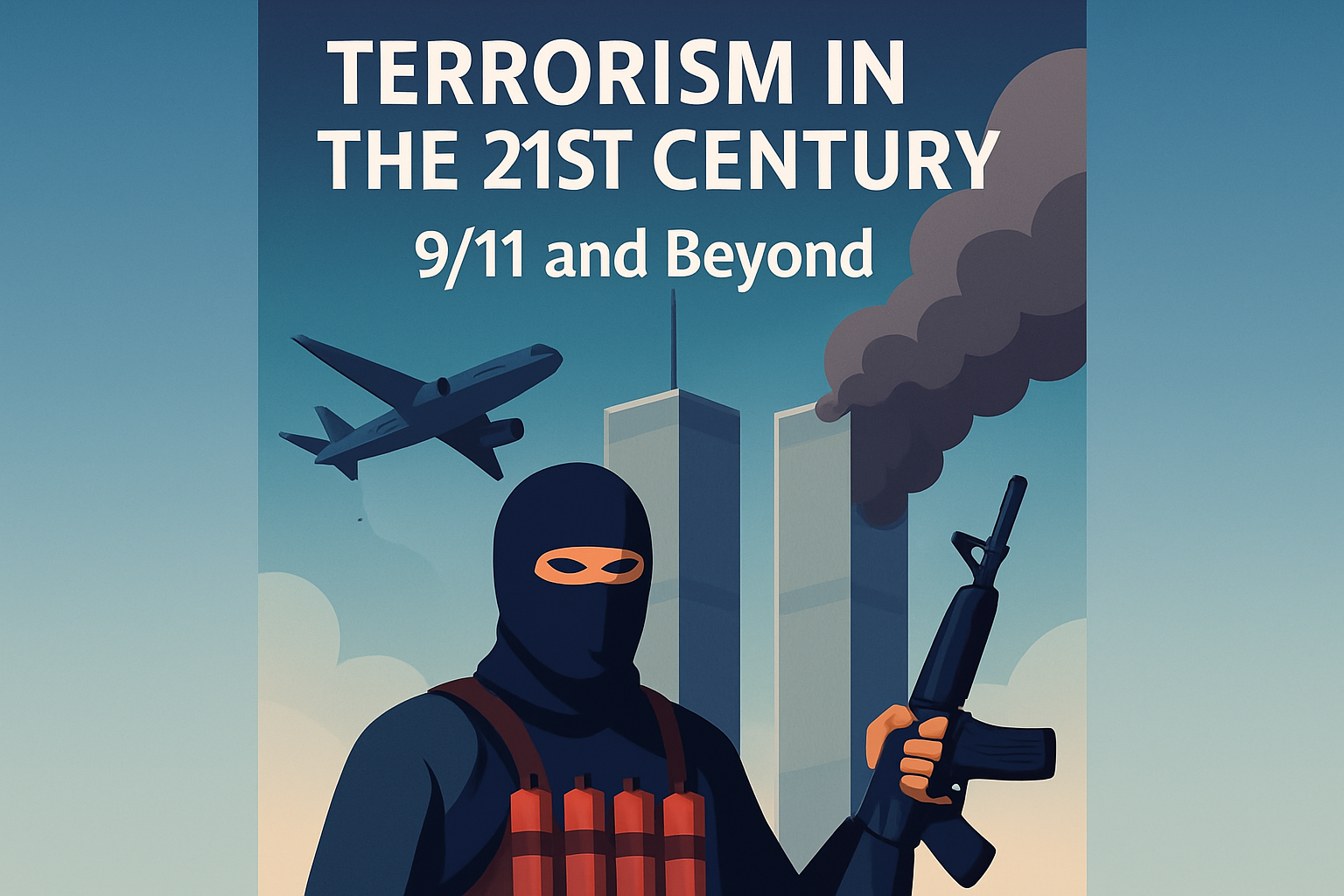
The dawn of the 21st century brought with it a profound transformation in the realm of global security. The events of September 11, 2001, commonly referred to as 9/11, marked a new era in terrorism, where the tactics, scope, and implications of terrorist acts evolved dramatically. The central figure behind these attacks was the extremist group al-Qaeda, led by Osama bin Laden. Their actions have since served as a sinister blueprint for subsequent terrorist activities worldwide.
Terrorism in the 21st century can be defined as the use of violence, often against civilians, to achieve political, ideological, or religious goals. It is not confined to any one geography, ethnicity, or ideology; it is a multifaceted threat that adapts and evolves with the times. The globalization of technology and information has allowed terrorist organizations to expand their reach, recruit followers, and coordinate attacks with unprecedented speed and stealth.
This matters because terrorism is not just a distant possibility; it is a pressing reality that influences global politics, shapes international relations, and impacts daily life for countless individuals around the world. Understanding terrorism’s evolution, its causes, and how it manifests in today’s society can enable governments, organizations, and individuals to respond more effectively. With lives at stake, the need for knowledge and preparedness has never been more urgent.
The Aftermath of 9/11: A New Age in Security
The September 11 attacks were a wake-up call that redefined global security policies. On that fateful day, four commercial airplanes were hijacked by al-Qaeda operatives. Two planes struck the Twin Towers of the World Trade Center in New York City, another crashed into the Pentagon, while the fourth, United Airlines Flight 93, was heroically diverted by passengers to crash in a Pennsylvania field.
This attack resulted in nearly 3,000 deaths and demonstrated the profound impact a relatively small group of individuals could have. In response, the United States, alongside its allies, launched the War on Terror, a sweeping initiative involving military interventions, heightened security measures, and international cooperation aimed at dismantling terrorist networks.
One significant consequence was the establishment of the Department of Homeland Security and the introduction of the USA PATRIOT Act, which enhanced surveillance and intelligence-gathering capabilities. These measures have faced scrutiny regarding civil liberties, but proponents argue they are vital for national security.
Emergence of New Terrorist Organizations
In the years following 9/11, the world witnessed the emergence and rise of new terrorist entities. The most infamous of these is the Islamic State of Iraq and Syria (ISIS), which emerged from the destabilized regions in the Middle East. Growing out of the remnants of al-Qaeda in Iraq, ISIS quickly morphed into a formidable force, capturing territories across Syria and Iraq and declaring a caliphate in 2014.
ISIS’s brutality was broadcast globally, leveraging social media as a powerful tool for recruitment and propaganda. Unlike previous groups, ISIS was able to attract a diverse array of followers worldwide, exploiting geopolitical strife and economic disenfranchisement to bolster its ranks.
- Real-World Example: The group’s rapid territorial gains and high-profile attacks, like those in Paris (2015) and Brussels (2016), highlighted the shifting nature of terrorism where attackers could be radicalized at home without direct organizational ties.
- Real-World Example: ISIS-affiliated individuals have carried out attacks in various continents, showcasing the far-reaching impact of modern terrorism.
The rise of organizations like ISIS represents more than just a change in name; it signals shifts in strategy, motivation, and technological engagement, demanding new counter-terrorism strategies and international cooperation.
The Cyber Realm: New Frontiers for Terror
As technology has evolved, so too have the methods employed by terrorists. The internet and digital platforms have become arenas for cyber-terrorism, propaganda, and cyber-attacks. This new dimension allows terrorist organizations to reach a global audience while maintaining anonymity and evading law enforcement.
An alarming development is the threat of cyber-attacks on critical infrastructure, such as power grids, banking systems, and government databases. Such attacks do not merely target individuals but can cripple entire nations, creating widespread chaos and economic damage.
Real-World Example: In 2015, Ukrainian power companies experienced a series of cyber-attacks that resulted in widespread power outages, attributed to cyber-terrorists with sophisticated hacking capabilities. This incident underscored the vulnerability of critical infrastructure to cyber threats, adding a new dimension to national security considerations.
| Cyber-Terrorism Threats | Potential Impacts |
|---|---|
| Data Breaches | Exposure of sensitive information, identity theft |
| Critical Infrastructure Attacks | Disruption of essential services, economic instability |
| Propaganda Spread | Radicalization and recruitment of individuals globally |
The cyber realm represents a new frontier for terrorism, challenging traditional conceptions of warfare and necessitating innovative approaches to cybersecurity and intelligence operations.
Global Responses to Terrorism
The fight against terrorism has become a global effort, involving a combination of military interventions, intelligence-sharing, diplomatic engagements, and strategic partnerships. Governments have recognized that terrorism knows no borders, requiring cooperative international frameworks.
The United Nations and various regional organizations, such as NATO and the European Union, have implemented strategic counter-terrorism measures. These include sanctions against known terrorists, the cutting of funding sources, and improving information sharing among member states.
Real-World Example: Successful operations against major terrorist figures, such as the 2011 raid resulting in the death of Osama bin Laden, demonstrate the effectiveness of coordinated global efforts. These operations often involve multinational task forces, real-time intelligence exchanges, and technological innovations.
However, global responses to terrorism are not without challenges. Differences in political priorities, legal systems, and resource allocations can hinder unified approaches. To address these issues, multilateral dialogue and capacity-building initiatives are essential, aiming to enhance local law enforcement capabilities and promote peace-building efforts in affected regions.
Homegrown Terrorism: A Growing Concern
While international terrorism remains a significant threat, the dangers posed by homegrown terrorists—individuals radicalized within their own countries—have risen sharply. These actors often operate independently from established terrorist groups, making them harder to detect and predict.
Homegrown terrorists may be motivated by a range of ideologies, from religious extremism to right-wing nationalism. The accessibility of extremist content online, coupled with feelings of alienation or disenfranchisement, can lead individuals down a path toward radicalization.
Real-World Example: The 2013 Boston Marathon bombing, carried out by the Tsarnaev brothers, exemplifies the threat posed by homegrown terrorism. Despite living and being educated in the United States, they became radicalized and executed a devastating attack, killing three people and injuring hundreds.
Addressing the root causes of homegrown terrorism requires a multifaceted approach, combining community engagement, mental health resources, and educational initiatives. By fostering inclusive societies that counteract extremist narratives, the risk of homegrown terrorism can be mitigated.
Conclusion: Navigating the Complexities of Modern Terrorism
Terrorism in the 21st century presents formidable challenges, requiring nuanced understanding and coordinated responses. From the catastrophic 9/11 attacks to the adaptive tactics of ISIS and the insidious nature of cyber-terrorism, each facet demands attention and action. By examining the transformations of terrorism, it becomes apparent that no single solution exists; rather, a comprehensive, global strategy is essential.
The key takeaway is the importance of resilience and adaptation. As terrorism evolves, so too must the strategies to counter it. Individuals, communities, and nations are called to remain vigilant, informed, and proactive in addressing the myriad forms of terrorism that threaten peace and security.
As a call-to-action, readers are encouraged to stay informed about global developments, support policies that foster international cooperation, and promote the values of tolerance and understanding. In doing so, we contribute to a world that is safer, more secure, and more resilient against the forces of terror.
Frequently Asked Questions
1. What were the major impacts of the 9/11 attacks on global security?
The 9/11 attacks were a watershed moment in global security, essentially reshaping how nations perceive and respond to threats. Immediately, the world witnessed a seismic shift in security protocols, especially in the United States. Airports worldwide enforced stricter security checks, implementing advanced screening technologies and introducing more rigorous passenger identification processes.
On a larger scale, 9/11 prompted the U.S. and its allies to launch the War on Terror, introducing a new kind of warfare that wasn’t just about state versus state but targeted elusive non-state actors. This led to military interventions in Afghanistan and, later, Iraq, as efforts concentrated on dismantling terrorist networks like al-Qaeda. Furthermore, national intelligence infrastructures underwent significant restructuring, including the establishment of the U.S. Department of Homeland Security, aimed at preventing future attacks. Economically, the financial markets experienced intense volatility shortly after the attacks, reflecting the broader climate of fear and uncertainty. All these changes highlight how deeply 9/11 affected global security paradigms, influencing both policy and everyday life.
2. How has terrorism evolved since 9/11?
Post-9/11, the nature of terrorism has undergone substantial evolution. Al-Qaeda set a precedent for modern terrorist operations with its global reach and network-centric approach. Since then, we’ve seen the emergence of various offshoots and new groups inspired by their tactics. The most notable evolution is evident in the rise of ISIS, which employed savvy online propaganda to recruit on a global scale and inspired numerous lone-wolf attacks worldwide.
Technological advances have also played a crucial role in this evolution. New communication tools like encrypted messaging apps and social media platforms have enabled terrorists to organize and propagate their ideologies more effectively, posing challenges to surveillance efforts. Additionally, tactics have diversified as we saw a move toward more insurgencies and homegrown terrorism where individuals or small cells carry out attacks based on indoctrination or radicalization through digital content rather than direct contact with a terrorist group. This context of continual evolution presents a persistent and adaptable threat that global security forces are working to combat.
3. What has been the role of Osama bin Laden in shaping modern terrorism?
Osama bin Laden’s legacy in modern terrorism is profound and multifaceted. As the founder of al-Qaeda, he was a pivotal figure in orchestrating the 9/11 attacks, which marked the deadliest terrorist act on U.S. soil. His strategy was innovative for its time, focusing on audacious, high-profile attacks against Western targets to galvanize and maintain a global jihadist movement.
Bin Laden’s vision transcended national borders, fostering a decentralized network of militant groups that shared al-Qaeda’s ideology but operated independently. This franchise-like model allowed al-Qaeda to perpetuate its influence globally, even as its core leadership was targeted. Bin Laden’s influence persisted beyond his death in 2011; he inspired generations of militants, and his methods became a blueprint for groups like ISIS. His ability to harness media, particularly video, to spread his message and recruit followers was another revolutionary aspect of his approach, making him a figure that continues to shape the dynamics of terrorism years after his death.
4. How has international cooperation been affected by the threat of terrorism since 9/11?
Since 9/11, international cooperation on counter-terrorism has intensified significantly, marked by an unprecedented level of information sharing, coordinated policy frameworks, and joint operations. The attacks underscored the need for a united global front, leading to the establishment of various alliances and initiatives. For example, the United Nations passed several resolutions aimed at combatting terrorism financing and enhancing cross-border coordination.
Intelligence agencies worldwide have increased collaboration to track potential threats and disrupt terrorist plots. The sharing of intelligence on suspicious individuals and extremist networks has become more regular and detailed, with platforms like Interpol and Europol playing integral roles. On the military front, NATO and other coalitions have engaged in joint missions, particularly in regions like Afghanistan, where stabilization efforts have been a focal point. This era of cooperation has tested the resilience of international relations, challenging nations to transcend political differences to tackle a common enemy.
5. What are some current challenges in combating terrorism globally?
One of the most significant challenges in combating terrorism today is the rapid pace of technological innovation. The internet provides a fertile ground for radicalization, with social media platforms being used effectively to spread extremist ideologies and recruit new members. Encryption technologies make it increasingly difficult for security agencies to monitor communications and gather intelligence on potential threats.
Additionally, the shift towards homegrown terrorism, where individuals are radicalized without explicit coordination with terrorist networks, requires a nuanced approach that combines law enforcement tactics with community engagement and counter-radicalization programs. Political instability and civil unrest in parts of the Middle East and Africa create breeding grounds for terrorist activities, further complicating international efforts. Resources are another critical challenge, as countries must balance counter-terrorism efforts with emerging security concerns such as cyber threats and regional conflicts. Combatting modern terrorism requires dynamic, multifaceted strategies that adapt to an ever-changing landscape.