
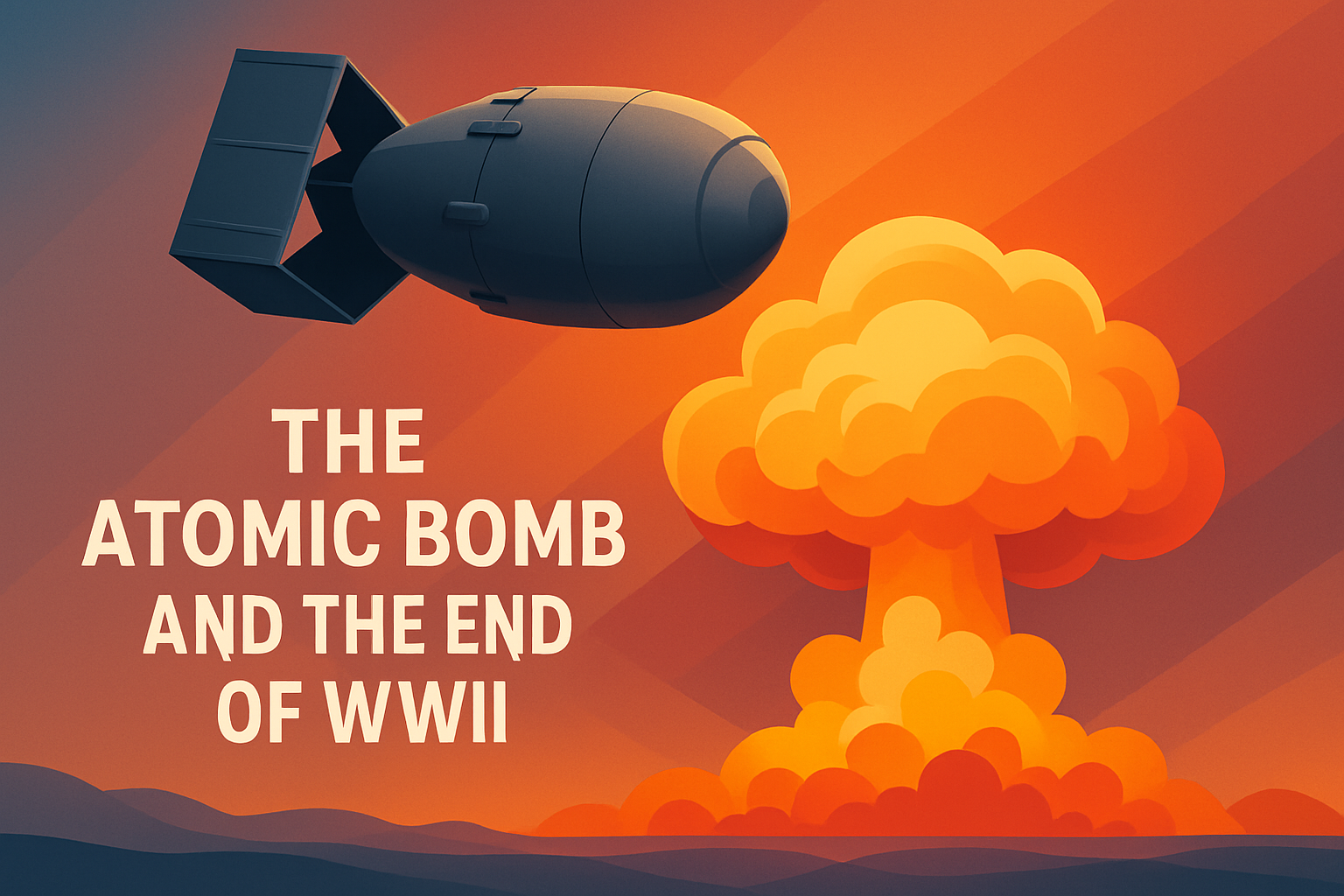
The impact of the atomic bomb on the conclusion of World War II remains one of the most discussed and debated topics in modern historical studies. As the world teetered on the brink of technological advancement and ethical quandaries, the introduction of atomic warfare fundamentally altered the course of global politics and conflict resolution. An atomic bomb, defined as a weapon of mass destruction that derives its explosive energy from nuclear reactions, brought a swift and dramatic end to a protracted global conflict. The decision to deploy atomic bombs on Hiroshima and Nagasaki has been both lauded for hastening the end of the war and criticized for the devastating humanitarian cost. Understanding this pivotal moment in history is crucial for contextualizing not only past conflicts but also contemporary discussions about nuclear proliferation and global peace.
The Development of the Atomic Bomb
The journey toward creating an atomic bomb began long before its eventual deployment, rooted in the scientific revolutions of the early 20th century. During the 1940s, the United States initiated the Manhattan Project, a top-secret research and development undertaking aimed at building the first nuclear weapon. Spearheaded by physicist J. Robert Oppenheimer and involving thousands of scientists, the project culminated in the successful Trinity test in July 1945.
Faced with the relentless aggression of Axis powers, and following the attack on Pearl Harbor, the U.S. government’s resolve to develop an unparalleled weapon became a top priority. The Trinity test demonstrated the sheer destructive power of atomic energy, marking a turning point in the warfare capabilities of nations. The project resulted in two types of atomic bombs: the uranium-based “Little Boy” and the plutonium-based “Fat Man.”
Understanding the complexities of atomic bomb development underscores the intersection of scientific innovation and military strategy. The project’s unprecedented scope, speed, and eventual success set the stage for the consequential decisions that followed its completion. Led by some of the best scientific minds, the project unveiled both the potential and the perils of nuclear technology. As intricate as the science behind nuclear fission is, the implications of its weaponization are equally multifaceted, raising fundamental questions about scientific responsibility and ethical boundaries.
Deployment of the Atomic Bomb on Japan
The allied pursuit to end World War II swiftly and decisively resulted in the historic decision to deploy atomic bombs in August 1945. President Harry S. Truman authorized the use of “Little Boy” on Hiroshima and “Fat Man” on Nagasaki, cities considered to be strategic military targets. On August 6th and August 9th, respectively, these Japanese cities witnessed unprecedented destruction.
Hiroshima, a thriving metropolis, and Nagasaki, an important industrial hub, were both reduced to ruins. The immediate impact was catastrophic: tens of thousands perished instantly, with countless others suffering from debilitating injuries and radiation sickness. Conventional wisdom suggests that these bombings expedited Japan’s surrender, thereby preventing further loss of life on both sides. The Emperor of Japan, Hirohito, announced unconditional surrender on August 15th, officially concluding World War II.
However, deploying the bombs was not without significant controversy. The ethical considerations of targeting civilian populations, the long-term effects of radiation exposure, and the devastating humanitarian aftermath have prompted endless debates. The question of whether the bombings were crucial to ending the war remains contentious, complex, and subject to ongoing historical analysis.
The Aftermath and Global Impact
The aftermath of the atomic bombings extended far beyond the physical and immediate destruction experienced by Japan. The bombings ushered the world into the nuclear age, redefining military strategy, international relations, and peacekeeping approaches. Nations now grappled with living under the looming shadow of potential nuclear conflict.
The international political landscape shifted as countries sought to develop their own nuclear capabilities, thereby creating a new dynamic characterized by deterrence and the threat of mutually assured destruction. This newfound reality fundamentally altered the power structures and diplomatic negotiations on a global scale, giving rise to the Cold War era.
The United Nations was also prompted to establish the Atomic Energy Commission, tasked with promoting peaceful uses of atomic energy and preventing its proliferation for military purposes. Amidst the fear and tension, efforts for nuclear disarmament began taking shape, though progress remains fraught with challenges.
- Truman Doctrine: Establishment of policies to prevent Soviet expansion.
- Marshall Plan: Rebuilding European economies to prevent communism.
- NATO Formation: Creation of a military alliance for collective security.
As nations around the world navigated this new reality, the moral implications of nuclear warfare persisted in the social and political consciousness. The bombings heightened awareness of human vulnerability in the face of technological advancements and underscored the need for responsible stewardship of such powerful innovations.
Personal and Cultural Narratives
The personal and cultural impact of the atomic bombings of Hiroshima and Nagasaki endures in the memories and narratives of survivors, known as hibakusha. Their stories provide poignant and intimate insights into the human cost of atomic warfare, chronicling loss, suffering, and resilience amidst the devastating aftermath.
Hibakusha have played a crucial role in advocating for nuclear disarmament and global peace. Their lived experiences and testimonies help forge a collective memory and strengthen the resolve to prevent similar tragedies in the future. The annual Hiroshima Peace Memorial Ceremony stands as a testament to remembering past devastation while actively promoting peace and reconciliation.
Moreover, these events have permeated cultural expressions and artistic endeavors, influencing literature, film, and visual arts globally. The profound exploration of themes related to survival, collective trauma, and restitution reflects the enduring impact of atomic warfare on human consciousness.
The richness of personal narratives not only humanizes the historical events but also establishes a meaningful discourse on the consequences of unchecked scientific and military power. As such, they are invaluable in fostering global empathy and understanding, critical to preventing recurrence of conflict on such a catastrophic scale.
Historical Reflection and Legacy
Reflecting on the atomic bombings as a historical event provides vital lessons on diplomatic policy, humanitarian ethics, and the precarious balance between technological innovation and moral responsibility. History warns of the potential destructiveness wrought by employing technology without foresight or restraint.
The legacy of the atomic bomb is multifaceted, embodying contradictions and dualities inherent in humanity’s pursuit of dominance and security. It prompts ongoing analysis, debate, and reevaluation of military protocols, global treaties, and mechanisms established to maintain peace.
The 1970 Treaty on the Non-Proliferation of Nuclear Weapons (NPT) emerged as a cornerstone in international efforts to prevent nuclear spread and to promote disarmament. Furthermore, modern environmental and non-governmental organizations remain instrumental in raising awareness, conducting dialogue, and promoting compliance with international regulations.
The atomic bomb’s legacy, fraught with complexity and ambivalence, continues to shape ideological, technological, and geopolitical dimensions of contemporary society. Examining this enduring legacy provides an opportunity to build informed perspectives and cultivate a proactive commitment to peace and security globally.
Summary and Next Steps
The atomic bombings of Hiroshima and Nagasaki marked a decisive end to one of history’s most devastating conflicts, but the complexity of their legacy continues to resonate worldwide. As we’ve explored, the deployment of atomic weapons was a pivotal moment that not only brought World War II to a swift conclusion but also heralded a new era characterized by nuclear tension, ethical dilemmas, and global disarmament efforts.
Understanding the intricate details of how atomic bombs were developed, deployed, and subsequently shaped geopolitical landscapes is vital for both historical insight and future preparedness. While the bombings served an immediate military purpose, their long-term humanitarian and ethical consequences invite continued reflection and action.
For today’s global citizens and policymakers, the key takeaway lies in fostering informed dialogue about nuclear policy, supporting disarmament initiatives, and honoring the lessons learned from the past. Actively engaging in educational initiatives and advocating for a world free from the threat of nuclear warfare can drive meaningful change and reinforce commitments to peace.
As individuals and communities, our next step is to remain vigilant and proactive in promoting nuclear non-proliferation efforts, contributing to a more peaceful and secure world. Together, by honoring the past and envisioning a future committed to harmony, we can transform the lessons of history into a force for positive global engagement and unity.
Frequently Asked Questions
1. How did the use of atomic bombs lead to the end of World War II?
The use of atomic bombs on the Japanese cities of Hiroshima and Nagasaki in August 1945 played a crucial role in hastening the end of World War II. Until then, Japan had refused to surrender unconditionally, as demanded by the Allies. The overwhelming and unprecedented destruction caused by the bombings, coupled with the immense loss of life and suffering, forced Japan to reconsider its position. The bombs demonstrated a new level of destructive capability that made prolonging the war untenable. On August 15, 1945, Japan announced its surrender, bringing an official end to World War II on September 2, 1945, when the formal surrender ceremony was conducted aboard the USS Missouri. This marked a significant turning point in military strategy and global politics, as well as the beginning of nuclear diplomacy and deterrence as key elements of international relations.
2. Why did the United States decide to use atomic bombs instead of other military options?
The decision to use atomic bombs was influenced by several factors. One of the primary reasons was to bring a swift end to the war with Japan, avoiding the potentially immense casualties of a land invasion of the Japanese mainland (codenamed Operation Downfall). American military planners estimated that an invasion would result in hundreds of thousands of Allied and Japanese casualties. Additionally, the bombings were intended to assert U.S. military capability and technological superiority at the onset of the Cold War, as a signal to the Soviet Union. This decision has been subjected to extensive analysis and debate, with discussions focusing on the moral, ethical, and strategic implications. Historical records suggest that the desire to avoid heavy Allied casualties and the consideration of geopolitical factors were major influences on President Harry S. Truman’s decision to authorize the bombings.
3. What were the immediate and long-term effects of the atomic bombings on Hiroshima and Nagasaki?
The immediate effects of the bombings were catastrophic for Hiroshima and Nagasaki. The intense heat and explosion vaporized thousands of people instantly, with the death toll by the end of 1945 estimated to be around 140,000 in Hiroshima and 74,000 in Nagasaki. Survivors suffered from extreme injuries, including severe burns, radiation sickness, and trauma. Long-term effects included an increase in cancer rates, genetic damage, and psychological effects that persisted for generations. Infrastructure was obliterated, leaving both cities in ruins. The bombings affected international city planning, emergency preparedness, and medical research, as the destructive potential of nuclear weapons required new approaches to urban resilience and health responses. The survivors, known as Hibakusha, became central figures in advocating for nuclear disarmament. The bombings indelibly impacted Japanese society and catalyzed global anti-nuclear movements.
4. How did the atomic bombings influence global politics and the development of nuclear weapons?
The atomic bombings of Hiroshima and Nagasaki represented a watershed moment in global politics, initiating the nuclear age and fundamentally altering the nature of international conflict and diplomacy. The demonstration of atomic warfare capability induced a rapid acceleration in nuclear arms development, known as the nuclear arms race, primarily involving the United States and the Soviet Union. This competitive escalation fostered a climate of tension known as the Cold War, which dominated global politics for decades. The bombings also gave rise to international efforts to regulate nuclear weapons, leading to treaties like the Non-Proliferation Treaty (NPT) in 1968. It compelled nations to grapple with the ethical implications of weapons of mass destruction, resulting in various disarmament movements and the establishment of international bodies aimed at preventing nuclear proliferation. The presence of nuclear weapons reshaped military strategies, leading to the concept of Mutually Assured Destruction (MAD), which paradoxically contributed to a period of relative peace known as the nuclear peace theory.
5. What are the ethical debates surrounding the use of atomic bombs in World War II?
The decision to use atomic bombs on Hiroshima and Nagasaki is one of the most contentious moral questions of the 20th century. Critics argue that the bombings constituted unnecessary acts of mass violence, primarily affecting civilians, and posit that they may have represented war crimes due to the disproportionate suffering inflicted. Additionally, some historians suggest that Japan was already on the brink of surrender and that diplomatic avenues had not been fully explored. Conversely, proponents argue that the bombings saved lives by preventing a drawn-out conflict and that the psychological shock accelerated Japan’s surrender, thereby avoiding the more extensive casualties anticipated with a conventional invasion. The ethical debates encompass questions about proportionality, civilian versus military targets, and war ethics. This discussion has broader implications on the development and utilization of advanced technology in warfare, highlighting the ongoing tension between national security concerns and humanitarian considerations.