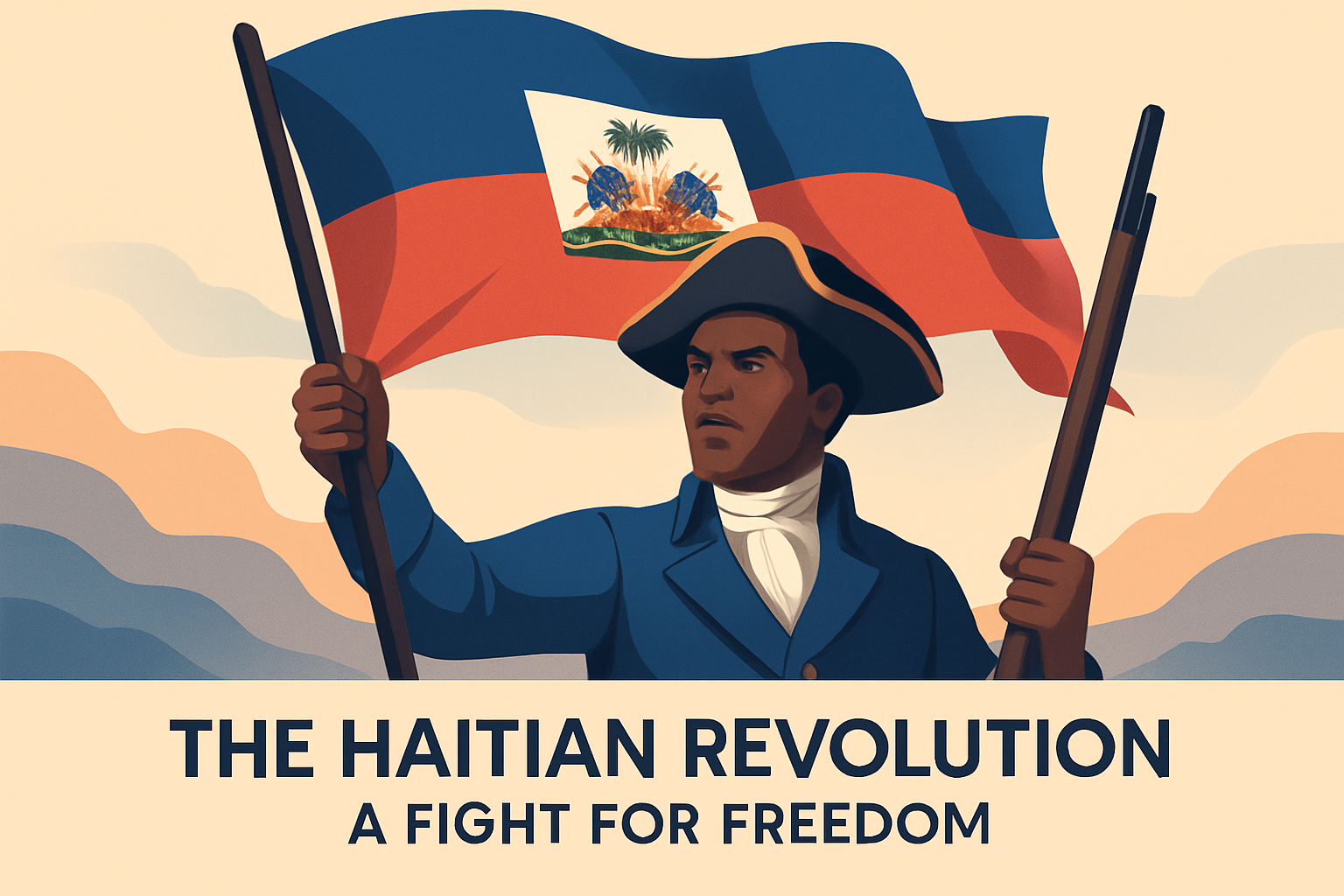
The Haitian Revolution stands as a powerful testament to the human spirit’s unyielding desire for freedom and justice. Taking place between 1791 and 1804, this landmark event not only reshaped the future of Haiti but also struck a significant blow against the institution of slavery worldwide. By successfully overthrowing French colonial rule and ending slavery, the revolution marked Haiti as the first free Black republic in the world. Understanding this revolution is crucial, not just for its historical significance, but because it addresses universal principles of liberty, resistance against oppression, and the fight for human rights. In our interconnected world, where the echoes of colonialism and injustice still resonate, the lessons learned from the Haitian Revolution are more relevant than ever.
The Roots of Revolution: Slavery and Colonialism
At the heart of the Haitian Revolution were the brutal conditions imposed by the system of slavery and colonialism in Saint-Domingue, as Haiti was known under French rule. This colony was one of France’s most lucrative, courtesy of its sugar, coffee, and indigo plantations. However, this economic prosperity was built on the backs of the enslaved African population, who faced inhumane treatment, severe punishments, and a complete denial of basic human rights. The stark contrast between the wealth generated by the colony and the suffering of those who produced it sowed the seeds of discontent and resistance.
The enslaved people leveraged their collective strength and cultural resilience, drawing on African practices and communal bonds to lay the groundwork for a revolution. The catalyst for the uprising came in August 1791, when Boukman Dutty, a Vodou priest, allegedly held a ceremonious gathering that ignited the first wave of insurrections. This initial revolt was marked by a fierce desire to dismantle the oppressive structures that had dehumanized them for so long.
- Economic Exploitation: Despite its wealth, Saint-Domingue’s prosperity exacerbated the disparities between the colonists and the enslaved, fueling anger.
- Inhuman Conditions: The enslaved faced severe punishment and grueling labor, with few surviving past 10 years of service.
- Vodou as a Unifier: Cultural practices like Vodou played a critical role in unifying the enslaved against their oppressors.
Key Figures and Leadership
The Haitian Revolution was marked by illustrious leaders whose courage and strategic acumen guided the revolution to success. François-Dominique Toussaint Louverture emerged as a central figure, expertly navigating the complex political landscape. Born into slavery, Louverture emancipated himself and honed his skills in leadership and diplomacy. His extraordinary intelligence and ability to galvanize both Black and free people of color earned him the nickname “The Black Napoleon.”
Louverture’s ability to engage in strategic alliances, including temporary alliances with the Spanish against the French, showcased his flexibility and forethought. However, as colonial powers realigned amid the tumultuous backdrop of the broader Atlantic Revolutions, Louverture’s vision was challenged by shifting allegiances and the reinstatement of slavery by Napoleon Bonaparte. Despite his eventual capture and death in 1803, Louverture laid the foundational principles that his successors, such as Jean-Jacques Dessalines, would carry forward.
| Name | Role | Achievement |
|---|---|---|
| Toussaint Louverture | Leader | Strategic alliances and diplomacy |
| Jean-Jacques Dessalines | Successor | Declared Haitian Independence |
The Battles and Strategies
Central to the triumph of the Haitian Revolution were the myriad battles and strategic maneuvers employed by the revolutionaries. Throughout the conflict, the revolutionaries had to contend not just with the French, but also with British and Spanish forces that saw the unrest as an opportunity to increase their own colonial holdings. The geography of Haiti, with its treacherous mountains and dense forests, played a crucial role in the revolutionaries’ guerrilla tactics. They effectively used the landscape to their advantage, executing hit-and-run attacks and utilizing their intimate knowledge of the terrain to outmaneuver their opponents.
Innovative strategies, such as raiding plantation supplies and disrupting supply lines, were employed to weaken the colonial powers. Most notably, the Battle of Vertières, fought on November 18, 1803, was the culminating confrontation that led to the French defeat. Under the command of Dessalines, the revolutionaries demonstrated military prowess and indomitable spirit, forcing the French army to surrender and securing Haiti’s independence.
The Impact on Global Slavery
The ripple effects of the Haitian Revolution extended far beyond the borders of the island, altering the landscape of slavery worldwide. In Haiti, the end of slavery was irrevocable, setting a powerful precedent for other colonies and enslaved peoples. The successful revolt instilled fear in slaveholding societies, catalyzing movements and debates about abolition across the Americas and Europe.
In the United States, for instance, the Haitian Revolution exacerbated tensions between pro-slavery and abolitionist factions, contributing to the complex political dynamics surrounding slavery. The revolution’s success also forced nations like France to rethink colonial policies, eventually influencing the broader abolitionist movement. However, the Haitian experience also served as a cautionary tale in the eyes of white-dominated societies, leading to increased repression and tightening of slave codes in other colonies and the Southern United States.
Legacy and Modern Relevance
The Haitian Revolution’s legacy is felt deeply in today’s global fight for human rights and equality. As the first successful slave rebellion leading to the founding of a nation, it serves as an indelible reminder of the power of resistance against oppression. Despite Haiti’s ongoing struggles with political instability, economic challenges, and external interventions, the spirit of liberty and self-determination born from the revolution remains a beacon of hope for oppressed communities worldwide.
In contemporary discourse, the revolution highlights critical issues of racism, colonial exploitation, and the ongoing fight for social justice. The story of Haiti’s revolutionaries encourages new generations to scrutinize the systems of power and inequality that persist today. As we reflect on the triumphs and tribulations of the Haitian Revolution, its lessons on unity, resilience, and the enduring human spirit continue to resonate with activists, scholars, and anyone committed to the cause of freedom.
Conclusion and Call to Action
The Haitian Revolution is more than a historical event; it is a powerful narrative of freedom against adversity that continues to inspire. The key takeaway is the recognition of courage and unity in the face of systemic oppression. The revolution empowered a population to resist and ultimately overthrow the chains of bondage, setting in motion a global reevaluation of slavery and human rights.
In today’s world, where issues of inequality and oppression remain pervasive, the importance of standing firm for justice and equality cannot be understated. As we learn and draw insights from the Haitian Revolution, we are reminded of our own capacity to effect change within our communities. The next step is not just to remember but to act—to engage, educate, and advocate for a just world where freedom is a right enjoyed by all, as the people of Haiti so valiantly fought to achieve.
Frequently Asked Questions
1. What were the main causes of the Haitian Revolution?
The Haitian Revolution was sparked by multiple interlinked factors. At its core, the revolution was a response to the brutal system of slavery imposed by French colonialists. Enslaved Africans endured extreme hardships, including grueling labor, inhumane living conditions, and severe punishments. This oppression spurred a powerful yearning for freedom and dignity. Additionally, the principles of the French Revolution of 1789—liberty, equality, and fraternity—inspired both free people of color and enslaved individuals in Saint-Domingue (now Haiti). The complex social hierarchy, where free Africans and mixed-race individuals faced discriminatory practices despite being free, also fueled tensions. Economic factors played a role as well, with the wealth generated by the colony making it a prized possession for France, leading to harsh exploitation. All these elements combined, igniting a revolution that sought to redefine the society from one based on oppression to one founded on freedom and equality.
2. Who were the key figures in the Haitian Revolution?
The Haitian Revolution was marked by the presence of several key figures who played pivotal roles in leading and shaping its course. Toussaint Louverture is perhaps the most renowned, known as the leader who transformed an initially chaotic slave rebellion into a revolutionary movement. His strategic acumen and diplomatic skills were instrumental in navigating the complexities of colonial and foreign politics. Jean-Jacques Dessalines, once a lieutenant under Louverture, was another critical leader; he declared Haiti’s independence in 1804 and became its first ruler. Other notable figures included Henri Christophe and Alexandre Pétion, each of whom contributed to and led different factions during and after the revolution, helping to build the nascent independent state. These leaders, despite their differences and occasional conflicts, collectively forged a path toward freedom and autonomy for Haiti.
3. How did the Haitian Revolution impact the global abolitionist movement?
The Haitian Revolution had profound implications for the global abolitionist movement. As the first successful slave rebellion that led to the establishment of a free Black republic, it challenged the perceived norms of slavery and colonialism worldwide. It served as a powerful example that enslaved people could liberate themselves and that colonial powers could be overthrown. This inspired enslaved people in other regions, as well as abolitionists who saw the Haitian example as a significant argument against slavery. The revolution instilled fear among slaveholders and colonial empires, leading to stricter control measures. However, it also strengthened the resolve of abolitionists by showcasing that an enslaved population could effectively resist and disassemble the web of oppression. Over time, the Haitian Revolution’s legacy would add fuel to the abolitionist fires burning in the Americas and Europe, gradually helping to shift international public opinion on slavery.
4. What were the immediate and long-term effects of the revolution on Haiti?
In the immediate aftermath of the revolution, the most significant effect was Haiti gaining its independence and establishing itself as the first free Black republic in the world. This victory, however, came with grave challenges. The new nation faced diplomatic isolation, as many countries, especially slaveholding nations, refused to recognize Haiti for fear of encouraging slave uprisings within their borders. Economically, Haiti suffered due to this isolation alongside the devastating impacts of the prolonged conflict which destroyed much of its infrastructure. In the long term, France’s demand for reparations (amounting to 150 million francs in 1825) for the loss of its colony’s wealth further burdened the fledgling economy, leading to a crippling national debt that affected development for generations. Internally, Haiti struggled with political instability throughout the 19th century, as different leaders vied for power amidst economic hardship. Despite these adversities, the spirit of freedom and resistance defined by the revolution continued to inspire the Haitian identity and its people’s resilience.
5. How is the legacy of the Haitian Revolution recognized today?
Today, the legacy of the Haitian Revolution is recognized as a monumental moment in history that reshaped the socio-political landscape far beyond Haiti’s borders. In Haiti, the revolution is celebrated as a source of national pride and identity, commemorated annually on Independence Day (January 1st) and other patriotic occasions. Internationally, the Haitian Revolution is increasingly acknowledged for its role in advancing human rights and the abolition of slavery. Modern scholarship often revisits this transformative event to emphasize its global significance, highlighting the revolutionary ideals of freedom, equality, and justice that resonate with contemporary social movements. While the revolution’s complex legacy includes enduring challenges, such as economic struggles and political instability, its narrative of resilience and liberation continues to inspire those fighting against racial and social injustices. This recognition efforts extend into education and cultural discourse, ensuring that the powerful message of the Haitian Revolution remains vivid and influential.