
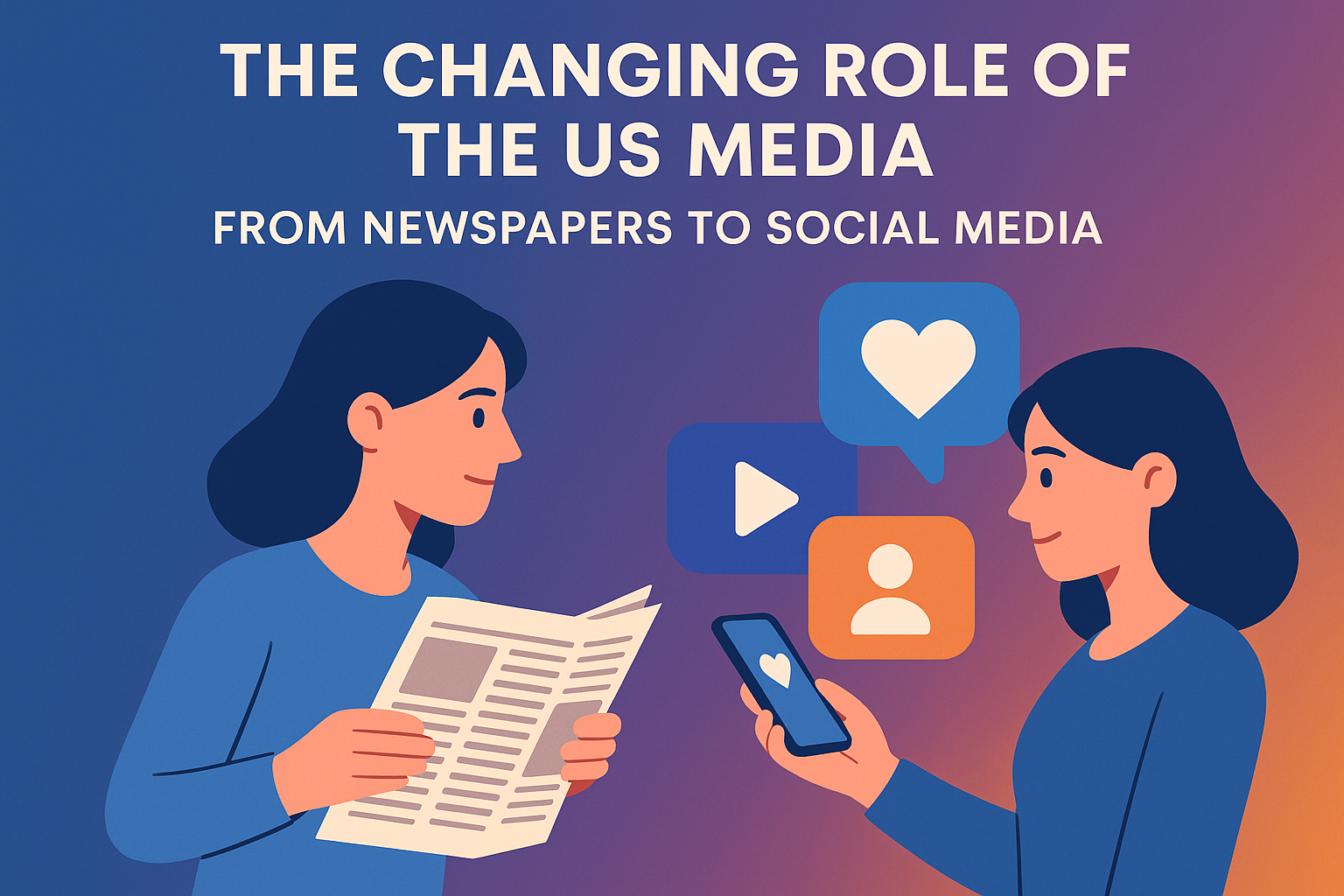
Introduction to the Evolution of Media in the United States
In today’s fast-paced digital era, the role of media has evolved immensely, playing an integral part in shaping public opinion and influencing societal norms. Over the years, the United States media landscape has undergone transformative changes, transitioning from traditional newspapers and radio broadcasts to the omnipresent and instant communication platforms we know today as social media. Understanding this evolution is crucial, not just from a historical standpoint, but because of the profound impact media has on democracy, culture, and the daily lives of American citizens.
Historically, newspapers were the cornerstone of news dissemination, acting as the primary source of information for the masses. As technology advanced, radio and television took the baton, introducing a more dynamic and engaging approach to communication. However, the most significant transformation arguably came with the internet, leading to the advent of social media platforms. These platforms have revolutionized how news is reported, consumed, and even created, offering a democratized and interactive avenue for users worldwide. Given this shift, examining the intricate dynamics between these media forms and their effects on society becomes imperative, making it a matter of significance for individuals, stakeholders, and policymakers alike.
The Era of Newspapers: The Foundation of Print Journalism
The inception of newspapers laid the groundwork for formal journalism, systematically organizing and disseminating information to the public. Newspapers catered to the growing literacy rates and a more informed public during the 19th and early 20th centuries. Crucially, they fulfilled the role of watchdogs, holding governments accountable and providing a platform for public debate. Notably, the New York Times, founded in 1851, played a pivotal role during this era, setting resounding standards for investigative journalism with its thorough coverage and far-reaching stories.
In representing the interests of diverse communities, newspapers like ‘The Chicago Defender’ emerged as influential voices against racial injustice, notably during the Great Migration. They highlighted socio-political concerns that mainstream newspapers often chose to ignore. In this way, newspapers not only informed but also empowered societal dialogue.
The print journalism of the golden newspaper era symbolizes essential democratic ideals, ensuring the public remains informed and engaged. Newspapers’ trustworthiness and the depth of their secretive sources signify an era where multiple perspectives converged to promote a well-rounded view of societal events.
The Rise of Radio and Television: A New Wave of Mass Communication
With the onset of the 20th century came the radio revolution, forever altering the dynamics of information dissemination. Radio broadcasts brought news, entertainment, and educational content directly into American living rooms, reaching audiences at unprecedented speeds. The immediacy of radio, as showcased by President Franklin D. Roosevelt’s Fireside Chats, allowed leaders to establish direct connections with the populace, promoting engagement and understanding in a conversational style.
Television then expanded on this potential, introducing visual elements that enabled more vivid storytelling. The broadcast of the US lunar landing in 1969 captured the eyes of millions globally, demonstrating television’s unparalleled power in uniting viewers for monumental historical moments. TV news networks like CNN, which originated the 24-hour news cycle, provided round-the-clock coverage, inciting an appetite for constant information while raising the stakes for journalistic accountability.
While radio and television introduced unparalleled immediacy, they also centralized control of media content to a select handful of networks, steering narratives through concentrated lenses. The challenge between maintaining objectivity and appealing to the masses shaped how these mediums informed the populace.
Emergence of the Internet: Catalyzing Change in Communication
The introduction of the internet in the late 20th century brought forth a tectonic shift in the media landscape. Unlike any medium before, it offered a decentralized and open channel for information sharing, allowing journalists and ordinary people alike to broadcast their views to global audiences. Platforms like blogs emerged, giving rise to citizen journalism, where users could report and opine on news events without traditional gatekeepers standing in their way.
The internet did not just become a medium for text; multimedia content surged, with platforms like YouTube changing the game for video consumption. Real-time updates became the new norm, transforming how events like the Arab Spring were reported. From unfiltered live streams to viral Twitter threads, internet-driven media offered unmediated slices of reality that bypassed corporate media structures.
However, with this accessibility came challenges in verifying information and maintaining quality standards. While the democratization of journalism widened participation, it complicated a saturated field rife with unverified sources and fake news, challenging the essence of journalistic integrity and trust.
| Media Type | Key Features | Examples |
|---|---|---|
| Newspapers | In-depth Analysis, Investigative Journalism | New York Times, The Washington Post |
| Radio | Immediacy, Direct Public Communication | NPR, Fireside Chats |
| Television | Visual Storytelling, 24-hour News Cycle | CNN, CBS News |
| Internet | Decentralized, Multimedia Content | Blogs, YouTube |
The Social Media Revolution: Instantaneous and Interactive Engagement
In the 21st century, social media platforms emerged as dominant forces in shaping both personal interactions and public discourse. Platforms like Facebook, Twitter, and Instagram transformed from mere social networking sites into crucial information channels competing with traditional media. The ability to instantly share and engage with content meant that news could go viral within minutes, setting new standards for speed in reporting and dissemination.
One prominent example is the use of Twitter during the political movements and elections, where sound bytes and real-time commentary influence public opinion. Former President Barack Obama’s use of social media during his campaign illustrated how effectively these platforms could mobilize and engage voters, altering the fabric of political campaigns.
Moreover, social media’s algorithmic curation of newsfeeds introduces echo chamber phenomena, where users encounter information reinforcing their views, raising questions about polarization. Platforms have had to address these issues while maintaining their roles as arbiters of content amidst rising concerns over misinformation and privacy violations.
Media’s Influence on Society: Opportunities and Challenges
As media evolved, its influence over societal norms and behaviors has grown exponentially. From setting public agendas to influencing elections, the media’s power in molding opinion remains undeniable. This influence is seen in how media coverage of social issues, like the #MeToo movement, has propelled global conversations, encouraging cultural shifts and policy reforms.
Despite the opportunities media presents, challenges remain. Misinformation continues to circulate, eroding trust and polarizing communities. Moreover, the consolidation of media ownership raises concerns about diversity and representation in content creation. This irony stands against the backdrop of digital optimization, highlighting the ongoing struggle between democratization and corporate capitalism.
Conclusion: The Future Path of the US Media Landscape
The trajectory of the US media from the age of newspapers to social media reflects not only technological innovation but also a persistent redefinition of communication norms and responsibilities. While each iteration of media communication serves its purpose in connecting and informing the public, the current challenge lies in bridging the gap between accessible information and high-quality journalism. Society’s increasing reliance on media demands responsible engagement with emergent technologies to maximize societal benefit and minimize harm.
To navigate this media landscape, consumers are called to exercise critical awareness, understanding the broader implications of media consumption habits on thought patterns and worldviews. Individuals can proactively engage with media literacy initiatives and support a free press, championing diversity, transparency, and accountability in media practices.
Ultimately, these steps ensure that as media continues to evolve, its role in fostering informed and engaged communities remains truly effective. As citizens, embracing such actions can lead to empowered civic participation and informed discourse, pivotal for a thriving democracy.
Frequently Asked Questions
1. How has the role of newspapers in the US changed over the years?
The role of newspapers in the United States has significantly evolved from their inception as the primary source of news and information. In the early days, newspapers were the cornerstone of everyday communication, delivering news about politics, society, and global events directly to the public’s doorstep. They played a crucial role in informing the electorate, scrutinizing government actions, and spotlighting societal issues. With the advent of radio and television, newspapers faced new competition, but they remained a trusted source for in-depth reporting and investigative journalism. However, with the rise of digital media and the internet, newspapers have had to transform to maintain relevance. Many publications have shifted to digital formats, offering online subscriptions to reach a broader audience. Despite these changes, newspapers continue to uphold their influential role by adapting to the digital environment, often focusing on multimedia storytelling to engage readers.
2. What factors contributed to the rise of social media as a news platform in the US?
The rise of social media as a prominent news platform in the United States can be attributed to several key factors. Firstly, the advent of smartphones and high-speed internet has made accessing information quicker and more convenient than ever before. Social media platforms like Facebook, Twitter, and Instagram provide real-time news updates and allow users to engage interactively with content. Secondly, the personal nature of social media, where users can curate their feeds based on interests, provides a personalized news consumption experience. Another factor is that social media platforms have turned news consumption into a shared experience, where people can discuss and debate news topics with friends and strangers alike. Lastly, social media has democratized news production, allowing anyone with internet access to publish and share information, which has broadened the range of voices and perspectives available to the public. However, this also presents challenges such as misinformation and the rise of echo chambers.
3. What are the major differences between the traditional media landscape and today’s digital media environment?
The traditional media landscape primarily consisted of newspapers, radio, and television, playing a relatively linear role in news dissemination. This model was characterized by a one-way communication flow—from the media to the audience. In contrast, today’s digital media environment is dynamic and interactive, heavily influenced by the proliferation of the internet and social media platforms. In this digital age, content is no longer limited to professional journalists and large media corporations; instead, anyone with internet access can create and share news. This shift has led to a richer diversity of content but also presents challenges with verifying the accuracy and bias of information. Additionally, digital media emphasizes engagement, where comments, shares, and likes can shape the prominence and perceived importance of news stories. The speed at which news is published and consumed has increased drastically, fostering an environment where instant updates are expected. Yet, this rapid pace can also lead to less thorough vetting of information before it reaches the public.
4. How have these changes in media impacted public opinion and societal norms in the US?
The evolution of media from traditional to digital forms has greatly impacted public opinion and societal norms in the United States. Digital media, with its vast reach and dynamic nature, has the power to influence public opinion in profound ways. Social media platforms, in particular, have amplified the voices of previously marginalized groups, initiating discussions that have led to social movements and cultural shifts. Issues related to social justice, environmental concern, and political reform have gained momentum and visibility due to the immediacy and shareability of digital content. Furthermore, the interactive nature of digital media has fostered a more engaged and informed public but has also contributed to the polarization of opinions, as people are increasingly exposed to news that aligns with their existing beliefs. The abundance of information has cultivated a demand for transparency and accountability, prompting institutions and leaders to adapt to this new, more participative media environment.
5. What challenges do journalists face in the digital age of media?
Journalists today face a myriad of challenges in the digital age of media. With the increased speed and competition in news delivery, there’s immense pressure to report quickly, which can sometimes compromise thorough research and fact-checking. The vast amount of information available and the rise of misinformation make it difficult to ensure credibility and accuracy, necessitating heightened vigilance in verifying sources. Additionally, the proliferation of social media as a news source has resulted in a fragmented audience, forcing journalists to compete for attention in a crowded and fast-paced media landscape. This environment has also led to the dilemma of balancing click-driven content against the maintenance of journalistic integrity. Furthermore, the transition to digital platforms has changed the economic model of journalism, with traditional advertising revenues declining and media outlets searching for sustainable business models. In response, journalists have had to become more versatile, often assuming roles in multimedia production, social media engagement, and digital marketing to stay relevant.