
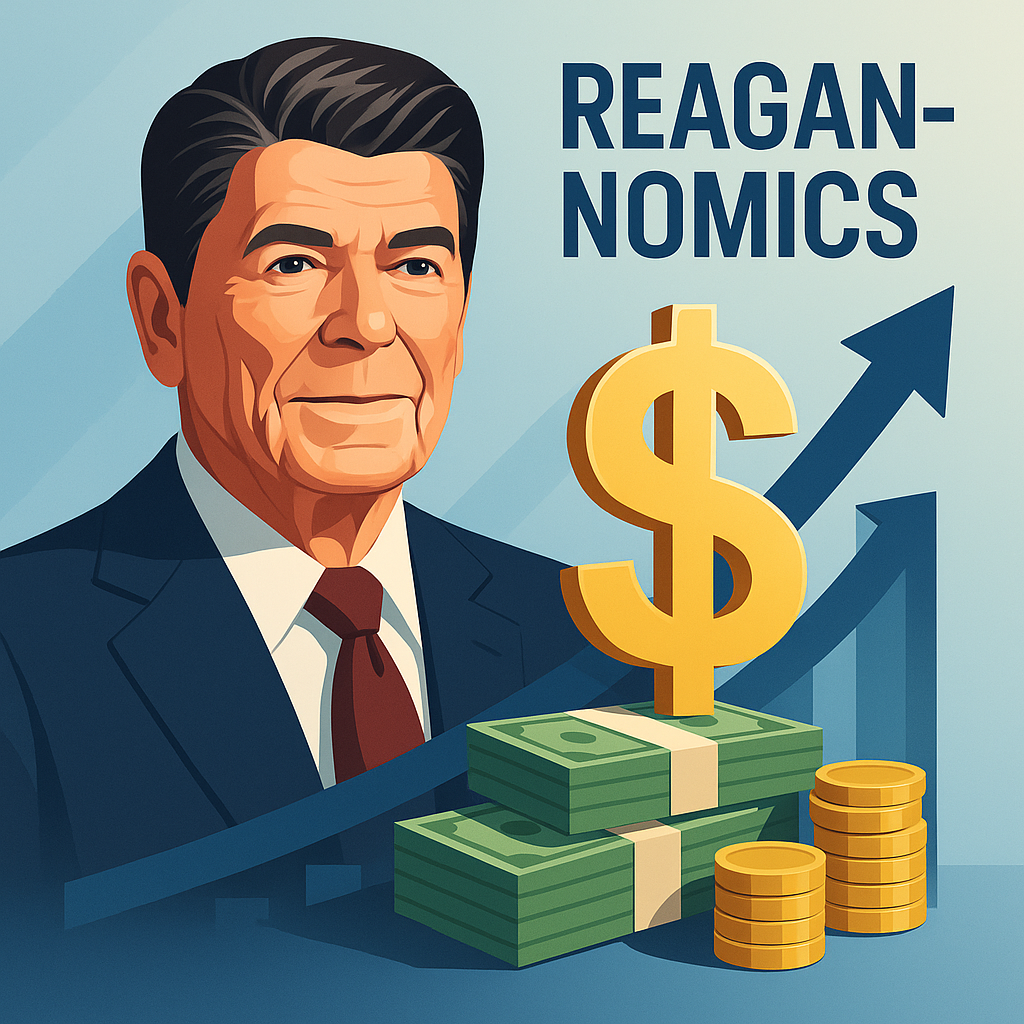
Reaganomics is a term that evokes strong reactions and has left a lasting imprint on the economic fabric of the United States. Named after President Ronald Reagan, who served from 1981 to 1989, these economic policies were characterized by supply-side economics, tax cuts, deregulation, and a reduction in government spending on social programs. But what exactly did Reaganomics entail, and why does it continue to shape economic discourse even today? This exploration of the economic landscape of the 1980s reveals the logic and consequences behind these policies, defining critical terms, and elucidating their enduring relevance in contemporary economic debates. Understanding Reaganomics is essential because it not only shaped the economic trajectory of the United States during Reagan’s presidency but also set the stage for policy decisions that continue to influence fiscal strategies globally. The following sections delve into the foundational concepts of Reaganomics and provide a comprehensive overview for those hoping to decipher its complex impacts.
The Foundation of Reaganomics
At the heart of Reaganomics was supply-side economics, a theory advocating for tax reductions as a means to stimulate economic growth. The idea was simple: by lowering taxes, individuals and businesses would have more money to invest, leading to job creation and economic prosperity. The Economic Recovery Tax Act of 1981 epitomized this strategy, slashing income tax rates and providing significant relief to corporations. Supply-side proponents argued that benefits would “trickle down” from the wealthy to the lower income brackets, though this viewpoint has sparked considerable debate and controversy.
A real-world example of this policy in action was the reduction of the top marginal tax rate from 70% to 50% in 1982. This was designed to incentivize investment and productivity. While this spurred initial economic growth and increased federal revenue, critics argue that it disproportionately favored the wealthy, exacerbating income inequality—a view supported by the widening gap between the rich and the poor during this period.
Deregulation and Its Impact
Deregulation formed another pillar of Reaganomics. The administration sought to decrease federal oversight in industries such as transportation, banking, and telecommunications. The philosophy was that less regulation would encourage innovation and efficiency, leading to economic expansion and competition. The deregulation of the airline industry serves as an illustrative example. By removing government controls over fares and routes, the airline industry experienced increased competition, which led to lower costs for consumers and more flight options.
The policy did have its drawbacks, however. While increased competition benefited consumers, it also led to financial instability, employee layoffs, and a decline in service quality in some sectors. For instance, the savings and loan crisis in the late 1980s highlighted the potential pitfalls of deregulation, as many financial institutions faced collapse due to irresponsible lending practices.
Government Spending and Deficits
Reaganomics also emphasized reducing the size of the government by curbing government spending. This was aimed particularly at social programs, which Reagan viewed as contributing to a dependency culture and inhibiting economic growth. Despite these intentions, the administration increased defense spending significantly, leading to substantial budget deficits. The combination of tax cuts and heightened defense expenditures contributed to the national debt reaching unprecedented levels.
The controversial aspect of these policies is evident in their real-world effects. For example, while defense contractors experienced economic booms, many social programs faced cuts, affecting the vulnerable populations reliant on them. The tension between advocating for fiscal responsibility while racking up large deficits remains a point of contention in analyses of Reagan’s economic legacy.
The Broader Economic Impact
One of the broader goals of Reaganomics was to bring down inflation and reduce unemployment. The Volcker Shock, initiated by the Federal Reserve to combat inflation, complemented these efforts. The monetary policy tightened the money supply, resulting in high interest rates during the early 1980s but ultimately succeeded in curbing the inflation that plagued the late 1970s.
This economic tightening made borrowing more expensive and initially led to a recession and increased unemployment rates. However, the latter part of Reagan’s presidency saw an economic upturn, attributed by supporters to the successful reduction of inflation and recovery that coincided with his policies. Critics, however, argue that this recovery cannot solely be credited to Reaganomics, suggesting a more complex interplay of global economic conditions and policy decisions.
| Key Economic Indicators | 1980 | 1989 |
|---|---|---|
| Inflation Rate | 13.5% | 4.8% |
| Unemployment Rate | 7.1% | 5.3% |
| Federal Revenue (in billions) | $517 | $991 |
Legacy and Ongoing Debate
The influence of Reaganomics extends beyond the 1980s, continuing to shape economic policies in subsequent administrations. While some celebrate its principles for fostering significant economic growth and revitalizing the U.S. economy after the 1970s’ stagnation, others highlight its role in escalating national debt and widening income inequality. The theory of trickle-down economics, in particular, remains controversial, with scholars and policymakers divided on its efficacy in addressing economic disparity.
Reagan’s policies also sparked a global movement towards free-market principles, impacting economies worldwide. Nations adopted similar tax cuts and deregulatory measures, spurred by the economic success the U.S. seemed to enjoy. But as debates around inequality and market failures persist, questions remain about the sustainability and morality of such policies. The prosperity heralded by Reaganomics comes with lessons on economic trade-offs and the delicate balance between growth and equitable wealth distribution.
Conclusion
Reaganomics was a bold experiment in reshaping the United States’ economic policies during the 1980s, driven by a distinct vision of supply-side economics, deregulation, and fiscal discipline. While the era saw significant changes, both celebrated and criticized, its complex legacy offers invaluable insights for contemporary economic policy discourse.
Key takeaways underscore the importance of evaluating policy impacts across different socioeconomic strata, weighing economic growth against the backdrop of rising deficits and income disparity. For modern policymakers, Reaganomics serves as a case study in balancing innovative economic strategies with social equity. Understanding these dynamics is crucial for crafting informed and effective fiscal policies in today’s rapidly evolving economic landscape.
For those interested in exploring these themes further, consider examining contemporary adaptations of supply-side principles or comparative studies of economic policies across different administrations. Engaging with this material deepens our grasp of how past policies influence current realities and future possibilities.
Frequently Asked Questions
1. What are the key components of Reaganomics?
Reaganomics, named after President Ronald Reagan, is a term used to describe the economic policies that were implemented during his presidency in the 1980s. These policies are rooted in supply-side economics and focused on several key components. Firstly, there was a significant reduction in income tax rates for individuals and businesses with the belief that this would stimulate spending and investment. The idea was that by cutting taxes, people would have more disposable income to spend, and businesses would be motivated to invest in new ventures, potentially leading to economic growth.
Secondly, Reaganomics involved deregulating various industries. The goal was to increase efficiency and reduce costs by allowing market forces to dictate outcomes rather than government intervention. This approach was particularly noticeable in industries such as telecommunications, transportation, and finance.
Another critical aspect of Reaganomics was reducing government spending, particularly in social programs. The intention was to reduce the size of the federal government, thereby decreasing the budget deficit. However, military spending increased during this period, as national defense was a priority for the Reagan administration.
2. How did tax cuts under Reaganomics affect the economy?
The tax cuts under Reaganomics were substantial, with the Economic Recovery Tax Act of 1981 being a central element. This legislation aimed to provide significant tax reductions across the board, including the highest tax bracket, which was reduced from 70% to 50%. The principle behind this was the Laffer Curve, which suggested that lower tax rates could potentially lead to increased tax revenue by boosting economic growth.
As for the effects, the tax cuts created initial economic stimulation, leading to periods of growth in GDP and employment. However, it’s essential to look at these results within the broader context. While some argue that these tax cuts led to increased investments and job creation, critics point out that they also contributed to the widening income inequality and a burgeoning national deficit, as the anticipated increase in tax revenue did not fully materialize to offset the cuts’ impact.
3. What was the impact of deregulation under Reaganomics?
Deregulation was a significant component of Reaganomics, with the administration aiming to reduce the federal government’s role in various industries. The belief was that by lifting regulatory constraints, businesses would become more competitive, innovative, and efficient, ultimately benefiting consumers with lower prices and better services.
In the short term, deregulation did lead to increased competition and lower prices in certain sectors, particularly aviation and telecommunications. However, it also led to some unintended consequences. For instance, in the financial sector, deregulation was later linked to risky banking practices that contributed to savings and loan crises. In the long term, some critics argue that deregulation exacerbated economic disparities and led to market failures in cases where oversight was critically needed.
4. How did Reaganomics address government spending and the federal deficit?
An essential aspect of Reaganomics was curbing government spending, with a particular focus on reducing expenditures on social programs. The intention was to shrink the size of the government and decrease the federal budget deficit. However, the results were mixed. Although there was some reduction in the growth of social program spending, overall government outlays actually increased during Reagan’s presidency, primarily due to a significant rise in military spending.
This prioritization of defense meant that while domestic programs saw cuts, the budget still faced pressures from heightened military expenditures. Consequently, instead of decreasing, the federal deficit ballooned. By the end of Reagan’s second term, the national debt had tripled, raising questions about the long-term fiscal sustainability of the policies implemented under Reaganomics.
5. Why does Reaganomics remain a topic of debate in modern economic discussions?
Reaganomics continues to be a subject of debate because it fundamentally reshaped American economic policy and left lasting legacies. Proponents argue that the policies promoted economic growth, revitalized business, and increased prosperity during a time of economic malaise in the late 1970s. Furthermore, the principles of tax cuts and limited regulation became foundational elements of conservative economic platforms.
However, critics highlight that although there was economic growth, it came at the cost of increasing income inequality and a larger national debt size. The question of whether the growth seen was sustainable without the negative implications remains extensively debated among economists, political analysts, and policymakers. Additionally, with its focus on free-market mechanisms, Reaganomics set the stage for discussions about government roles and its limits in the economy, topics that continue to influence modern fiscal policy debates, both in the United States and around the world.