
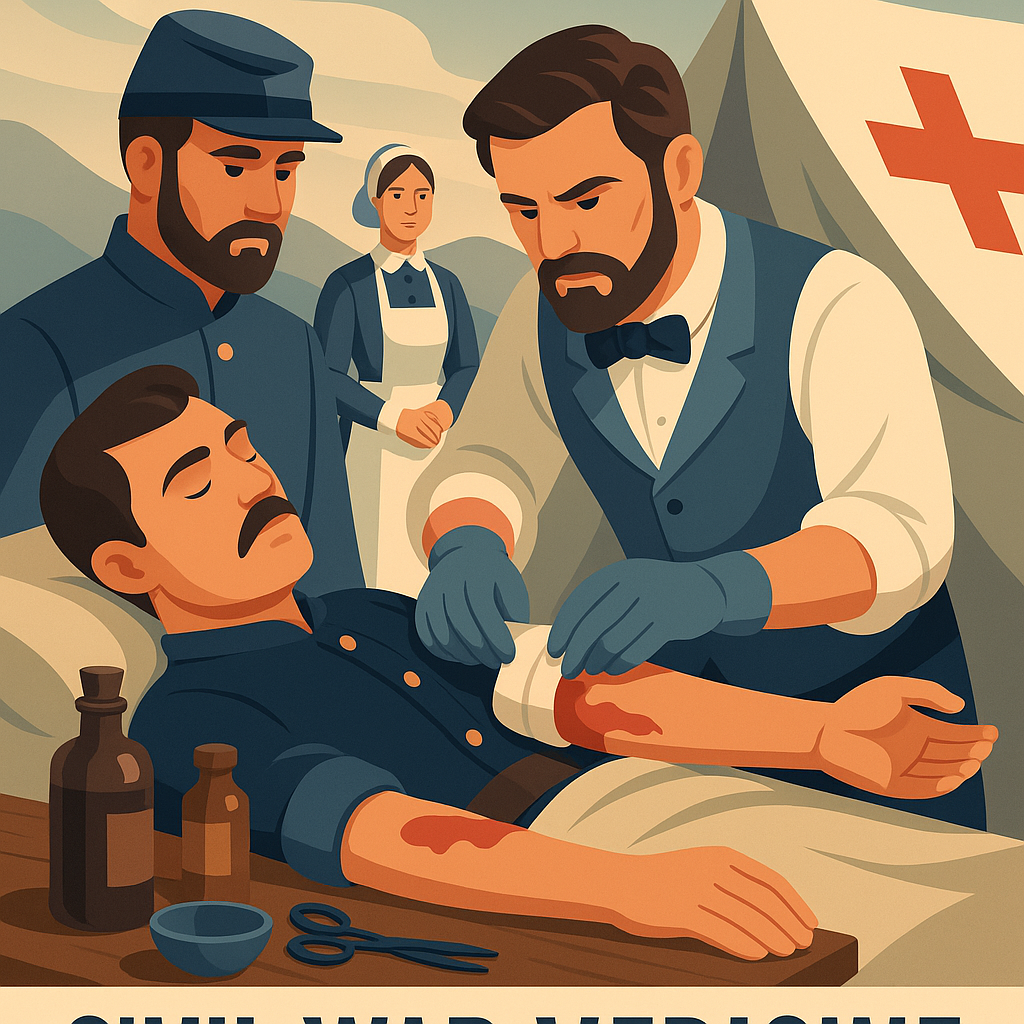
The American Civil War, a deeply transformative event in the nation’s history, was also a critical period for the development of medical practices. During the 1860s, the war’s staggering human toll demanded innovations in medicine, significantly impacting how doctors and nurses approached healthcare and ultimately saved lives. Key terms like “Civil War medicine” refer to the practices, techniques, and medical knowledge that evolved during this time of conflict. In the midst of chaos and limited resources, medical professionals were compelled to adapt their methods swiftly, paving the way for modern medicine. Understanding the medical landscape of the Civil War is crucial, not only for its historical importance but also for its influence on today’s emergency medical protocols and practices.
The Surge in Demand for Medical Personnel
The eruption of conflict between the Union and Confederate states led to countless injuries and fatalities. As a result, the demand for skilled medical personnel surged. Before the war, the United States had around 13,000 physicians, most of whom had limited surgical experience. The war changed this drastically, forcing thousands to quickly transition into roles that dealt with severe trauma and emergent care. Civil War medicine required individuals who could act swiftly, despite often having rudimentary supplies. Doctors had to prioritize wounds that could be treated immediately and devise tactics that would allow them to perform life-saving procedures on large numbers of soldiers.
Consider the story of Dr. Jonathan Letterman, an innovator in battlefield medicine, who fundamentally reshaped military medical logistics. By organizing efficient field hospitals and establishing an ambulance corps capable of promptly transporting the wounded, Letterman dramatically improved survival rates. His system became a blueprint for future military medical procedures, laying the groundwork for modern triage systems.
Infection Control: Antiseptics and Cleanliness
In the medical scene of the Civil War, the majority of deaths were not caused directly by enemy fire but by infections that set in afterward. The understanding of germs and sterilization was in its infancy, which meant that infection control was a significant hurdle. Many surgeons operated without washing their hands and reused instruments and dressings without sterilization. However, as the war progressed, the emphasis on cleanliness became more apparent.
One example worth noting involves Dr. Joseph Lister, whose pioneering work in antiseptics began during and immediately following the Civil War. While Lister was based in the United Kingdom, his methods rapidly gained traction in American medical practices. Surgeons began adopting these antiseptic techniques, which entailed cleaning wounds and instruments with carbolic acid to reduce infection rates. This practice marked a notable shift towards modern sterilization techniques and highlighted the importance of microbiological understanding in medicine.
Nurses: The Unsung Heroes
While doctors faced the daunting task of surgery and procedural innovation, nurses played an equally vital role on the battlefield and in hospitals. Initially, nursing was an unstructured field dominated by untrained men and women. However, the war witnessed the formation of more organized nursing corps, most notably championed by figures like Clara Barton and Dorothea Dix.
Clara Barton, often referred to as the “Angel of the Battlefield,” was instrumental in redefining nursing during the Civil War. She provided crucial care and supplies to wounded soldiers on the front lines. Her remarkable dedication and organizational acumen led to the founding of the American Red Cross. Barton’s hands-on experience, particularly her ability to improvise in dire situations, underscored the essential role nurses would play in elevating standards of care.
Surgical Tactics and the Advent of Amputation
The devastating injuries caused by high-velocity bullets and shrapnel ushered in an era where surgical amputation became commonplace. In fact, amputations accounted for more than 70% of all surgeries performed. Speed, precision, and the capacity to manage shock were critical for success in these operations. Surgeons had to act quickly under primitive conditions to prevent the spread of gangrene and other lethal infections.
Despite its perceived brutality, the amputation process saved countless lives. By removing shattered limbs quickly, surgeons could stave off potentially deadly infections. Reports indicate that skilled surgeons could perform a major amputation in less than ten minutes, a necessity given the sheer number of casualties requiring immediate attention.
| Procedure | Approx. Time Taken | Survival Rate |
|---|---|---|
| Amputation | 10 minutes | 75% |
| Bullet Extraction | 5-15 minutes | 85% |
| Removal of Debris | 20-30 minutes | 90% |
Field Hospitals and Medical Logistics
The establishment of field hospitals was another critical development during the Civil War. These makeshift facilities were strategically positioned close to battlefields to offer timely medical intervention. Initially chaotic, these hospitals evolved to become more structured with the introduction of standardized practices. Organization within these hospitals became imperative, with the ability to categorize wounds and assign the necessary medical procedures swiftly.
Medical logistics were revolutionized by the Sanitary Commission, which worked tirelessly alongside military forces to supply hospitals with necessary medical equipment and drugs. They played a crucial role in ensuring a steady supply of medical provisions, from bandages to opiates, which were essential for pain management. Their efforts not only improved the infrastructure of Civil War medicine but also planted the seeds for future civilian healthcare systems.
Emergence of Ambulance Services
Before the Civil War, there was little to no organized system for evacuating wounded soldiers from battlefields. The establishment of a dedicated ambulance corps by Dr. Jonathan Letterman marked a groundbreaking shift in military medicine. The development of horse-drawn ambulances enabled faster transportation of injured soldiers to field hospitals, reducing mortality by ensuring that timely care was received.
This structured approach effectively reduced delays between injury and treatment, significantly improving survival rates. The success of the ambulance systems during the Civil War has been instrumental in shaping current emergency response systems, emphasizing speedy and efficient transportation of patients.
Morphine and the Management of Pain
Managing severe pain under battlefield conditions was a monumental challenge. During the Civil War, morphine emerged as a critical drug for pain relief, allowing surgeons to perform otherwise excruciating procedures like amputations and bullet extractions. Morphine allowed for more humane treatment of wounded soldiers and helped in controlling pain post-surgery. However, the widespread use of morphine also led to the burgeoning issue of addiction, with many soldiers developing dependencies that plagued them long after the war concluded.
The administration of morphine was fundamental to the evolution of anesthetics and pain management in medical practices. It prompted more extensive research into less addictive alternatives and highlighted the necessity of mitigating opioid dependencies in post-operative care.
The Legacy of Civil War Medicine
The American Civil War was the crucible in which modern medical practices began to take shape. The strategies and solutions created out of necessity during the conflict laid the groundwork for advancements in surgical, medical, and nursing practices that have endured. The conflict facilitated progress in medical transportation, established norms for wound care, improved hospital design, and forged a legacy of innovation grounded in practical needs. This history underlines the resilience and resourcefulness of medical professionals, whose contributions echo into today’s healthcare systems.
By examining these developments, contemporary practitioners can appreciate the historical context that informs their current practices. Understanding the evolution of medical care from its rudimentary roots during the Civil War encourages ongoing innovation and adaptation, inviting a new generation of medical professionals to build upon these pioneering efforts.
Conclusion
The strides made in Civil War medicine demonstrate extraordinary resilience and innovation in the face of adversity. Doctors and nurses, driven by the urgent need to save lives, laid the foundational stones for modern medical practices that we continue to rely upon and refine. From establishing organized ambulance systems to introducing antiseptic techniques, the progress made during this period markedly advanced medical knowledge and treatment capabilities. Recognizing these breakthroughs enables us to appreciate their indelible impact on today’s healthcare landscape.
The study of Civil War medicine provides valuable lessons in the power of resourcefulness and innovation under pressure. As you learn more about this significant period, consider how it can inspire actions within modern contexts, whether in embracing new medical technologies or establishing more efficient healthcare systems. Engage with this legacy by recognizing its relevance and strive to honor the past while driving forward continued improvement in medical practices.
In closing, critical engagement with the history of medicine during the Civil War not only pays homage to the incredible advancements made but also serves as a beacon for future innovation. Take a moment to explore the information-rich resources available and consider how you can contribute to ongoing medical advancements. Let the groundbreaking efforts of doctors and nurses from the 1860s lead you toward opportunities for improvement and greater care delivery today.
Frequently Asked Questions
1. What were some key medical innovations that emerged during the Civil War?
During the American Civil War, medical practices saw several innovations that were pioneering for the time and crucial in saving lives, although these advancements were often driven by dire necessity. One major innovation was the use of anesthesia, which included ether and chloroform, during surgeries. Before this period, too many procedures were conducted without any form of pain relief. Alongside anesthesia, the development and improvement of the triage system were vital. Triage helped prioritize care based on the severity of injuries, ensuring that the gravest cases received immediate attention. Additionally, the Civil War spurred the wide-scale application of sanitary practices inspired by Florence Nightingale’s principles, which helped reduce infection rates. This included the sterilization of instruments and maintaining clean operating environments. Although germ theory was not fully accepted at that time, these practices laid the foundation for modern antiseptic procedures.
2. How did Civil War doctors handle infections and diseases without modern antibiotics?
Handling infections during the Civil War without modern antibiotics was a monumental challenge for doctors. Infections were rampant, particularly after surgeries, often leading to sepsis. The lack of understanding of germ theory compounded these issues, as sterilization practices were rudimentary. However, doctors were resourceful, utilizing available materials and methods to combat infection. For example, they often employed topical antiseptics like bromine and iodine, which were used with varying success to treat infected wounds. The application of direct heat through hot water was another technique believed to draw out infection. In terms of diseases, such as dysentery or typhoid fever, treatments were primarily supportive. Doctors prescribed dietary adjustments and rest, recognizing that fully curative options were limited. Surgeons would often opt for amputations over riskier surgeries to prevent infections from spreading further.
3. Who were some notable figures in Civil War medicine, and what did they contribute?
The Civil War saw several notable figures who made significant contributions to the advancement of medical practices. One key figure was Jonathan Letterman, often referred to as the “Father of Battlefield Medicine.” He revolutionized the treatment and transport of wounded soldiers by creating an organized ambulance and hospital system that could swiftly and efficiently evacuate and treat the injured. Another important individual was Clara Barton, who later founded the American Red Cross. During the war, she was known as the “Angel of the Battlefield” due to her relentless efforts in providing care and supplies to the wounded. Their work, along with others like Mary Edwards Walker, the only woman to have received the Medal of Honor for her medical service during the war, laid the groundwork for future medical and humanitarian efforts.
4. What were the conditions of field hospitals during the Civil War?
Field hospitals during the Civil War were often makeshift setups, rapidly established near battlefields to provide immediate care to the wounded. Conditions were generally poor, with many hospitals operating in tents, barns, or abandoned buildings, lacking proper sanitation and basic amenities. The proximity to battlefields meant that these facilities were frequently overcrowded and understaffed, with supplies running thin. Surgeons often had to work with whatever materials were at hand, improvising to handle the overwhelming number of casualties. Despite these hardships, the development of more organized hospital systems was an important step forward in military medicine, showing that even in the direst circumstances, medical teams sought to offer the best possible care given the constraints.
5. How did the Civil War influence the role of women in the medical field?
The Civil War significantly impacted the role of women in the medical field, providing them with unprecedented opportunities to participate in healthcare. Before the war, women’s roles in medicine were largely limited. However, the urgent need for medical personnel during the conflict paved the way for thousands of women to serve as nurses and aides, fundamentally challenging societal norms. Figures like Dorothea Dix, who was appointed the Superintendent of Nurses for the Union Army, played a crucial role in organizing female nursing corps. Many women displayed remarkable dedication and resilience, often working in harsh conditions to care for soldiers. This involvement not only showcased their capabilities but also sparked broader social changes, leading to the expansion of nursing education and professional opportunities for women in the post-war era. The war highlighted the critical impact women could have within medicine, setting the stage for their growing presence in the field.