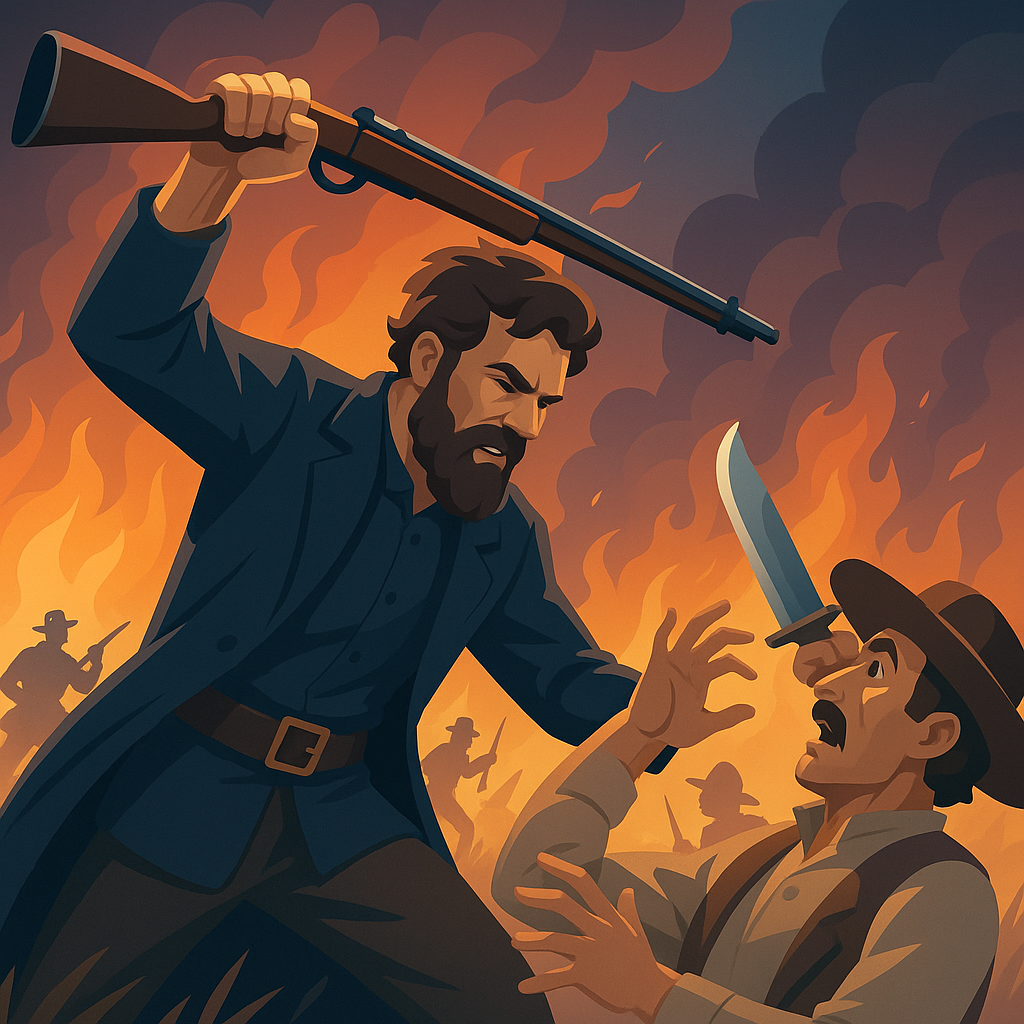
Bleeding Kansas represents a critical chapter in American history. This term refers to the period between 1854 and 1861 when the Kansas territory became a battleground between pro-slavery and anti-slavery factions. The passage of the Kansas-Nebraska Act in 1854, which allowed the residents of Kansas to decide whether to permit slavery, sparked violent confrontations and political turmoil. This signifies not just the struggle over slavery but also the broader fight over states’ rights and territorial expansion in America. Understanding Bleeding Kansas is essential because it offers insights into the causes of the American Civil War. This period underscores how deeply divided the nation was over slavery and how violence became a tool for political leverage and retaliation. Knowing these events can help us understand the roots of modern-day tensions regarding civil rights, federal authority, and the ongoing debate on state-level decision-making versus national governance. As we delve deeper into this historic occurrence, we uncover the intense emotions, complex political maneuverings, and human tragedies that set the stage for the Civil War.
The Kansas-Nebraska Act: Triggering Conflict
The Kansas-Nebraska Act was proposed by Stephen A. Douglas in 1854 and intended to open new territories for settlement but also to gain southern support for a northern transcontinental railroad. The act became law on May 30, 1854, and effectively repealed the Missouri Compromise of 1820, which prohibited slavery north of the 36°30′ latitude. This new legislation enabled settlers in those territories to decide the issue of slavery through popular sovereignty.
The idea of popular sovereignty, seemingly democratic, instead led to chaos as both pro-slavery and anti-slavery settlers rushed to Kansas to affect the impending vote. The capacity for fraudulent voting and political sabotage ran high, prompting outbreaks of violence. Pro-slavery forces, primarily from Missouri, were derogatorily termed “border ruffians.” The opposition, spurred by abolitionists, were labeled “free-staters.” The clashing interests of these two groups set a perilous stage where settlements, homes, and livelihoods hung in the balance.
Real-World Example: The Sack of Lawrence
A poignant real-world example of the violence inflamed by the Kansas-Nebraska Act was the Sack of Lawrence. On May 21, 1856, a pro-slavery posse composed of 800 men entered the town of Lawrence, Kansas, a stronghold for anti-slavery settlers. They destroyed printing presses, looted homes and shops, and burned down the Free State Hotel. The Sack of Lawrence is more than a single violent event; it symbolizes the volatility and lawlessness that plagued the territory. The destruction went mostly unpunished, further demonstrating how unchecked aggression would lead to bloodshed.
John Brown and the Pottawatomie Massacre
John Brown, an abolitionist fervent in his beliefs, further illustrated the turbulent nature of the period with the Pottawatomie Massacre. Following the Sack of Lawrence, Brown retaliated by executing five pro-slavery settlers in Pottawatomie Creek, swaying the instability to another level. Brown’s ambition to eradicate slavery by violent means was both criticized and admired. He became a figurehead of radical abolitionism, inspiring others while delineating the moral and ethical divides among Americans regarding the justification of violence for a perceived greater good.
Legislative Deadlock and Two Governments
The strife spilled from battles and violent skirmishes into legislative chaos. Two rival constitutions and governments emerged within Kansas: the pro-slavery Lecompton Constitution and the anti-slavery Topeka Constitution. Each claimed legitimacy and sought recognition from the United States Congress. While President James Buchanan supported the pro-slavery Lecompton government, Republicans backed the Topeka government.
The deadlock posed by two competing governments within a single territory mirrored the broader national schism. It underscored the alarming potential for secession and conflict within a democracy when foundational questions remain unsettled. The governmental gridlock exemplified the consequence of an ambiguous legislative act riddled with underlying ethical conflicts.
The Role of the Media and Public Opinion
Media, in its formative stages, played a pivotal role in shaping public perception of the situation in Kansas. Newspapers acted as political mouthpieces, with coverage tailored to incite either support for slavery or an abolitionist stance. The term “Bleeding Kansas” itself originated from sensationalized newspaper reports that broadcast the territorial conflict to horrified Northerners and supportive Southerners.
This reporting intensified debates over slavery throughout the United States. Public opinion became severely polarized, further dividing the nation. Abolitionist newspapers, such as Horace Greeley’s New-York Tribune, painted the struggle as a clear moral crusade, while Southern papers defended it as a fight to maintain a traditional way of life.
- New-York Tribune: Vocal supporter of the abolition cause; emphasized the moral imperative to end slavery.
- Richmond Enquirer: Defended slavery as an essential aspect of Southern culture and economy.
- Chicago Times: Criticized abolitionists’ violent methods while highlighting pro-slavery aggression.
The media’s immense influence during Bleeding Kansas illustrates an early example of how journalistic practices could grip national discourse. The real-time reporting on events like the Sack of Lawrence amplified tensions and played a considerable role in hardening rural and urban populace sentiment on an overwrought national question.
Long-term Effects and National Repercussions
The violence and legislative strife of Bleeding Kansas reverberated nationally, setting into motion a series of historical nodes that would spiral the nation toward the Civil War. First, it highlighted the failure of popular sovereignty as an approach to resolving slavery issues, revealing it as ineffective and untenable due to immutable societal divisions.
Furthermore, Bleeding Kansas brought characters such as John Brown into the national spotlight, foreshadowing their catalytic roles in future conflicts. It also contributed to the disintegration of existing political alliances, evidenced by the demise of the Whig party and the rise of the Republican Party, solidifying a new political landscape starkly drawn along the lines of slavery.
The discord in Kansas sent ripples through time and effectively laid the framework for states like South Carolina to wholly secede, citing self-determination akin to the arguments once made over Bleeding Kansas. Through these stats, we uncover the folly of postponing confrontations on such a morally divisive issue.
Summary and Call to Action
The historical experience of Bleeding Kansas underscores the catastrophic potentials that arise when foundational ethical issues are deferred rather than addressed forthrightly. This lesson on Bleeding Kansas offers a pertinent reminder for us to examine the abiding social challenges and conflicts in our society today. Understanding Bleeding Kansas provides an acute perception of how political indecisiveness, media influence, and social extremities converge with tangible, historical consequences.
The conflicts manifesting in 19th-century Kansas did not just foreshadow the broader American tragedy of the Civil War; they provided a profound insight into human nature’s inherent capability for compartmentalization and divisiveness when beliefs are at stake. In contemporary contexts, similar ideological clashes invite us to pose certain reflective questions: Are we addressing the pressing moral imperatives of our time unequivocally? Are we conscious of media narratives’ weight and influence on our understanding? Seeking answers to these questions empowers citizens with the tools required to prevent repeating history’s mistakes.
Therefore, as we look upon Bleeding Kansas not solely as a prelude to the Civil War but as a case study with profound lessons, it invites committed examination and reflection. Explore historical documents, visit museums, and engage scholarly debates to bridge past experiences with present-day rationales and attitudes. Thus, through historical understanding and active civic participation, we can work towards mitigating divisions and fostering unity, averting the escalation of conflict through learned wisdom from our rich historical tapestry.
Frequently Asked Questions
1. What exactly was ‘Bleeding Kansas’?
Bleeding Kansas refers to a turbulent and violent period in the Kansas territory from 1854 to 1861. This era was marked by a series of violent confrontations between pro-slavery and anti-slavery factions within Kansas. The conflict was triggered by the Kansas-Nebraska Act of 1854, which allowed the settlers of Kansas and Nebraska to decide for themselves whether or not to allow slavery within their borders. This concept, known as popular sovereignty, was intended to ease tensions between the North and South over the expansion of slavery, but it instead erupted into violence as pro-slavery and anti-slavery settlers rushed into Kansas to influence the vote. The term ‘Bleeding Kansas’ captures the bloodshed and chaos that ensued, serving as a precursor to the American Civil War.
2. How did the Kansas-Nebraska Act contribute to the tensions of Bleeding Kansas?
The Kansas-Nebraska Act of 1854 played a pivotal role in the events that unfolded during Bleeding Kansas. By repealing the Missouri Compromise, which had prohibited slavery in certain territories, the Act introduced the idea of popular sovereignty. This meant that the settlers in Kansas and Nebraska could decide for themselves whether to allow slavery, essentially opening the floodgates for intense conflict. Pro-slavery advocates from neighboring Missouri, as well as anti-slavery settlers from the North, poured into Kansas, each determined to sway the vote in their favor. This competition quickly turned violent, as both sides formed militias and engaged in deadly clashes. The Act, meant to quell disputes, inadvertently exacerbated them, polarizing the nation and bringing sectional tensions to a boiling point.
3. Who were some of the key figures involved in Bleeding Kansas?
Several key figures emerged during Bleeding Kansas, each leaving a significant mark on the conflict. Among the most notable was John Brown, a fervent abolitionist who led anti-slavery forces in a series of raids. His infamous attack at Pottawatomie Creek, where he and his followers killed five pro-slavery settlers, became a symbol of the fierce resistance against the expansion of slavery. On the pro-slavery side, figures like William Quantrill and his band of pro-slavery guerrillas, known for their brutal raids against Unionist communities, became infamous. Politicians such as Senator Stephen A. Douglas, who advocated for the Kansas-Nebraska Act, also played critical roles in escalating the conflict, albeit often unintentionally through their legislative actions. These individuals and their actions highlighted the deep divisions engulfing the nation and foreshadowed the even greater conflict to come.
4. What were the long-term effects of the Bleeding Kansas conflict?
The events of Bleeding Kansas had profound and lasting effects on the United States, contributing significantly to the secessionist tensions that ultimately led to the Civil War. The conflict underscored the failure of popular sovereignty as a solution to the slavery question and highlighted the extent of national division. It also served to radicalize both sides of the slavery debate, solidifying anti-slavery sentiment in the North and entrenching pro-slavery resolve in the South. The violence and political turmoil within Kansas also demonstrated the inadequacy of democratic processes to resolve deep-seated moral and ethical conflicts when fundamental human rights were at stake. In the years that followed, Bleeding Kansas amplified the political discourse around slavery and states’ rights, setting the stage for the inevitable clash between the North and South.
5. How did Bleeding Kansas influence public opinion in the Northern and Southern United States?
Bleeding Kansas significantly influenced public opinion across both the Northern and Southern United States. In the North, the relentless violence and egregious acts perpetrated by pro-slavery forces painted a vivid picture of the moral depravity associated with slavery, galvanizing anti-slavery sentiment. Newspapers sensationalized the events, swaying public opinion and increasing support for the burgeoning Republican Party, which was founded on anti-slavery principles. Conversely, in the South, the conflict was viewed through the lens of aggression by abolitionists attempting to impose Northern values and disrupt the Southern way of life. This narrative fostered a siege mentality and increased the desire for the South to protect its institutions and way of life. The starkly differing perceptions of Bleeding Kansas further deepened the sectional divide, making compromise increasingly elusive and foreshadowing the larger conflict that was soon to follow.