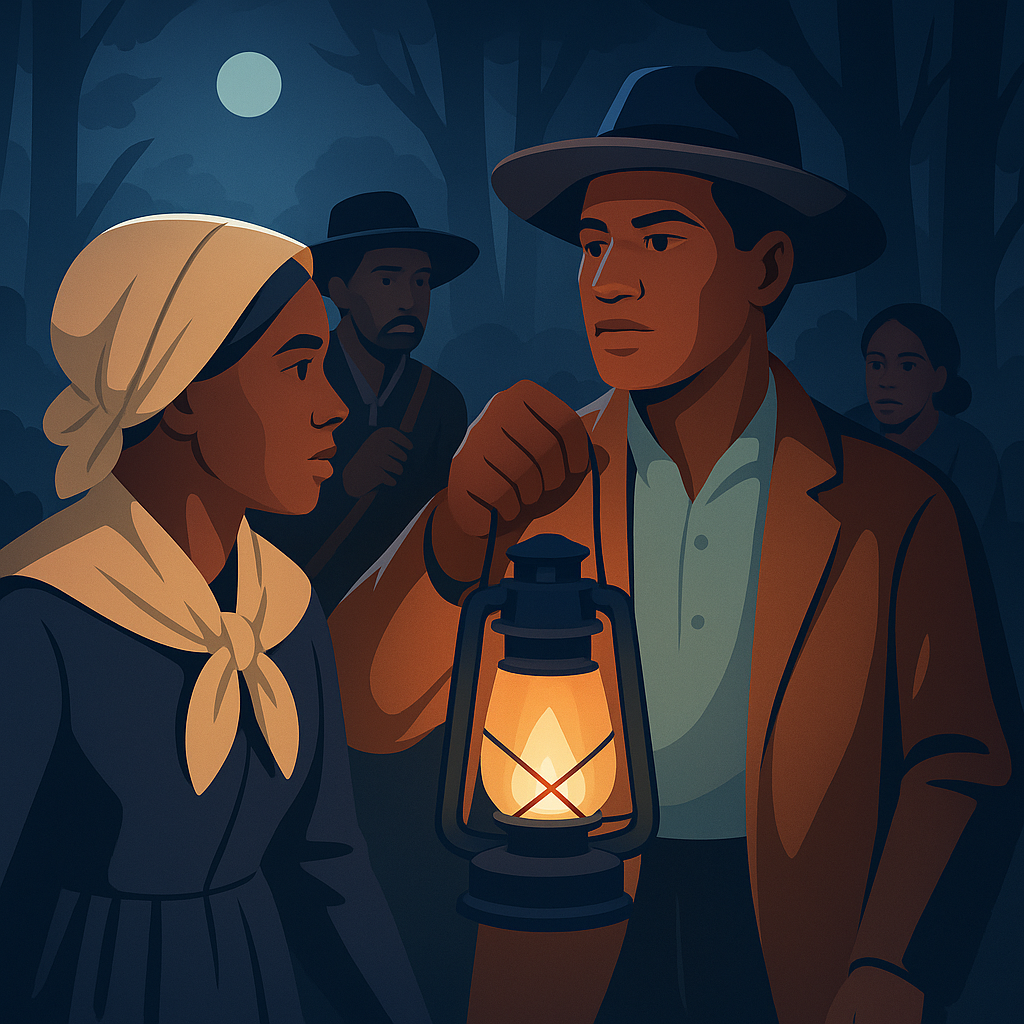
The Underground Railroad represents one of the most daring acts of resistance against the institution of slavery in American history. A clandestine network of secret routes and safe houses, it offered hope and a path to freedom for thousands of enslaved African Americans. The term “Underground Railroad” refers not to a literal railroad but rather to an organized movement involving countless individuals known as “conductors,” “stationmasters,” and “passengers,” who risked their lives to aid freedom seekers. This phenomenon of courage and solidarity emerged in the late 18th century and continued up to the Civil War. It mattered profoundly because it was a symbol of resistance against oppression and a precursor to the broader movement for civil rights. Understanding the Underground Railroad is vital to appreciating the legacy of these heroes and the enduring fight for justice and equality. Through examining this history, we acknowledge the bravery and humanity that paved the way for change.
The Structure and Function of the Underground Railroad
The Underground Railroad was composed of a loosely organized group of individuals, safe houses, and routes that assisted enslaved people in their escape from bondage in the southern United States. Conductors, often abolitionists, but also free African Americans and sympathetic whites, guided runaways northward, sometimes all the way to Canada. These routes were perilous, with fugitives often traveling by night and seeking refuge in barns, attics, and other hidden places during the day.
An example of this intricate network is the story of Levi Coffin, a Quaker abolitionist often referred to as the “President of the Underground Railroad.” Coffin and his wife Catherine operated their home in Cincinnati, Ohio, as a major depot. They reportedly assisted over 3,000 runaway slaves, providing food, shelter, and clothing. The Coffins’ success exemplified the commitment and risk that characterized the efforts of many involved in this cause.
Prominent Figures in the Underground Railroad
Harriet Tubman, perhaps the most famous conductor, was herself born into slavery. After escaping to freedom, she made approximately 13 missions to rescue around 70 enslaved people, including family and friends, using the various routes and safe houses of the Underground Railroad. Tubman’s extraordinary courage and leadership became legendary, earning her the nickname “Moses” for her role in leading others to freedom.
Another significant figure was William Still, a free-born African American who worked as an abolitionist in Philadelphia. He meticulously documented the arrivals of the fugitives he assisted, later publishing these accounts in 1872 to preserve the stories of those who risked everything for freedom. His work provides invaluable insights into the personal struggles and triumphs of those who traversed the Underground Railroad.
Routes and Geographic Spread
The Underground Railroad included a vast network of routes stretching from the southern slave states up to the northern free states and into Canada. The routes were not fixed paths but rather dynamic and adaptable to the ever-present danger of capture and re-enslavement. Geography played a critical role, with rivers, mountain ranges, and other natural features both aiding and complicating the arduous journey.
A significant route ran through the Appalachian Mountains and into the Midwest, with pivotal junctions at cities such as Cleveland and Detroit. From here, many fugitives crossed into Canada, where slavery had been abolished in 1834. The Niagara River crossing was particularly notable, serving as a final stop before freedom in Canada. These routes illustrated the reliance on geography and the necessity for secrecy and vigilance in the quest for liberty.
| State | Safe Houses | Known Routes |
|---|---|---|
| Ohio | Over 300 | Main Route to Canada |
| Pennsylvania | 150+ | Central Route North |
| Indiana | 100+ | Routes to Illinois |
Challenges and Dangers Faced
The journey along the Underground Railroad was fraught with peril. Fugitive slaves faced the constant threat of capture by bounty hunters and law enforcement, particularly following the enforcement of the Fugitive Slave Act of 1850. This legislation mandated that escaped slaves could be recaptured in free states and returned to their enslavers, heightening the risk for both the escapees and those aiding them.
One such grim instance was the capture of Margaret Garner, whose failed escape attempt ended with tragic consequences. Upon capture, in a desperate bid to save her children from being returned to slavery, she killed one of her own daughters. Garner’s wrenching decision underscored the profound desperation and fear faced by those seeking a different fate for themselves and their families.
The Role of Abolitionist Societies and Churches
Abolitionist societies and churches played a critical role in supporting the operations of the Underground Railroad. These organizations offered moral and financial support, spread awareness about the horrors of slavery, and helped maintain the network of routes and safe houses. The Quaker community was particularly instrumental due to their longstanding opposition to slavery and willingness to aid in the movement.
Organizations such as the Philadelphia Vigilance Committee, led by figures like Robert Purvis, organized efforts to provide legal aid and resources for individuals on their path to freedom. Similarly, many African Methodist Episcopal churches became safe havens where fugitives received help, with church members often doubling as conductors.
Impact and Legacy
The Underground Railroad significantly impacted the lives of many enslaved individuals, offering them a chance at autonomy and control over their destinies. Moreover, it left an indelible mark on American society, contributing to the mounting tensions between the North and South that would ultimately lead to the Civil War. The bravery displayed by those who participated—both the escapees and their allies—helped lay the groundwork for future civil rights movements.
The stories and deeds of those involved in the Underground Railroad serve as powerful reminders of the strength of human spirit and the enduring commitment to justice and liberty. In educating ourselves and recognizing their courage, we ensure that their legacy continues to inspire future generations to work toward a more equitable society.
Conclusion: Remembering the Legacy and Continuing the Struggle
The Underground Railroad was not merely a route to physical freedom but also a pathway towards hope and new possibilities for the enslaved. Its legacy is found in the bravery of those who risked everything for freedom and those allies who, guided by a profound sense of justice, dedicated their lives to aiding the enslaved. The network of conductors and supporters forged an unmatched collaboration, offering glimpses of humanity amid seemingly insurmountable cruelty.
Today, the Underground Railroad stands as a testament to the power of collective action and the enduring struggle for human rights. Understanding its history enriches our appreciation for the heroes who defied an unjust system and worked tirelessly to offer a beacon of hope to those in darkness. By learning these stories, we reinforce the importance of courage, empathy, and the relentless pursuit of justice. Commit to remembering this history and harness its lessons to advocate for freedom and equality in our modern world.
As you reflect on this narrative, consider the small ways in which you can contribute to social justice efforts in your own community. The Underground Railroad reminds us that even the smallest acts of resistance can have profound impacts, shaping a future grounded in mutual respect and freedom for all.
Frequently Asked Questions
1. What was the main purpose of the Underground Railroad?
The primary purpose of the Underground Railroad was to provide a secret, organized system for aiding enslaved African Americans seeking freedom. This network was crucial during the era of American slavery as it offered a glimmer of hope and a tangible path to freedom for thousands who were subjected to the brutal conditions of slavery. It wasn’t a railroad in the traditional sense but rather a series of routes and safe houses which spread across states and territories, operated by brave volunteers who believed in human dignity and true freedom.
The system functioned by recruiting conductors, stationmasters, and agents who would assist these freedom seekers, referred to as “passengers,” to escape from slaveholding states to the free states and Canada. Every component of the Underground Railroad was cloaked in secrecy to protect both those seeking freedom and those assisting them. The dedication of the people involved in this movement played a profound role in challenging the institution of slavery and paving the way for a future where freedom was possible for all.
2. Who were some of the key figures or ‘heroes’ involved in the Underground Railroad?
Several extraordinary individuals emerged as key figures in the Underground Railroad, with their courage and dedication leaving a lasting impact on history. Perhaps the most famous is Harriet Tubman, known for her unwavering commitment to freedom. A former slave herself, Tubman risked her life repeatedly by returning to the southern states to guide approximately 70 enslaved people to freedom over numerous trips. Her role as a conductor was crucial, and her tactics and bravery earned her the moniker “Moses.”
Another prominent figure was William Still, often referred to as the “Father of the Underground Railroad.” As an active organizer, Still documented many of the passengers’ stories, providing a vital historical record of the movement. His efforts also involved concealing these individuals and facilitating their journey to freedom. John Brown, a fervent abolitionist, also supported the railroad, involving in efforts to arm enslaved people and similar attempts to battle slavery head-on. These figures, among countless others—many of whom remain unnamed today—demonstrated extraordinary heroism and solidarity that propelled the Underground Railroad forward.
3. How were the ‘routes’ of the Underground Railroad structured?
The routes of the Underground Railroad were an intricate web of pathways stretching across multiple states and regions, all designed to transport enslaved individuals from the hostile environments of slaveholding states to the relative safety of free states and eventually to Canada. These routes were not static; they evolved over time depending on the possibility of escape and detection risks, aided by the knowledge and resources of the conductors and stationmasters who managed and protected them.
Typically, the journey would begin at night to avoid detection, utilizing natural cover such as forests, rivers, and mountains. Safe houses, known as “stations,” were quietly established along these routes and served as temporary refuge points where individuals could rest, eat, and receive guidance for the next leg of their journey. Much of the planning and direction depended on coded signals and secret messages to ensure secrecy and the security of the passengers. Maps were often shared by word of mouth, and geographical features were memorized to guide their way forward. The success of these routes was heavily reliant on the cooperation and trust among the network of allies that spanned the northern United States and Canada.
4. What role did safe houses or ‘stations’ play in the success of the Underground Railroad?
Safe houses, or “stations,” were integral to the survival and success of the Underground Railroad. These designated safe havens were homes, churches, or any inconspicuous buildings where fugitives could receive shelter and rest as they traveled across the country in pursuit of freedom. Each station was run by “stationmasters,” usually abolitionists or sympathizers, who took on significant risk to support the operation.
At these stations, safety and secrecy were paramount. Stationmasters would often use secret compartments, hidden rooms, or basements to conceal those they were aiding. The people managing these stations typically provided food, emotional support, clothing, and vital information about the next stages of the journey. The network of stations was widespread and dynamically shifted as needed to avoid infiltration and capture, thus preserving its operation against increasing pressures from slave catchers and law enforcement. The collective courage and commitment of those who operated these stations significantly underpinned the effectiveness of the Underground Railroad.
5. How did the legacy of the Underground Railroad shape the future fight for civil rights?
The legacy of the Underground Railroad is profound and enduring, establishing a foundation for future civil rights movements. It was one of the earliest acts of organized resistance against the established norms of slavery and racial injustice, demonstrating the power of collective action and solidarity in fighting oppression. The courageous efforts from those involved in the Underground Railroad reverberated through history, underscoring a continued struggle for equality and freedom.
The narrative of the Underground Railroad instilled a legacy of resilience and advocacy, inspiring successive generations in their quests for civil rights and social justice. Its lessons on persistence, cooperation across races and genders, and the importance of refusing to accept systemic oppression have informed many other pivotal moments in history. Figures from the Civil Rights Movement in the 20th century have pointed to the Underground Railroad as an illustrative example of the kind of coordinated effort and moral clarity necessary to achieve societal change. Subsequently, the Underground Railroad’s legacy is not merely a historic relic but an active source of inspiration and guidance in continuing battles for equality and human rights across the globe.