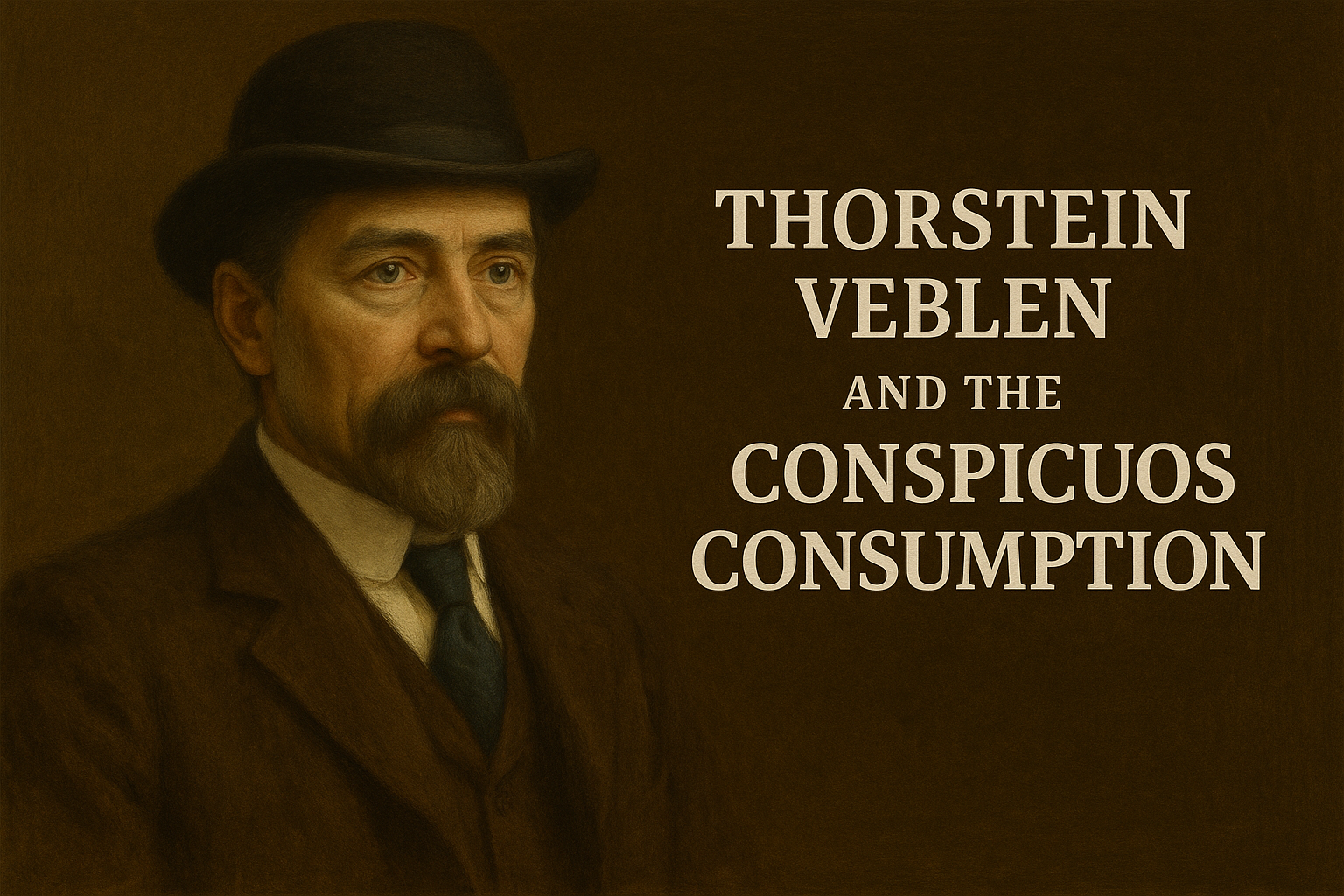
Thorstein Veblen, an American economist and sociologist, introduced the concept of “conspicuous consumption” in his seminal work, “The Theory of the Leisure Class,” published in 1899. This idea has endured through time, remaining relevant as societies continue to evolve, showcasing Veblen’s deep insight into consumer behavior and socio-economic dynamics. Veblen’s work critically assessed the behaviors of the affluent, highlighting that consumption was often performed not solely for utility but for social status and distinction. His analysis of conspicuous consumption was rooted in a critique of capitalist societies where economic activities were intertwined with social stratification and individual signaling of wealth and status.
The term “conspicuous consumption” refers to spending on goods and services primarily to display wealth and signal economic power rather than to fulfill basic needs. It illuminates the practices of those seeking to showcase their financial prowess to gain prestige within their community. Such behaviors were prevalent among the leisure class, who could afford to indulge in luxuries as markers of their social standing and hierarchical superiority. The theory posits that this type of consumption is irrational from a utility perspective yet serves a critical function within social structures. As society progresses into the 21st century, Veblen’s thesis continues to be observed globally, influencing consumer culture and marketing strategies alike.
This article delves into Veblen’s concept of conspicuous consumption, examining its origins, the dynamics it describes, its socio-economic implications, and its ongoing relevance in modern society. By understanding the intricacies of Veblen’s analysis, one can appreciate the broader implications of consumption patterns in reinforcing social hierarchies and shaping economic landscapes.
Understanding Conspicuous Consumption
Thorstein Veblen’s observations arose during a period of rapid industrialization and economic expansion in the United States. The late 19th century saw significant technological advancements, wealth generation, and the creation of new affluent classes. Veblen noted that while some wealth was directed toward productive investment, a substantial portion was spent on luxury goods and services, which held little intrinsic value apart from their ability to affirm the social status of their owner. He termed this practice “conspicuous consumption,” identifying it as a defining characteristic of the leisure class.
Veblen’s theory suggests that conspicuous consumption is driven by motives rooted in social comparison. Individuals purchase and publicize expensive items primarily to differentiate themselves from others and assert their place within the social hierarchy. The desire for distinction led the upper classes to continuously display wealth, reinforcing their dominance over other social strata. This behavior isn’t purely about financial prowess; it is also about time, as leisure time itself becomes a form of conspicuous consumption. The leisure class, therefore, not only consumed extravagantly but also engaged in activities demonstrating their ability to afford time away from productive labor.
The mechanisms of conspicuous consumption involve a cycle of emulation and distinction. Members of lower social strata often emulate the consumption patterns of those above them, hoping to attain similar prestige and acceptance. However, as this emulation starts undermining the exclusivity of certain goods, the upper classes seek new ways to differentiate their status through novel and scarce goods or experiences. This cycle, therefore, both influences and is influenced by economic production and marketing strategies, as businesses cater to consumers’ desires for status-defining goods.
Veblen specifically critiqued the rationality of this form of consumption. From an economic standpoint focused on utility maximization, such behavior may appear illogical, since the purchased goods often offer little direct satisfaction or practical use. Yet, when viewed through a sociological lens, conspicuous consumption serves a fundamental role in structuring societal norms, power dynamics, and hierarchies.
The Evolution and Impact of Conspicuous Consumption
The concept of conspicuous consumption has evolved over the decades, remaining relevant within socio-economic discourse. With globalization and the rise of digital technologies, this behavior can be observed in various forms across diverse societies. In contemporary times, new platforms such as social media have amplified the visibility and reach of conspicuous consumption, shifting some dynamics yet retaining core principles identified by Veblen.
The global economy has expanded the reach of luxury brands, which are emblematic of conspicuous consumption. These brands craft identities around exclusivity, quality, and status, appealing to consumers’ desires for social differentiation. Marketing strategies for luxury items often involve promoting their scarcity and associating them with prestigious lifestyles, mirroring the patterns of Veblen’s leisure class. High-price tags on such items add to their allure, signaling that they are accessible to only a select group of individuals.
The nuances of conspicuous consumption extend beyond individual behaviors to impact broader economic and cultural systems. Economically, this form of consumption can drive demand and spur innovation within industries. It encourages businesses to innovate new luxury goods and experiences, fostering competition and economic growth. Additionally, conspicuous consumption influences cultural norms, shaping perceptions of success and aspiration focused not on merit or productivity but on wealth demonstration.
However, the implications of this type of consumption are not solely positive. Socially, conspicuous consumption can exacerbate inequalities, as it reinforces and perpetuates class distinctions. It can manifest in societal pressures to conform to unattainable standards of wealth and success, leading to potential financial stress as individuals attempt to emulate lifestyles beyond their means. On an environmental level, such consumption patterns can drive overproduction and waste, as goods consumed for status may be rapidly discarded when they lose their exclusivity.
The rise of digital media has added an additional layer of complexity to how conspicuous consumption manifests. Platforms like Instagram and TikTok allow individuals to broadcast their consumption behaviors to vast audiences. Influencers, both brand-sponsored and independent, can cultivate and project lifestyles that epitomize conspicuous consumption. Such online displays create new forms of social distinction and emulation, aligning with Veblen’s observations while adapting to modern technological paradigms.
Conspicuous Consumption in the Modern Market
In the contemporary market, conspicuous consumption remains a commanding force. It is intricately woven into the mechanisms of consumer capitalism, notably within burgeoning luxury markets. As wealth distribution becomes increasingly stratified, the demand for luxury goods as indicators of success emphasizes Veblen’s insights. Despite the passage of time since Veblen’s original theory, the core principles of conspicuous consumption continue to manifest robustly across societies worldwide.
Modern marketing techniques effectively capitalize on conspicuous consumption. Upscale brands invest heavily in campaigns that combine tradition and innovation, creating products that evoke legacy yet remain on the cutting edge of fashion and technology. Messaging that appeals to emotions tied to exclusivity, superiority, and sophistication helps position products as symbols of status and wealth. The gradual shift towards branding experiences rather than mere products has extended the domain of conspicuous consumption. Luxury brands host exclusive events, offer personalized services, and provide unique experiences, increasing their allure and maintaining consumer interest.
One significant contemporary development is the role sustainable practices play within the luxury segment. Consumers currently show growing interest in environmental and ethical considerations, impacting the narrative of luxury. Brands strive to blend sustainable practices with exclusivity, promoting “conspicuous conservation” where consumers publicize their environmental consciousness alongside their affluence. This development reflects conspicuous consumption’s adaptability, where the core desire for status remains constant, but the ways in which it is signaled evolve with social norms.
The implications of conspicuous consumption in today’s world, however, require careful examination. While it can drive economic activity and support industries, the potential downsides remain noteworthy. Social consequences include widening economic divides, reinforced class systems, and heightened interstatus competition. Economically, disproportionate focus on status-driven consumption can result in neglect of basic needs and stabilization sectors, skewing resource allocation which can have long-term impacts.
Conclusion
Thorstein Veblen’s concept of conspicuous consumption offers profound insights into the socio-economic fabric of society, exploring how consumer behavior interlinks with status, prestige, and social structure. Despite originating over a century ago, Veblen’s theories continue to illuminate the dynamics of modern consumerism. His analysis underscores that the pursuit of social distinction through consumption persists as a crucial element of individual and collective identity.
Veblen’s observations underscore the dual nature of conspicuous consumption: it functions as an engine for economic growth and an instrument of social stratification. As industries and technologies advance, the mechanisms for signaling status evolve, yet remain rooted in the fundamental human tendencies Veblen articulated. Understanding this theory allows for greater comprehension of not just economic systems but also societal values and priorities.
The enduring relevance of conspicuous consumption within contemporary markets highlights its role in shaping consumer behavior and cultural dynamics. As the global landscape continues to shift, driven by factors such as digitalization and socio-economic changes, Veblen’s work challenges us to consider the motivations driving consumption and their broader implications. Whether fostering innovation or exacerbating inequality, conspicuous consumption remains an essential lens for interpreting the complexity of human economic and social interaction.
Veblen’s legacy endures in stimulating discourse on the interplay between economy and society, reminding us of the profound impact our consumption choices have on defining both individual identity and collective norms. His examination of conspicuous consumption continues to offer valuable frameworks for understanding past, present, and future consumer behaviors within the ever-evolving socio-economic landscape.
Frequently Asked Questions
1. Who was Thorstein Veblen, and why is he significant?
Thorstein Veblen was an American economist and sociologist born on July 30, 1857, in Cato, Wisconsin, to Norwegian immigrant parents. He is highly regarded for his critical analysis of the socio-economic phenomena of his time, notably contributing to the field through his exploration of leisure, affluence, and consumption patterns. Veblen brought a fresh perspective to economics by integrating sociological insights. His most famous work, “The Theory of the Leisure Class,” published in 1899, introduced groundbreaking ideas that challenged existing economic theories, emphasizing social influence over individual decisions. The concept of “conspicuous consumption” is one of his fundamental contributions, and it continues to be a vital tool for understanding consumer behavior, social status, and economic inequality. Veblen’s work remains significant because it offers a lens through which contemporary society can analyze and question the motivations behind consumerism and the symbolic meanings attached to wealth and consumption.
2. What is “conspicuous consumption,” and how does it relate to Veblen’s theory?
“Conspicuous consumption” is a term coined by Thorstein Veblen to describe the behavior of spending money on luxury goods and services to publicly display economic power and social status. Veblen argued that this type of consumption was not merely about fulfilling basic needs or desires for comfort but rather about showcasing wealth and achieving social prestige. In “The Theory of the Leisure Class,” Veblen observed that individuals and classes often engage in consumption patterns designed to impress others, suggesting that consumption decisions are deeply intertwined with societal norms and hierarchies. It’s a form of consumption where the primary aim is to signal one’s position within the social structure, creating a visible marker of affluence and elite status. This behavior, as Veblen highlighted, leads to a continuous cycle of wanting more luxurious goods to maintain and elevate one’s standing, which perpetuates economic disparities and fosters a materialistic culture prioritizing appearance over substance.
3. How does Veblen’s concept of conspicuous consumption apply to modern society?
Veblen’s concept of conspicuous consumption remains strikingly relevant in today’s world, where consumer culture is pervasive, and the pressure to “keep up with the Joneses” is ever-present. The modern manifestation can be seen in the popularity of designer brands, luxury cars, and high-end gadgets—items that often serve as status symbols indicating wealth and success. Social media has amplified this behavior by providing platforms for individuals to display their lifestyle choices to a broader audience, further embedding conspicuous consumption into the collective consciousness. Millennials and Gen Z are exposed to influencers and celebrities who often flaunt opulent lifestyles, blurring the lines between aspiration and reality. Economic systems today still reward materialism, making it essential to continually evaluate the value versus the social prestige associated with consumption. Veblen’s insights into the socio-economic dynamics of status-driven spending help dissect contemporary consumerism, shedding light on persistent economic inequality and cultural values oriented around wealth visibility and social competition.
4. Are there criticisms of Veblen’s concept of conspicuous consumption?
While Veblen’s concept of conspicuous consumption has been influential, it has also faced critiques over the years. One criticism is that it may overly generalize or oversimplify consumer motivations, considering not all consumption aiming for display is merely for social prestige. People may make luxury purchases for reasons such as personal satisfaction, quality, craftsmanship, or aesthetic appreciation, voting with their wallets for values they personally find significant. Moreover, Veblen’s theory primarily focused on the behaviors of the affluent, raising questions about its applicability across different social strata and in diverse socio-economic contexts. Critics also point to the evolution of consumer habits wherein experiences, sustainability, and authenticity often outweigh traditional displays of wealth. As societies shift towards valuing life-enriching experiences and ecological consciousness over material accumulation, aspects of Veblen’s observations may require reinterpretation to align with contemporary values and context.
5. How does Veblen’s concept inform sustainable consumption practices today?
Today, Thorstein Veblen’s concept of conspicuous consumption provides an essential foundation for understanding and reshaping our consumption behaviors towards sustainability. By recognizing the motivations behind conspicuous consumption, individuals and policy-makers can better address the environmental impacts of relentless consumerism. It invites critical reflection on how consumption patterns can transition from status-driven to value-driven, emphasizing eco-friendly and sustainable practices. Intentionally choosing products that prioritize environmental impact and ethical production can subvert traditional conspicuous consumption practices, promoting a new form of “conspicuous conservation,” where sustainable choices become the new markers of status and success. This shift is not only about mitigating negative environmental impacts but also about fostering societal norms that prioritize long-term ecological balance over short-term displays of wealth. Veblen’s analysis, thus, becomes a tool for advocating for responsible and conscious consumption, capable of driving systemic changes that support both societal well-being and the planet’s health.