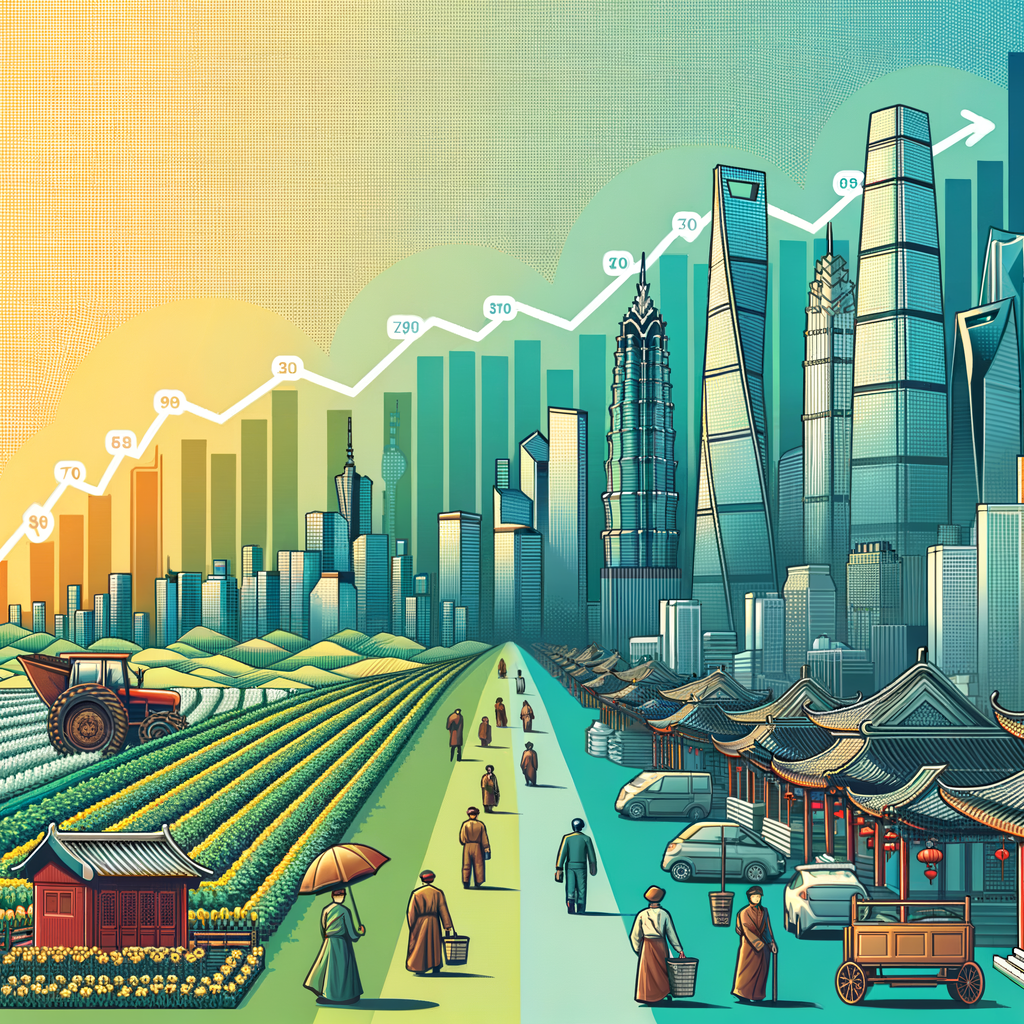
The dramatic ascent of China’s economy from a once largely agrarian society to a global economic powerhouse is a narrative that has fascinated both economists and policymakers worldwide. China’s economic rise is particularly remarkable considering its humble beginnings under the leadership of Mao Zedong. This transformation is a tale of strategic shifts and reforms that catapulted the nation onto the world stage as an economic leader. The story begins with the era of Maoist policies which laid a rigid foundation, later transitioning to a thriving market economy under the visionary leadership of Deng Xiaoping and his successors. Understanding the trajectory of China’s economic growth requires an exploration of the pivotal moments and policies that reshaped its socioeconomic landscape. From humble beginnings to becoming the second-largest economy globally, China’s journey is characterized by its embrace of market-oriented reforms, openness to international trade, and innovative development strategies. In this examination, we will delve into the key factors that powered China’s stunning economic ascent, reflect on the challenges encountered, and ponder the implications of China’s newfound economic clout on the global stage.
Maoist Era: Foundation and Limitations
The bedrock of China’s modern economy is traced back to the leadership of Mao Zedong. Following the establishment of the People’s Republic of China in 1949, Mao initiated a series of socialist reforms intended to transform the country into a communist utopia. Among these initiatives was the Great Leap Forward, launched in the late 1950s, aiming to rapidly industrialize the nation by collectivizing agricultural production and developing heavy industry. However, this grand vision was met with disastrous consequences, leading to widespread famine and a significant loss of life. Despite the setbacks, these policies laid the groundwork for future leaders seeking to balance industrialization with agricultural productivity.
Mao’s emphasis on self-reliance and ideological purity constrained economic growth by restricting foreign trade and investment. The Cultural Revolution (1966-1976) further disrupted economic progress by destabilizing institutions and eroding intellectual capital as education and professional expertise were de-emphasized. Nonetheless, these formative years established a unified national identity and centralized control—elements that subsequent leaders would leverage to modernize the economy.
Deng Xiaoping’s Reforms: Opening the Door to the World
In the late 1970s, China was at a crossroads, facing economic stagnation and the need for reform. Enter Deng Xiaoping, whose pragmatic approach ushered in an era of economic transformation. Deng’s policies, epitomized by the phrase “Crossing the river by feeling the stones,” emphasized gradual liberalization measures that carefully balanced reform with traditional socialist principles. Deng introduced the Four Modernizations, focusing on agriculture, industry, science and technology, and defense, steering China toward a more market-oriented economy.
One of the key shifts was the decollectivization of agriculture, where collective farms were dismantled, and land was allotted to individual households, effectively incentivizing farmers through a system known as the “household responsibility system.” This innovation dramatically boosted agricultural productivity and laid the economic groundwork for future reforms.
Deng’s open-door policy marked a pivotal moment in China’s economic strategy, inviting foreign capital and technology into special economic zones (SEZs). These zones, starting with Shenzhen, became laboratories for economic experimentation, generating significant foreign investment and acting as conduits for knowledge and technology exchange. The introduction of SEZs facilitated industrial growth and established China as a hub of manufacturing and export.
Industrialization and Urbanization: Engines of Growth
The pace of urbanization and industrialization in China has been nothing short of phenomenal. Starting in the 1980s, the migration from rural areas to urban centers accelerated, driven by the lure of employment opportunities in burgeoning industries. This rural-to-urban shift spurred infrastructural development and powered industrial expansion, reinforcing China’s manufacturing capabilities. The growth of industrial sectors ranged from textiles and electronics to heavy machinery and automotive, cementing China’s role as the world’s factory.
China’s strategic investments in infrastructure, such as the development of transportation networks including high-speed rail and expansive highways, facilitated economic integration and market access. Urbanization fueled consumption and domestic demand, further bolstering economic growth. The rise of megacities like Shanghai and Beijing symbolized the nation’s urban metamorphosis.
Market Reforms and Global Integration
By the turn of the millennium, China was preparing to integrate fully into the global economy. In 2001, its accession to the World Trade Organization (WTO) marked a significant milestone, committing China to a framework of international trade norms and accelerating its participation in global markets. The accession catalyzed an export-driven boom, with China’s low labor costs and massive production capacity powering its competitive edge in international trade.
The government’s proactive role in fostering market competitiveness through state-owned enterprise (SOE) reforms, private sector support, and technology investments further boosted economic growth. While SOEs continued to play a vital role, private enterprises flourished, contributing significantly to GDP growth and employment. China’s burgeoning middle class expanded domestic consumption, further fueling economic dynamism.
Innovation became another pillar of economic growth as the nation invested in research and development heavily. Consequently, China emerged as a leader in technology and innovation, with tech giants like Huawei, Alibaba, and Tencent becoming global players.
Challenges and Environmental Considerations
Despite its rapid growth, China’s economic miracle is not without challenges. The environmental cost of relentless industrialization has been substantial, with pollution becoming a critical issue affecting health and quality of life. Recognizing these challenges, the government has sought to implement sustainable practices, promote green technologies, and set ambitious goals to combat climate change.
Other economic challenges include managing economic disparities between urban and rural areas, which continue to widen. Bridging this gap requires policies that ensure equitable development and access to resources across regions. Moreover, China’s aging population, due to years of one-child policy enforcement, poses a demographic challenge with implications for labor market dynamics and economic productivity. Economic policymakers are thus tasked with designing strategies that address these multifaceted challenges while sustaining growth.
The Future: Implications of China’s Economic Rise
China’s economic ascent has redefined global economic and geopolitical landscapes. Its growing influence is seen in initiatives like the Belt and Road Initiative (BRI), which seeks to enhance connectivity and foster trade across Asia, Europe, and Africa, reinforcing China’s role as a key player in international economic development.
The transformation of China’s economy has broad implications for global economic governance. As China continues to advocate for a more prominent role in international organizations, it highlights the need for reformed global economic structures reflecting the current world economic configuration. Other nations adjust their policies concerning trade, partnerships, and diplomatic relations in response to China’s rising influence.
Conclusion
The tale of China’s economic journey from the ideologically-driven policies of Mao Zedong to the market-oriented strategies of Deng Xiaoping and beyond is a testament to the adaptability and dynamism of its economic model. Its evolution from a closed, agrarian society to a global economic leader underscores the significance of strategic reform, open trade, and the embrace of innovation. As China continues to navigate its path, addressing environmental, demographic, and economic challenges will be critical to sustaining its growth trajectory. The global community will closely watch how China balances domestic imperatives with its prominent role on the world stage, inspiring other developing nations with its model of economic transformation. As we reflect on China’s economic rise, it serves as a reminder of the transformative power of policy-driven growth and strategic economic planning in reshaping a nation’s destiny.
Frequently Asked Questions
1. What were the key factors that led to the rise of China’s economy from Mao Zedong’s era to a market-driven economy?
The metamorphosis of China’s economy began in earnest following Mao Zedong’s leadership, which was characterized by heavy state control and collectivism. Mao’s initial policies aimed to rapidly industrialize the country through central planning, which often led to inefficiencies and economic hardships. However, the real turning point came after Mao’s death in 1976 when Deng Xiaoping rose to prominence. Deng initiated a series of economic reforms in the late 1970s and early 1980s, marking a shift away from strict communist policies towards a more market-oriented economy.
The changes Deng instigated included opening up the economy to foreign investments, implementing agricultural reforms through the Household Responsibility System, and allowing private enterprises to flourish. Special Economic Zones (SEZs) were also established, notably in Shenzhen, to attract foreign businesses by offering tax incentives and a more relaxed regulatory environment. These strategic moves were instrumental in setting the stage for China’s unprecedented economic growth, turning it into a manufacturing powerhouse.
2. How did China’s approach to foreign investment change from the Mao era to the reform period under Deng Xiaoping?
Under Mao’s leadership, China maintained a closed, self-reliant economy that largely shunned foreign investments, viewing them as imperialistic influences that could undermine the country’s sovereignty. The focus was on creating a self-sufficient economy embedded in socialist ideals with minimal external dependencies.
However, in contrast, Deng Xiaoping’s economic reforms signify a dramatic pivot. Recognizing the potential benefits of foreign capital and technology, China opened its doors to the global market. This was achieved by establishing Special Economic Zones, which offered foreign investors attractive conditions such as tax breaks and less stringent regulations. This openness was a far cry from the earlier era of economic isolation, and it effectively integrated China into the global supply chain. By enabling joint ventures and facilitating technology transfers, China was able to accelerate its own industrial and technological capabilities, thereby sustaining its economic momentum.
3. What role did agriculture play in the economic transformation of China?
Agriculture played a pivotal role in China’s economic transformation, particularly in the early reform years. During Mao’s era, agriculture was heavily collectivized, which often resulted in low productivity and inefficiency. This period saw massive famines and economic stagnation. The shift came with the introduction of the Household Responsibility System by Deng Xiaoping. This reform dismantled collective farming by allowing individual farming families to lease plots from the state, contract responsibilities, and retain profits from surplus production.
This policy boosted agricultural productivity remarkably, as farmers were now incentivized to work harder and more efficiently, seeing direct benefits from their labor. Increased agricultural output not only secured food supplies but also created surplus income that could be spent or invested, laying a foundation for further economic growth. Moreover, this excess rural labor force was gradually absorbed by the burgeoning industries, fueling urban industrial expansion with cheap labor and driving further economic progress.
4. How did the reforms impact the quality of life and social structure in China?
The comprehensive economic reforms beginning in the late 1970s drastically altered both the quality of life and the social structure of Chinese society. The shift towards a market-oriented economy brought about significant improvements in material well-being. Dramatic increases in GDP were accompanied by reductions in poverty levels and improved access to education and healthcare. Urbanization surged as millions of rural inhabitants moved to cities in search of better opportunities, a migration that fueled urban development and economic growth.
However, rapid economic growth also introduced disparities in wealth and geographical inequalities. Coastal regions and urban centers experienced a much brisker growth pace than the interior rural areas, leading to a widening gap between rich and poor, and urban and rural populations. Furthermore, the societal transformation brought about by these reforms meant transitioning from a planned socialist economy to a hybrid model raising new social issues. These included loss of job security seen in the previous state-run economy, challenges in accessing affordable housing in urban areas, and evolving expectations in employment and social mobility.
5. What challenges did China face during its transition from a planned economy to a market-oriented one?
The transition from a planned economy to a market-oriented system wasn’t without its challenges for China. One of the significant hurdles was managing the resistance from those vested in the old state-controlled system. Many state-owned enterprises struggled to compete in the new economic landscape, leading to unemployment and social unrest due to closures and layoffs.
Moreover, transitioning to a market economy required significant legal and institutional reforms to support a conducive environment for market operations, property rights, and foreign investment. Issues such as corruption and lack of transparency had to be addressed systematically. Another challenge was balancing rapid economic growth with environmental sustainability as industrialization led to significant pollution and depletion of natural resources.
In addition, the transitional years saw China grappling with how to maintain social stability amidst rapid changes. The government had to ensure that economic reforms did not lead to unacceptable social inequality or political instability, which required crafting policies that promoted equitable development and preserved national cohesion. Despite these challenges, China managed its transition remarkably, maintaining robust growth and steadily integrating with the global economy.